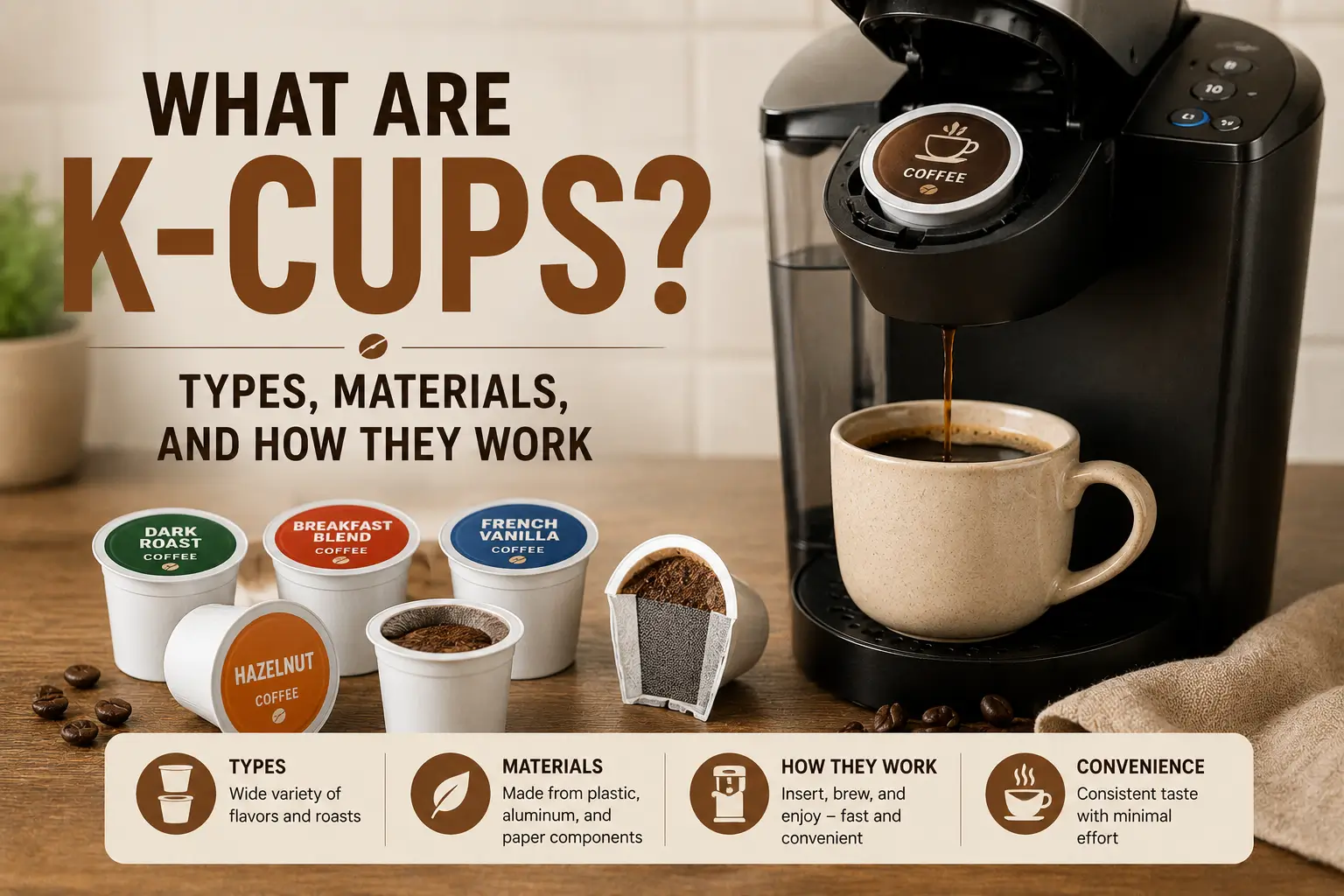

What Are K-Cups? Meaning, Types & How They Work
K-Cups are sealed single-serve pods designed to brew one drink at a time in a compatible Keurig-style coffee maker ↗. Most coffee K-Cups contain pre-measured ground coffee rather than instant coffee.
The term K-Cup is Keurig’s branded name for this cup-shaped single-serve pod format. Today, many coffee brands sell K-Cup pods or compatible pods for Keurig brewers.
In this guide, I explain the meaning of K-Cups, how they work, what they are made from, the main types available, and how they differ from other coffee pods.
Important Note:
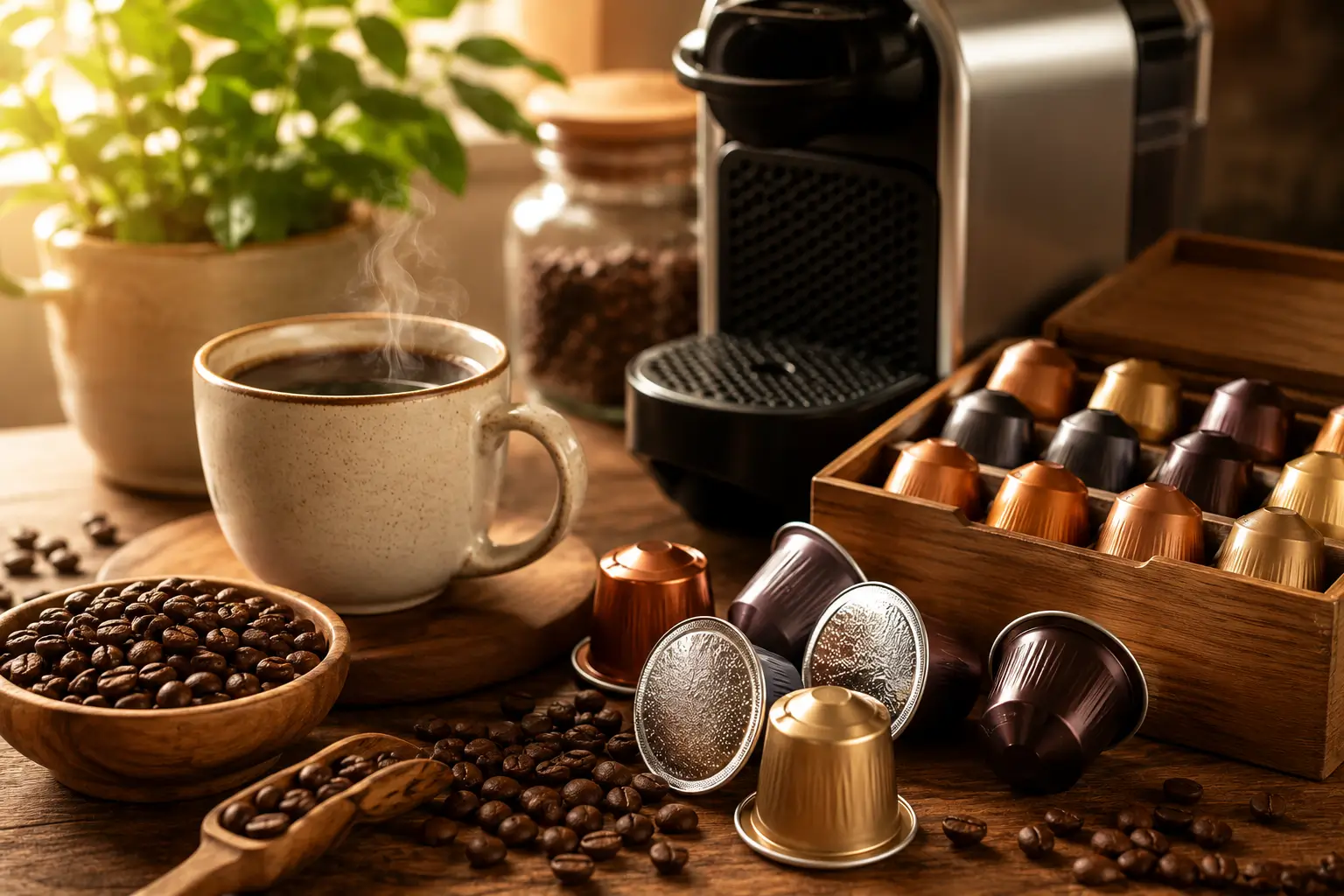
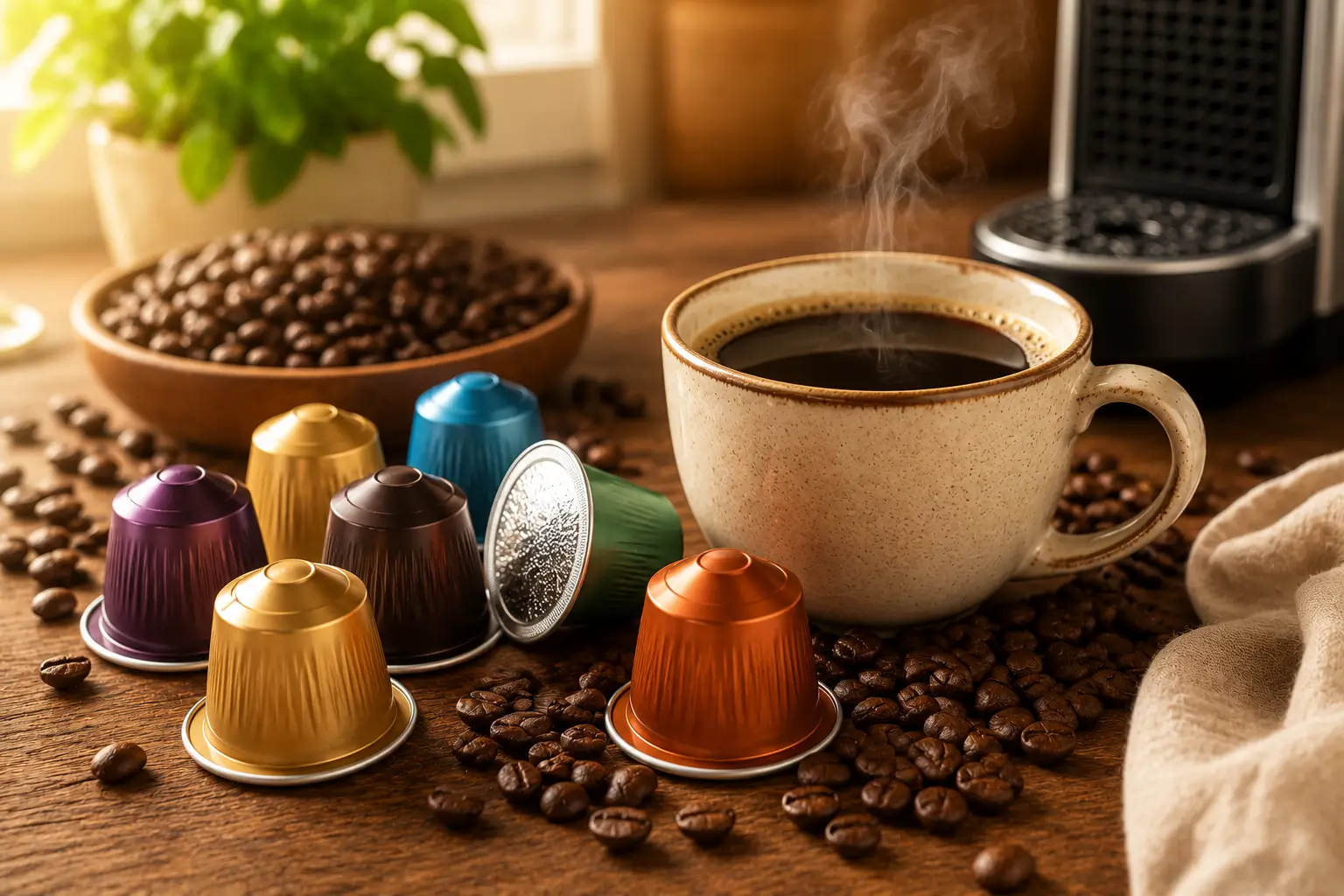
Not every coffee pod is a K-Cup. Nespresso capsules, soft coffee pods, E.S.E. pods, and other systems use different shapes and brewing methods, so always check machine compatibility before buying.
Key Takeaways
What Are K Cups?
A K-Cup is a small, sealed single-serve pod designed to brew one drink in a compatible Keurig-style coffee maker. Most coffee K-Cups contain pre-measured ground coffee inside an internal filter.
K-Cup is Keurig’s name for its cup-shaped single-serve pod format. It is one type of coffee pod, not a general name for every pod or capsule.
During brewing, the machine punctures the pod and passes hot water through the coffee. The brewed drink then flows directly into your cup.
| Feature | K-Cups |
|---|---|
| Format | Cup-shaped single-serve pod |
| Main use | Brewing one drink at a time |
| Contents | Usually ground coffee or another beverage ingredient |
| Machine type | Compatible Keurig-style brewer |
| Main benefit | Fast and convenient brewing |
Simple answer: A K-Cup is a sealed single-serve pod used in a compatible Keurig-style brewer. Most coffee K-Cups contain ground coffee that is brewed when hot water passes through the pod.
What Are K-Cups Made Of?
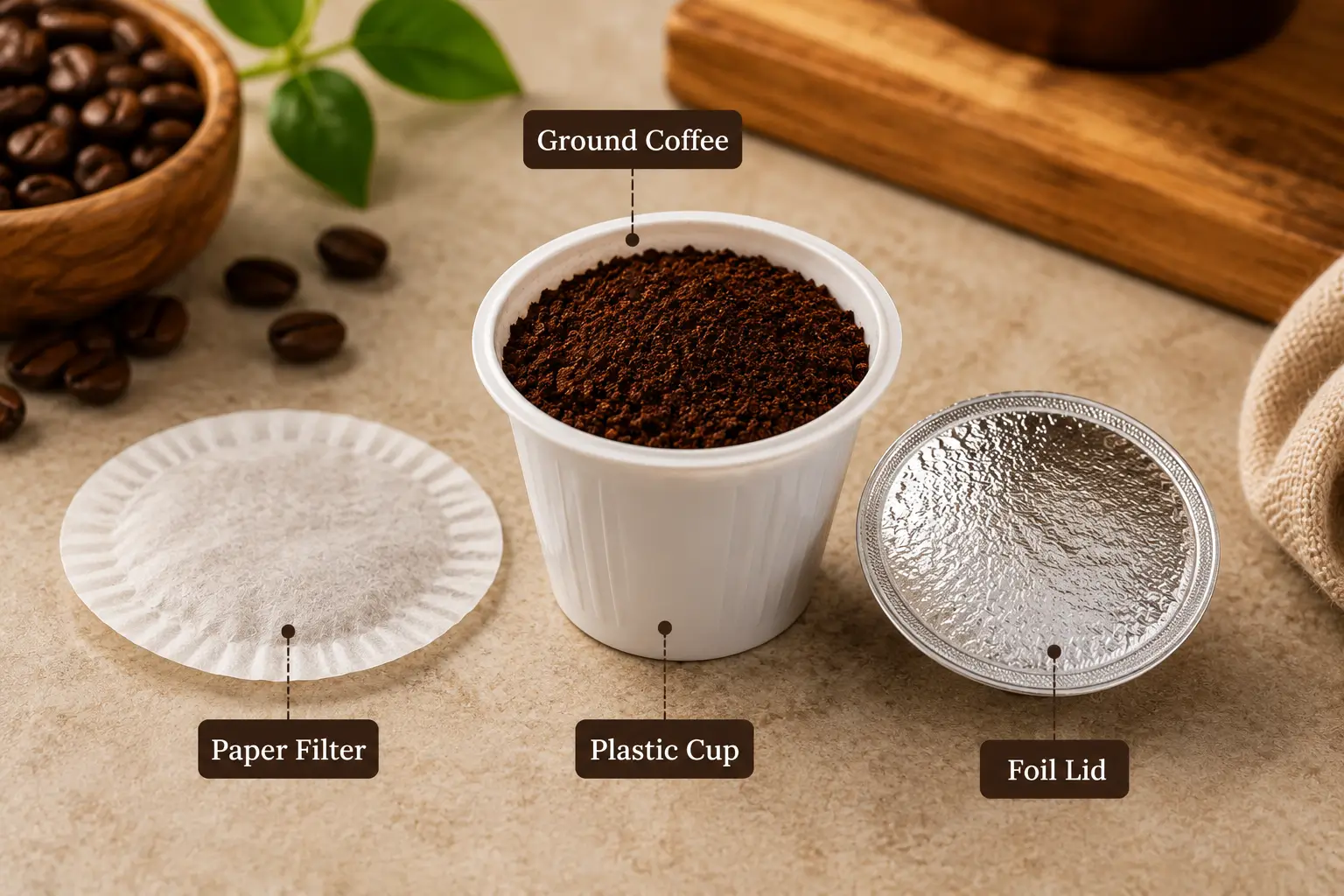
A typical K-Cup contains a small outer cup, a sealed foil lid, an internal filter, and the beverage ingredients inside. For coffee K-Cups, those ingredients are usually roasted and ground coffee.
The exact materials can vary by brand and product, so check the packaging if recycling or pod material is important to you.
How Do K Cups Work?
A K-Cup works inside a compatible Keurig-style brewer. When you close the brewer, the machine punctures the pod and sends hot water through the coffee grounds.
The internal filter keeps the grounds inside the pod while the brewed coffee flows into your cup.
Then simple steps:
Types of K Cups
K-Cups are available for different drinks and preferences. Coffee options can vary by roast, caffeine level, and flavor, while compatible pods are also available for tea, cocoa, and other beverages.
| K-Cup Type | Best For | Common Features |
|---|---|---|
| Regular Coffee K-Cups | Daily coffee drinkers | Light, medium, and dark roasts |
| Decaf K-Cups | People reducing caffeine | Decaffeinated coffee |
| Flavored K-Cups | People who enjoy flavored coffee | Vanilla, caramel, hazelnut, mocha |
| Tea K-Cups | Tea drinkers | Black, green, and herbal tea |
| Hot Cocoa K-Cups | Non-coffee drinks | Hot chocolate and cocoa drinks |
| Reusable K-Cup Filter | Using your own ground coffee | Refillable filter for compatible brewers |
K-Cup Compatibility
Most K-Cups are designed for compatible Keurig-style brewers, but compatibility can vary by brewer model and pod brand.
Not every single-serve coffee pod works in a Keurig brewer, so compatibility should always be confirmed before purchase.
Benefits of K-Cups + Drawbacks: Pros and Cons of K-Cups
| Pros | Cons |
|---|---|
| Fast single-cup brewing | Can cost more per serving than ground coffee |
| Pre-measured coffee | Creates single-use packaging |
| Little cleanup | Flavor and quality vary by product |
| Many coffee and beverage choices | Requires a compatible brewer |
K-Cups are useful for convenience and portion control, but they may not be the best choice for people focused mainly on lowest cost or reducing single-use packaging.
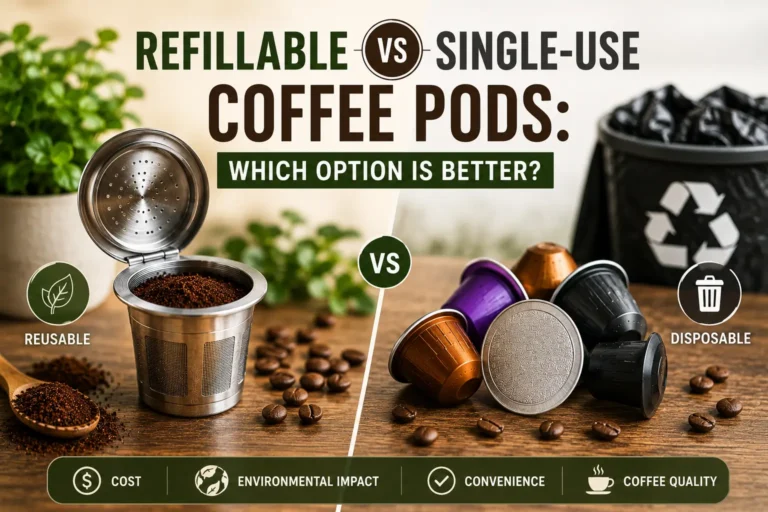
If reducing single-use pod waste is important to you, a reusable K-Cup ↗ filter may be another option to compare.
How Should K-Cups Be Stored?
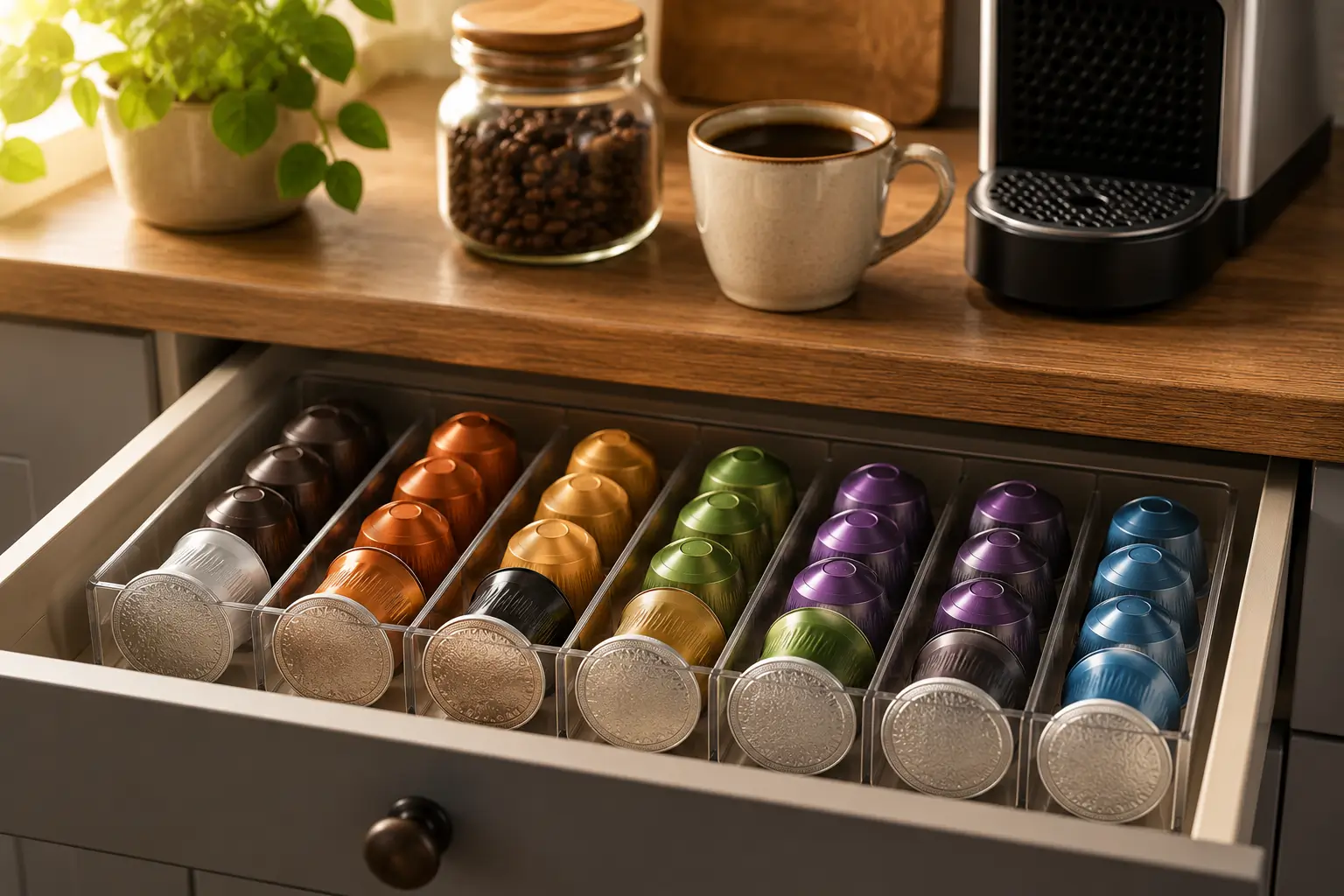
K-Cups are sealed to help protect the coffee from air, moisture, and light before brewing. However, flavor quality can still decline over time.
Store unopened K-Cups in a cool, dry place away from direct sunlight, heat, and moisture. Keep them in their original packaging or another dry storage area until you are ready to use them.
Check the best-before date on the package if you are storing pods for a long time.
If you want more detail about shelf life and whether older pods are still usable, read our guide on How Long Do Coffee Pods Last? ↗
Frequently Asked Questions
A K-Cup is a sealed single-serve pod designed to brew one drink in a compatible Keurig-style brewer.
Yes, K-Cup coffee is real regular ground coffee.
K-Cup is Keurig’s name for its cup-shaped single-serve pod format.
Most coffee K-Cups contain roasted and ground coffee, not instant coffee. Some specialty drink pods may use different ingredients.
The brewer punctures the pod and sends hot water through the coffee. The internal filter keeps the grounds inside while the brewed coffee flows into your cup.
K-Cups are one type of coffee pod, but not every coffee pod is a K-Cup. Other systems use different pod shapes and machines.
It is still brewed coffee when the pod contains ground coffee. The main difference is that the coffee is pre-measured inside a single-serve pod.
Standard K-Cup-style pods share a similar format, but compatibility can still vary by brewer model and product. Always check the package before buying.
Standard single-use K-Cups are designed for one brew. Reusable K-Cup filters are separate products made to be filled with your own ground coffee.Can K-Cups be reused?
Final Thoughts
K-Cups are single-serve pods designed to make one drink quickly in a compatible Keurig-style brewer. Most coffee K-Cups contain pre-measured ground coffee inside a sealed pod with an internal filter.
They are convenient and easy to use, but not every coffee pod is a K-Cup. Before buying, check machine compatibility, the type of drink inside the pod, and whether a single-use or reusable option better fits your routine.