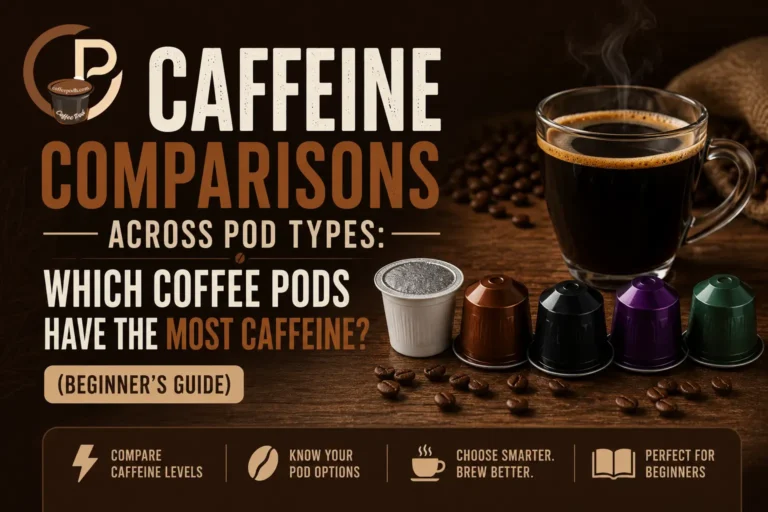

Caffeine Content in Coffee Pods: Complete Beginner’s Guide
Many coffee drinkers want stronger coffee for energy and focus, but understanding caffeine levels in single-serve coffee capsules can feel confusing. Some espresso pods taste very strong but contain less total caffeine than larger coffee cups, while flavored coffee pods may seem sweet but still contain moderate caffeine levels.
I had the same confusion when I first started comparing different pod systems at home. Some blends gave a strong energy boost, while others tasted bold but actually contained lower caffeine per serving.
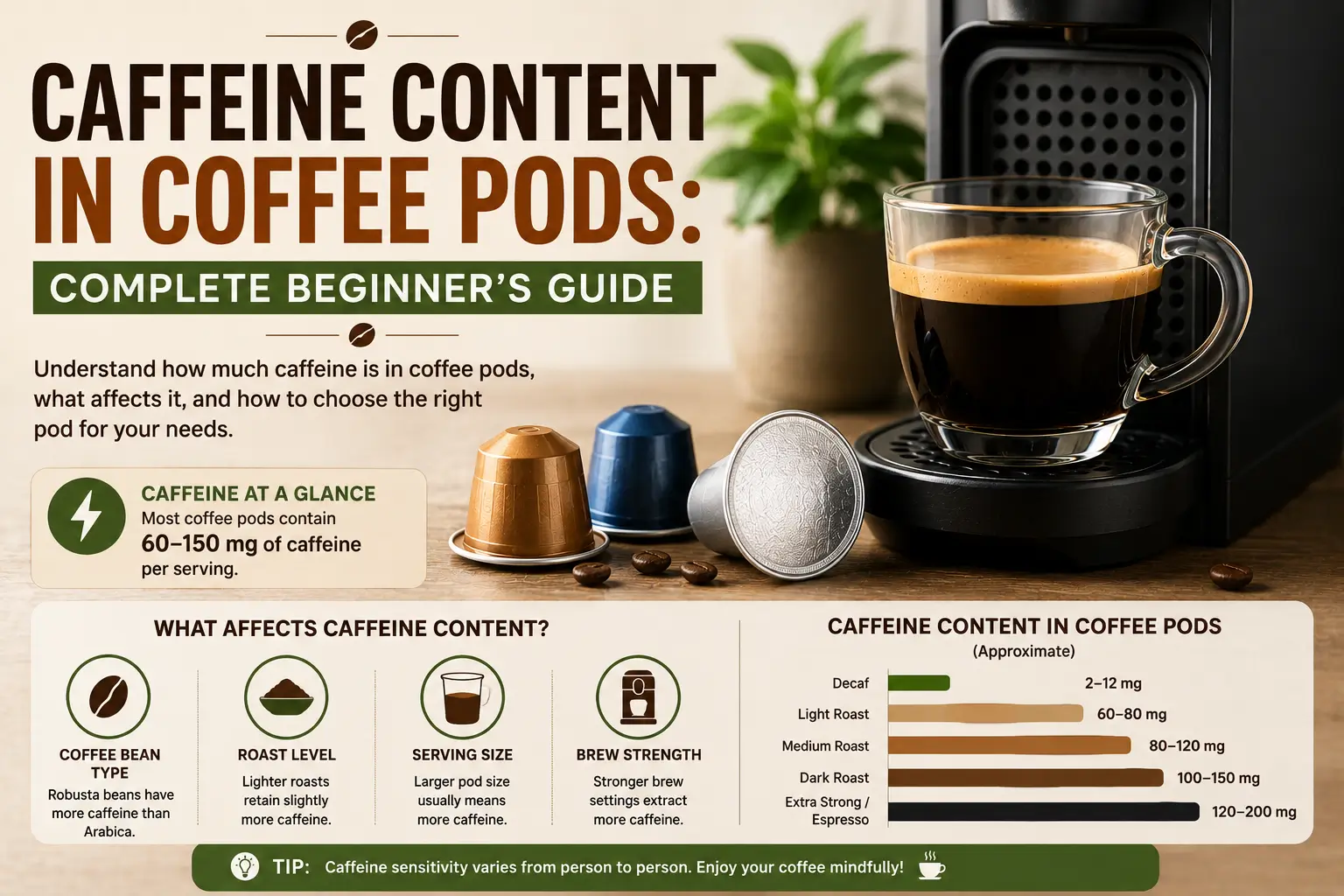
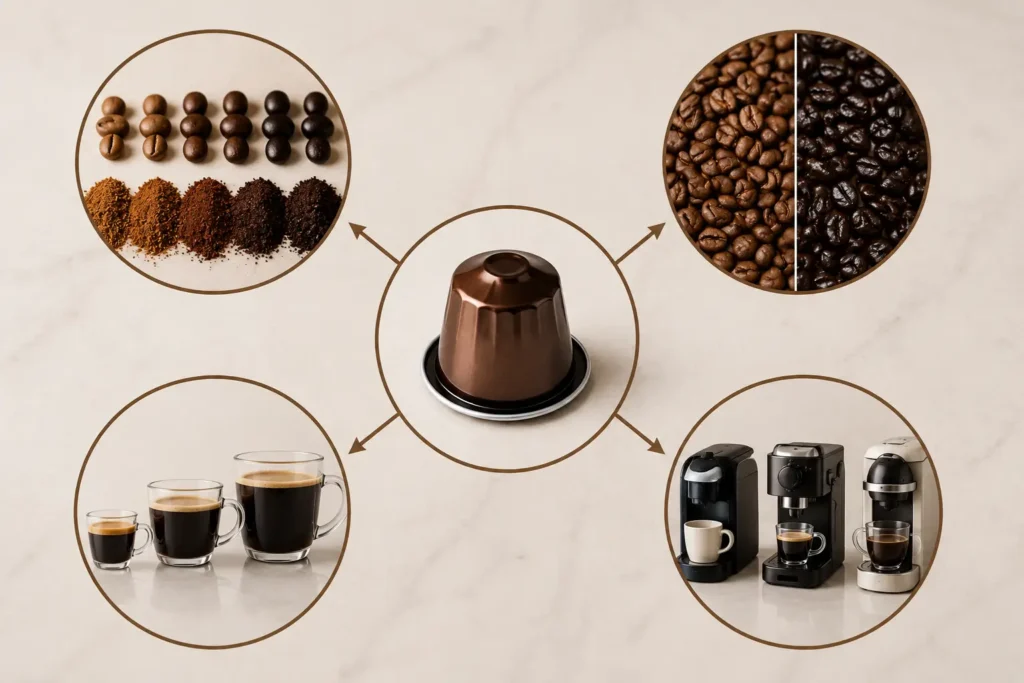
After testing different pod machines, roast levels, and brewing styles, I realized that caffeine strength depends on much more than flavor alone. The Caffeine Content in Coffee Pods can vary based on roast level, pod size, coffee bean type, and brewing method.
Systems like Keurig and Nespresso use different brewing styles that can significantly change caffeine concentration and serving size. In this guide, you will learn how caffeine levels work in coffee capsules, which pods are strongest, and how to choose the right coffee strength for your daily routine.
Key Takeaways
How Much Caffeine Is in Coffee Pods?
The amount of caffeine in single-serve coffee capsules usually ranges from:
Caffeine levels depend on:
Some high-caffeine blends may contain even more caffeine than regular pod coffee.
Coffee Pod Caffeine Comparison Chart
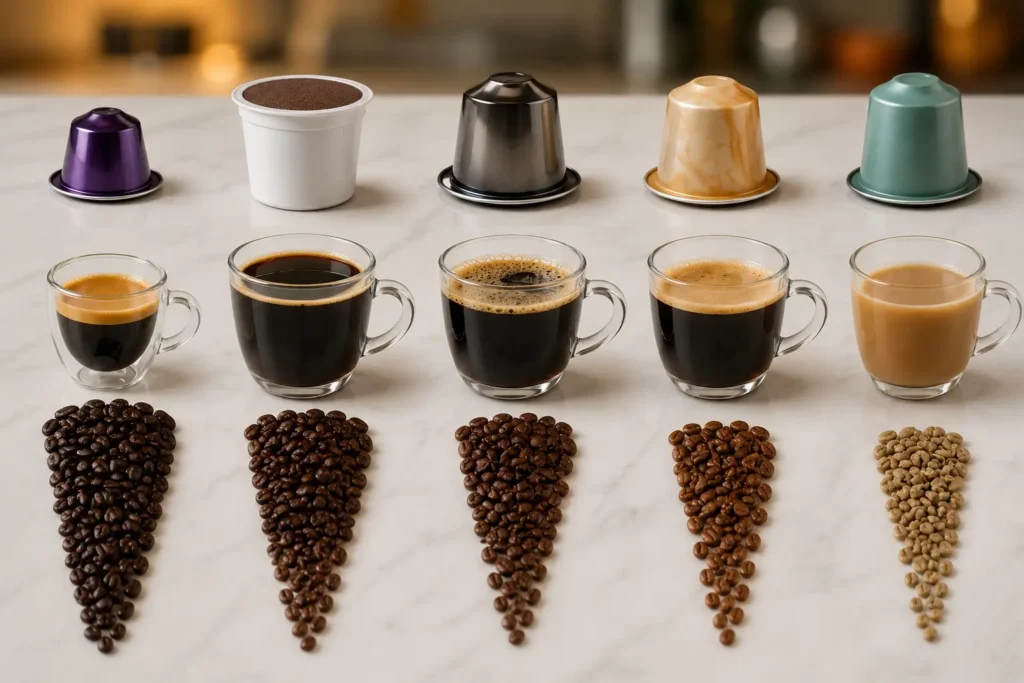
| Pod Type | Average Caffeine |
| Standard K-Cup | 75–120 mg |
| Espresso Pod | 40–80 mg |
| Double Espresso Pod | 100–165 mg |
| Dark Roast Pod | 80–130 mg |
| Decaf Coffee Pod | 2–15 mg |
What Affects Caffeine Levels in Coffee Capsules?
Several factors affect how much caffeine ends up in your cup.
Coffee Bean Type
Coffee pods made with robusta beans usually contain more caffeine than arabica blends.
| Bean Type | Average Caffeine |
| Arabica Beans | Lower caffeine |
| Robusta Beans | Higher caffeine |
Many high-caffeine coffee pods use robusta blends for stronger energy effects.
Roast Level
Many people believe dark roast coffee contains the most caffeine, but the difference is usually smaller than expected.
Lighter roast coffee often keeps slightly more caffeine by volume because the beans are roasted for less time.
Dark roast coffee usually tastes:
However, stronger flavor does not always mean more caffeine.
Expert Tip:
Strong coffee flavor and high caffeine are not always the same thing. Some smooth medium roast blends contain more caffeine than dark roast capsules.
Pod Size
Larger coffee pods usually contain:
This is why some large coffee capsules may contain more caffeine than concentrated espresso shots.
Brewing Method
Espresso extraction creates more concentrated coffee, while drip brewing creates larger servings with more total liquid.
This changes caffeine concentration and serving size significantly.
Espresso Pods vs Coffee Pods Caffeine
Many beginners think espresso pods contain the most caffeine because they taste stronger.
However, espresso is more concentrated, while standard coffee pods often contain more total caffeine because they produce larger drinks.
| Drink Type | Typical Serving | Average Caffeine |
| Espresso Pod | Small shot | 40–80 mg |
| Standard Coffee Pod | Large cup | 75–120 mg |
In my experience, some medium roast coffee capsules produced a stronger energy boost than concentrated espresso pods simply because of the larger serving size.
Do Flavored Coffee Pods Contain Caffeine?
Yes. Most flavored coffee capsules still contain caffeine unless they are labeled decaf.
Popular flavored blends include:
The flavoring itself usually does not affect caffeine levels significantly.
Most flavored coffee capsules use:
Which Coffee Pods Are the Strongest?
The strongest coffee capsules usually include:
Some specialty brands also produce ultra-strong coffee pods designed for:
Dark roast flavor may taste stronger, but caffeine levels depend more on bean type and pod size.
Expert Tip:
Double espresso capsules and robusta blends usually create the strongest caffeine effects in pod coffee systems.
Do Decaf Coffee Pods Still Contain Caffeine?
Yes. Decaf coffee capsules are not completely caffeine-free.
Most decaf pods still contain:
This small amount is much lower than standard pod coffee.
Decaf options are often preferred by:
Is Pod Coffee Stronger Than Regular Coffee?
Coffee strength depends on:
Espresso capsules usually taste stronger because they are concentrated.
However, larger drip-style coffee pods may contain more total caffeine than espresso shots.
| Brewing Style | Flavor Strength | Total Caffeine |
| Espresso Pod | Very Strong | Moderate |
| Large Coffee Pods | Medium | Higher total caffeine |
| Decaf Pods | Mild | Very Low |
Safe Daily Caffeine Intake
Most healthy adults can safely consume moderate caffeine daily.
According to general FDA guidance, around:
is considered moderate for many adults.
However, caffeine sensitivity varies between people.
Some users may experience:
especially when drinking multiple high-caffeine pods daily.
How to Choose the Right Coffee Pod Strength?
Choosing the right coffee strength depends on your preferences and caffeine tolerance.
Choose Medium Caffeine If You Want:
Choose High-Caffeine Pods If You Want:
Choose Decaf Pods If You Want:
Reusable coffee pods can also help users customize caffeine strength more easily.
Common Beginner Mistakes With Coffee Pod Caffeine
Many beginners misunderstand pod coffee strength.
Confusing Flavor With Caffeine
Strong taste does not always mean high caffeine.
Ignoring Serving Size
Large coffee pods may contain more total caffeine than espresso shots.
Drinking Multiple Pods Too Quickly
High-caffeine blends can add up fast during busy mornings.
Assuming Flavored Coffee Is Weak
Flavored coffee capsules often contain similar caffeine levels to regular coffee.
Coffee Pod Caffeine Myths vs Facts
| Myth | Fact |
|---|---|
| Espresso pods always contain the most caffeine | Larger coffee pods may contain more total caffeine |
| Dark roast always means stronger caffeine | Roast flavor and caffeine are different |
| Flavored coffee pods are caffeine-free | Most still contain normal caffeine |
| Decaf coffee contains zero caffeine | Decaf still contains small amounts |
Buying Checklist for Stronger Coffee Pods
Before buying coffee capsules, check:

Conclusion
After comparing different pod systems and brewing styles over time, it becomes clear that caffeine levels depend on much more than just coffee flavor. In my experience, serving size, bean type, roast level, and brewing method all play a major role in how strong pod coffee feels during daily use. Some espresso capsules tasted much stronger but actually contained less total caffeine than larger coffee pods, while robusta blends produced noticeably higher energy effects.
Medical Disclaimer
Important Health Information
This article is provided for general information and educational purposes only. It is not medical advice and should not be used to diagnose, treat, prevent, or manage any health condition.
Caffeine affects people differently based on age, health, medicines, pregnancy, sensitivity, and total daily intake.
Speak with a qualified healthcare professional if you have ongoing symptoms, a medical condition, take regular medication, are pregnant or breastfeeding, or are concerned about your caffeine intake.