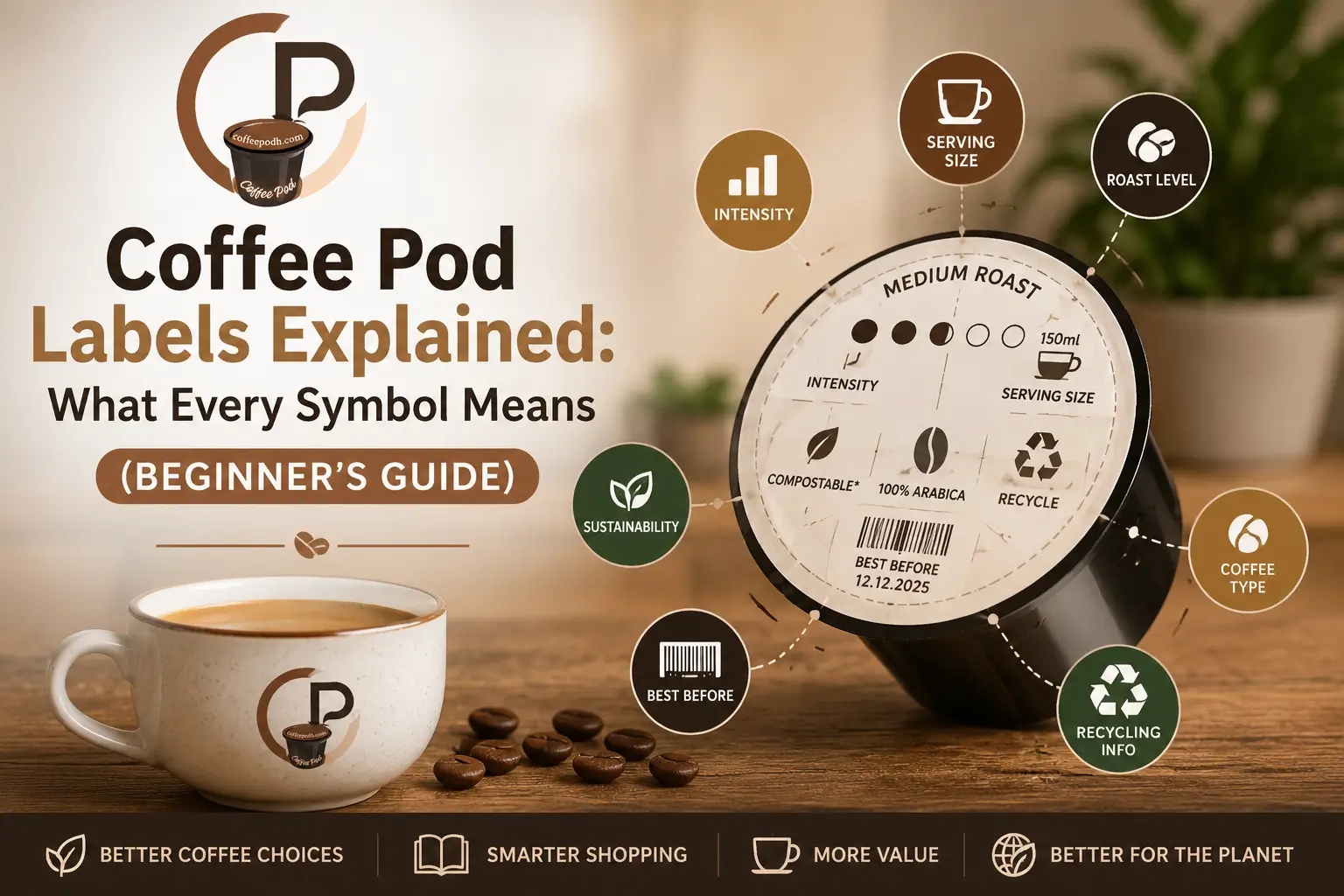

Coffee Pod Labels Explained: What the Symbols and Numbers Mean
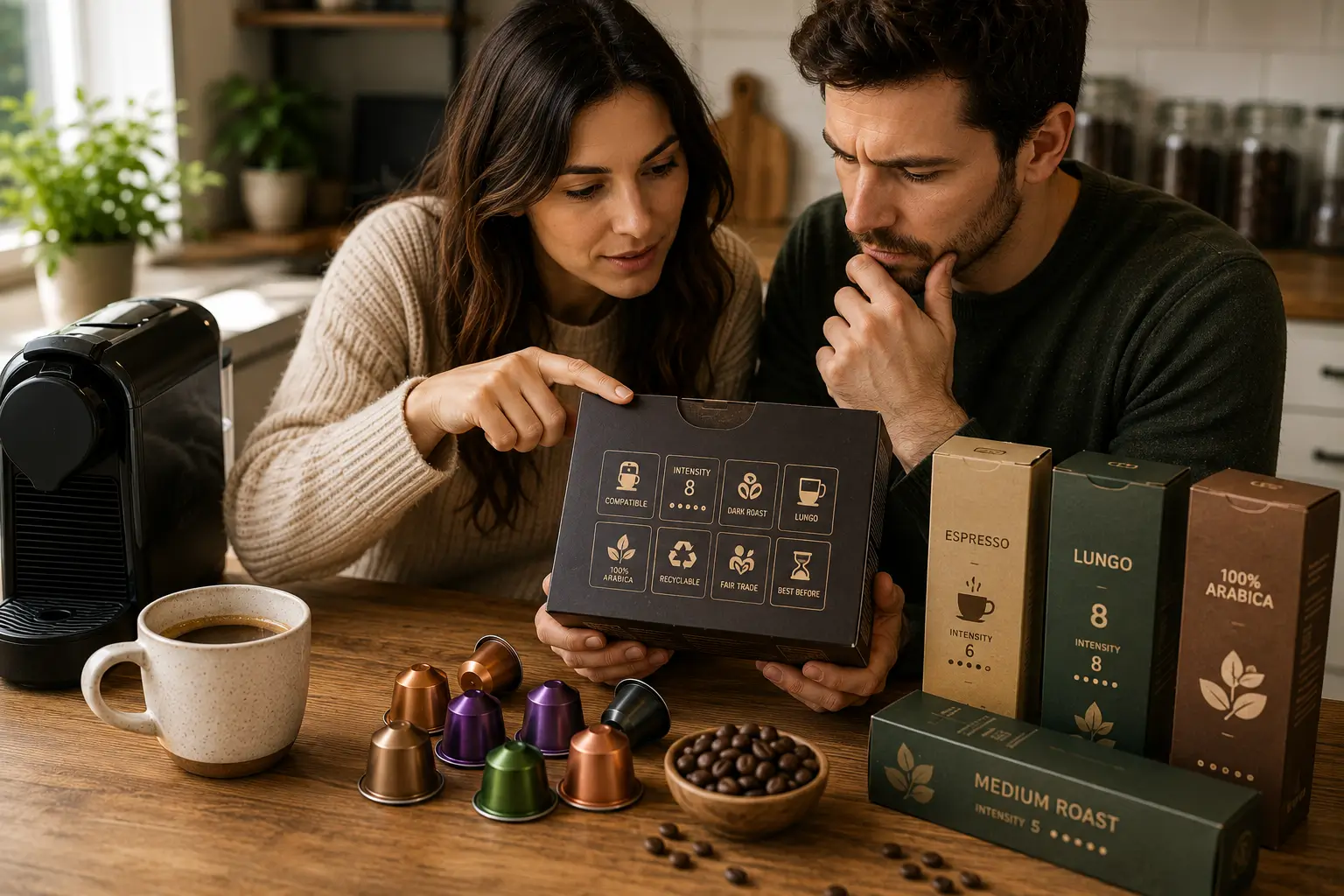
Coffee pod packaging can look confusing at first ↗. You may see numbers, roast levels, cup-size icons, bean names, compatibility symbols, certifications, and recycling labels without knowing what they actually mean.
These details can help you choose the right pod before you buy. They can tell you whether a capsule fits your machine, how strong or dark the coffee may taste, what cup size it is designed for, and whether there are special storage, ingredient, or disposal instructions.
In this guide, you will learn how to read coffee pod labels step by step, including intensity numbers, roast levels, flavor notes, coffee bean information, compatibility symbols, freshness dates, and sustainability labels.
Important Note:
Coffee pod labels are not fully standardized across brands. An intensity rating, color, or cup-size symbol used by one brand may not mean exactly the same thing on another brand’s packaging. Always check the manufacturer’s own guidance when comparing different pod systems.
Key Takeaways
How to Read a Coffee Pod Label?
Start with the information that affects whether the pod will work in your machine and how the coffee is likely to taste.
Check these details in this order:
Quick Answer:
Coffee pod labels usually show machine compatibility, coffee type, roast or intensity, cup size, flavor notes, and sometimes ingredients, freshness, or sustainability information. Check compatibility first, then use the roast, intensity, and flavor description to choose a pod that matches your taste.
Why Coffee Pod Labels Matter?
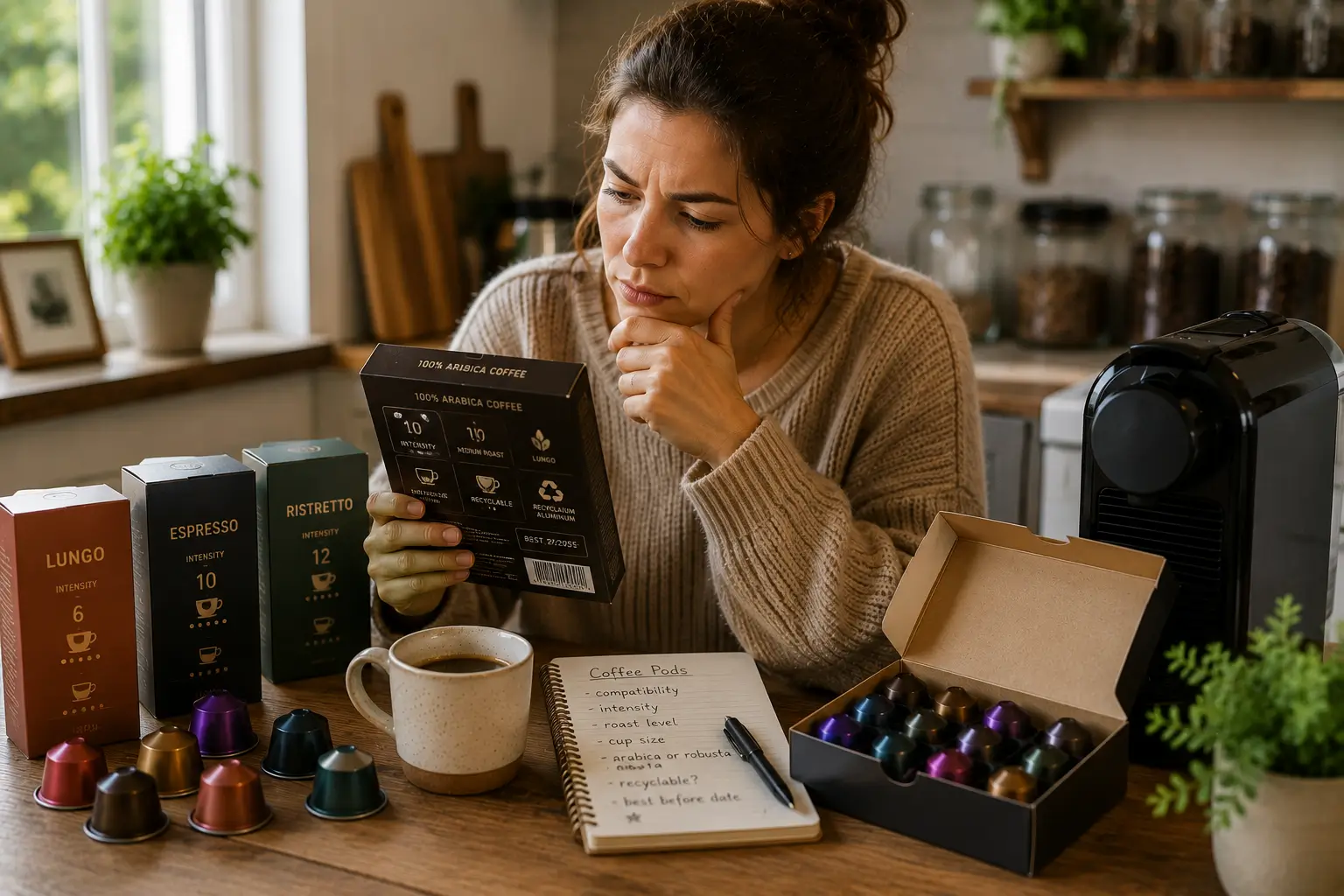
Every coffee pod box contains more than just marketing information. The label can help you understand whether the pod will work with your machine, how strong the coffee may taste, what cup size to use, and how the packaging should be stored or disposed of.
A quick look at the packaging can answer useful questions such as:
Reading these details before buying can help you compare coffee pods more accurately and avoid common mistakes, especially when trying a new brand or pod system.
The Main Types of Information Found on Coffee Pod Packaging
Coffee pod packaging can include several types of information. The most useful details are the ones that help you check compatibility, predict flavor, choose the right cup size, and understand storage or disposal instructions.
| Label Category | What It Tells You | Why It Matters |
|---|---|---|
| Machine Compatibility | Which coffee machines the pods fit | Prevents buying the wrong pods |
| Roast Information | Light, medium, or dark roast | Gives an idea of flavor style |
| Intensity Rating | Expected flavor strength | Helps match your taste preference |
| Cup Size | Recommended brewing size | Produces the best flavor balance |
| Coffee Bean Information | Arabica, Robusta, or blend | Explains the coffee’s character |
| Sustainability Labels | Recycling or environmental details | Helps environmentally conscious buyers |
| Certifications | Organic or ethical sourcing | Shows production standards |
| Best-Before Date | Freshness information | Helps maintain coffee quality |
The sections below explain what each of these labels means and how to use them when choosing coffee pods.
Machine Compatibility Symbols Explained
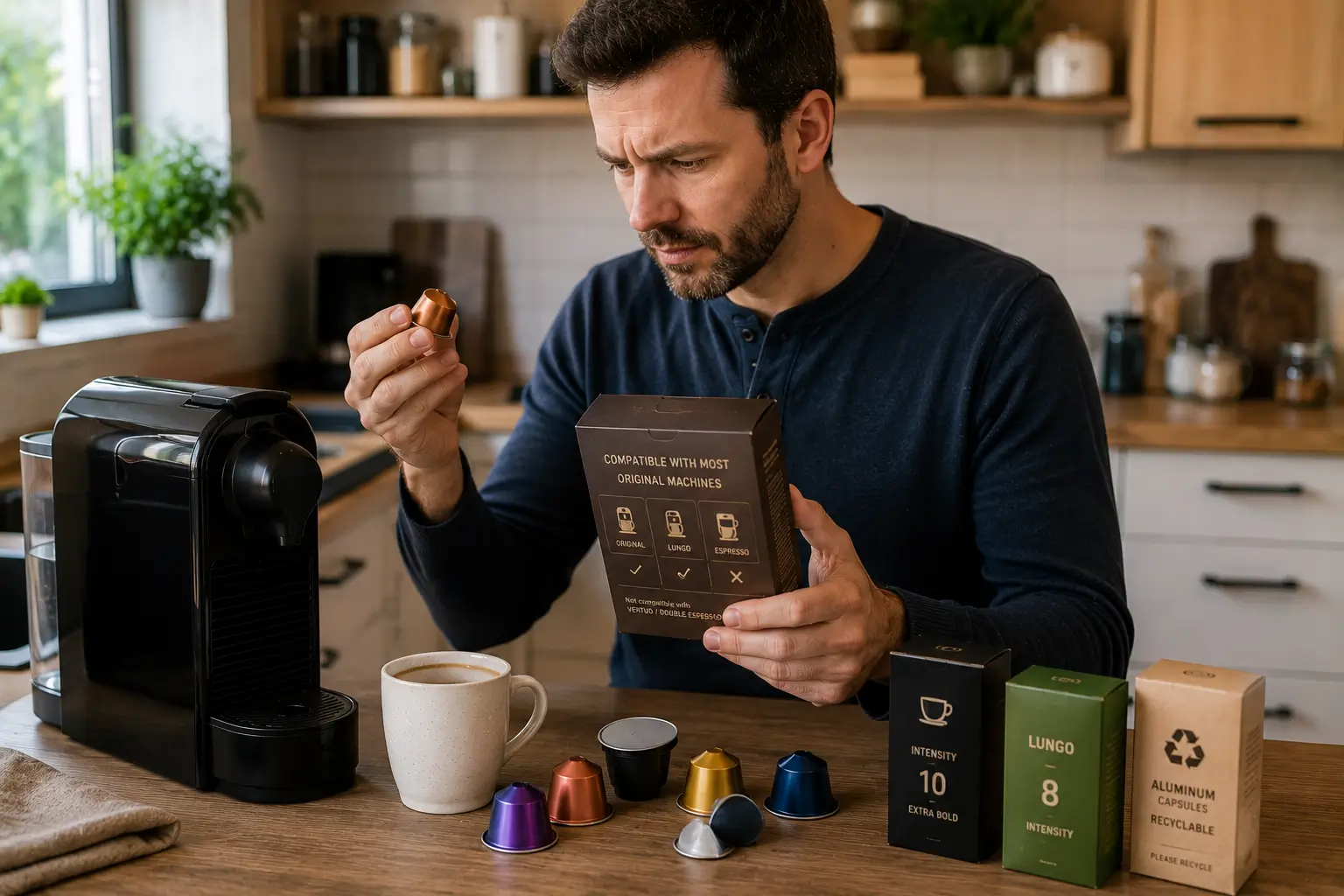
Machine compatibility should be the first thing you check on a coffee pod label. Pods made for one capsule system may not fit or brew correctly in another machine.
Look for the machine system or compatibility statement printed on the box before buying.
These are examples of common coffee systems. Compatibility can vary by product, so always confirm the exact machine or system named on the packaging.
Why Compatibility Matters
Buying the wrong pod type is one of the easiest mistakes to avoid. Even when two capsules look similar, their shape, size, sealing system, or brewing method may be different.
For example:
Checking compatibility before buying can prevent wasted pods and help avoid problems during brewing.
Tip: Always check machine compatibility before comparing roast, flavor, or intensity. If the pod does not fit your machine, the other label information will not matter.
What Do Roast Labels Mean?
Most coffee pod boxes show a roast level to give you a general idea of how the coffee may taste.
Common roast labels include:
Roast level is a useful taste guide, but it does not tell you exactly how much caffeine is in the pod.
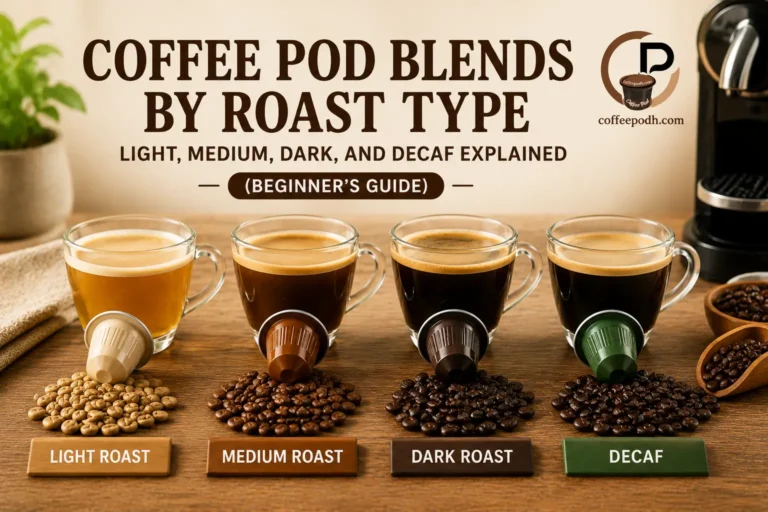
If you’d like a detailed comparison of roast styles and how they affect taste, see our guide on Coffee Pod Blends by Roast Type ↗: Light, Medium, Dark, and Decaf Explained.
Understanding Intensity Numbers
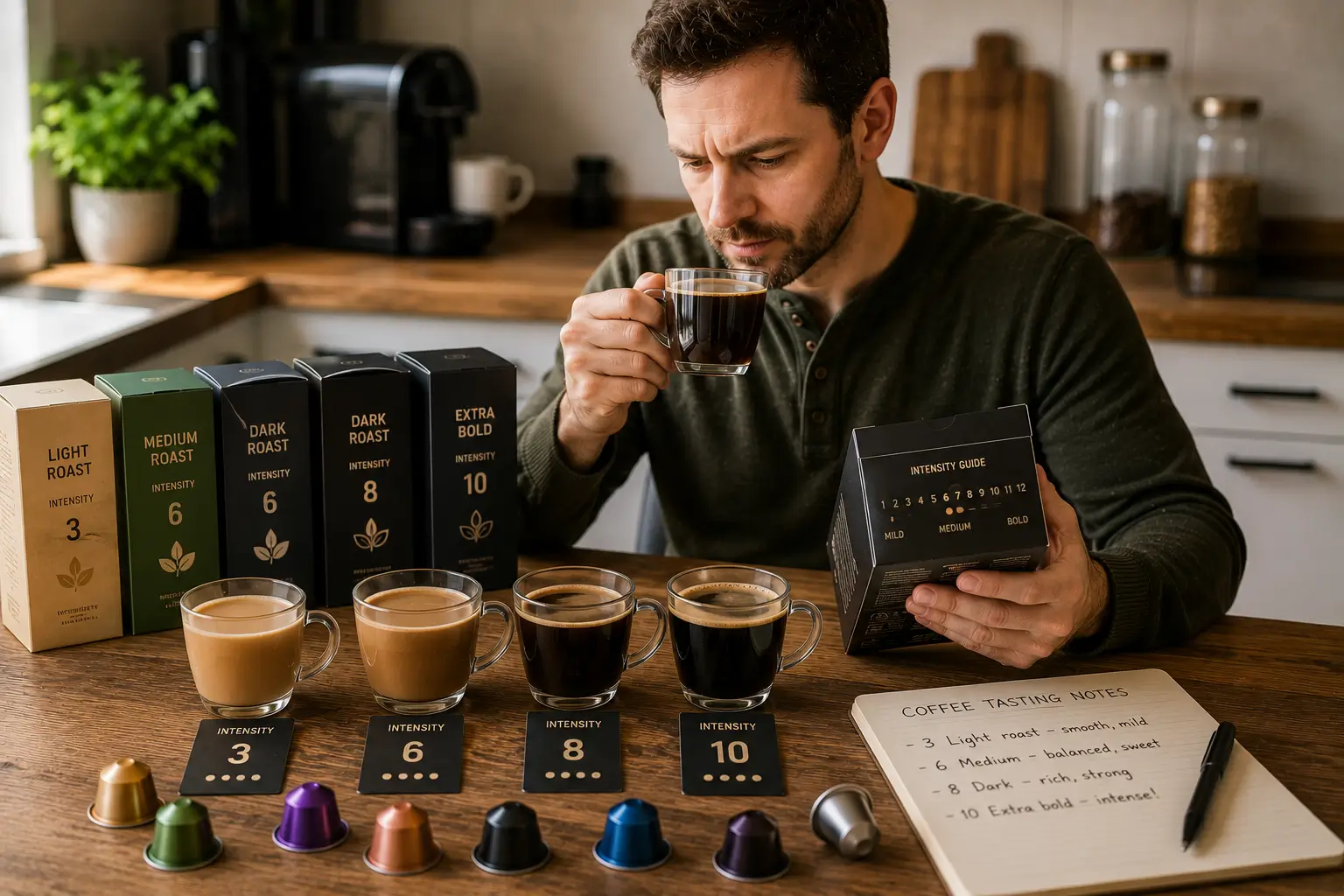
Many coffee pod brands use an intensity number, such as 5, 8, 10, or 12, to describe how bold or intense the coffee is expected to taste.
Intensity does not mean caffeine level. A higher intensity number usually refers to flavor strength, roast character, body, or bitterness rather than the exact amount of caffeine.
For example:
| Intensity | General Taste |
|---|---|
| 1–4 | Mild and smooth |
| 5–7 | Balanced and rounded |
| 8–10 | Rich and bold |
| 11–13 | Full-bodied and intense |
Important: Intensity scales vary by brand. An intensity 8 from one brand may not taste the same as an intensity 8 from another.
Use the intensity number together with the roast level and flavor description. This gives you a better idea of whether the coffee will taste mild, balanced, bold, or intense.
If you want to understand how intensity ratings work in more detail, including the difference between mild, bold, and strong coffee, read our Coffee Pods Flavor Intensity Guide ↗.
Cup Size Symbols Explained
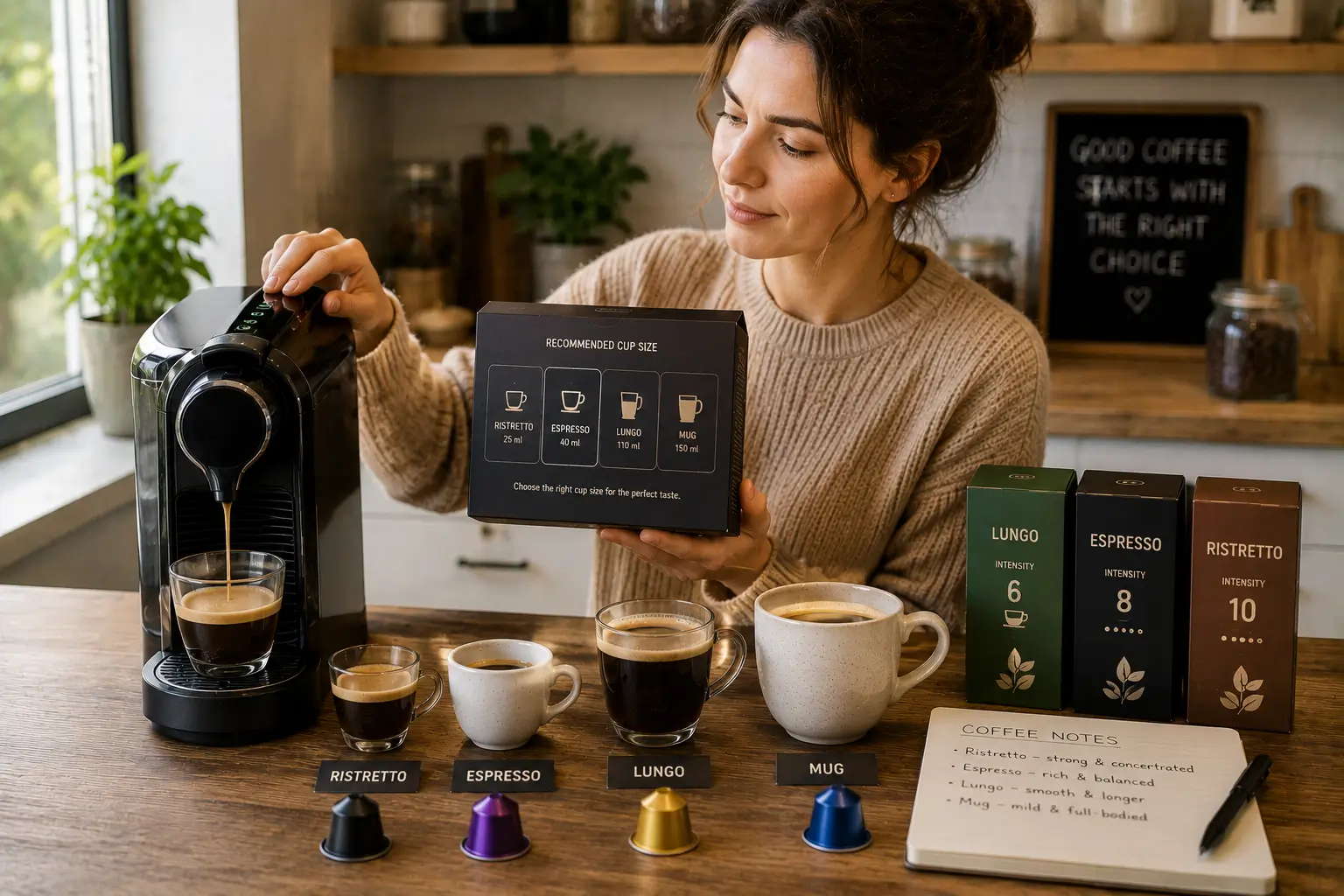
Coffee pod packaging may also show a recommended cup size. This tells you how much water the pod is designed to brew with and helps you get the intended flavor strength.
Here are the most common cup size labels.
| Cup Size | Typical Volume* | What It Means |
|---|---|---|
| Ristretto | 25–30 ml | Very short, concentrated coffee |
| Espresso | 35–40 ml | Small, concentrated coffee |
| Lungo | 80–110 ml | Longer coffee with more water |
| Mug | 150–230 ml | Larger everyday serving |
Typical volumes can vary between brands and coffee machines. Always follow the cup-size guidance shown on the specific pod or manufacturer instructions.
Why Cup Size Matters
Using much more or much less water than recommended can change the taste of the coffee.
For example:
Following the recommended cup size usually gives you the best balance of flavor, aroma, and body.
Coffee Bean Labels Explained
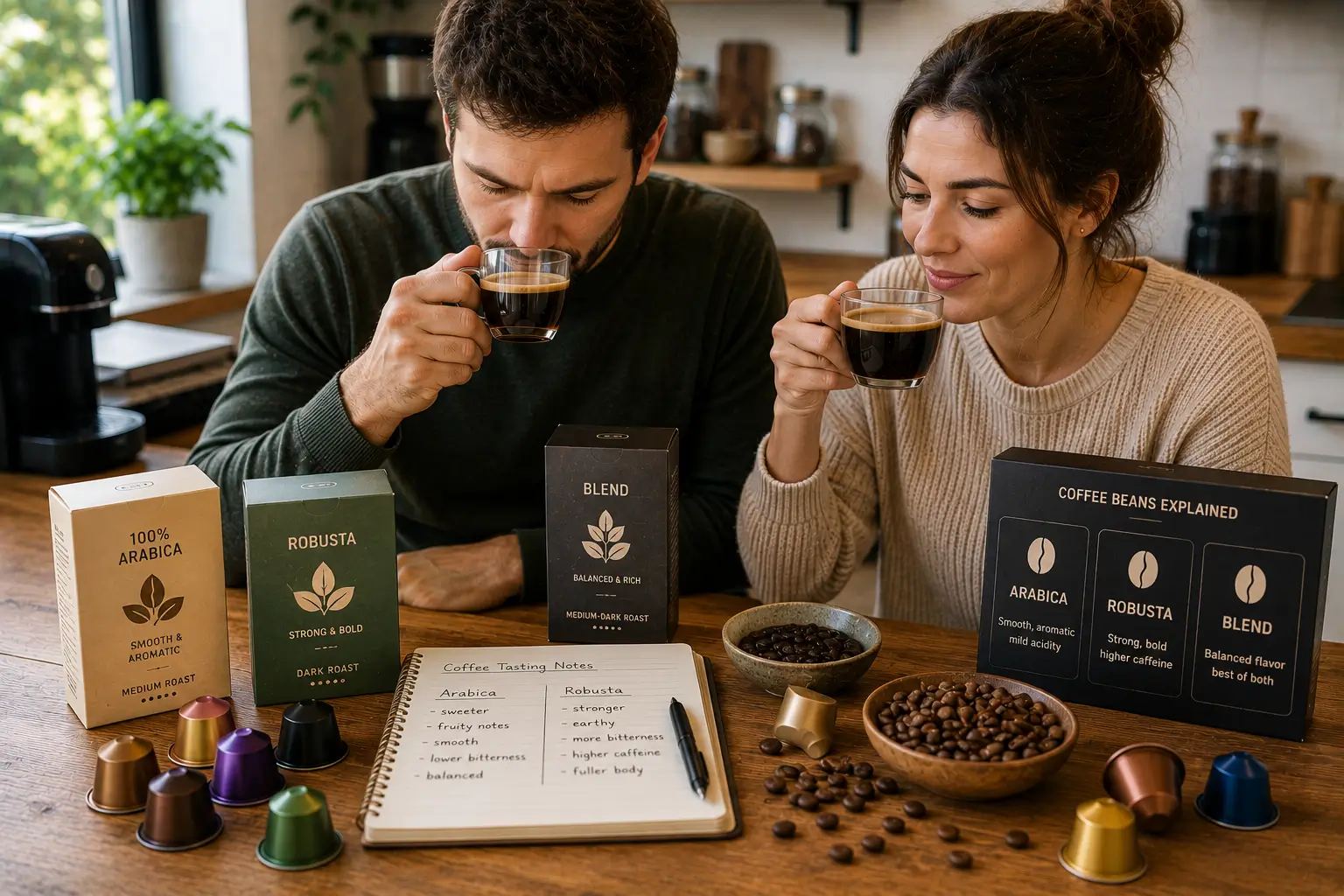
Some coffee pod labels tell you which type of coffee bean is used. The most common labels are Arabica, Robusta, or a blend of both.
Bean type can give you a general idea of the coffee’s flavor, body, and bitterness, but the final taste also depends on roast level and blend.
Some products contain only one type of bean, while others use a blend of both.
100% Arabica means the coffee contains only Arabica beans.
Arabica coffee is often associated with:
Many specialty coffee pods use Arabica beans, but the exact taste still depends on the roast and origin.
Robusta
Robusta beans often produce a stronger, heavier coffee with:
Robusta also generally contains more caffeine than Arabica, although the exact amount in a pod still depends on the dose and recipe.
Arabica and Robusta Blend
Some coffee pods combine Arabica and Robusta beans to balance different characteristics.
A blend may combine:
The exact balance depends on the percentage of each bean used, which is not always shown on the package.
What Does “Single Origin” Mean?
Single origin means the coffee comes from one country, region, farm, or defined growing area rather than being blended from several places.
You may see origins such as:
Single-origin labels can help you understand where the coffee comes from and may give clues about its flavor profile.
If you would like to learn more, read our guide on Single-Origin Coffee Pods ↗: What Makes Them Different?
Sustainability Symbols Explained
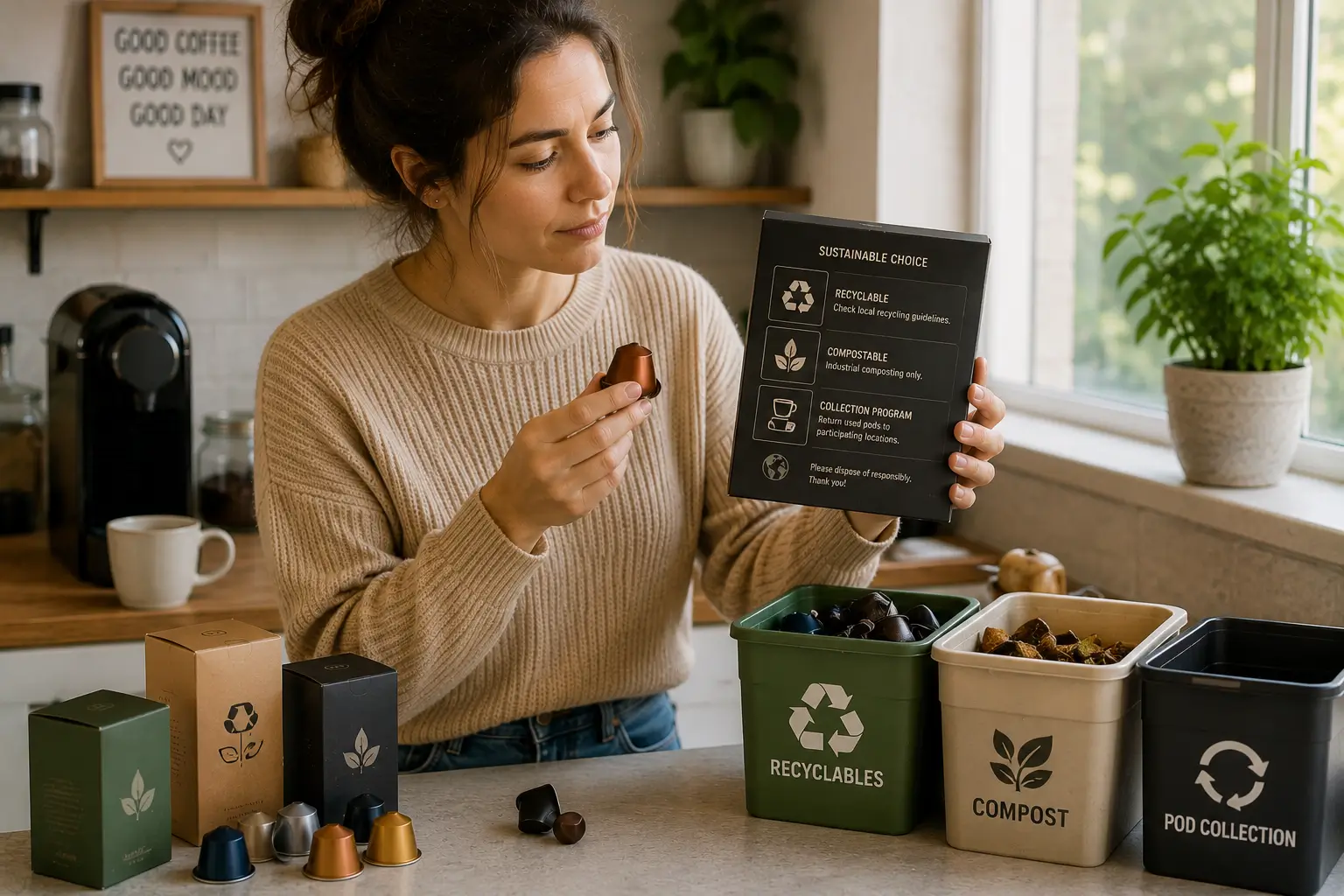
Coffee pod packaging may include recycling, composting, or other environmental symbols. These labels can help you understand how the pod or packaging should be disposed of.
However, similar-looking symbols do not always mean the same thing, so always read the disposal instructions printed on the package.
However, they are often misunderstood.
Recyclable
A recyclable label means some or all of the pod or packaging may be accepted for recycling.
Depending on the product, you may need to:
Do not assume a recyclable symbol means the capsule can go directly into your household recycling bin. Follow the instructions on the packaging and local recycling rules.
Compostable
A compostable label means the material is designed to break down under specific composting conditions.
Check the label carefully because compostable does not always mean suitable for home composting.
Home Compostable
Home compostable means the product is designed to break down in a home composting system under suitable conditions.
Follow the manufacturer’s instructions because decomposition time and conditions can vary.
Industrially Compostable
Industrially compostable means the product is intended for a commercial or industrial composting facility where controlled conditions are used.
It usually should not be placed in a home compost bin unless the packaging also specifically says it is home compostable.
Certification Labels Explained
Coffee pod packaging may also display certification labels. These symbols usually provide information about how the coffee was produced, sourced, or verified under a particular standard.
Common examples may include:
| Certification | What It Means |
|---|---|
| Organic | indicates the coffee was produced according to an approved organic standard. |
| Fairtrade | relates to Fairtrade sourcing and producer standards. |
| Rainforest Alliance Certified | shows that the product or its ingredients meet applicable Rainforest Alliance certification requirements. |
Certification labels do not tell you how strong or flavorful the coffee will taste. They provide information about sourcing, farming, or production standards instead.
Always look for the exact certification name or logo on the package rather than relying on general words such as “natural,” “green,” or “responsibly sourced.”
Best-Before Dates and Freshness Labels
Coffee pod boxes may include a best-before date, packed-on date, or production date. These labels help you judge freshness and know how long the pods are expected to keep their best flavor.
Common freshness labels include:
A best-before date is mainly about quality, not an automatic safety cutoff. Coffee pods may still be usable after that date if the packaging is intact and they have been stored properly, but flavor and aroma can gradually decline.
If the packaging is damaged, swollen, punctured, or no longer sealed, do not rely only on the printed date.
Storage Symbols Explained
Coffee pod packaging may also show simple storage instructions. These help protect the coffee from heat, moisture, light, and air.
Common recommendations include:
Following the storage instructions can help preserve flavor and keep the pods in better condition until use.
Common Coffee Pod Label Mistakes
Many beginners misunderstand coffee pod packaging.
Here are some of the most common mistakes.
Thinking Intensity Means More Caffeine
Mistake: Assuming a higher intensity number always means more caffeine.
Better approach: Use intensity as a guide to flavor strength and body. Check caffeine information separately when available.
Ignoring Compatibility Symbols
Mistake: Buying pods before checking whether they fit your machine.
Better approach: Confirm the exact capsule system before ordering.
Confusing Roast Level with Strength
Mistake: Treating roast level and strength as the same thing.
Better approach: Roast mainly describes how the beans were roasted and the flavor profile, while strength or intensity may describe how bold the coffee tastes.
Assuming Recyclable Means Home Recyclable
Mistake: Putting every capsule with a recycling symbol directly into household recycling.
Better approach: Check whether cleaning, material separation, or a special collection program is required.
Overlooking the Cup Size Label
Mistake: Brewing every pod with the same amount of water.
Better approach: Follow the recommended cup size to get the intended flavor balance.
Quick Coffee Pod Label Cheat Sheet
| Label or Symbol | What It Usually Tells You | Why It Matters |
|---|---|---|
| Machine Compatibility | Which brewer or pod system it fits | Helps prevent buying incompatible pods |
| Roast Level | Light, medium, or dark roast | Gives a general idea of flavor style |
| Intensity Number | Expected taste strength | Helps compare how bold the coffee may taste |
| Cup Size | Recommended brewing volume | Helps you use the intended amount of water |
| Arabica / Robusta | Coffee bean type or blend | Gives clues about coffee character |
| Single Origin | Coffee from one defined origin | Gives information about where the coffee comes from |
| Recyclable | Recycling or disposal guidance | Helps you follow the correct disposal method |
| Compostable | Composting instructions | Shows whether special composting conditions may be required |
| Best Before | Freshness guidance | Helps you use pods while quality is at its best |
Helpful Tip
When buying coffee pods, check the front and back of the package. Important compatibility, ingredient, freshness, and disposal information may appear in different places.
How to Read a Coffee Pod Box Step by Step?
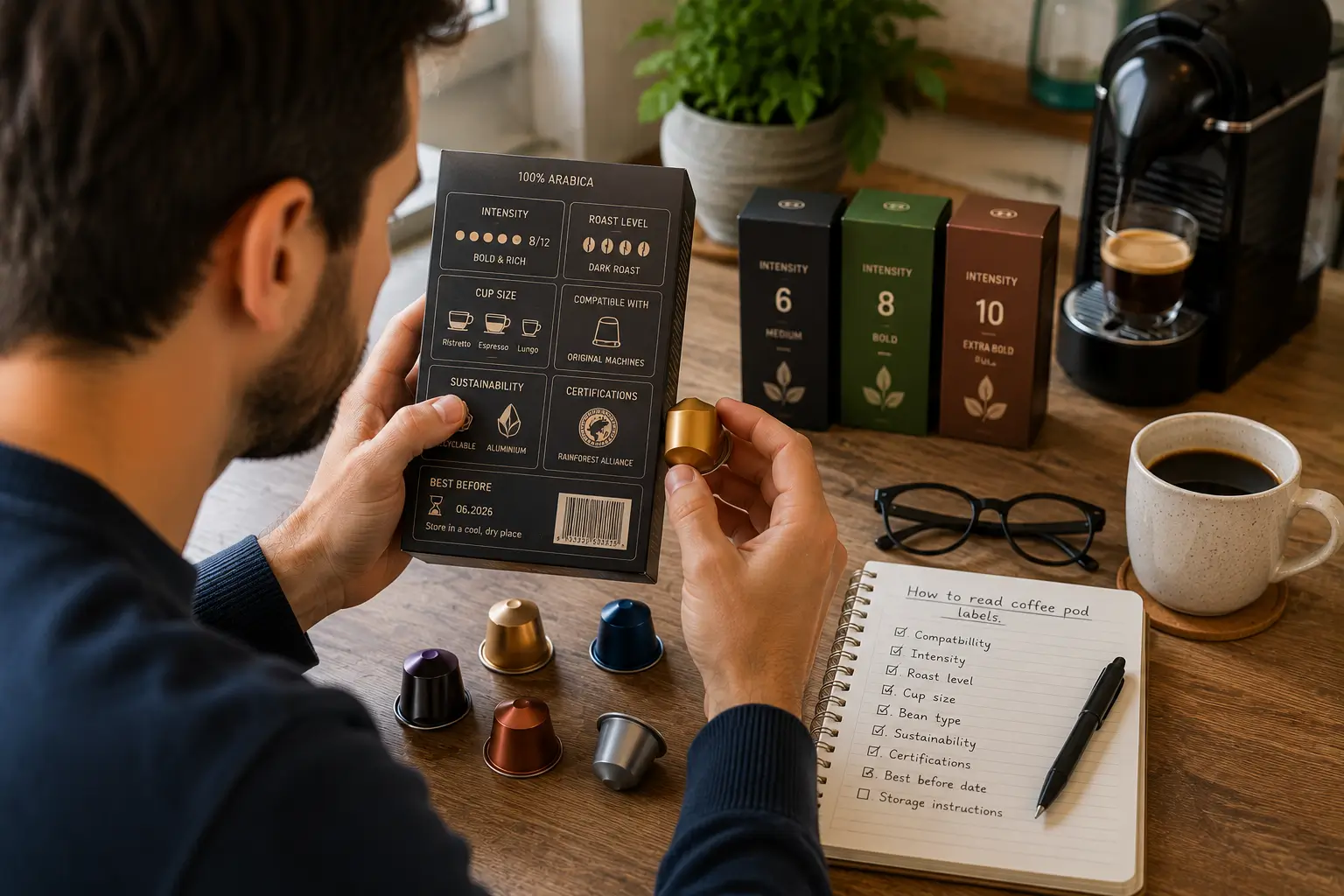
If a coffee pod box contains a lot of information, use this simple order to check the most useful details before buying.
Step 1: Check Machine Compatibility
Check the machine or capsule system first. If the pod does not fit your brewer, the other label details will not matter.
Look for the exact system or compatibility statement printed on the package.
Step 2: Look at the Roast Level
Next, check the roast level to get a quick idea of the coffee’s overall flavor style.
Use the roast label as a general taste guide rather than an exact measure of caffeine or strength.
Step 3: Read the Intensity Rating
The intensity number gives a general idea of how bold the coffee may taste. It does not show the exact caffeine content.
Step 4: Check the Cup Size
Check the recommended cup size so you use the amount of water the pod was designed for. This usually gives the best balance of flavor and aroma.
Step 5: Review Bean Information
See whether the coffee is made from:
Bean information can give you extra clues about the coffee’s character, body, and origin.
Step 6: Check Freshness and Storage Information
Before buying or using the pods, check the best-before date, storage guidance, and condition of the packaging.
A damaged or poorly sealed package can affect freshness even if the printed date has not passed.
A damaged package can affect freshness, even if the coffee is still within its recommended date.
Step 7: Read Sustainability Information
If environmental information matters to you, check whether the package includes recycling instructions, compostability guidance, or recognized certification labels.
This helps you choose products that match your preferences.
Real Example: Reading a Coffee Pod Label
Imagine you pick up a coffee pod box with the following information:
What can you learn from these labels?
| Label | What It Tells You |
|---|---|
| Compatible with Nespresso Original | Designed for a compatible Original-system machine |
| Intensity 8 | Expected to have a relatively bold taste |
| Medium Roast | Balanced roast profile |
| 100% Arabica | Made only with Arabica coffee |
| Espresso | Designed for a small espresso-size serving |
| Recyclable Aluminum | Follow the brand’s recycling instructions |
| Rainforest Alliance Certified | Carries a recognized sourcing certification |
In less than a minute, these label details can tell you whether the pod fits your machine, what style of coffee to expect, how it should be brewed, and what disposal or certification information applies.
Coffee Pod Label Checklist
Before buying any coffee pods, use this quick checklist.
This checklist can make it easier to compare unfamiliar coffee pods and avoid common buying mistakes.
Frequently Asked Questions
The numbers usually represent the coffee’s intensity rating. They describe the expected flavor strength, body, and aroma. They do not directly measure caffeine content.
No.
A higher intensity rating does not automatically mean the coffee contains more caffeine. Intensity mainly refers to taste and overall flavor experience.
It means the coffee is made entirely from Arabica beans. Arabica coffee is generally known for its smooth flavor, pleasant aroma, and balanced taste.
Single-origin coffee comes from one country or one growing region instead of being blended with beans from several locations.
They help you identify whether the coffee pods fit your brewing system.
Always check compatibility before buying to avoid purchasing pods that your machine cannot use.
It means some or all of the packaging or capsule may be recyclable.
Always follow the manufacturer’s disposal instructions because recycling requirements vary by brand and material.
Not directly.
Certifications such as Fairtrade, Rainforest Alliance, and USDA Organic mainly provide information about farming practices, sourcing standards, or production methods.
Yes.
Coffee pods stay fresh for a long time because they are sealed, but checking the best-before date helps ensure you enjoy the best possible flavor and aroma.
Final Thoughts
Coffee pod labels become much easier to understand once you know what to check first. Start with machine compatibility, then look at roast level, intensity, cup size, bean information, freshness, and any recycling or certification symbols.
Remember that labels are not always standardized between brands. Use them as practical guides, compare several pieces of information together, and follow the manufacturer’s instructions when compatibility or disposal details are unclear.