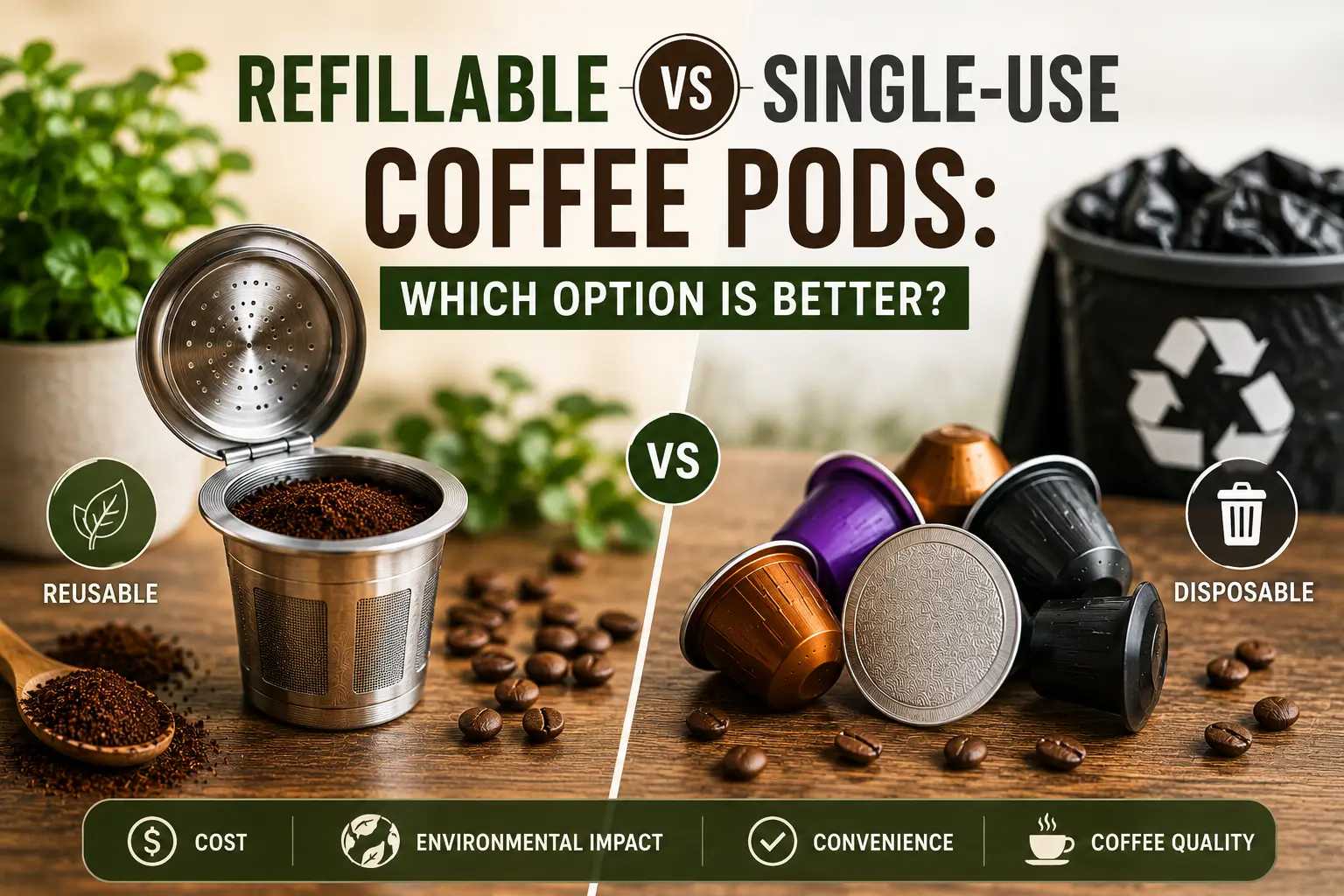

Refillable vs Single-Use Coffee Pods: Which Option Is Better?
Refillable coffee pods are better when you want to use your own coffee ↗, reduce single-use packaging and potentially lower your cost per cup. Single-use pods are better when speed, sealed freshness and repeatable results matter more than filling and cleaning.
Neither option is automatically best for every coffee drinker. A refillable pod can reduce packaging waste, but it still needs washing, correct grind size and exact machine compatibility. A single-use pod creates one used package per drink, but some aluminum, plastic and compostable systems have real recovery routes.
The best choice depends on how often you brew, what machine you own, how much convenience you need, what coffee you buy, and what recycling or composting options actually exist where you live.
Important Note
Do not buy a reusable pod just because it says “universal.” Refillable accessories are machine-specific. Keurig offers an official My K-Cup reusable filter for compatible Keurig brewers, while Nespresso does not currently offer an official refillable capsule and recommends its own capsules for optimum machine performance.
Key Takeaways
- Refillable pods give you more control over coffee brand, roast, grind and dose.
- Single-use pods are faster because the coffee is already measured, sealed and ready to brew.
- Refillable pods can reduce the number of single-use capsules discarded, but washing and replacement parts are still part of the lifecycle.
- Single-use environmental impact varies by material and whether the pod is actually recycled or composted.
- Refillable pods can lower cost per cup when your own coffee costs less than the disposable pods they replace.
- There is no universal break-even number; calculate it from your own pod price, coffee dose and reusable accessory cost.
- Keurig currently sells an official reusable My K-Cup filter for compatible household brewers.
- Nespresso reusable capsules are third-party accessories, not an official Nespresso refillable system.
Quick Answer
Choose refillable pods if you brew often, want to use your own coffee and are willing to fill and clean the pod. Choose single-use pods if you value maximum speed, consistent dosing and sealed freshness. For sustainability, the answer depends on how many times a reusable pod is actually used and whether single-use pods are recycled, composted or sent to landfill.
What Are Refillable Coffee Pods?
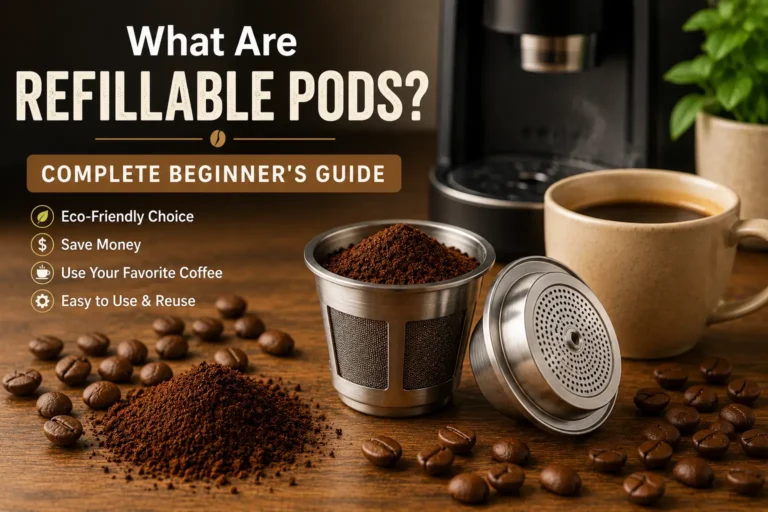
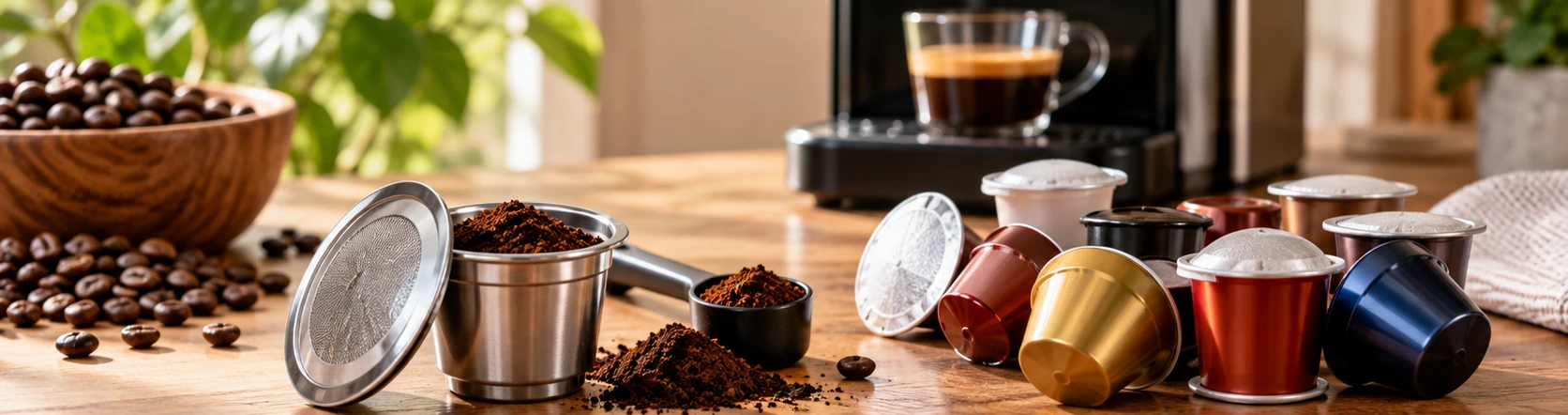
Refillable coffee pods are reusable filters or capsules that you fill with your own ground coffee before brewing. After the drink is made, you empty the grounds, rinse or wash the reusable part and use it again.
Common materials include stainless steel, food-contact plastic, metal mesh and silicone seals. The main benefit is control: you choose the coffee rather than buying only factory-filled capsules made for the system.
Main Advantages of Refillable Pods
- Use your own coffee.
- Adjust roast, grind and dose.
- Reduce the number of single-use pods discarded.
- Potentially lower the cost per cup.
- Use coffee that may not be sold in your machine’s disposable format.
Main Drawbacks of Refillable Pods
- Need filling before each brew.
- Need cleaning after use.
- Can be sensitive to grind size and overfilling.
- May brew less consistently until you find the right recipe.
- Compatibility is not universal.
See What Are Refillable Coffee Pods? ↗ for the full setup guide.
What Are Single-Use Coffee Pods?
Single-use coffee pods are factory-filled servings designed for one brew. Examples include K-Cup pods, Nespresso Original and Vertuo capsules, aluminum compatible capsules, compostable pods and E.S.E. paper espresso pods.
The coffee dose, grind, capsule geometry and seal are prepared before you open the box. That makes the process faster and usually more repeatable for the user.
Refillable vs Single-Use Coffee Pods: Main Comparison
| Feature | Refillable Pod | Single-Use Pod |
|---|---|---|
| Preparation | Fill and close before every brew | Insert and brew |
| Cleanup | Empty grounds and wash | Remove and discard/recycle/compost |
| Coffee choice | Very flexible | Limited to available pods/capsules |
| Consistency | Depends on grind and dose | Usually high because the dose is factory controlled |
| Freshness | Depends on coffee storage | Factory-sealed pods can provide strong barrier protection |
| Packaging waste | Lower per brew when reused many times | One used pod/capsule per brew |
| Cost | Can be lower over time | Recurring pod cost continues |
| Convenience | Moderate | Very high |
| Compatibility | Must match exact brewer/accessory | Must match exact pod/capsule family |
Which Option Costs Less?
Refillable pods can cost less per cup, but the answer depends on the coffee you buy and the accessory you use.
For refillable brewing, include the reusable pod/filter, coffee, replacement gaskets or paper inserts if needed, and small cleaning costs. For single-use brewing, include the capsule price, shipping/subscription cost and any paid recovery program if applicable.
Do Not Compare Pack Price Alone
A bag of coffee and a box of pods do not make the same number of drinks. Compare cost per brewed cup.
For a detailed cost framework, see Coffee Pods Cost Per Cup ↗.
How to Find the Break-Even Point
Simple Break-Even Formula
Reusable accessory cost ÷ savings per cup = approximate break-even number of cups.
Example: if a reusable setup costs $16 and saves $0.40 per cup versus your usual disposable pod, the accessory cost is recovered after about 40 brews. This is a cost example only; environmental break-even depends on materials, cleaning, reuse count and the single-use format being replaced.
Convenience and Cleaning
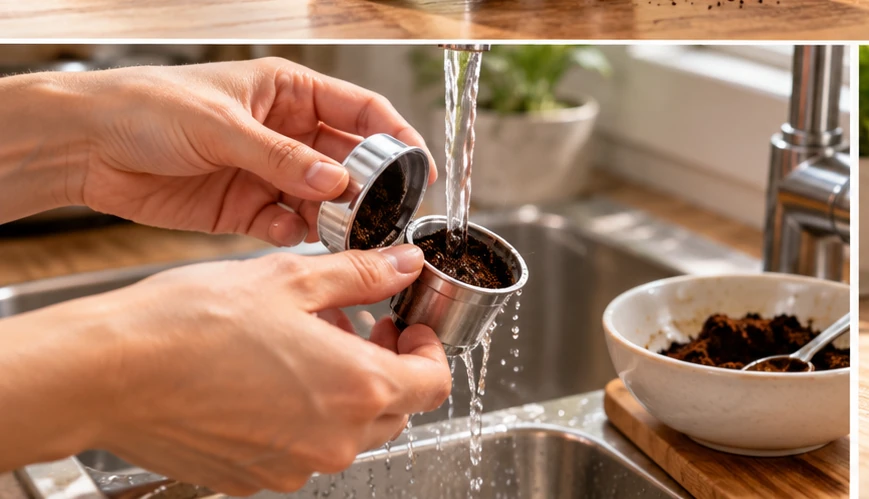
Single-use pods are clearly easier when speed matters. Insert the pod, brew, remove it, then follow the correct waste route.
Which Makes Better Coffee?
Refillable Advantage
You can use freshly ground specialty coffee, change roast and adjust dose. This gives more control.
Single-Use Advantage
The dose, grind and package are engineered together, improving convenience and repeatability.
A reusable pod can taste excellent when the coffee is fresh and the grind matches the filter. It can taste weak or slow if it is underfilled, overfilled or packed with the wrong grind.
A sealed disposable capsule can preserve coffee well, especially with a strong oxygen and moisture barrier. Freshness still declines over time, so storage and best-before dates matter.
See Coffee Pods Flavor & Intensity ↗ and How Long Do Coffee Pods Last? ↗.
Which Option Creates Less Waste?
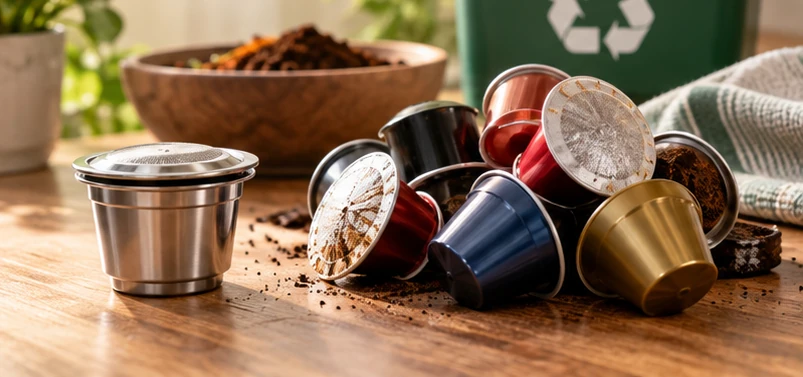
A refillable pod usually creates less capsule packaging waste per drink because the same hardware is used repeatedly.
But total environmental impact also includes the reusable pod’s manufacturing, number of uses, water and energy for cleaning, coffee dose, and what disposable pod it replaces. Published lifecycle studies also show that end-of-life assumptions can change which single-use material performs best.
Most Defensible Sustainability Benefit
If one durable refillable pod is used many times, it can substantially reduce the number of single-use capsule shells entering the waste stream.
What About Recycling Single-Use Pods?
K-Cup Pods
Current Keurig K-Cup pods are made from #5 polypropylene. Keurig says they can be recycled locally where accepted or through its K-Cycle mail-in program, but also states that K-Cup pods are not recycled in many communities.
Nespresso Aluminum Capsules
Nespresso operates dedicated aluminum capsule collection systems. In the U.S., options include recycling bags, UPS drop-off, boutiques and selected at-home/local collection routes.
Compostable Single-Use Pods
These need the composting route shown by their certification. A compostable pod should not automatically go into conventional recycling.
See How to Recycle Coffee Pods ↗, Compostable Coffee Pods ↗ and Biodegradable Coffee Pods ↗.
Refillable vs Single-Use Pods for Keurig
Keurig currently sells the My K-Cup Universal Reusable Coffee Filter, which it describes as the reusable filter designed and approved by Keurig for compatible coffee makers. It lets you brew your own ground coffee.
K-Cup pods are pre-filled, sealed and available from many coffee brands. They are faster for users who do not want to measure or clean grounds.
See Keurig Coffee Pods ↗ and What Is a K-Cup? ↗.
Refillable vs Single-Use Pods for Nespresso
Nespresso does not currently offer an official refillable/reusable capsule. Third-party reusable products exist, but Nespresso recommends authentic Nespresso capsules for optimum machine performance and warns that incompatible third-party capsules can affect brewing, leak, become stuck or contribute to damage.
Some third-party reusable capsules are sold for selected Original machines. Vertuo is more complex because it uses system-specific capsules and barcode-driven extraction. Do not assume an online reusable product is officially supported.
See Nespresso Coffee Pods ↗ and Nespresso vs Keurig ↗.
Compatibility Is More Important Than Reusable vs Disposable
An incompatible reusable pod can leak, restrict flow or fail to brew. An incompatible disposable capsule may not fit at all. Match the exact brewer model first.
Which Option Is Better for Different Users?
| User | Better Starting Option | Why |
|---|---|---|
| Busy professional | Single-use | Fast preparation and minimal cleanup |
| Frequent home brewer | Refillable can make sense | Repeated use can lower packaging waste and cost per cup |
| Specialty coffee fan | Refillable | Lets you choose your own roast and coffee |
| Beginner | Single-use | Fewer grind and dose variables |
| Shared office kitchen | Single-use often easier | Less cleaning and fewer user errors |
| Waste-conscious user | Refillable or supported recovery route | Reuse reduces shells; recycling/composting can improve single-use end of life |
| Occasional coffee drinker | Single-use may be simpler | Low usage can make reusable setup less important |
Common Mistakes With Refillable Coffee Pods
- Wrong grind: very fine coffee can restrict some reusable mesh filters.
- Overfilling: too much coffee can block flow or prevent sealing.
- Tamping too hard: many reusable filters are not designed like espresso portafilters.
- Skipping cleaning: oils and fines can build up in the mesh.
- Using a huge cup size: a small refillable dose may taste weak with too much water.
- Assuming universal compatibility: accessories need to match the brewer.
- Expecting perfect consistency immediately: grind and dose may need adjustment.
Refillable vs Single-Use Buying Checklist
| Question | If Yes |
|---|---|
| Do you want the fastest morning routine? | Single-use has the advantage |
| Do you want to use your own coffee? | Refillable has the advantage |
| Do you dislike cleaning coffee grounds? | Single-use is easier |
| Do you brew several cups each week? | Refillable may improve long-term value |
| Does your area recycle or compost your disposable pod? | Single-use waste impact may be lower than landfill disposal |
| Does your machine have an approved reusable filter? | Refillable setup is easier to justify |
| Do you value factory-sealed freshness and consistency? | Single-use has the advantage |
Frequently Asked Questions
They can be. Compare the reusable accessory cost plus your ground coffee with the price of the single-use pod it replaces.
Yes. Results depend on fresh coffee, the correct grind, fill level and a compatible reusable pod.
Yes. They are already measured and sealed, so they usually require less preparation and cleanup.
A durable refillable pod used many times creates fewer single-use capsule shells. Total environmental impact still depends on manufacturing, cleaning and the disposal route for the alternative.
Yes. Keurig currently sells the My K-Cup Universal Reusable Coffee Filter for compatible Keurig coffee makers.
Nespresso does not currently offer an official refillable capsule. Third-party reusable products exist, but compatibility and support vary.
You can use many ground coffees, but the grind and dose still need to match the reusable filter.
Factory-sealed pods can provide strong freshness protection. Refillable coffee can also be very fresh if you store beans or grounds well and fill the pod just before brewing.
There is no universal number. Continue using it while the mesh, body, lid and seals remain undamaged and it still brews correctly.
Current Keurig K-Cups use #5 polypropylene and can be recycled where the exact pod format is accepted. Check locally.
Yes. Nespresso operates dedicated aluminum capsule collection programs in many locations.
They can reduce packaging waste, but shared offices often prefer single-use pods because they require less filling and cleaning.
Not always. Occasional users may value the convenience and sealed storage of single-use pods more than reusable savings.
An incompatible or incorrectly used reusable pod can cause brewing problems. Use an accessory designed for your exact machine.
Refillable is better for coffee choice, reuse and potential savings. Single-use is better for speed, consistency and minimal cleanup.
Conclusion
Refillable and single-use coffee pods solve different problems. Refillable pods give you more control over the coffee and can reduce single-use packaging while lowering cost per cup in the right routine. Single-use pods deliver stronger convenience, factory-controlled consistency and easy storage.
For most buyers, the decision should start with machine compatibility and brewing habits. If you brew often and do not mind cleaning, refillable may be the better long-term fit. If speed and repeatability matter most, single-use remains the easier option—especially when you have access to a real recycling or composting route.