Is It Safe to Drink Coffee Pods Every Day feature image
Health & Content QuestionsDaily Coffee UseBeginner’s Guide

Is It Safe to Drink Coffee Pods Every Day? Daily Health Effects Explained (Beginner’s Guide)

Daily coffee pod routine with coffee machine coffee pods water and morning coffee

Drinking coffee from a pod machine is part of my normal morning routine ↗. I like the speed, the consistent taste, and the fact that I can make one cup without preparing a full pot. For a long time, I never thought much about this daily habit. I simply inserted a pod, pressed the button, and enjoyed my coffee.

But I started paying more attention when one morning cup sometimes became two or three cups on busy days. I wondered if drinking coffee pods every day was safe. I also wanted to know whether the pod itself was the concern or if caffeine, serving size, and what I added to my coffee mattered more.

If you use a Keurig, Nespresso, or another single-serve coffee machine every day, you may have asked the same questions. Is one coffee pod a day okay? Are two or three pods too much? Can daily pod coffee affect your sleep or energy levels?

The short answer is that drinking coffee pods every day can be fine for many healthy adults when total caffeine intake stays at a suitable level. However, caffeine sensitivity, the type of pod, how many cups you drink, and your daily routine can change the answer.

In this beginner’s guide, I will explain what may happen when you drink pod coffee daily, how caffeine affects daily intake, and how to decide if your coffee pod habit may need a small change.

Important note: This guide gives general coffee and caffeine information. It is not personal medical advice. People who are pregnant, breastfeeding, taking certain medicines, or managing a health condition may need individual advice from a qualified healthcare professional.

Quick Answer:

Yes, many healthy adults can drink coffee pods every day.

The main issue is usually not the capsule or pod format itself. What matters more is:

  • How much caffeine each pod contains
  • How many pods you drink per day
  • Other sources of caffeine in your diet
  • When you drink coffee
  • Your personal caffeine sensitivity
  • Sugar, syrups, creamers, or other ingredients you add

For most adults, the U.S. Food and Drug Administration cites 400 mg of caffeine per day as an amount not generally associated with negative effects. However, caffeine sensitivity and the rate at which the body clears caffeine can differ from one person to another.

This means there is no single safe number of coffee pods that works for every person.

One pod may contain much less caffeine than another. A person drinking two high-caffeine pods could consume more caffeine than someone drinking three smaller espresso capsules.

The better question is not simply:

How many coffee pods do I drink?

Instead, ask:

How much total caffeine am I getting each day, and how does my body respond to it?

Key Takeaways

  • Drinking coffee pods every day can be fine for many healthy adults.
  • Total daily caffeine matters more than the number of pods alone.
  • Coffee pod caffeine levels can vary by brand, coffee type, bean blend, and serving size.
  • One person’s comfortable caffeine intake may feel too strong for another person.
  • Poor sleep, restlessness, or feeling jittery may be signs that your current intake does not suit you.
  • Sugar, creamers, and sweetened coffee drinks can change the nutrition of your daily cup.
  • Checking the pod label and paying attention to your own routine can help you make better daily coffee choices.

Is It Safe to Drink Coffee Pods Every Day?

Daily coffee pod routine with pod machine and morning coffee

For many healthy adults, drinking coffee pods daily can be part of a normal coffee routine.

Coffee pods are simply a single-serve way to prepare coffee. Most standard pods contain ground coffee sealed inside a capsule or filter-style container. The machine passes hot water through the coffee to make one serving.

Because of this, drinking pod coffee every day is not automatically more concerning than drinking brewed coffee every day.

The bigger factor is what is in your cup and how much you consume.

For example, consider these two daily routines:

Person A

  • Drinks one regular coffee pod in the morning
  • Drinks water during the day
  • Does not use energy drinks
  • Sleeps normally

Person B

  • Drinks three strong coffee pods
  • Has an energy drink later?
  • Drinks another coffee in the evening
  • Often has trouble sleeping

Both people drink coffee pods every day, but their total caffeine habits are very different.

This is why I do not judge a daily coffee routine by pod count alone. I look at the full day.

The FDA states that caffeine is found in many foods and drinks, and sensitivity can vary widely between people. Coffee is only one possible source. Tea, energy drinks, chocolate, some sodas, and certain products may also add caffeine to your daily total.

Daily Coffee Pod Use Is About the Full Routine

When reviewing a daily coffee habit, I think about four simple questions:

  • How much caffeine is in the pod?
  • How many caffeinated drinks do I have during the full day?
  • What time do I drink my last coffee?
  • Do I notice unwanted effects after drinking it?

These questions give a clearer picture than simply saying one, two, or three pods are always safe.

For a broader look at the general pros and possible concerns linked with pod coffee, read our Health Benefits and Risks of Coffee Pods guide. ↗

What Happens When You Drink Pod Coffee Daily?

Daily pod coffee effects with alertness timing and routine

Drinking pod coffee every day creates a regular caffeine habit for many people.

Caffeine is a stimulant. It acts on the brain and nervous system and can help reduce feelings of tiredness. This is one reason many people reach for coffee soon after waking up or during a busy workday.

With daily use, you may notice several changes in your routine.

You May Feel More Alert After Your Coffee

One of the most common reasons people drink coffee is to feel more awake.

I notice this most clearly with my first cup of the day. The routine itself feels familiar, but caffeine can also reduce feelings of tiredness and increase alertness.

The effect may depend on:

  • Caffeine dose
  • Your usual caffeine intake
  • Sleep quality
  • Body response
  • Time of day

A person who rarely drinks coffee may notice a stronger effect from one pod than someone who drinks caffeinated coffee every day.

Your Body May Become Used to Regular Caffeine

Daily caffeine use can change how strongly you notice its effects.

You may remember a time when one coffee pod made you feel very awake. After drinking the same coffee every day, the effect may feel less noticeable.

This can lead some people to:

  • Choose stronger pods
  • Drink a second cup
  • Brew larger servings
  • Add coffee later in the day

I have found that this is where daily coffee habits can slowly change without us noticing.

One cup becomes two. Two cups become three on busy days.

This does not automatically mean there is a health problem. However, it is a good reason to check your total caffeine intake instead of continuing to add more coffee just because your usual pod feels less effective.

We will explain caffeine tolerance in more detail later in this guide.

Your Coffee Timing May Affect Your Daily Routine

The time you drink coffee matters.

A morning pod may fit easily into your routine. A strong coffee late in the afternoon or evening may feel very different.

The European Food Safety Authority notes that a single caffeine dose of 100 mg may affect sleep duration and sleep patterns in some adults, especially when taken close to bedtime.

I learned to pay more attention to timing after noticing that an afternoon coffee sometimes felt harmless while I was drinking it, but I was still awake later than normal.

This article will not repeat our full sleep guide. If late coffee is your main concern, our Can Coffee Pods Affect Sleep? ↗ guide explains caffeine timing and sleep in more detail.

Your Daily Add-Ins Can Become Part of the Habit

The coffee pod is only one part of your drink.

Many people add:

  • Sugar
  • Flavored syrup
  • Cream
  • Coffee creamer
  • Whole milk
  • Sweetened plant milk
  • Whipped toppings
  • A plain black coffee pod usually has very little nutritional impact from calories, sugar, and fat. However, the final drink can be very different once extra ingredients are added.

    For example, adding a small amount of milk is different from making a sweet coffee drink with syrup, sugar, and flavored creamer every morning.

    This is why daily use matters.

    An ingredient added once may seem small. The same ingredient used every day becomes part of your regular diet.

    For detailed nutrition information, see our Coffee Pods Calories and Nutrition Guide ↗.

    Does the Coffee Pod Itself Make Daily Drinking Unsafe?

    This is one of the most common concerns I hear from coffee pod users.

    People often focus on the capsule because pod coffee is packaged differently from ground coffee.

    However, for most daily coffee drinkers, the more useful questions are about:

    • Caffeine intake
    • Coffee ingredients
    • Added sugar
    • Serving size
    • Drinking frequency
    • Personal sensitivity

    A standard pod that contains ground coffee is different from a sweetened specialty pod containing milk powder, cocoa, or added sweeteners.

    This is why reading the label matters.

    Plain Coffee Pods

    Plain coffee pods usually contain roasted and ground coffee.

    These may include:

    • Arabica coffee
    • Robusta coffee
    • Coffee blends
    • Light roast coffee
    • Medium roast coffee
    • Dark roast coffee
    • Decaffeinated coffee

    The main daily-use question is often caffeine amount.

    Flavored Coffee Pods

    Flavored pods may contain coffee with added natural or artificial flavors.

    A vanilla or hazelnut flavor name does not always mean the pod contains a large amount of sugar. You still need to check the ingredient and nutrition information for the exact product.

    Specialty Drink Pods

    Some pods are made for drinks such as:

    • Mocha
    • Cappuccino-style drinks
    • Latte-style drinks
    • Hot chocolate
    • Sweet coffee beverages

    These products may have a different nutrition profile from plain black coffee pods.

    If you drink them every day, check:

    • Calories
    • Sugar
    • Fat
    • Serving size
    • Ingredients

    The word coffee pod covers many different products. Treating every pod as nutritionally identical can lead to confusion.

    How Caffeine Changes the Answer?

    Coffee pod caffeine daily intake with calculator and different caffeine amounts

    Caffeine is one of the main factors to consider when drinking coffee pods every day.

    The FDA cites 400 mg of caffeine per day for most adults as an amount not generally associated with negative effects. EFSA also states that caffeine intakes up to 400 mg per day do not raise safety concerns for healthy adults in the general population, except pregnant women.

    But this does not mean everyone should aim for 400 mg every day.

    That number is not a daily target.

    It is also not proof that every person will feel comfortable at that intake.

    Some people may notice unwanted effects at much lower amounts.

    These can include:

    • Feeling jittery
    • Restlessness
    • Trouble sleeping
    • Headaches
    • A faster heartbeat
    • Feeling uncomfortable after strong coffee

    Your own response matters.

    I prefer to think of caffeine limits as a boundary to understand, rather than a goal to reach.

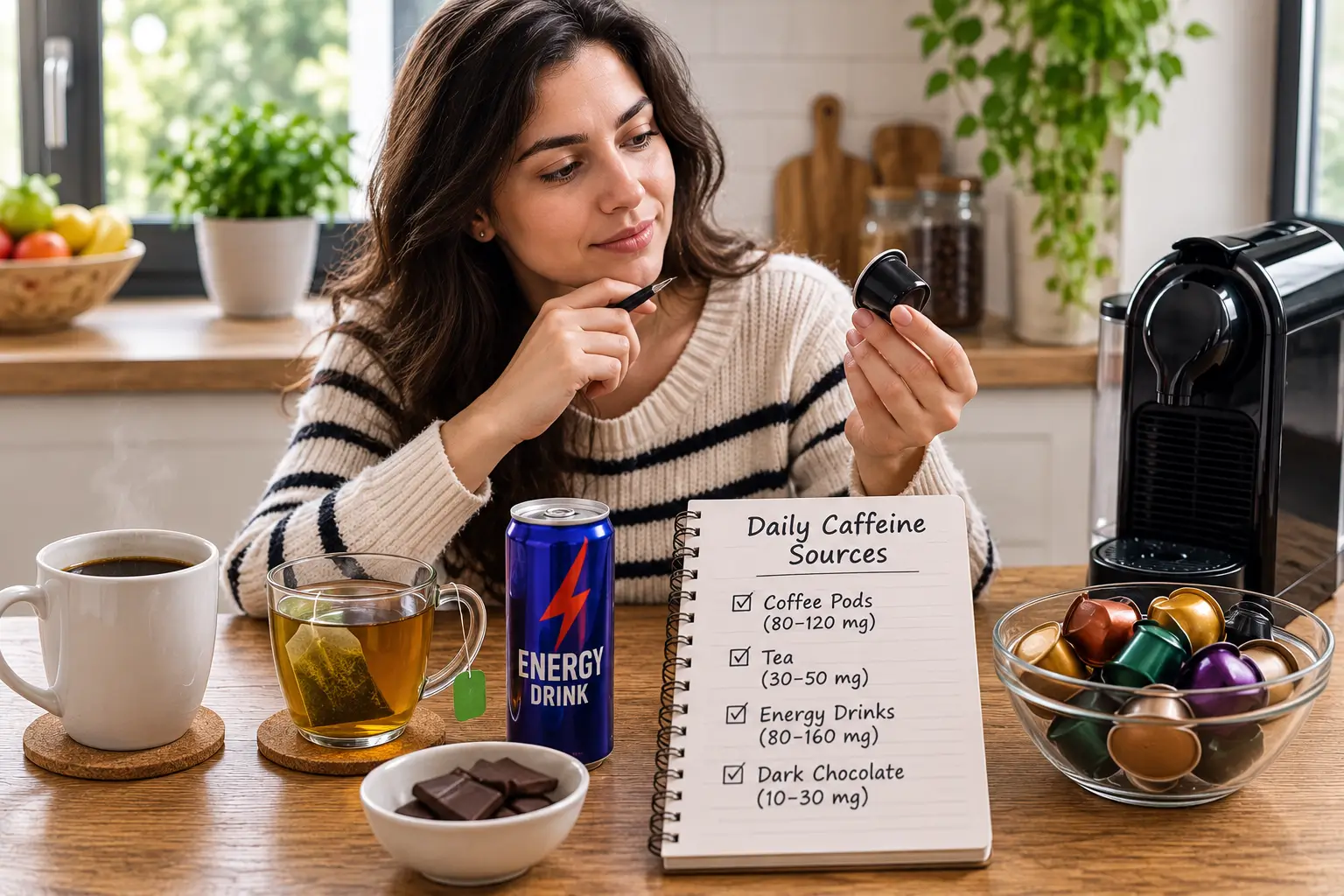
    Caffeine Comes from More Than Coffee Pods

    Your daily caffeine total may include:

    Caffeine SourceDoes It Add to Daily Intake?
    Coffee podsYes
    Espresso capsulesYes
    TeaYes
    Energy drinksYes
    Some soft drinksYes
    ChocolateMay add some caffeine
    Some medicines or productsMay contain caffeine
    Decaf coffeeUsually contains a small amount

    This is why counting only coffee pods may give you an incomplete answer.

    For example, you may drink two coffee pods and think your caffeine intake is moderate. But if you also drink strong tea and an energy drink, your total daily intake may be much higher.

    If you want to compare caffeine levels between different pod styles, our Caffeine Comparisons Across Pod Types guide ↗ explains why caffeine can vary between coffee capsules and serving formats.

    There is no single number of coffee pods that is right for every adult.

    This is because coffee pods do not all contain the same amount of caffeine.

    Some pods make a small espresso serving. Others make a larger cup of coffee. Bean type, coffee amount, blend, and serving format can also affect caffeine levels.

    Your own CoffeePodH caffeine comparison guide notes that many standard coffee pods may fall around 60 mg to 150 mg of caffeine per serving, although the exact amount varies by product.

    This creates a big difference.

    Consider this simple example:

    Number of PodsIf Each Has 60 mg CaffeineIf Each Has 100 mg CaffeineIf Each Has 150 mg Caffeine
    1 pod60 mg100 mg150 mg
    2 pods120 mg200 mg300 mg
    3 pods180 mg300 mg450 mg
    4 pods240 mg400 mg600 mg

    These figures are examples, not caffeine values for every coffee pod. Always check the product information when available.

    The table shows why I avoid saying:

    Four coffee pods a day are safe.

    Four lower-caffeine pods and four high-caffeine pods can create very different daily caffeine totals.

    Is One Coffee Pod a Day Usually Too Much?

    For many healthy adults, one standard coffee pod a day may fit within a moderate caffeine routine.

    However, you should still consider:

    • The pod’s caffeine level
    • Other caffeinated drinks
    • Caffeine sensitivity
    • Sleep response
    • Advice from your healthcare professional, if relevant

    Are Two Coffee Pods a Day Too Much?

    Two coffee pods may still fit within a moderate daily caffeine intake for many adults.

    But again, pod type matters.

    Two pods containing 60 mg of caffeine each provide about 120 mg in total.

    Two pods containing 150 mg each provide about 300 mg.

    The number of capsules is the same.

    The caffeine intake is very different.

    What About Three or Four Pods a Day?

    At three or four caffeinated pods per day, checking the label becomes much more useful.

    Do not assume that your coffee is low in caffeine because the capsule looks small.

    Add the estimated caffeine from each serving and include other caffeine sources from your day.

    If the manufacturer lists caffeine per serving, I suggest using this simple calculation:

    Caffeine per pod × number of pods = estimated caffeine from pod coffee

    Then add caffeine from other regular sources.

    Daily Coffee Pod Intake: A Simple Check

    Daily HabitWhat to Check
    1 podCaffeine sensitivity and pod strength
    2 podsTotal caffeine from both servings
    3 podsPod caffeine plus other caffeine sources
    4+ podsFull daily caffeine intake and how you feel
    Coffee late in the daySleep timing and caffeine response
    Sweet specialty pods dailySugar, calories, and ingredients
    Regular and energy drinks togetherCombined caffeine intake

    Is One Coffee Pod a Day Bad for You?

    For many healthy adults, drinking one coffee pod a day is unlikely to be a concern.

    One standard pod often provides much less caffeine than the 400 mg daily amount cited by the FDA for most adults. However, the exact caffeine content depends on the coffee pod, serving size, coffee blend, and brand.

    This is why I still check the product information when trying a new pod.

    A small capsule can taste very strong but may not always have the highest caffeine level. At the same time, a larger coffee serving may contain more caffeine because more coffee or a different blend is used.

    If you drink one pod each morning and feel well, sleep normally, and do not consume large amounts of caffeine from other sources, your routine may be reasonable.

    What Should You Check If You Drink One Pod Daily?

    Ask yourself these simple questions:

    • Do I feel jittery after drinking it?
    • Does my heart feel like it is beating faster than normal?
    • Do I get a headache after coffee?
    • Does my morning coffee upset my stomach?
    • Do I add a lot of sugar or sweetened creamer?
    • Am I also drinking tea, cola, or energy drinks?
    • Do I depend on coffee late in the day to stay awake?

    One pod a day may sound like a small habit, but your full routine still matters.

    For example, one coffee pod plus two energy drinks is very different from one coffee pod plus water for the rest of the day.

    My Experience with One Morning Pod

    For me, one morning pod is the easiest coffee habit to track.

    I know when I drink it. I can check the pod strength or caffeine information when available. I also know what I add to the cup.

    Problems are more likely to appear when I stop paying attention and make extra cups simply because the machine is quick.

    That is one thing I have learned from using pod machines. Convenience can make a second cup feel like a very small decision.

    It only takes a few seconds to insert another pod.

    For daily coffee drinkers, that convenience is worth thinking about.

    Is Drinking Two Coffee Pods a Day Too Much?

    Coffee pod timing and sleep with evening coffee and bedside clock

    Two coffee pods a day are not automatically too much.

    For many healthy adults, two moderate-caffeine pods may still fit within their normal daily caffeine intake.

    But the answer changes based on the pod.

    Imagine two people.

    Coffee drinker A:

    • Drinks two pods with about 60 mg of caffeine each
    • Estimated pod caffeine: 120 mg

    Coffee drinker B:

    • Drinks two pods with about 150 mg of caffeine each
    • Estimated pod caffeine: 300 mg

    Both people say:

    I only drink two coffee pods a day.

    However, their estimated caffeine intake from pod coffee is very different.

    This is why pod count alone can be misleading.

    Timing Matters With a Second Pod

    The second cup is also where timing becomes more important.

    A common routine may look like this:

    • First pod at 7:00 a.m.
    • Second pod at 10:00 a.m.

    Another person may drink:

    • First pod at 9:00 a.m.
    • Second pod at 6:00 p.m.

    The pod count is the same.

    The timing is different.

    Caffeine can remain in the body for hours. Some people may still feel the effects of an afternoon or evening coffee when they are ready to sleep.

    I personally pay more attention to the time of my second cup than the first. My morning coffee rarely surprises me. A later coffee can be easier to forget when thinking about sleep that night.

    If you regularly drink two pods a day, note the time of your second cup for a week. You may notice a pattern between late coffee and how easily you fall asleep.

    What About Three or Four Coffee Pods Every Day?

    Three or four coffee pods a day need more attention.

    This does not mean everyone drinking three pods has a harmful coffee habit.

    The main issue is that caffeine can add up quickly.

    Using the example amounts from Part 1:

    • Three 60 mg pods provide about 180 mg of caffeine.
    • Three 100 mg pods provide about 300 mg.
    • Three 150 mg pods provide about 450 mg.

    At four pods:

    • Four 60 mg pods provide about 240 mg.
    • Four 100 mg pods provide about 400 mg.
    • Four 150 mg pods provide about 600 mg.

    Again, these are simple examples. They are not caffeine values for every coffee pod.

    The point is that the same number of pods can create very different caffeine totals.

    Why Three or Four Pods Can Be Easy to Reach

    Pod machines remove many of the small steps involved in making coffee.

    You do not need to:

    • Measure ground coffee
    • Prepare a full coffee pot
    • Wait for a large batch to brew
    • Clean a traditional coffee filter after every cup

    This convenience is one of the main reasons I like pod coffee.

    But it can also make extra servings easier to drink without thinking about the total.

    You may have:

    • One pod after waking up
    • One during work
    • One after lunch
    • One while finishing an evening task

    Each cup feels separate.

    By the end of the day, you have used four pods.

    I suggest looking at daily coffee as a total instead of treating every cup as a new decision.

    A Simple Pod Tracking Method

    If you are unsure how many pods you drink, try this for seven days.

    DayMorning PodsAfternoon PodsEvening PodsTotal
    Monday1102
    Tuesday1203
    Wednesday1113
    Thursday2103
    Friday1214
    Saturday1001
    Sunday1102

    You do not need a special app.

    I have found that simply counting empty pods at the end of the day can show a habit that is easy to miss.

    If you use reusable coffee pods, make a quick note on your phone after each cup instead.

    Can Drinking Coffee Pods Daily Affect Sleep?

    Yes. Daily pod coffee can affect sleep if your caffeine intake or coffee timing does not suit your body.

    The coffee pod is not the main reason.

    Caffeine is.

    Caffeine can increase alertness, which is useful when you want to feel awake. The same effect may be less helpful when your body is trying to prepare for sleep.

    Some people can drink coffee in the afternoon and sleep normally.

    Others notice sleep problems after a much earlier cup.

    Signs Your Coffee Timing May Be Affecting Sleep

    You may notice:

    • Taking longer to fall asleep
    • Waking more often during the night
    • Feeling less rested in the morning
    • Staying awake later than planned
    • Needing more coffee, the next day because you feel tired

    The last point can create a simple cycle.

    Poor sleep → more coffee → later caffeine → poor sleep

    I have seen this happen in my own routine on busy workdays. If I sleep badly, an extra coffee feels like an easy fix the next day. But if that extra cup is too late, the same problem can continue.

    Try Changing the Time Before Changing the Pod

    If daily coffee seems to affect your sleep, you may not need to stop drinking pod coffee completely.

    First, look at timing.

    You can try:

    • Drinking your first coffee earlier
    • Moving your second pod earlier
    • Avoiding caffeinated pods late in the day
    • Choosing decaf for an evening coffee
    • Tracking sleep for several days

    Our full guide on Can Coffee Pods Affect Sleep? covers this topic in more detail.

    Do not repeat the full sleep discussion here. The daily-use lesson is simple:

    The time of your last caffeinated pod can matter as much as the number of pods you drink.

    Can Daily Pod Coffee Affect Your Stomach?

    Coffee can cause digestive discomfort for some people.

    This may include:

    • Stomach discomfort
    • Heartburn
    • Acid reflux symptoms
    • A feeling of irritation
    • A faster need to use the bathroom

    Not every coffee drinker experiences these effects.

    Your response may depend on:

    • Coffee type
    • Roast
    • Serving size
    • Caffeine level
    • How often you drink coffee
    • Whether you drink coffee on an empty stomach
    • Your personal digestive sensitivity

    Pay Attention to the Pattern

    I do not assume every stomach problem is caused by a coffee pod.

    Instead, I look for a repeated pattern.

    For example:

    Do I feel uncomfortable every time I drink a strong pod before breakfast?

    Or:

    Does the same problem happen when I drink three cups but not when I drink one?

    This type of simple observation can help you understand your own coffee routine.

    If you regularly notice digestive discomfort after coffee, reducing the amount or changing the type of coffee may be worth discussing with a qualified healthcare professional.

    Can Low-Acid Coffee Pods Help?

    Some coffee drinkers choose low-acid coffee pods because they prefer a smoother coffee or feel more comfortable drinking them.

    However, the term low acid does not mean a coffee will suit every sensitive stomach.

    Coffee tolerance is personal.

    If stomach comfort is your main concern, read our Low-Acid Coffee Pods guide ↗ for a more focused explanation.

    Do Daily Coffee Pods Add Too Many Calories?

    Plain black pod coffee is usually very low in calories.

    The bigger calorie difference often comes from what you add to the cup or the type of pod you choose.

    A Plain Coffee Pod Routine

    A simple black coffee may contain very few calories.

    If you drink two plain black coffee pods every day, the coffee itself may add little to your total daily calorie intake.

    A Sweet Coffee Pod Routine

    Now consider a different daily habit.

    Each cup includes:

    • Sweetened creamer
    • Sugar
    • Flavored syrup
    • Whipped topping

    If you make this drink twice every day, the added ingredients become a regular source of calories and sugar.

    The pod may still be called coffee.

    The final drink is very different.

    Watch Specialty Drink Pods

    Some pods or capsules are made for:

    • Latte-style drinks
    • Cappuccino-style drinks
    • Mocha drinks
    • Hot chocolate
    • Sweetened coffee beverages

    These may contain milk ingredients, sugar, cocoa, or other added ingredients.

    Always check the product label.

    I pay more attention to products I drink every day than products I use once in a while.

    A sweet seasonal pod on the weekend is one thing.

    A sweetened specialty drink every morning and afternoon becomes part of my regular eating pattern.

    Does Your Body Build a Tolerance to Coffee Pods?

    You do not build a tolerance to the physical coffee pod.

    You can develop tolerance to caffeine.

    Caffeine tolerance means the same amount of caffeine may feel less noticeable after regular use.

    You may think:

    This pod used to wake me up. Now it does almost nothing.

    The coffee may not have changed.

    Your regular caffeine habit may have changed how strongly you notice its effects.

    Why Does My Usual Coffee Pod Feel Weaker?

    There are several possible reasons:

    • You drink caffeine every day
    • You have increased your total caffeine intake
    • You are sleeping less
    • You changed the serving size
    • You are comparing it with a stronger coffee
    • The pod has a different coffee blend
    • Your routine has changed

    Do not automatically assume the machine is making weak coffee.

    First, check whether the pod, brew size, or daily caffeine habit has changed.

    The Stronger Pod Cycle

    This is a pattern I think daily pod drinkers should watch.

    Step 1: One regular pod feels strong.

    Step 2: You drink it every day.

    Step 3: The effect feels less noticeable.

    Step 4: You choose a stronger pod.

    Step 5: You start drinking two strong pods.

    Step 6: Your daily caffeine intake increases.

    The easy response is to keep choosing stronger coffee.

    But more caffeine is not always the best answer.

    Sometimes the real issue is poor sleep, a busy routine, or regular caffeine tolerance.

    Does Switching Coffee Pod Brands Reset Caffeine Tolerance?

    Not necessarily.

    Caffeine tolerance is linked to regular caffeine use, not the logo on the coffee pod box.

    Switching from one caffeinated brand to another may change:

    • Flavor
    • Roast
    • Coffee blend
    • Caffeine amount
    • Serving size

    But if your total caffeine intake stays high, changing the brand alone may not change your caffeine tolerance.

    Should You Drink More Pods If Coffee Feels Weak?

    I would not automatically add more pods.

    First, check:

    • 1How much caffeine are you already drinking?
    • 2How well are you sleeping?
    • 3Have you changed your brew size?
    • 4Are you drinking coffee later in the day?
    • 5Are you using caffeine from other sources?

    Sometimes feeling tired is not a sign that you need stronger coffee.

    Can Reducing Caffeine Cause Headaches?

    Yes. People who regularly consume caffeine may experience withdrawal symptoms when they suddenly reduce or stop their intake.

    Headache is a commonly reported caffeine withdrawal symptom.

    Other possible symptoms can include:

    • Tiredness
    • Lower alertness
    • Difficulty concentrating
    • Irritability

    This is one reason some daily coffee drinkers prefer to reduce caffeine gradually instead of suddenly stopping all caffeinated drinks.

    For example, a person drinking four caffeinated pods every day might slowly reduce their intake rather than moving from four pods to zero in one day.

    A simple change could look like this:

    Current HabitPossible Gradual Change
    4 caffeinated pods3 caffeinated + 1 decaf
    3 caffeinated pods2 caffeinated + 1 decaf
    2 caffeinated pods1 caffeinated + 1 decaf
    1 caffeinated podSmaller serving or decaf if needed

    This is only a general example. Your personal needs may differ.

    Regular vs Decaf Coffee Pods for Daily Drinking

    Decaf coffee pods can be useful for people who enjoy the coffee routine but want less caffeine.

    I like this option because sometimes I want the taste and the warm drink more than I need another caffeine boost.

    Regular Coffee Pods May Suit You If:

    • You tolerate caffeine well
    • You drink coffee earlier in the day
    • Your total caffeine intake is moderate
    • Coffee does not disturb your sleep
    • You do not notice unwanted effects

    Decaf Coffee Pods May Suit You If:

    • You are sensitive to caffeine
    • You enjoy coffee later in the day
    • You want to reduce total caffeine
    • You already consume caffeine from other sources
    • You want to keep the coffee habit while cutting back

    Decaf Does Not Always Mean Zero Caffeine

    Decaffeinated coffee usually still contains a small amount of caffeine.

    The amount is much lower than regular coffee in many cases, but it is useful to know that decaf and caffeine-free do not always mean the same thing.

    Our Decaf Coffee Pods guide ↗ explains caffeine levels, benefits, and common questions in more detail.

    A Quick Daily Coffee Pod Self-Check

    If you drink coffee pods every day, use this simple check.

    Answer yes or no to each question.

    QuestionYes / No
    Do I know roughly how many pods I drink daily?
    Do I check caffeine information when available?
    Do I count tea or energy drinks in my caffeine intake?
    Do I usually drink my last coffee well before bedtime?
    Do I sleep normally after my usual coffee routine?
    Can I drink fewer pods without feeling that I must make another cup?
    Do I pay attention to sugar and creamer added daily?
    Does coffee usually feel comfortable on my stomach?
    Have I avoided increasing pod strength without checking caffeine?

    You do not need a perfect score.

    The goal is to notice your daily habit.

    When I started looking at my coffee this way, I stopped thinking only about whether coffee pods were good or bad.

    I started asking a more useful question:

    Does my current coffee pod routine work well for me?

    Signs You May Be Drinking Too Many Coffee Pods

    There is no single pod number that tells every person they are drinking too much coffee.

    One person may feel fine after two coffee pods. Another person may feel uncomfortable after one strong capsule.

    This is why I pay attention to changes in how I feel and how my daily routine works.

    Possible signs that your current caffeine intake may not suit you include:

    • Feeling jittery or shaky
    • Restlessness
    • Trouble falling asleep
    • Waking up feeling tired
    • A faster heartbeat
    • Headaches
    • Stomach discomfort
    • Feeling unusually nervous after coffee
    • Needing more coffee to notice the same effect
    • Drinking coffee later because earlier cups no longer feel strong enough

    These signs do not prove that coffee pods are causing a health problem. Many symptoms can have different causes.

    However, if you notice the same pattern after increasing your coffee or caffeine intake, it may be worth reviewing your daily routine.

    The Sign I Watch Most: My Sleep

    For me, sleep is one of the easiest signs to track.

    If I drink coffee later than usual and then struggle to fall asleep, I can look back at the time of my last pod.

    The problem is that poor sleep can make you want more coffee the next day.

    That can create a simple pattern:

    Late coffee → poor sleep → morning tiredness → more coffee → another late cup

    If this pattern continues, the coffee machine may get blamed.

    The real issue may be the timing and total caffeine intake.

    Another Sign: Your Pod Count Keeps Increasing

    Think about how many pods you used to drink.

    Was one cup enough six months ago?

    Are you now drinking three or four cups to feel the same level of alertness?

    An increase does not automatically mean something is wrong. Work, sleep, and daily routines change.

    But a rising pod count is a useful reason to check your caffeine intake.

    I do not wait until I feel terrible before reviewing my coffee routine.

    If my normal one or two cups slowly become four, I want to know why.

    When Should You Consider Cutting Back?

    You may want to review or reduce your caffeine intake if:

    • Coffee regularly affects your sleep
    • You often feel jittery after drinking it
    • You notice a racing or unusually fast heartbeat
    • You get frequent headaches linked with caffeine changes
    • Coffee often causes digestive discomfort
    • You keep increasing the number of pods you drink
    • You rely on late coffee to stay awake
    • Your total caffeine intake is higher than you realized

    Cutting back does not always mean giving up coffee completely.

    You may simply need to change:

    • The number of caffeinated pods
    • Pod caffeine level
    • Serving size
    • Coffee timing
    • Other caffeinated drinks
    • The balance between regular and decaf pods

    Do Not Ignore Strong or Ongoing Symptoms

    If you have severe, unusual, or ongoing symptoms, speak with a qualified healthcare professional.

    Do not use a coffee article to diagnose the cause of chest pain, ongoing heart symptoms, severe headaches, or other serious concerns.

    Coffee and caffeine information can help you review your routine.

    It cannot replace individual medical advice.

    Who Should Be More Careful with Daily Caffeine?

    Daily caffeine guidance is not the same for every person.

    Some people may need to limit caffeine or get individual advice from a healthcare professional.

    This may include people who:

    • Are pregnant
    • Are breastfeeding
    • Take medicines that may interact with caffeine
    • Have been advised to limit caffeine
    • Are highly sensitive to caffeine
    • Have a health condition affected by stimulants
    • Regularly experience unwanted symptoms after caffeine

    Children and adolescents also have different caffeine considerations from healthy adults.

    The 400 mg daily amount often discussed for caffeine applies to most healthy adults. It should not be treated as a universal caffeine limit for every age or situation.

    Pregnancy and Daily Coffee Pods

    Pregnancy deserves extra care because caffeine guidance is lower than the general adult amount.

    The European Food Safety Authority states that caffeine intake from all sources up to 200 mg per day does not raise safety concerns for the fetus in pregnant women.

    However, personal medical advice matters.

    If you are pregnant or planning a pregnancy, discuss your caffeine intake with your healthcare professional.

    Also count caffeine from:

    • Coffee pods
    • Tea
    • Chocolate
    • Cola
    • Energy drinks
    • Other caffeine-containing products

    Do not assume that one small capsule contains very little caffeine simply because the pod is small.

    My Daily Coffee Pod Routine: What I Learned

    Using coffee pods regularly taught me that the biggest problem is often not knowing how quickly a habit changes.

    My coffee machine makes a cup in a short time.

    That convenience is the reason I use it.

    But it also means I can make another coffee without thinking much about the first one.

    I used to focus mostly on pod flavor and strength. If a coffee tasted bold, I assumed it had a lot of caffeine. If it tasted mild, I thought it was a lighter choice.

    After comparing different pod types, I learned that taste intensity and caffeine are not always the same thing.

    A dark or intense flavor does not automatically tell me the exact caffeine amount.

    Now I pay attention to three things.

    1. I Count the Full Day, Not Just My Morning Coffee

    My first pod is easy to remember.

    The second cup during work is also easy to remember.

    The cup I make while finishing something later in the day is the one I may forget when thinking about my total intake.

    I now look at the full day.

    Coffee, tea, and other caffeine sources all count.

    2. I Pay Attention to Time

    I have found that the time of my coffee can matter more than I expect.

    A pod that feels completely normal in the morning may be a poor choice for me later in the day.

    If I want coffee in the evening, decaf can help me keep the routine without adding as much caffeine.

    3. I Do Not Automatically Choose a Stronger Pod

    When my usual coffee feels less effective, my first thought could be:

    I need stronger coffee.

    Now I stop and check my routine first.

    Did I sleep well?

    Have I already had caffeine?

    Am I simply tired from a long day?

    Have I been drinking more coffee recently?

    These questions have helped me make better coffee choices than simply moving to the strongest pod I can find.

    My Main Lesson

    The biggest lesson I have learned is simple:

    Daily pod coffee is easier to manage when you know what you are drinking.

    You do not need to turn every cup into a health calculation.

    But knowing your normal pod count, caffeine level, and coffee timing can prevent a small habit from changing without you noticing.

    Simple Tips for Healthier Daily Coffee Pod Habits

    If you enjoy pod coffee every day, you do not need to make your routine difficult.

    Start with simple habits.

    1. Know Your Normal Pod Count

    Ask yourself:

    How many pods do I usually drink on a normal day?

    Not your best day.

    Not the day you only had one cup.

    Think about a normal workday.

    If you do not know, count your pods for one week.

    2. Check Caffeine Information When Available

    Look at:

    • The product box
    • Manufacturer information
    • Serving details
    • Official product guidance

    Some brands provide clearer caffeine information than others.

    If an exact caffeine amount is not listed, avoid assuming that pod intensity is the same as caffeine level.

    3. Count Other Caffeine Sources

    Do not forget:

    • Tea
    • Energy drinks
    • Cola
    • Chocolate
    • Other coffee drinks
    • Caffeine-containing products

    Your body does not separate caffeine by brand or drink type.

    It all adds to your total intake.

    4. Watch the Time of Your Last Caffeinated Pod

    If you have trouble sleeping, note the time of your last coffee.

    Try moving it earlier.

    You may find that changing coffee timing is easier than giving up your favorite morning pod.

    5. Use Decaf When You Want the Coffee Routine

    Sometimes I want a warm coffee because I enjoy the habit.

    I do not always need more caffeine.

    Decaf pods can be useful for this situation.

    6. Do Not Chase Pod Intensity

    A higher intensity number does not always mean more caffeine.

    Intensity often describes flavor characteristics such as roast, body, or bitterness.

    Check caffeine information separately when possible.

    7. Pay Attention to Daily Add-Ins

    If you add sugar, syrup, or sweetened creamer to every cup, look at the total amount used across the day.

    One spoon may feel small.

    Several sweet coffees every day can create a very different nutrition pattern.

    8. Reduce Caffeine Gradually If Needed

    If you drink several caffeinated pods daily, suddenly stopping may cause caffeine withdrawal symptoms in some people.

    A gradual change may feel easier.

    You could:

    • Replace one regular pod with decaf
    • Make one fewer caffeinated cup
    • Reduce other caffeine sources
    • Choose a lower-caffeine option

    If you have health concerns or strong symptoms, get individual advice from a healthcare professional.

    Daily Coffee Pod Habit Checklist

    Use this quick checklist once every few months.

    Daily Coffee QuestionMy Answer
    How many pods do I drink on a normal day?
    What type of pods do I use most?
    Do I know their approximate caffeine level?
    Do I drink tea or energy drinks too?
    What time is my last caffeinated coffee?
    Does coffee affect my sleep?
    Do I feel jittery after strong pods?
    Has my pod count increased recently?
    Do I add sugar or sweetened creamer daily?
    Could I replace one later cup with decaf?

    I like this type of checklist because it keeps the focus on the real habit.

    The question is not:

    Are coffee pods good or bad?

    The better question is:

    Is my current daily coffee pod routine suitable for me?

    Key Takeaways: Is Daily Coffee Pod Drinking Safe?

    Here are the main points to remember:

    • Many healthy adults can drink coffee pods every day.
    • The pod format itself is usually not the main daily-use concern.
    • Total caffeine intake matters more than pod count alone.
    • The FDA cites 400 mg of caffeine per day as an amount not generally associated with negative effects for most adults.
    • The 400 mg figure is not a daily caffeine target.
    • Coffee pods can contain different amounts of caffeine.
    • One, two, three, or four pods can create very different caffeine totals depending on the product.
    • Daily caffeine use may make the same coffee feel less noticeable over time.
    • Coffee timing may affect sleep.
    • Sugar, syrup, and sweetened creamers can change the nutrition of your daily coffee.
    • Decaf pods may help reduce caffeine while keeping the coffee routine.
    • Your own response to caffeine matters.
    • Strong or ongoing symptoms should be discussed with a qualified healthcare professional.

    Frequently Asked Questions

    The number of pods is only part of the answer. Check caffeine per serving, other caffeine sources, coffee timing, and how you feel after drinking coffee.

    Whether the full drink suits your diet depends on the pod type and what you add to it.

    A plain black coffee is different from a sweetened specialty drink made with sugar, syrup, and creamer.

    Two moderate-caffeine pods may fit within a suitable daily caffeine intake for many adults.

    However, two high-caffeine pods can provide much more caffeine.

    Check the product information when available and include other caffeine sources in your daily total.

    For most healthy adults, the FDA cites 400 mg of caffeine per day as an amount not generally associated with negative effects.

    Calculate your total caffeine intake instead of relying only on the number of pods.

    Three lower-caffeine pods may provide less caffeine than two stronger pods.

    Check the caffeine content, other caffeinated drinks, coffee timing, and your personal response.

    For example, four 60 mg pods provide about 240 mg of caffeine, while four 150 mg pods provide about 600 mg.

    These are examples only.

    If you regularly drink four caffeinated pods, checking your total daily caffeine intake is a sensible step.

    Caffeine sensitivity differs between people.

    If you have trouble sleeping, track the time of your last caffeinated pod and try moving it earlier.

    Final Thoughts:

    After using coffee pods as part of my own routine and spending time comparing caffeine levels, pod types, serving sizes, and coffee habits, I do not see daily pod coffee as a simple good-or-bad question.

    What matters more is the pattern behind the cup.

    One morning pod may fit easily into one person’s day. Another person may drink several high-caffeine pods, an energy drink, and a late coffee without realizing how much caffeine they have consumed.

    That is why I now look at my full daily routine. I count the cups, check caffeine information when I can, watch the time of my last coffee, and pay attention to sleep and how I feel. I also use decaf when I want the coffee experience without adding as much caffeine.

    My advice is simple: enjoy your coffee pods, but know your normal habit. You do not need to worry about every cup. A little awareness of caffeine, timing, and daily add-ins can help you make choices that fit your own routine.

    If your body keeps giving you signs that your current coffee habit does not suit you, do not ignore them. Reduce your intake if needed and speak with a qualified healthcare professional about ongoing or serious concerns.

Similar Posts