

Single-Origin Coffee Pods: Taste, Origins, Caffeine & Value

Single-origin coffee pods contain coffee from one defined origin instead of combining beans from several unrelated origins. That origin may be a country, growing region, estate, farm, cooperative, or a specific lot depending on how the producer labels the coffee.
The main reason to choose single-origin pods is not that they are automatically stronger or better. It is that they can make it easier to notice how origin, processing, altitude, climate, and roast affect flavor.
This guide explains what single-origin means, how it differs from blends, how popular origins can taste, how roast and caffeine fit into the picture, and whether single-origin pods are worth the extra cost.
Important Note
Single-origin is a sourcing description, not a quality grade. A single-origin coffee can be excellent or ordinary. A blend can also be excellent. Quality depends on the coffee, processing, roast, freshness, capsule sealing, and brewing.
Key Takeaways
- Single-origin coffee comes from one defined country, region, estate, farm, cooperative, or lot.
- Blends combine coffee from multiple origins for balance, consistency, or a specific flavor.
- Origin affects flavor, but roast level and processing can change the cup just as strongly.
- Single-origin does not automatically mean more caffeine, stronger coffee, or better quality.
- Current pod systems offer single-origin coffees in different serving sizes and intensity levels.
- Single-origin pods are useful for comparing regional flavor profiles with a consistent brewing method.
Quick Answer
A single-origin coffee pod contains coffee from one defined source, such as one country or growing region. It is different from a blend, which combines beans from several origins. Single-origin pods can highlight regional flavors, but they are not automatically stronger, higher in caffeine, or better quality than blends.
What Does Single-Origin Coffee Mean?
“Single origin” means the coffee comes from one clearly identified source rather than several unrelated origins mixed together. Nespresso, for example, describes Master Origin or Single Origin coffee as coffee from the same country or region.
- One country
- One coffee-growing region
- One estate
- One farm
- One cooperative or defined lot
Country vs Region vs Farm: How Specific Is the Origin?
| Label Level | Example | What It Tells You |
|---|---|---|
| Country | Colombia | All coffee comes from one country, but farms and regions may differ. |
| Region | A named growing region | Narrows the coffee to a smaller geographic area. |
| Estate / Farm | One estate or farm | Offers more specific traceability. |
| Micro-lot | One small production lot | Very specific traceability, but less common in mass-market pods. |
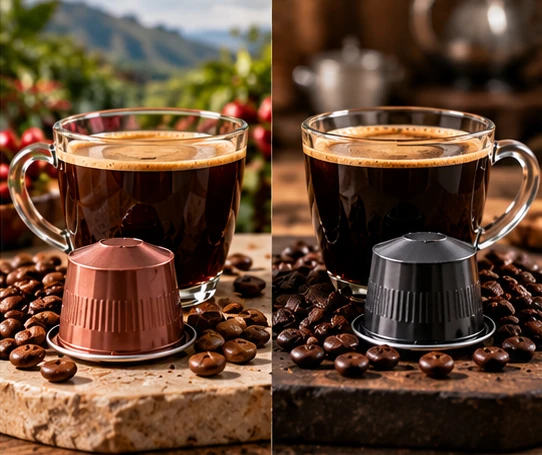
Single-Origin Coffee Pods vs Blend Coffee Pods
| Single-Origin Pods | Blend Coffee Pods |
|---|---|
| One defined source | Multiple origins |
| Highlights regional character | Often designed for balance and consistency |
| Useful for tasting and comparison | Useful for dependable everyday coffee |
| Can be premium-priced | Can range from budget to premium |
Neither approach is automatically better. Blending can be a deliberate craft, not a lower-quality shortcut.
Why Does Coffee Origin Affect Flavor?
Coffee taste develops from altitude, climate, rainfall, soil, coffee variety, processing, harvest timing, and roasting. People often call the combined environmental influence terroir.
Origin matters, but it is only one part of flavor. The same origin can taste very different at light and dark roasts.
Common Single-Origin Coffee Flavor Profiles
Colombia
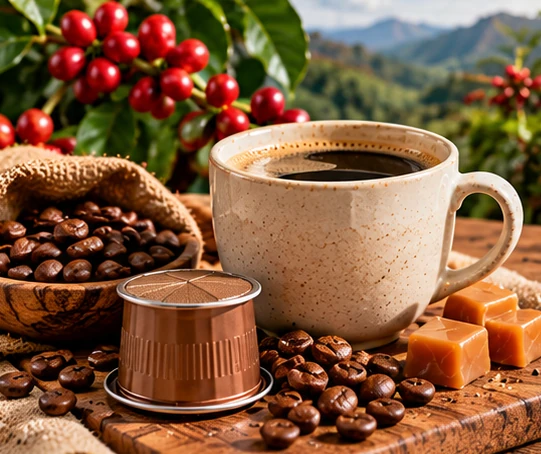
Colombian coffees often show balanced acidity, red-fruit, caramel, or chocolate-like notes. A current Nespresso Vertuo Colombia example is washed Arabica with red-fruit character.
Ethiopia
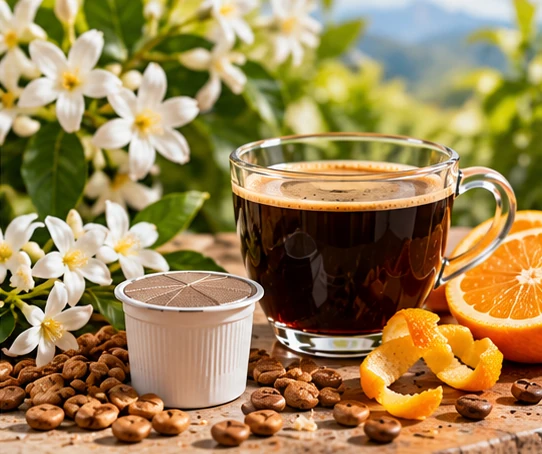
Ethiopian coffees are often associated with floral, citrus, fruit, or jam-like notes, although exact flavor depends heavily on processing and roast.
Brazil
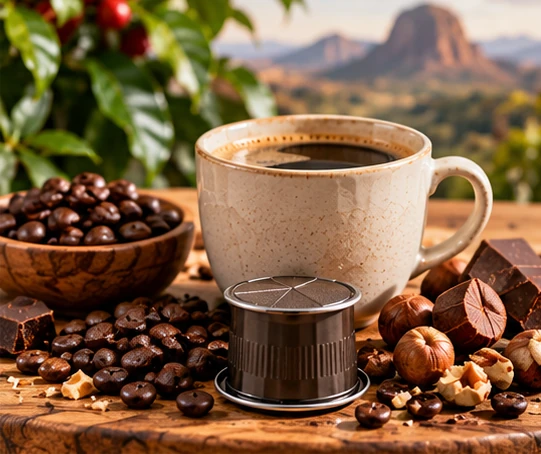
Brazilian coffees often lean toward nutty, chocolate, sweet, or lower-acidity profiles, but Brazil produces many different coffee styles.
Costa Rica
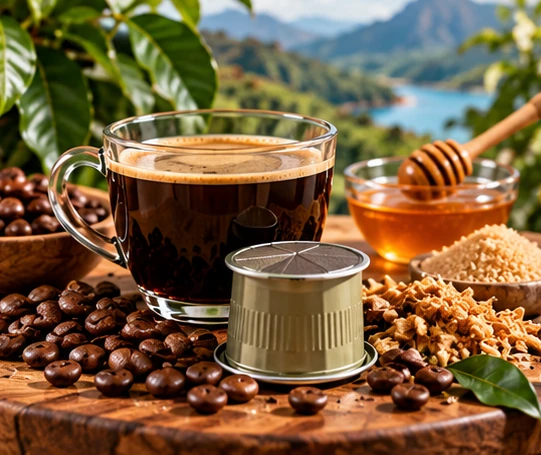
Costa Rican coffee can show sweet, malty, fruit, honey, or clean bright characteristics depending on processing and region.
Flavor Note Reminder
A label such as “red fruit,” “honey,” “cocoa,” or “caramel” usually describes what the coffee tastes like. It does not automatically mean those ingredients were added. See our coffee pod labels guide ↗.
Which Single-Origin Coffee Capsules Are Worth Trying?
If you are new to single-origin coffee, the best capsule to try depends on the flavor you already enjoy. There is no single “best” origin for everyone.
| If You Prefer… | Origin to Try | Why |
|---|---|---|
| Balanced, easy-to-drink coffee | Colombia | A practical beginner choice with balanced acidity and red-fruit, caramel, or chocolate-style notes. |
| Floral and fruity coffee | Ethiopia | Often shows floral, citrus, fruit, or jam-like character. |
| Sweet, malty coffee | Costa Rica | Can offer a clean, sweet cup with malty, fruit, or honey-like notes. |
| Sweet and jam-like coffee | El Salvador | A useful option if you enjoy rounder sweetness and fruit character. |
| Bolder, spiced coffee | Mexico | Can suit drinkers who want a more intense, spiced profile. |
For most beginners, Colombia is the safest starting point because its profile is often balanced. If you already enjoy lighter, fruitier coffee, Ethiopia may be more interesting. If you prefer deeper or more intense coffee, try Mexico or a darker-roasted origin.
Always check your exact machine format before buying. A good origin choice is not useful if the capsule does not fit your brewer.
Current Single-Origin Coffee Pod Examples
Current U.S. Nespresso Vertuo listings include a dedicated Master Crafted Single Origins range.
| Current Example | Drink Size | Intensity | General Profile |
|---|---|---|---|
| Ethiopia | 5.07 fl oz | 4 | Floral and complex |
| El Salvador | 7.77 fl oz | 5 | Sweet and jam-like |
| Costa Rica | 5.07 fl oz | 7 | Malty and sweet |
| Mexico | 7.77 fl oz | 7 | Intense and spiced |
| Colombia | 7.77 fl oz | 5 | Washed Arabica with red-fruit character |
These examples show why origin does not equal intensity. Ethiopia and Costa Rica are both single-origin coffees, but their intensity numbers and cup sizes differ.
For system-specific buying, see our Nespresso coffee pods guide ↗.
How Roast Level Changes Single-Origin Coffee
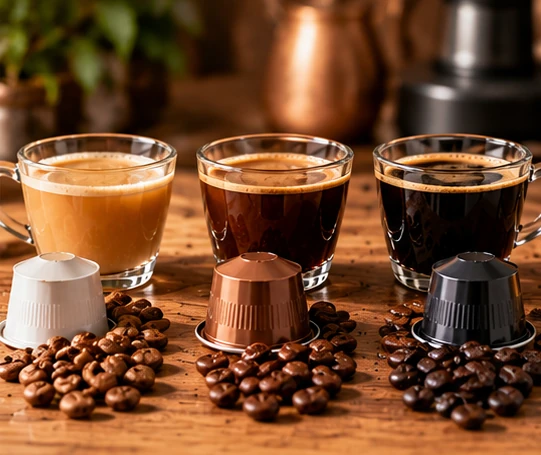
| Roast Level | What You May Notice |
|---|---|
| Light | Origin character, acidity, fruit and floral notes can be easier to notice. |
| Medium | Balanced origin character with more roast sweetness and body. |
| Dark | Roast, bitterness and smoky character can become more dominant than subtle origin notes. |
If intensity numbers confuse you, see our coffee pod flavor intensity guide ↗.
Arabica vs Robusta in Single-Origin Pods
Single-origin does not mean Arabica only. It simply describes origin.
Arabica
Often associated with more aromatic, floral, fruit, sweet, or complex flavors and usually lower caffeine than Robusta.
Robusta
Often stronger, more bitter, fuller-bodied, and usually higher in caffeine than Arabica.
Are Single-Origin Coffee Pods Stronger?
Not necessarily. “Single-origin” tells you where the coffee comes from. It does not tell you how bold the pod tastes.
- Roast level
- Coffee dose
- Bean variety
- Brew size
- Extraction
- Your personal taste
Do Single-Origin Coffee Pods Have More Caffeine?
No general rule says single-origin coffee has more caffeine. Caffeine depends more on bean type, dose, serving size, and brewing system.
For broader comparisons, see our coffee pod caffeine comparison ↗.
Single-Origin Pods for Keurig and Nespresso
Nespresso
Nespresso currently offers several Master Crafted Single Origins in Vertuo, including Ethiopia, El Salvador, Costa Rica, Mexico, and Colombia. Original-line availability can differ by market.
Keurig
The Keurig ecosystem also includes origin-focused K-Cups from different brands. Current Keurig recipe content references examples such as Single Origin Colombia Select, Single Origin Sumatra Reserve, and Ethiopia Supreme.
For K-Cup compatibility, see our Keurig coffee pods guide ↗.
Does Single-Origin Mean Better Quality?
No. Single-origin can improve traceability and make regional flavor easier to study, but quality still depends on green coffee quality, harvesting, processing, roasting, grinding, capsule sealing, freshness, and brewing.
A carefully designed blend can be higher quality than a poorly handled single-origin coffee.
Are Single-Origin Coffee Pods Worth the Price?
They can be worth it when you value traceability and distinct regional flavor. They may be less worthwhile if you mainly want a consistent daily cup with milk, syrup, or creamer.
Current Nespresso Vertuo single-origin examples in the U.S. sit around $1.45–$1.50 per capsule, which is in line with many premium Vertuo products rather than automatically being much more expensive.
| Single-Origin May Be Worth It If… | A Blend May Suit You Better If… |
|---|---|
| You want to compare countries or regions. | You want the same taste every day. |
| You drink coffee mostly black. | You add enough milk or syrup to hide subtle differences. |
| You enjoy fruit, floral, nutty, or regional flavor notes. | You prefer a smooth balanced profile. |
| Traceability matters to you. | Price and consistency matter more. |
For current pricing context, see our coffee pod price guide ↗.
How to Store Single-Origin Coffee Pods
- Keep them in a cool, dry place.
- Avoid direct sunlight and heat.
- Protect capsules from dents and punctures.
- Keep the original sleeve or box for the best-before date.
- Use older stock before newer packs.
For shelf-life guidance, see our how long coffee pods last guide ↗.
Are Single-Origin Coffee Pods More Sustainable?
Not automatically. Single-origin can improve traceability, but sustainability depends on farming, sourcing, capsule material, packaging, transport, and disposal. A single-origin label should not be treated as a sustainability certification.
How to Choose a Single-Origin Coffee Pod
- Check exact machine compatibility first.
- Choose an origin based on flavor, not country reputation alone.
- Pick a roast level that lets you notice the flavors you enjoy.
- Check serving size and intensity separately.
- Do not assume single-origin means stronger or more caffeinated.
- Compare price per pod before buying a large pack.
- Start with one small sleeve or box before stocking up.
Frequently Asked Questions
It means the coffee comes from one defined source, such as one country, region, estate, farm, or lot, instead of several unrelated origins.
Not automatically. Single-origin highlights one source, while blends can be designed for balance and consistency.
No. Caffeine depends more on bean type, dose, serving size, and brewing system.
Not necessarily. Roast, coffee dose and brew size affect how strong a pod tastes.
Colombia is a practical starting point for balanced coffee. Ethiopia can suit people who want floral or fruity coffee, while Brazil often suits people who like nutty or chocolate-style profiles.
Not always. It can refer to one country or region, so check how specifically the producer defines the origin.
Yes. Current Vertuo examples include Ethiopia, El Salvador, Costa Rica, Mexico, and Colombia.
Yes. The Keurig ecosystem includes origin-focused K-Cup coffees from different brands.
Climate, altitude, soil, coffee variety, processing, harvest and roasting all influence the final cup.
They can be if you enjoy comparing origins and drink coffee simply enough to notice the differences. If consistency matters more, a blend may offer better value.
Final Thoughts
Single-origin coffee pods make it easy to compare how coffee from different places can taste without changing your brewing routine. The key is to treat origin as one part of the cup, not as a promise of stronger coffee or higher quality. Compare the origin, roast, bean type, brew size, intensity, caffeine, compatibility, and price together.