

Troubleshooting Coffee Pod Jams or Leaks: Common Causes and Easy Fixes
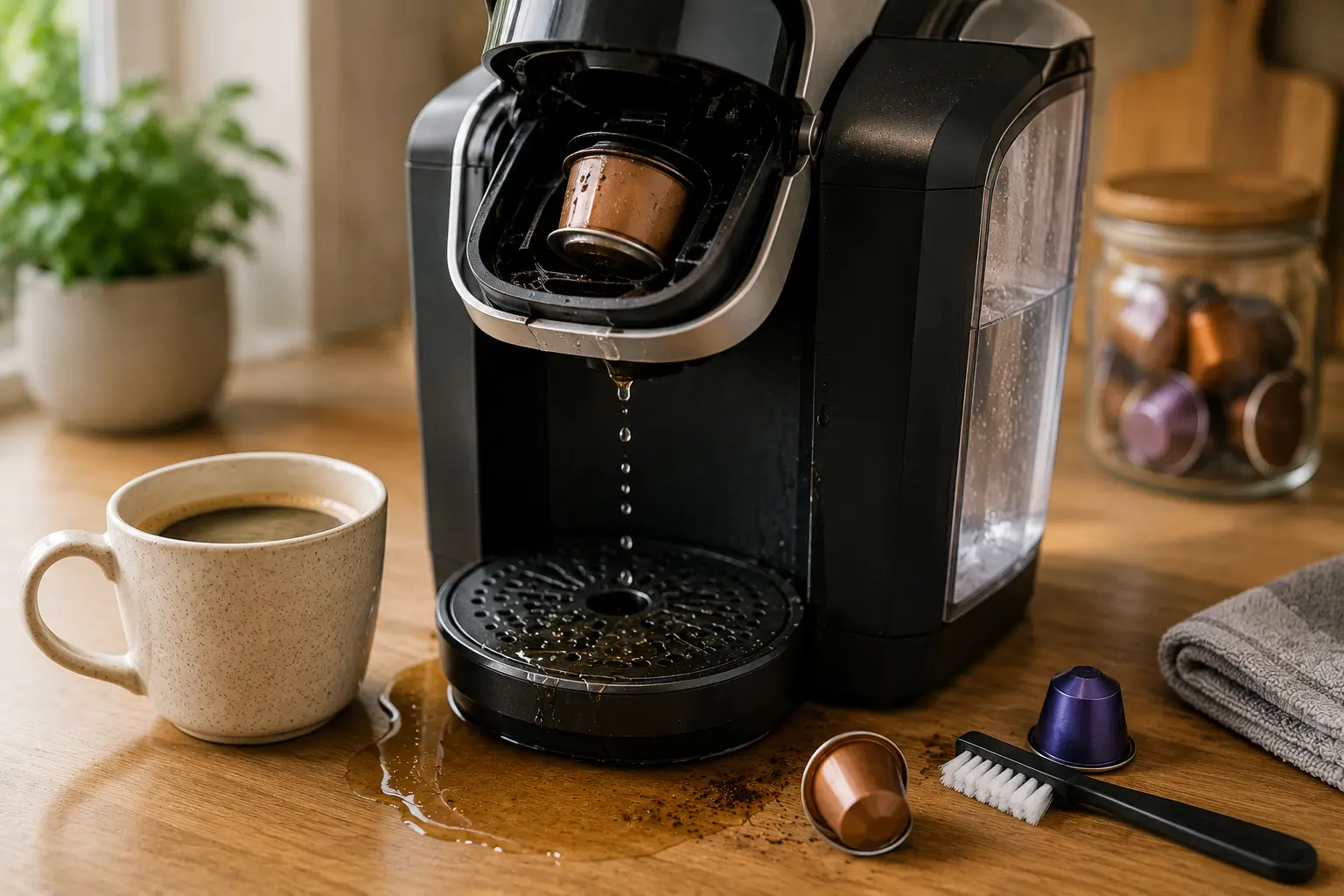
Coffee pod machines make brewing coffee quick and convenient. However, even the best machines can develop problems over time. You may notice water leaking onto the counter, coffee dripping around the capsule, or a pod getting stuck inside the brewing chamber. These issues can be frustrating, especially when you just want a quick cup of coffee.
Leaks and jams often come from a blocked needle, damaged capsule, worn seal, or mineral buildup. Many simple problems can be checked at home. Start with safe, external checks before considering a repair.
Quick Answer: How Do You Fix Coffee Pod Jams or Leaks?
Turn off and unplug the machine first, and let it cool. For a stuck pod, check the used-capsule bin and remove only capsules that release without force. For a leak, inspect the water tank, drip tray, pod fit, and visible seals. Clean accessible parts as directed in your manual. If water flow is slow, use the manufacturer-approved descaling process. Stop using the machine if water reaches electrical parts or the leak continues.
Key Takeaways
- Most coffee pod machine leaks are caused by blocked needles, damaged capsules, or worn seals.
- Coffee pod jams often happen when a capsule is inserted incorrectly or fails to eject properly.
- Water leaking around the pod usually points to a puncture or brewing chamber issue.
- Regular descaling helps prevent many brewing and pressure-related problems.
- Many common pod machine issues can be diagnosed and fixed in a few minutes.
What Causes Coffee Pod Machine Jams and Leaks?
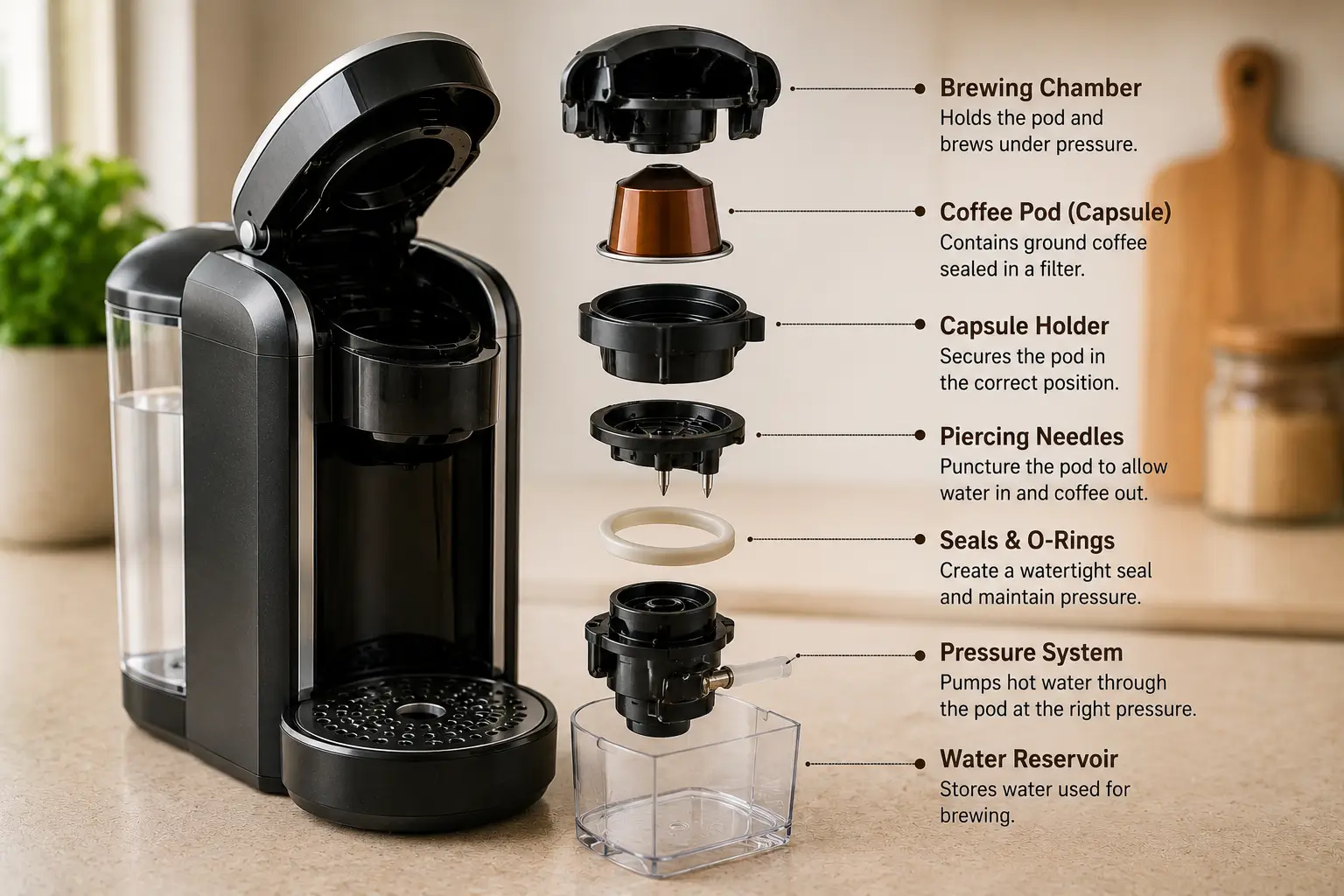
Coffee pod machines rely on pressure, water flow, and proper capsule positioning to brew coffee. When one part of this process fails, the machine may leak, stop brewing, or trap a capsule inside the chamber.
Several components work together during every brew cycle:
- Brewing chamber
- Capsule holder
- Piercing needles
- Water reservoir
- Internal seals
- Pressure system
If any of these parts become blocked, damaged, or worn, the machine may struggle to operate correctly.
The most common causes of coffee pod machine problems include:
- Clogged entrance or exit needles
- Coffee grounds buildup
- Mineral scale from hard water
- Damaged coffee pods
- Misaligned capsules
- Cracked water reservoirs
- Worn silicone seals or O-rings
- Excess pressure inside the brewing chamber
Machines from Keurig, Nespresso, and Dolce Gusto can all experience these issues, although the symptoms may vary slightly between models.
Common Signs Your Coffee Pod Machine Needs Attention
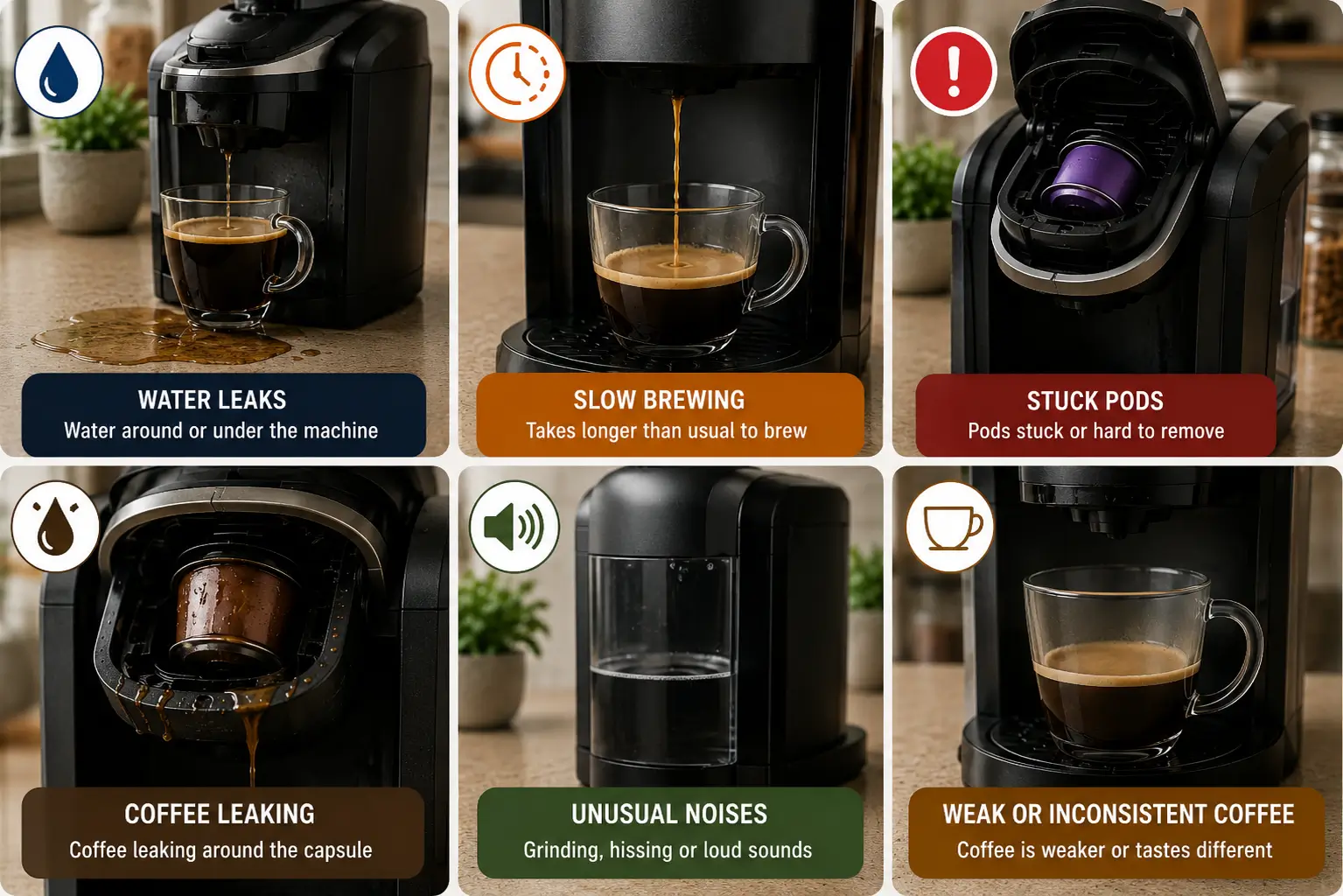
Many coffee pod machine problems start with small warning signs. Catching them early can help prevent larger issues later.
Watch for these symptoms:
Water Appearing Around the Machine
Water collecting under or around the machine is often the first sign of a leak. This may come from the reservoir, brewing chamber, or internal seals.
Coffee Leaking Around the Capsule
If coffee escapes around the pod instead of flowing into your cup, the capsule may not be sealing properly during brewing.
Stuck or Difficult-to-Remove Pods
A capsule that remains trapped after brewing may indicate pressure problems, alignment issues, or damage inside the pod chamber.
Slow Brewing Cycles
A machine that suddenly takes longer to brew may have restricted water flow caused by scale buildup or partial blockages.
Unusual Noises During Brewing
Grinding, hissing, or excessive pressure sounds can signal that water is struggling to move through the system.
Weak or Inconsistent Coffee
If the machine produces weaker coffee than usual, it may not be puncturing the capsule correctly or delivering enough pressure.
How to Diagnose a Coffee Pod Machine Problem?
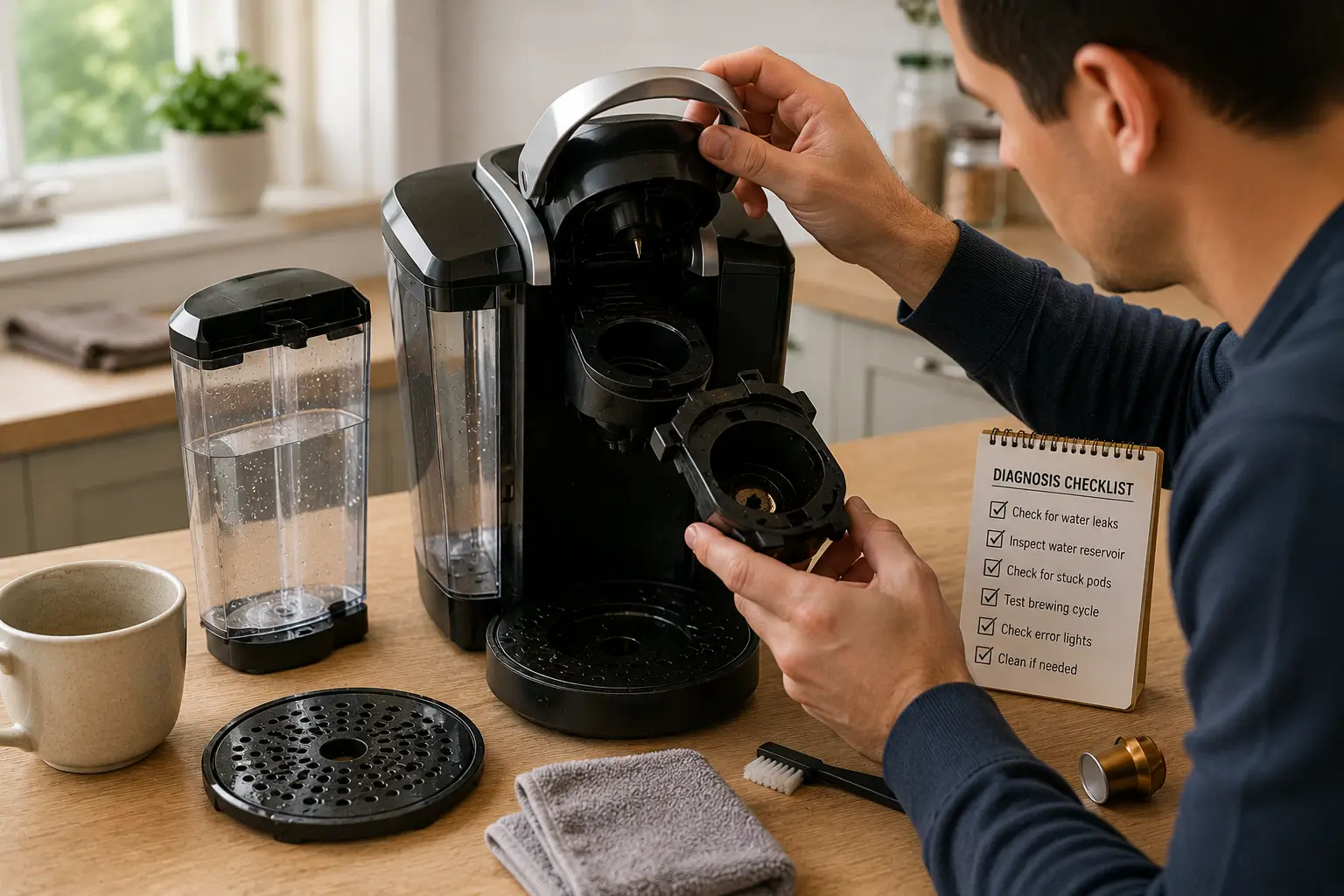
Before attempting any repair, identify the exact symptom. Many users assume the machine is broken when the real issue is much smaller.
A simple diagnosis can save time and money.
Check for Water Leaks
Remove the water reservoir and inspect it carefully.
Look for:
- Cracks in the tank
- Damaged reservoir valves
- Loose connections
- Water collecting underneath the machine
Refill the tank and monitor where the leak appears.
Check for Stuck Coffee Pods
Open the brewing chamber after the machine cools.
Inspect for:
- A capsule lodged in the holder
- Torn pod material
- Coffee grounds around the puncture area
- Capsules that failed to eject
Never force a stuck pod out with excessive pressure, as this can damage the capsule holder.
Check Brewing Performance
Run a brew cycle using water only.
Watch for:
- Slow water flow
- Uneven flow
- Interrupted brewing
- Water leaking from unusual locations
This test often helps identify pressure or blockage problems.
Check Error Messages and Warning Lights
Many modern coffee pod machines display warning lights when they detect an issue.
Common alerts may indicate:
- Descaling required
- Water reservoir problems
- Capsule chamber issues
- Internal brewing faults
Refer to your machine’s user manual to match the warning indicator with the correct troubleshooting step.
Common Coffee Pod Machine Leaks and Fixes
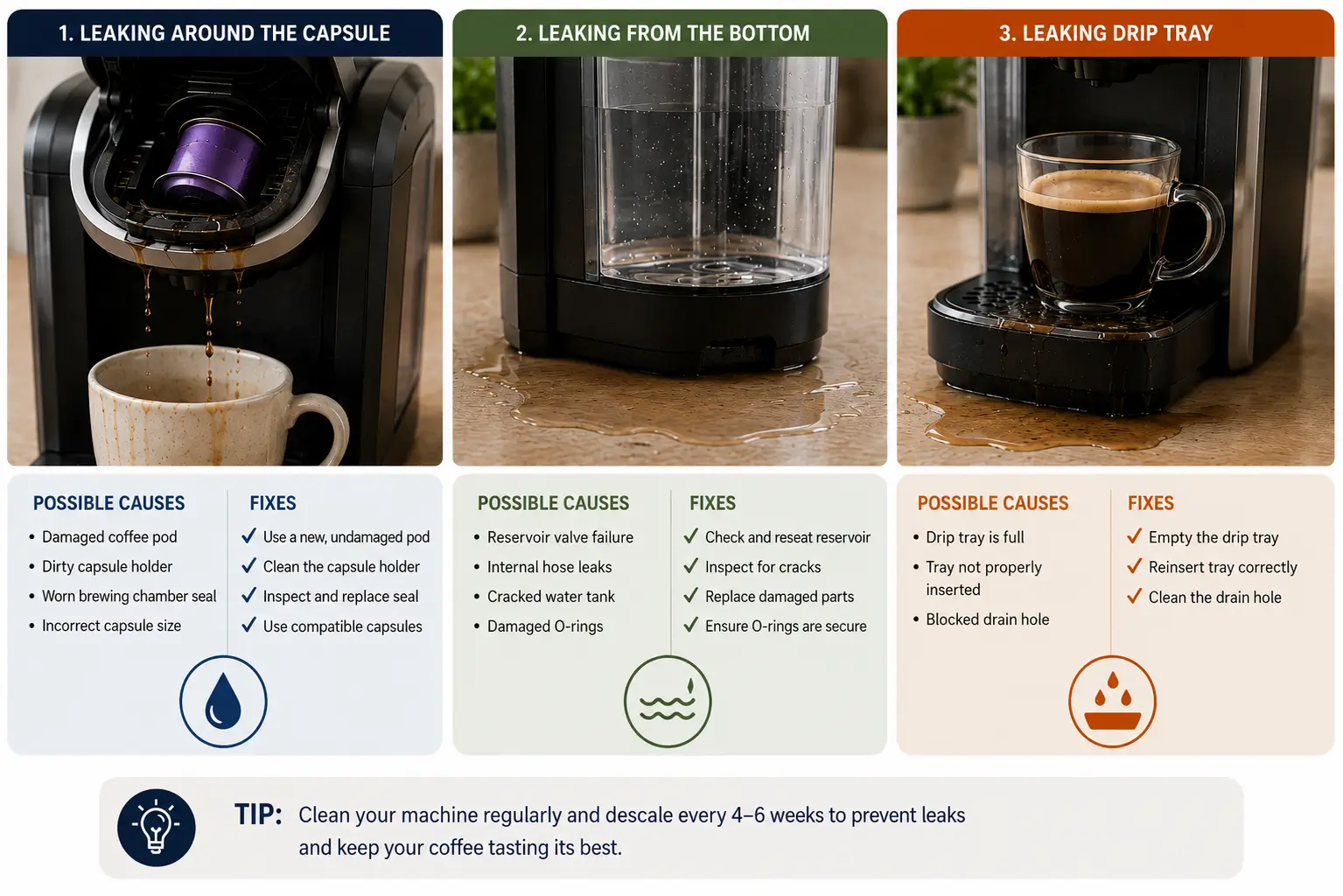
Leaks are among the most common complaints from pod machine owners. The location of the leak usually provides the best clue about the cause.
Coffee Pod Machine Leaking Around the Capsule
This issue often occurs when the machine cannot create a proper seal around the pod.
Possible causes include:
- Damaged coffee pod
- Incorrect capsule size
- Dirty capsule holder
- Worn brewing chamber seal
Remove the pod and inspect it carefully. Replace damaged capsules and clean any coffee residue from the holder before brewing again.
Coffee Pod Machine Leaking From the Bottom
A leak underneath the machine can be more difficult to identify.
Possible causes include:
- Reservoir valve failure
- Internal hose leaks
- Cracked water tank
- Damaged O-rings
Start by checking the reservoir because it is often the simplest source of the problem.
Water Reservoir Leaks
Reservoir leaks are common in older machines.
Signs include:
- Water pooling near the tank
- Dripping after refilling
- Loose valve connections
Inspect the tank for visible cracks and ensure it sits securely in place.
Leaking Drip Tray Problems
Sometimes the machine itself is not leaking.
An overflowing drip tray can make it appear that the machine has developed a fault.
Check whether:
- The tray is full
- The tray is seated properly
- Excess water is collecting after multiple brew cycles
Empty and clean the tray regularly to prevent overflow.
Damaged Seals and O-Rings
Rubber seals help maintain brewing pressure.
Over time they may:
- Dry out
- Crack
- Flatten
- Lose flexibility
When this happens, water can escape during brewing. Replacing worn seals often resolves recurring leaks.
Common Coffee Pod Jams and Fixes
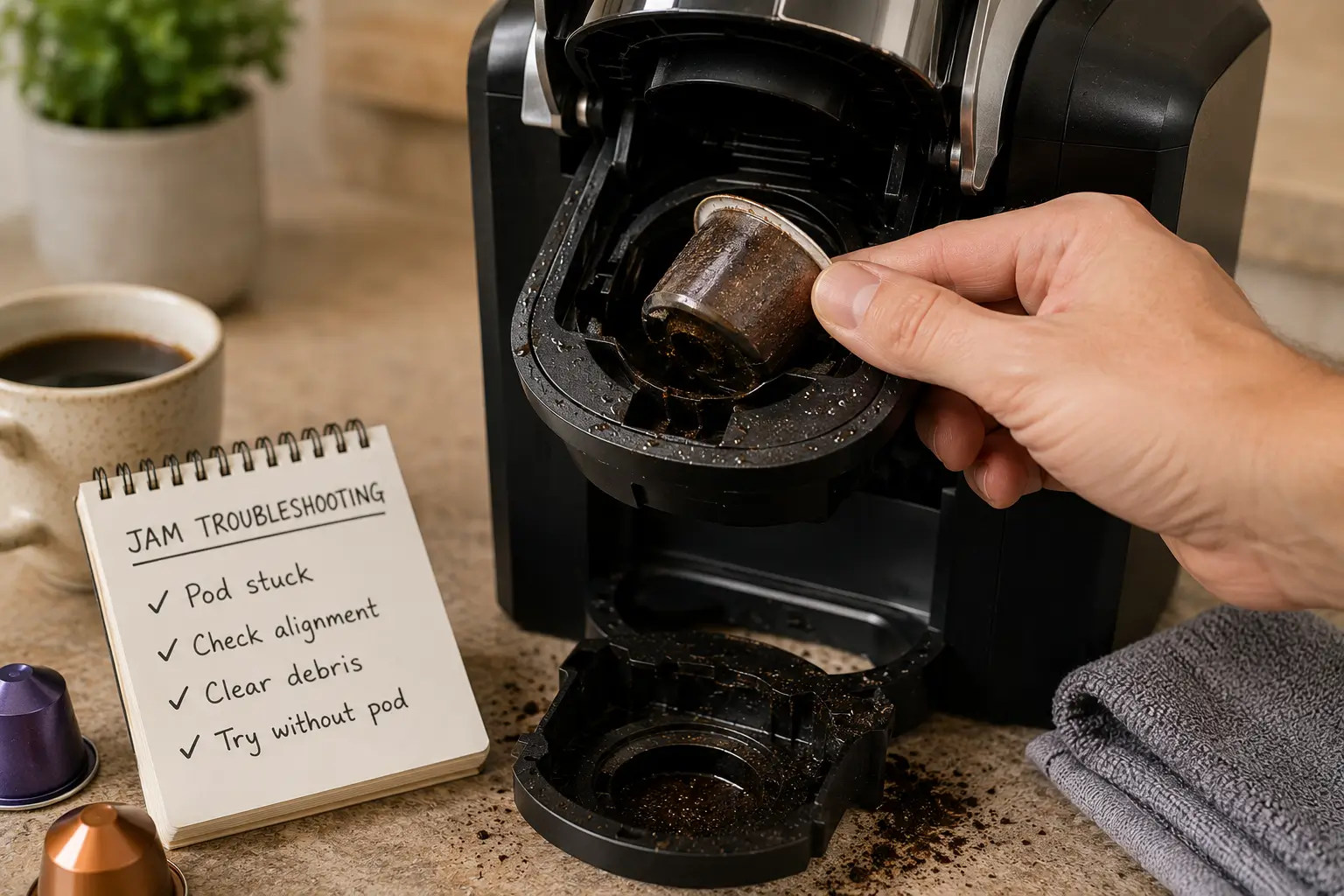
Coffee pod jams can stop your machine from brewing properly. In some cases, the pod becomes trapped inside the brewing chamber. In others, the machine struggles to puncture the capsule or eject it after brewing.
Most pod jams are caused by damaged capsules, blocked needles, or incorrect pod placement.
Coffee Pod Stuck in Machine
A stuck coffee pod is one of the most common pod machine problems.
Possible causes include:
- Swollen or damaged capsules
- Excess pressure inside the chamber
- Incorrect capsule insertion
- Worn ejection mechanism
- To remove a stuck pod safely:
Turn off the machine.
Allow the machine to cool.
Open the brewing chamber slowly.
Carefully remove the capsule.
Clean any coffee grounds left behind.
Avoid using sharp metal tools because they can damage the capsule holder.
Coffee Capsule Not Ejecting Properly
Many machines automatically release used capsules into a collection container. When this system fails, the capsule may remain inside the brewing chamber.
Common causes include:
- Full capsule container
- Coffee residue buildup
- Misaligned ejection parts
- Damaged capsule edges
Empty the used capsule container and clean the chamber regularly to reduce this problem.
Coffee Machine Not Piercing the Pod
For proper extraction, the machine must puncture the capsule at specific points.
If the capsule remains intact:
Water cannot flow correctly.
Brewing pressure drops.
Coffee becomes weak or fails to brew.
Possible causes include:
- Blocked piercing needles
- Incorrect capsule type
- Bent needle assembly
- Damaged capsule holder
Inspect the puncture points after brewing. A properly pierced pod should show clean entry and exit holes.
Coffee Grounds Escaping Into the Cup
Finding coffee grounds in your cup often indicates a brewing chamber issue.
This can happen when:
- A capsule tears during brewing
- The needle creates an oversized puncture
- Coffee residue blocks water flow
- The pod is defective
Cleaning the brewing chamber and replacing damaged capsules usually solves this issue.
Pod Explodes Inside the Machine
Although uncommon, a pod can burst under pressure.
Possible causes include:
- Severe needle blockages
- Excess mineral buildup
- Damaged capsules
- Incorrect pod compatibility
If a capsule bursts, clean the brewing chamber thoroughly before using the machine again.
Needle and Brewing Chamber Problems
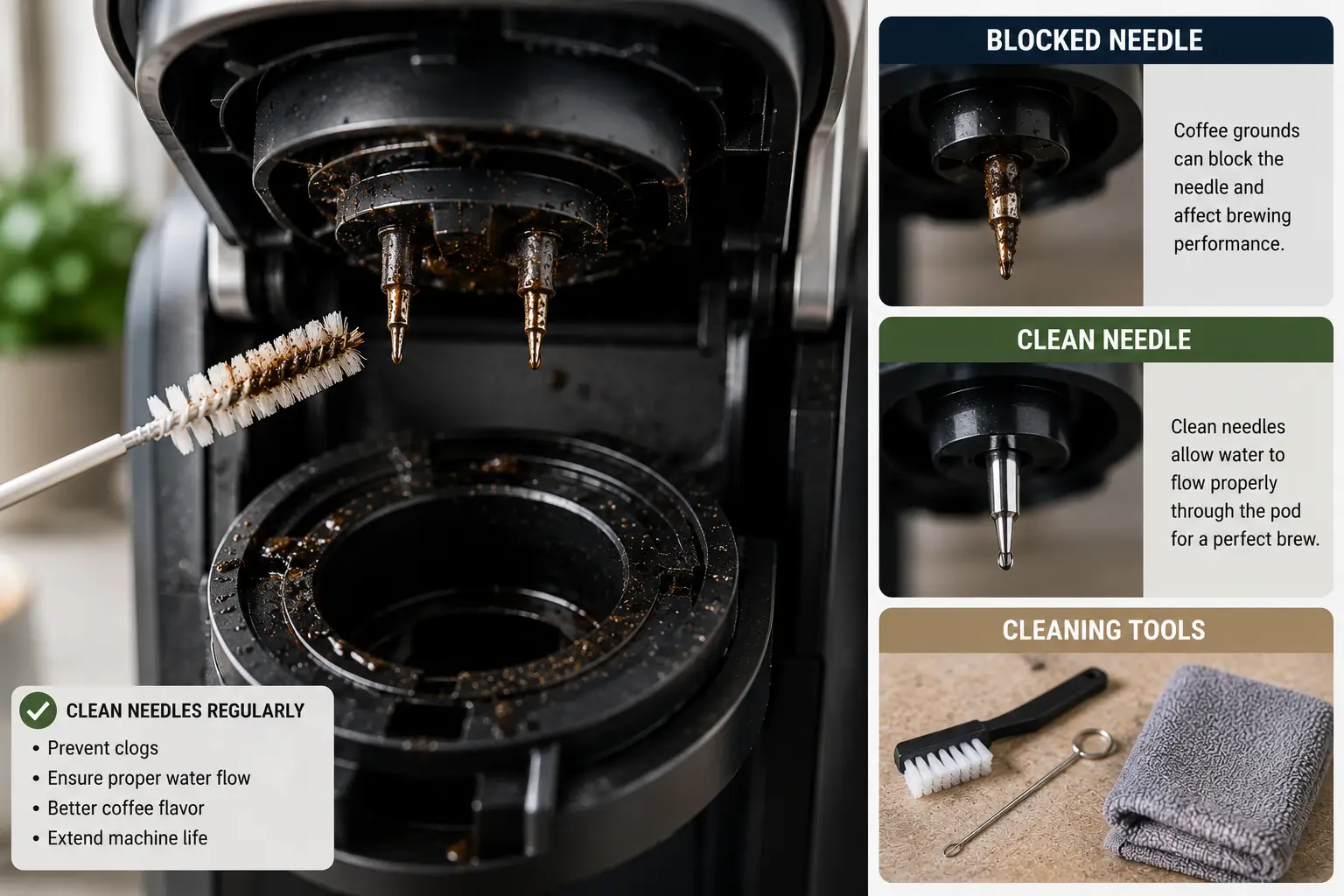
The needle system is responsible for puncturing the capsule and directing water through the coffee grounds.
Even small blockages can create pressure problems, leaks, and poor extraction.
Blocked Entrance Needle
The entrance needle creates the first puncture in the capsule.
Over time, coffee oils and fine grounds can collect around the opening.
Signs of a blocked entrance needle include:
- Slow brewing
- Weak coffee
- Incomplete extraction
- Water backing up inside the capsule
Carefully clean the needle according to the manufacturer’s instructions.
Blocked Exit Needle
The exit needle allows brewed coffee to leave the capsule.
A blockage here can create excessive pressure.
Symptoms often include:
- Coffee leaking around the pod
- Burst capsules
- Grounds in the cup
- Brewing interruptions
Regular cleaning helps keep water flowing normally.
Coffee Residue Buildup
Coffee oils build up naturally inside the brewing chamber.
Over time this residue can:
- Restrict water flow
- Affect coffee flavor
- Increase pressure
- Contribute to leaks
Wiping the brewing chamber regularly helps prevent buildup.
Mineral Scale Blockages
Hard water leaves mineral deposits inside coffee machines.
As scale accumulates, it narrows internal water pathways.
Common symptoms include:
- Slow brewing cycles
- Reduced coffee temperature
- Increased pump noise
- Weak extraction
Descaling removes these deposits and restores normal water flow.
Coffee Pod Machine Not Brewing Correctly
Sometimes a machine powers on normally but still produces poor coffee.
These performance issues are often linked to pressure, water flow, or capsule problems.
Slow Brewing
A brew cycle that suddenly takes longer than normal may indicate:
- Scale buildup
- Partial needle blockage
- Restricted water flow
- Reservoir valve problems
If the machine becomes noticeably slower, inspect it before the issue worsens.
Weak Coffee Extraction
Weak coffee can occur even when the machine appears to function normally.
Possible causes include:
- Incomplete capsule puncturing
- Low brewing pressure
- Blocked needles
- Damaged coffee pods
The machine may be brewing, but it is not extracting enough flavor from the capsule.
Watery Coffee After a Jam
A recent jam can affect extraction quality.
Coffee may taste watery because:
- The pod was not punctured properly
- Brewing pressure remains uneven
- Residue is blocking water flow
- Internal parts need cleaning
Running a water-only cycle after clearing a jam often helps restore normal performance.
Machine Stops Mid-Brew
A machine that stops unexpectedly may be responding to pressure or water flow problems.
Common causes include:
- Empty reservoir
- Scale buildup
- Internal sensor errors
- Blocked needles
If the issue continues after cleaning and descaling, further inspection may be necessary.
Brand-Specific Troubleshooting
While most pod machines share similar components, some problems are more common with certain brands.
Keurig Troubleshooting
Common Keurig issues include:
For pod sizes and brewer compatibility, see our Keurig coffee pods guide before trying a different K-Cup.
Blocked exit needles
K-Cup alignment problems
Reservoir valve leaks
Weak coffee extraction
Many Keurig brewing problems are linked to clogged needles or scale buildup.
Nespresso Troubleshooting
Common Nespresso issues include:
If the capsule does not fit or eject correctly, check our Nespresso coffee pods guide to understand Original and Vertuo differences.
Capsule not piercing correctly
Coffee leaking around capsules
Used capsule container blockages
Reduced brewing pressure
Check that capsules are seated correctly before brewing.
Dolce Gusto Troubleshooting
Common Dolce Gusto issues include:
- Capsule holder alignment problems
- Water flow restrictions
- Brewing pressure loss
- Needle blockages
Keeping the capsule holder clean helps reduce many brewing issues.
When Descaling Solves the Problem
If you are unsure which brewer design you have, our single-serve coffee machine guide explains the common systems and how they work.
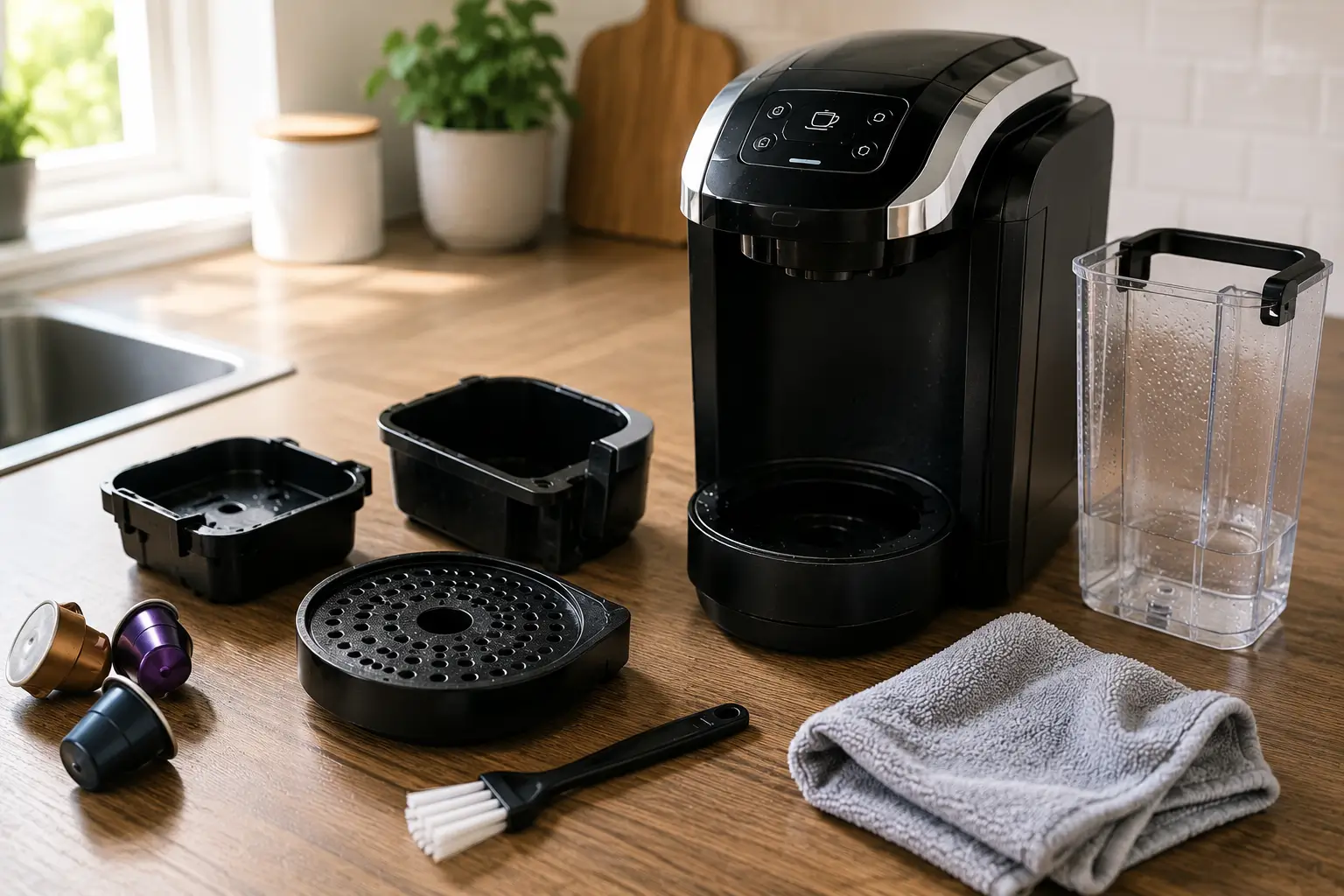
Many coffee pod machine owners overlook descaling when troubleshooting.
Mineral buildup affects:
- Water flow
- Brewing pressure
- Coffee temperature
- Machine performance
- Signs your machine may need descaling include:
- Slow brewing
- Unusual noises
- Reduced coffee volume
- Frequent brewing interruptions
If your machine has not been descaled for several months, mineral deposits may be contributing to leaks, jams, or poor extraction.
In many cases, a proper descaling cycle restores normal performance without the need for repairs.
Coffee Pod Compatibility Problems
Not every coffee pod works with every machine. Using incompatible capsules can create brewing problems, leaks, and pod jams.
Different brewing systems use different capsule shapes. Our Nespresso vs Keurig comparison explains the key differences before you switch pod types.
Some capsules may appear to fit, but their shape, size, or puncture points may differ from what the machine expects.
Common compatibility issues include:
- Incorrect capsule size
- Third-party pods with poor manufacturing quality
- Capsules that do not seal properly
- Pods designed for a different machine system
Always check that the capsule is compatible with your specific machine model before brewing.
Damaged Coffee Pods
A damaged pod can cause several problems during brewing.
Watch for:
- Dents or crushed capsules
- Torn pod lids
- Broken plastic edges
- Swollen capsules
Damaged pods may leak, burst, or become stuck inside the brewing chamber.
If a capsule looks damaged before use, replace it with a new one.
How to Prevent Future Jams and Leaks?
Store spare capsules away from heat and moisture. Read how long coffee pods last for practical freshness and storage guidance.
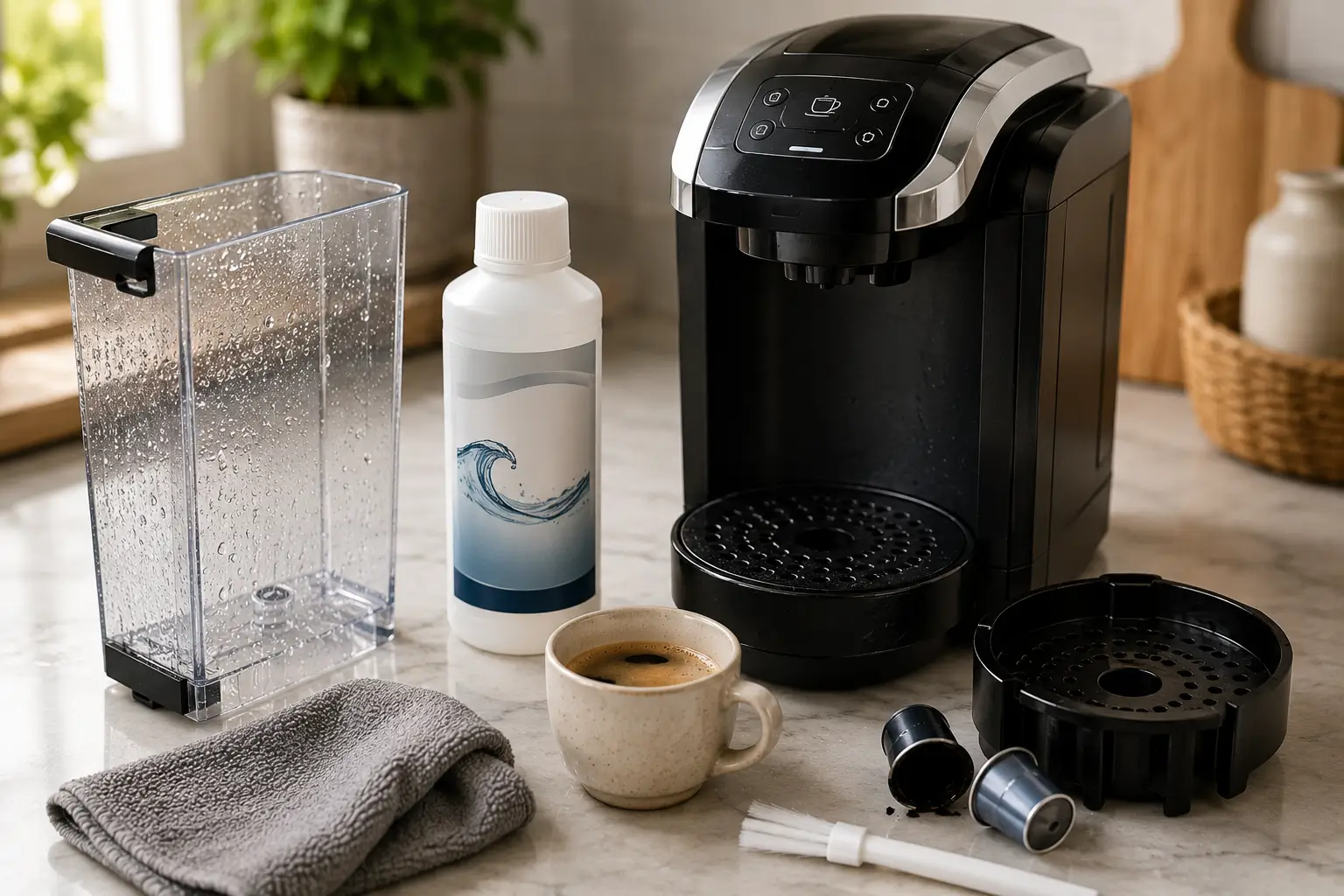
Most coffee pod machine problems can be avoided with a few simple habits.
Preventive care takes less time than troubleshooting a machine that has already stopped working.
Daily Checks
Before and after brewing:
- Remove used capsules promptly
- Empty excess water from the drip tray
- Check for visible coffee residue
- Wipe spills around the brewing area
These quick checks help prevent buildup inside the machine.
Weekly Inspection
Once a week, inspect the machine for:
- Coffee grounds near the needles
- Residue around the capsule holder
- Water leaks around the reservoir
- Signs of wear on seals
Regular inspections can help identify problems before they become serious.
Descale When Needed
Hard water gradually creates mineral deposits inside the machine.
Descaling helps:
- Maintain water flow
- Protect brewing pressure
- Improve coffee quality
- Reduce strain on internal parts
Machines used daily may require descaling more often than occasional-use machines.
Maintenance Schedule for Coffee Pod Machines
Following a simple schedule can significantly reduce the risk of jams and leaks.
| When | Maintenance task |
|---|---|
| After each use | Remove used pods when safe, empty the drip tray as needed, and wipe spills. |
| Weekly | Wash removable parts according to the manual and inspect the capsule holder for residue. |
| When prompted or recommended | Descale using the method and product approved for your exact machine model. |
| When leaks or jams recur | Check visible seals and reservoir fit; contact the manufacturer if problems persist. |
Repair or Replace Your Coffee Pod Machine?
Sometimes a repair makes sense. In other situations, replacing the machine may be the better option.
Signs a Repair Is Worth It
Consider repairing the machine if:
- The issue involves a clogged needle
- A seal or O-ring needs replacement
- The reservoir is leaking
- The machine is otherwise working well
Many minor problems are inexpensive to fix.
Signs It May Be Time for a New Machine
Replacement may be the better choice if:
- Multiple internal parts have failed
- Leaks continue after repairs
- Brewing pressure remains inconsistent
- The machine frequently displays error messages
- Repair costs approach the price of a new machine
Comparing repair costs with replacement costs can help you make a practical decision.
What to Check Before Calling for Repairs
Keep a record of where the leak starts, which capsules you use, and any warning lights. This can help you describe the issue accurately to the manufacturer or repair technician.
If cleaning, correct pod placement, and manufacturer-approved descaling do not solve the problem, stop using the machine and contact support. Do not open electrical housing or force the brewing mechanism.
In most situations, the machine did not require professional repair. A careful inspection, proper cleaning, or replacing a small part solved the issue. The key lesson I learned is that small warning signs should never be ignored. A minor leak or slow brew cycle often becomes a larger problem if left untreated.
Frequently Asked Questions
Water leaks are often caused by damaged seals, reservoir problems, blocked needles, or worn internal components. The location of the leak usually helps identify the source.
Coffee leaking around the capsule often indicates an improper seal, damaged pod, blocked needle, or compatibility issue.
A pod may become stuck because of pressure buildup, capsule damage, residue accumulation, or a faulty ejection mechanism.
Yes. A clogged needle can restrict water flow and increase pressure inside the brewing chamber, causing leaks around the capsule.
Follow your machine manual or descaling alert. The timing depends on water hardness, how often you brew, and the specific model.
Some third-party capsules may not match the exact dimensions of the original capsules. Poorly fitting pods can increase the risk of leaks and jams.
A recent jam may affect water flow and brewing pressure. Cleaning the brewing chamber and checking the puncture needles can often restore normal extraction.
Machine lifespan varies with the model, usage, water quality, and maintenance. Follow the manufacturer’s care instructions and consider repair support when recurring faults appear.
Conclusion
Troubleshooting coffee pod jams or leaks does not have to be complicated. Most issues are caused by blocked needles, damaged capsules, mineral buildup, worn seals, or simple compatibility problems. Identifying the symptoms early can help prevent more expensive repairs later.
Whether you use a Keurig, Nespresso, Dolce Gusto, or another pod machine, regular inspections and timely maintenance can keep the system working smoothly. In many cases, a few minutes of troubleshooting is all it takes to restore normal brewing performance and enjoy a reliable cup of coffee again.