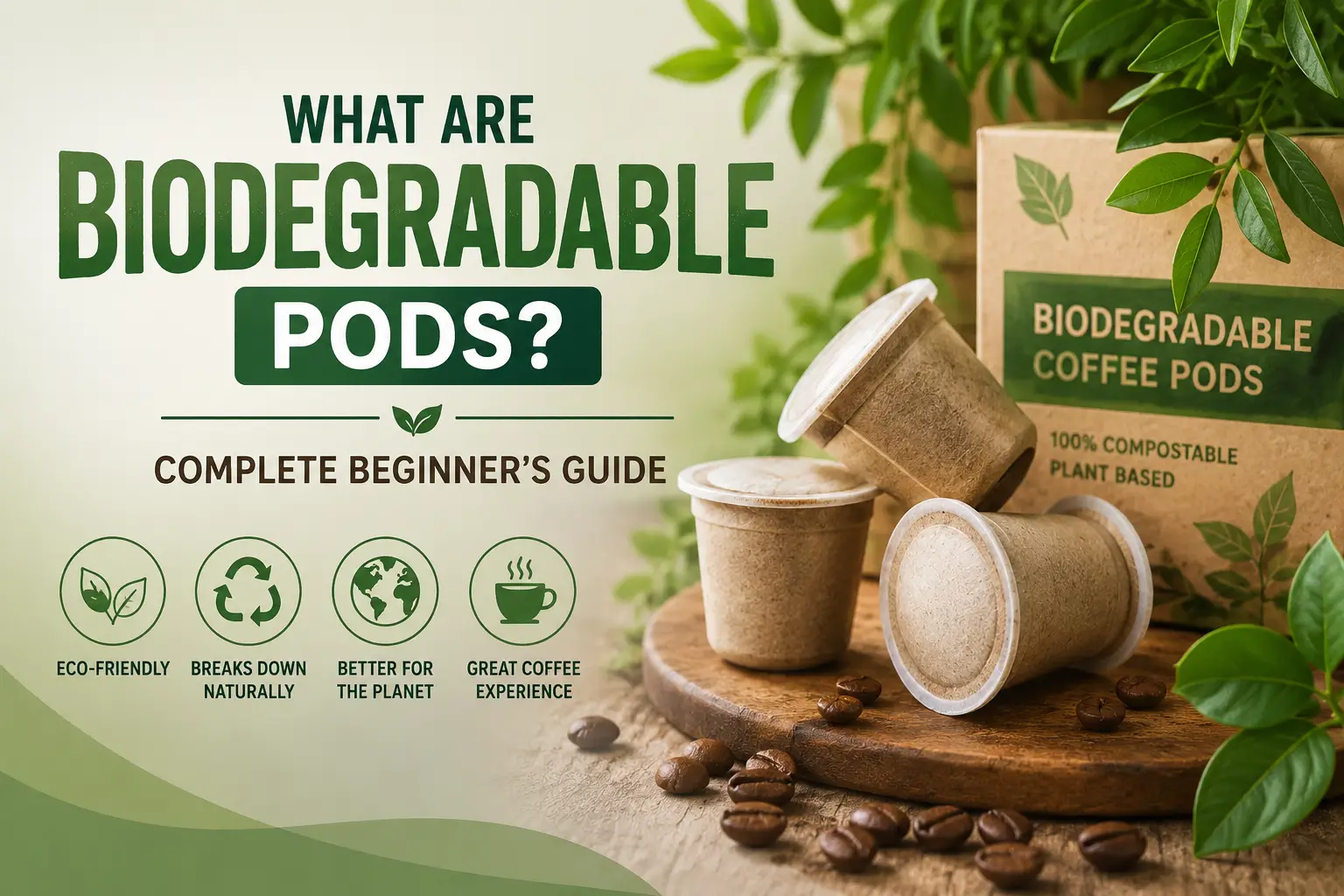

What Are Biodegradable Pods? Complete Beginner’s Guide
When I first started learning about eco-friendly coffee pods, I kept seeing terms like biodegradable, compostable, recyclable, and sustainable. At first, they all sounded the same. Many coffee drinkers face the same problem. You want to reduce waste, but it can be difficult to understand which coffee pods are actually better for the environment. Some products claim to be biodegradable, while others are labeled compostable. Without knowing the difference, it is easy to make the wrong choice.
After researching different coffee pod materials, testing various coffee capsule systems, and learning how these pods break down after use, I realized that biodegradable coffee pods are often misunderstood. Some break down naturally over time, while others require specific conditions to decompose properly. In this guide, you will learn what biodegradable pods are, how they work, what they are made of, their environmental impact, and whether they are a good alternative to traditional plastic coffee pods.
Key Takeaways
What Are Biodegradable Pods?
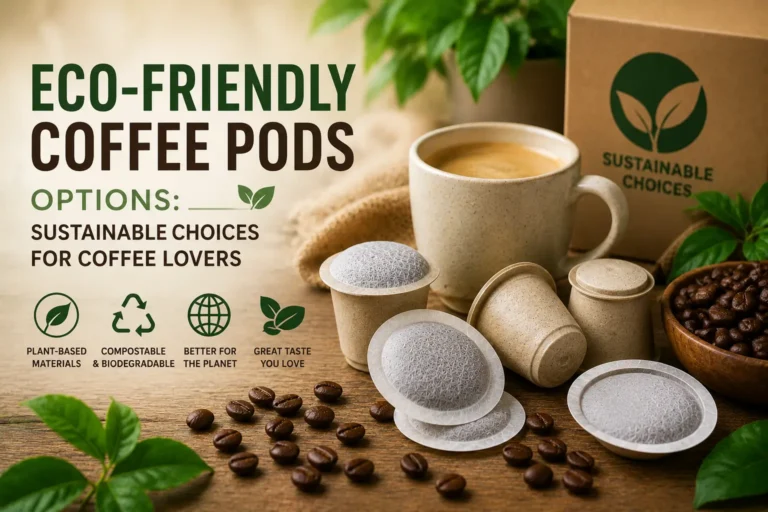
Biodegradable pods are single-serve coffee capsules designed to break down naturally through biological processes. Unlike traditional plastic coffee pods, biodegradable coffee pods are made from materials that microorganisms can gradually decompose over time.
These pods are created to reduce long-term environmental waste while still offering the convenience of single-serve coffee brewing. They are often marketed as eco-friendly coffee pods because they use plant-based materials instead of conventional petroleum-based plastics.
Many biodegradable coffee pods look similar to regular coffee capsules. They work in a similar way inside compatible coffee machines. The main difference is what happens after the pod is thrown away.
Traditional plastic pods can remain in landfills for hundreds of years. Biodegradable coffee capsules are designed to break down much faster under suitable environmental conditions.
Because of growing concerns about coffee pod waste, sustainable coffee pods have become increasingly popular among environmentally conscious coffee drinkers.
What Are Biodegradable Coffee Pods Made of?
One of the biggest differences between biodegradable coffee pods and traditional plastic capsules is the material used to manufacture them.
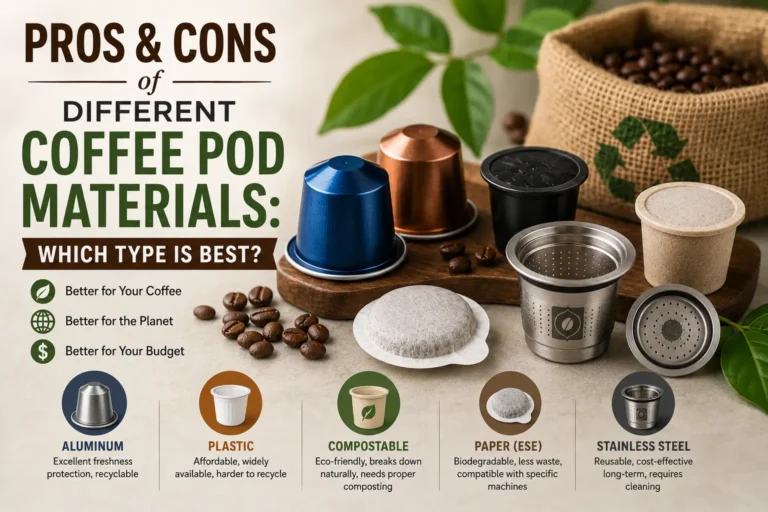
Most biodegradable coffee capsules are made from renewable plant-based resources rather than conventional plastics.
Common materials include:
PLA Bioplastic
PLA, or polylactic acid, is one of the most common materials used in biodegradable coffee pods.
It is typically made from renewable resources such as:
PLA can break down under specific composting conditions and is often used in sustainable packaging.
Cornstarch
Cornstarch-based materials are frequently used in biodegradable pod production because they come from renewable agricultural sources.
They provide a more environmentally friendly alternative to petroleum-based plastics.
Sugarcane Fiber
Some eco-friendly coffee pods use sugarcane fiber as part of their capsule structure.
Sugarcane fiber is renewable, biodegradable, and commonly used in sustainable food packaging.
Cellulose
Cellulose is a natural material found in plant cell walls.
It is often used in:
Because cellulose comes directly from plants, it can decompose naturally under the right conditions.
Paper-Based Filters
Many biodegradable coffee capsules include paper filters instead of synthetic materials.
These filters help reduce plastic use while maintaining coffee extraction quality.
Plant-Based Polymers
Some manufacturers combine multiple renewable materials to create durable yet biodegradable pod shells.
These plant-based polymers provide strength during brewing while supporting environmental sustainability.
How Do Biodegradable Coffee Pods Work?
Biodegradable coffee pods work very much like traditional coffee capsules.
The pod contains pre-measured ground coffee sealed inside a protective capsule. When inserted into a compatible coffee machine, hot water passes through the coffee grounds and extracts flavor, aroma, and caffeine.
The brewing process remains almost identical to standard coffee pods.
The key difference comes after the coffee has been brewed.
Instead of remaining intact in landfills for hundreds of years like many plastic coffee capsules, biodegradable coffee pods are designed to gradually break down through natural biological activity.
Microorganisms such as bacteria and fungi help decompose the pod materials over time.
The speed of decomposition depends on several factors:
Some biodegradable espresso pods may break down relatively quickly in industrial composting facilities, while others may take much longer if placed in a landfill.
This is why understanding proper disposal methods is just as important as choosing biodegradable coffee pods in the first place.
Benefits Of Biodegradable Coffee Pods
Biodegradable coffee pods have become popular because they offer a more environmentally friendly option for coffee drinkers who enjoy the convenience of single-serve brewing.
While they are not a perfect solution, they can help reduce the long-term waste associated with traditional coffee capsules.
They Reduce Plastic Waste
Traditional coffee pods often contain petroleum-based plastics that can remain in landfills for hundreds of years.
Biodegradable coffee pods use renewable materials that can break down naturally over time. This helps reduce the amount of plastic waste entering the environment.
For coffee drinkers who use pods daily, switching to biodegradable coffee capsules can make a noticeable difference in long-term waste reduction.
They Break Down Faster Than Traditional Pods
One of the main benefits of biodegradable pods is their ability to decompose more quickly than conventional plastic capsules.
The exact breakdown time depends on:
Unlike plastic pods, biodegradable coffee pods are designed to support natural decomposition processes.
Support Sustainable Coffee Consumption
Many biodegradable coffee pods use plant-based materials sourced from renewable resources.
Materials such as:
Can help reduce dependence on fossil-fuel-based plastics.
This makes biodegradable pods an attractive option for people looking to make more sustainable coffee choices.
Help Reduce Landfill Waste
Billions of coffee capsules are used worldwide each year.
Many of these capsules end up in landfills.
Biodegradable coffee pods can help reduce the long-term environmental burden associated with single-serve coffee systems.
Although they may still require proper disposal, they generally create less lasting waste than conventional plastic capsules.
Maintain Brewing Convenience
Many coffee drinkers choose pods because they are fast and easy to use.
Biodegradable coffee capsules provide the same convenience while offering a more environmentally conscious option.
Users can continue enjoying:
Without relying solely on traditional plastic capsules.
Biodegradable Pods vs Compostable Pods
Many people use the terms biodegradable and compostable as if they mean the same thing.
However, they are not identical.
Understanding the difference can help you choose the right type of coffee pod.
| Feature | Biodegradable Pods | Compostable Pods |
|---|---|---|
| Break Down Naturally | Yes | Yes |
| Become Compost | Not Always | Yes |
| Require Composting Conditions | Sometimes | Usually |
| Leave Nutrient-Rich Material | Not Guaranteed | Yes |
| Certified Compost Standards | Not Always | Often |
A biodegradable coffee pod is designed to break down naturally over time.
A compostable coffee pod is designed to break down into nutrient-rich organic matter without leaving harmful residues.
In simple terms:
All compostable pods are biodegradable.
But not all biodegradable pods are compostable.
This distinction is important because many consumers assume biodegradable automatically means compostable. That is not always true.
What Is Home Compostable?
Home compostable pods are designed to break down in backyard compost systems.
These conditions are generally cooler and less controlled than commercial compost facilities.
Home compostable products often carry certifications such as:
Not every biodegradable coffee pod qualifies for home composting.
What Is Industrial Compostable?
Industrial compostable coffee pods require specialized facilities.
These facilities use:
Industrial composting allows certain pod materials to break down much faster.
Many PLA-based coffee capsules fall into this category.
Always check the manufacturer’s disposal instructions before composting.
Biodegradable Pods vs Plastic Coffee Pods
Coffee drinkers often compare biodegradable coffee pods with traditional plastic coffee capsules.
Both provide convenience, but their environmental impact is very different.
Environmental Impact
Plastic coffee pods may remain in landfills for hundreds of years.
Biodegradable coffee pods are designed to break down much faster under suitable conditions.
This can help reduce long-term waste accumulation.
Resource Use
Plastic pods are usually made from fossil-fuel-based materials.
Biodegradable coffee capsules often use renewable resources such as:
Waste Generation
Traditional plastic coffee pods contribute significantly to landfill waste.
Biodegradable pods aim to reduce that impact by supporting natural decomposition.
Brewing Performance
Modern biodegradable coffee pods can provide brewing performance similar to traditional capsules.
Many users report little difference in:
when using quality biodegradable pod brands.
Quick Comparison Table
| Feature | Biodegradable Pods | Plastic Pods |
|---|---|---|
| Environmental Impact | Lower | Higher |
| Renewable Materials | Often | Rarely |
| Decomposition | Faster | Extremely Slow |
| Landfill Waste | Reduced | Significant |
| Brewing Convenience | High | High |
| Machine Compatibility | High | High |
How Long Do Biodegradable Coffee Pods Take To Break Down?
One of the most common questions coffee drinkers ask is how long biodegradable coffee pods take to decompose.
The answer depends largely on where the pod is disposed of.
There is no single timeline that applies to every biodegradable coffee capsule.
Industrial Compost Conditions
In commercial composting facilities, some biodegradable coffee pods can break down within:This can help reduce long-term waste accumulation.
Ddepending on the material and certification standards. These facilities provide ideal conditions for decomposition.
Home Compost Conditions
Home compost systems usually operate at lower temperatures. As a result, decomposition may take longer.
Some biodegradable coffee pods may take:
Depending on the compost environment. Not all biodegradable pods are suitable for home composting. Always check product labeling.
Landfill Conditions
Many people assume biodegradable pods immediately break down in landfills.
Unfortunately, this is not always true.
Landfills often lack:
Needed for efficient decomposition. As a result, biodegradable coffee capsules may still take years to fully break down when sent to landfill. Proper disposal remains important.
Why Breakdown Time Varies?
Several factors influence decomposition speed:
Material composition
Temperature
Moisture
Oxygen availability
Composting conditions
Microbial activity
Do Biodegradable Pods Leave Microplastics?
One concern many environmentally conscious coffee drinkers have is whether biodegradable coffee pods leave microplastics behind.
The answer depends on the materials used to manufacture the pod.
Some biodegradable coffee capsules use plant-based materials that can break down naturally without creating significant plastic pollution. Others may contain small amounts of bioplastics such as PLA that require proper composting conditions to decompose effectively.
If biodegradable pods are disposed of incorrectly, some materials may persist longer than expected.
This is why it is important to understand:
When shopping for eco-friendly coffee pods, look for products that clearly explain their environmental claims.
Are Biodegradable Coffee Pods Better For The Environment?
In many situations, biodegradable coffee pods can be a better environmental option than traditional plastic capsules. However, they are not a perfect solution.
Their environmental benefits depend on:
Environmental Benefits
Biodegradable coffee pods can help:
Environmental Limitations
Biodegradable does not automatically mean zero environmental impact.
Some biodegradable coffee capsules still require industrial composting facilities.
If sent to landfill, they may not break down as quickly as many people expect.
This is why responsible disposal remains important.
Can You Recycle Biodegradable Coffee Pods?
Many coffee drinkers assume biodegradable coffee pods should automatically be recycled. In reality, recycling rules vary. Some biodegradable materials are not accepted in traditional recycling systems.
The correct disposal method depends on:
Before recycling biodegradable coffee capsules, check local regulations and the instructions provided by the brand. In many cases, composting may be the preferred option.
Common Mistakes When Disposing Of Biodegradable Pods
Many people unknowingly dispose of biodegradable coffee pods incorrectly.
Here are some common mistakes.
Assuming Biodegradable Means Compostable
This is the most common mistake. Not every biodegradable coffee pod is compostable. Always read the packaging.
Throwing Pods Into The Wrong Bin
Different municipalities have different waste management systems. Using the wrong bin may prevent proper processing.
Ignoring Composting Requirements
Some pods require industrial composting conditions. Home compost systems may not provide the necessary environment.
Forgetting To Check Certifications
Reliable certifications can help identify products that meet recognized environmental standards.
Examples include:
Popular Brands Offering Biodegradable Coffee Pods
Several coffee companies now offer biodegradable or environmentally focused coffee capsules.
Examples include:
Some brands focus on:
Always verify compatibility with your machine before purchasing.
My Experience Using Biodegradable Coffee Pods
When I first started comparing different coffee pod options, I assumed biodegradable coffee pods and compostable coffee pods were exactly the same.
After testing several products and researching their materials, I learned that the differences matter.
Most biodegradable coffee pods I used brewed coffee that tasted very similar to traditional capsules. I noticed little difference in convenience or brewing quality. The biggest difference came after use. Understanding how to dispose of the pods properly became just as important as choosing the right coffee.
For coffee drinkers who want to reduce waste without giving up the convenience of pod machines, biodegradable coffee pods can be a practical middle ground. They are not a perfect solution, but they are often a better option than traditional plastic coffee capsules when disposed of correctly.
What Are Biodegradable Coffee Pods Made Of?
Common materials include:
Do Biodegradable Pods Leave Microplastics?
The answer depends on the materials used and disposal conditions. Products made from certified compostable materials generally have a lower risk of long-term plastic pollution.

Conclusion
When I first started researching biodegradable coffee pods, I thought they were simply another version of compostable pods. After testing different products and learning about their materials, disposal methods, and environmental impact, I realized there is much more to the story. Biodegradable coffee pods can help reduce long-term plastic waste and support more sustainable coffee consumption, but they work best when users understand how to dispose of them properly. For most coffee drinkers, they offer a practical way to enjoy the convenience of single-serve brewing while making a more environmentally conscious choice. Before buying, I recommend checking pod materials, composting requirements, machine compatibility, and trusted certifications so you can choose the option that best fits both your coffee routine and your sustainability goals.