

Are Coffee Pods Healthy? Benefits, Risks & Daily Use

Plain coffee from a pod is not automatically unhealthy. For most adults, the bigger health ↗ questions are the same ones that apply to coffee generally: how much caffeine you drink, how late you drink it, what ingredients are in the pod, what you add after brewing, and how your body responds to coffee.
A plain black coffee pod can be very low in calories and can provide caffeine plus naturally occurring coffee compounds. But sweet specialty pods, large daily caffeine totals, late-day coffee, or coffee that worsens reflux or other symptoms may be a poor fit for some people.
It is also important to separate the health effects of coffee from the convenience of the pod format. A sealed capsule may make brewing easier and more consistent, but convenience itself is not a medical benefit.
Important Health Note
This guide provides general information, not diagnosis or personalized medical advice. Caffeine tolerance can change with pregnancy, medications, health conditions, age and individual sensitivity. If a clinician has told you to limit caffeine or coffee, follow that advice rather than a general daily limit.
Key Takeaways
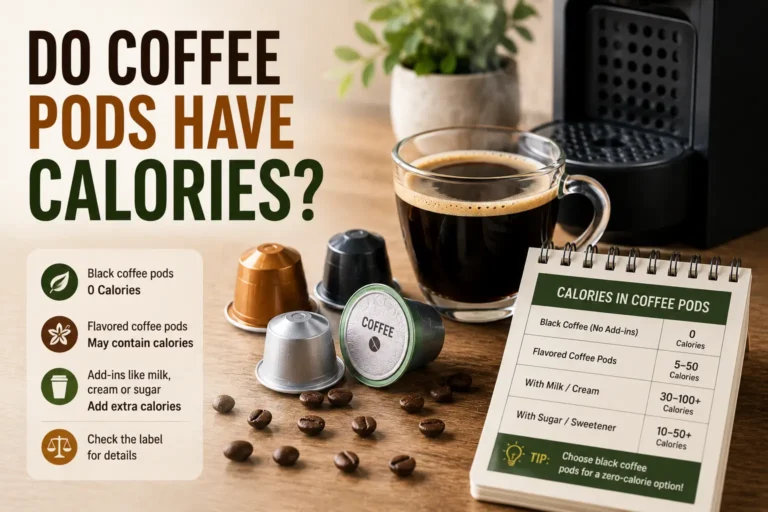
- Plain black pod coffee is generally very low in calories; milk, sugar, syrup and specialty drink mixes can change the nutrition profile.
- For most healthy adults, the FDA cites 400 mg of caffeine per day as an amount not generally associated with negative effects, but sensitivity varies.
- Caffeine can improve alertness, but too much can cause insomnia, jitters, anxiety, upset stomach, nausea, headache and palpitations.
- Coffee consumed even several hours before bed can disrupt sleep in sensitive people.
- Coffee can worsen reflux symptoms for some people, but triggers are individual.
- Coffee research shows several favorable health associations, but much of that evidence is observational and does not prove that coffee prevents disease.
- The pod material itself should not be treated as proof that a coffee is healthy or unhealthy; use intact, compatible products as directed.
Quick Answer
For many healthy adults, plain coffee pods can fit into a balanced diet. The main things to watch are total caffeine, sleep timing, added sugar and creamers, specialty-pod ingredients, and any personal symptoms such as reflux, headaches or palpitations. The pod format does not make coffee automatically healthier or less healthy than coffee brewed another way.
What Are Coffee Pods?

Coffee pods are pre-portioned single-serve products made for compatible brewers. The term includes several different formats, such as K-Cups, Nespresso capsules, E.S.E. pods and soft coffee pods.
Most plain coffee pods contain roasted and ground coffee. Specialty beverage pods can contain other ingredients, including sugar, milk powder, cocoa, flavorings or sweeteners. That distinction matters when discussing health and nutrition.
Are Coffee Pods Healthy?

There is no single yes-or-no answer for every product. A plain black coffee pod and a sweetened cappuccino-style pod are nutritionally different drinks.
| Pod / Drink Type | Main Health Consideration |
|---|---|
| Plain black coffee pod | Very low calorie; main issue is usually caffeine and individual tolerance |
| Decaf coffee pod | Much less caffeine, but not necessarily caffeine-free |
| Flavored coffee pod | Flavoring does not always mean sugar; check ingredients |
| Sweet specialty pod | May contain added sugar, milk ingredients, fat or allergens |
| Pod coffee with milk/syrup added later | Finished-drink calories depend heavily on the add-ins |
Potential Health Benefits of Coffee

The potential benefits come mainly from coffee itself, not from the capsule shell. Coffee contains caffeine and many naturally occurring compounds, including polyphenols.
Alertness and Attention
Caffeine is a stimulant. In suitable amounts, it can increase alertness and reduce feelings of tiredness. That is one of the clearest short-term effects of caffeinated coffee.
Very Low Calories in Plain Coffee
Plain black coffee is naturally very low in calories. A pod can therefore make a low-calorie drink when it contains plain coffee and you do not add sugar, syrup or large amounts of cream.
Coffee Contains Bioactive Plant Compounds
Coffee contains compounds with antioxidant activity. Regular and decaf coffee both retain many coffee-derived compounds, although their exact composition varies by bean, roast and brewing method.
Long-Term Health Associations
Large reviews of coffee research have found that moderate coffee consumption is associated with lower risk of several health outcomes in observational studies, including some cardiovascular, metabolic and liver outcomes. However, these studies do not prove that coffee itself caused the lower risk. Lifestyle, diet and other factors can affect the results.
Do Not Turn an Association Into a Treatment Claim
Coffee should not be presented as a treatment or prevention method for diabetes, heart disease, cancer or other conditions. Research on habitual coffee intake is useful for understanding population patterns, but it does not mean a person should start drinking pod coffee to treat a disease.
Coffee Pod Caffeine: How Much Is Too Much?
Caffeine is one of the most important health variables in pod coffee because capsule strength, coffee dose and drink size vary widely.
For most healthy adults, the U.S. FDA cites 400 mg of caffeine per day as an amount not generally associated with negative effects. That is a general benchmark, not a target everyone should try to reach. Some people experience symptoms at much lower amounts.
Possible Helpful Effect
Greater alertness and less tiredness for some people.
Too Much May Cause
Insomnia, jitters, anxiety, nausea, upset stomach, headache, increased heart rate or palpitations.
Count caffeine from all sources, not just coffee pods. Tea, cola, energy drinks, chocolate, supplements and some medicines can add to the daily total.
For pod-specific amounts, see Caffeine Content in Coffee Pods ↗.
Coffee Pods, Calories, Sugar and Additives
A common mistake is treating every flavored or specialty pod as nutritionally equivalent to plain coffee. They are not.
- Plain coffee: usually very low in calories.
- Flavoring: a vanilla or hazelnut aroma does not automatically mean the coffee contains a large amount of sugar.
- Drink mixes: hot chocolate, cappuccino-style or latte-style pods may contain sugar and milk ingredients.
- Add-ins: milk, cream, syrup and sugar added after brewing can contribute most of the drink’s calories.
- Allergens: specialty pods may contain milk, soy or other ingredients, so check the label if allergies matter.
For a deeper breakdown, see Coffee Pods Calories & Nutrition ↗.
Can Coffee Pods Affect Sleep?
Yes, when the pod contains caffeine. A controlled sleep study found that a 400 mg caffeine dose taken even 6 hours before bedtime significantly disrupted sleep. That does not mean every person needs the same six-hour cutoff, because dose and sensitivity vary, but it shows why late-day caffeine can matter even when you can still fall asleep.
If you notice lighter sleep, trouble falling asleep or waking during the night, consider the timing and total amount of caffeine rather than focusing only on the pod brand.
See Can Coffee Pods Affect Sleep? ↗ for the dedicated guide.
Can Coffee Pods Cause Headaches?
They can contribute in two different ways. A large caffeine dose can cause headache in some people, while regular caffeine users can also develop withdrawal headache if they suddenly stop or sharply reduce intake.
That makes “coffee caused my headache” difficult to answer from timing alone. The useful questions are how much caffeine you normally consume, whether your intake recently increased or decreased, and whether other symptoms are present.
See Can Coffee Pods Cause Headaches? ↗ for the detailed caffeine and withdrawal explanation.
Coffee Pods, Acidity and Acid Reflux
Coffee and caffeine are common symptom triggers reported by some people with gastroesophageal reflux disease (GERD). But reflux triggers are individual, so it is too broad to say that every coffee pod causes acid reflux or that one roast will solve GERD for everyone.
If coffee repeatedly worsens your symptoms, the relevant variables can include caffeine, amount consumed, timing, roast, acidity, milk or cream, and your own medical condition.
A lower-acid or decaf pod may be worth comparing for taste and tolerance, but it should not be presented as a treatment for reflux. See Low-Acid Coffee Pods ↗.
Can Coffee Pod Brewing Affect Cholesterol?
Coffee contains diterpenes called cafestol and kahweol. Higher intake of these compounds from unfiltered coffee can raise blood cholesterol. Paper filtering removes much of the diterpene content from brewed coffee.
That does not allow one cholesterol claim for every pod system. Some pod designs use an internal paper-like filter, while espresso-style capsules and other systems use different extraction methods. Coffee dose, filtration and preparation all matter.
If cholesterol is a medical concern for you, do not assume that every capsule is equivalent to paper-filtered drip coffee. Discuss your overall coffee intake and brew method with your healthcare professional.
Are Plastic or Aluminum Coffee Pods Bad for Your Health?
The shell material alone is not enough to label a coffee pod safe or unsafe. Coffee capsules are designed as food-contact products, and exact materials differ by brand and system. For example, Nespresso states that its capsules do not contain BPA or other bisphenols and that its food-contact materials comply with applicable requirements. That statement applies to Nespresso products, not automatically to every pod brand.
For everyday use, the practical safety steps are simple: use pods designed for your machine, do not brew a melted, punctured, swollen or badly damaged capsule, and do not improvise with a pod format that the brewer was not designed to use.
Avoid Unsupported “Toxin” Claims
Online discussions often treat the words plastic or aluminum as proof that pod coffee is harmful. Material alone does not establish exposure or health risk. A meaningful claim needs information about the exact material, migration into the drink, dose and real-use conditions.
Are Decaf Coffee Pods Healthier?
Decaf is not automatically healthier. It is mainly useful when caffeine reduction is the goal. That can make decaf a practical option for people who are sensitive to caffeine, want coffee later in the day, or have been advised to reduce caffeine intake.
Decaf coffee still contains coffee-derived compounds and a small amount of caffeine. The nutrition profile also depends on whether the product is plain coffee or a sweet specialty drink.
See Decaf Coffee Pods ↗.
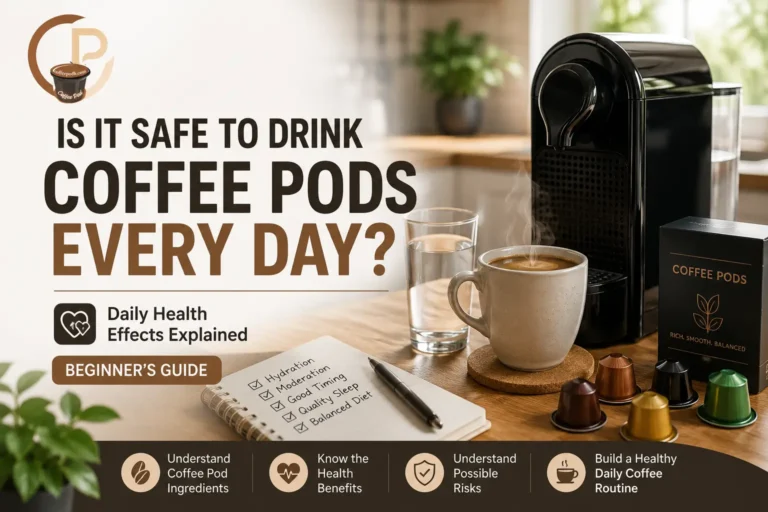
Is It Safe to Drink Coffee Pods Every Day?
For many healthy adults, daily coffee can fit into a balanced diet. The pod format does not create a separate universal daily limit. Instead, look at:
- Total caffeine from all drinks and foods.
- Whether caffeine affects your sleep.
- Whether coffee worsens reflux, anxiety, palpitations or stomach symptoms.
- How much sugar, syrup or creamer is added.
- Whether you have a condition, medication or pregnancy-related reason to use a lower caffeine limit.
For the dedicated daily-use discussion, see Is It Safe to Drink Coffee Pods Every Day? ↗.
Coffee Pods During Pregnancy
Pregnancy uses a lower caffeine benchmark than the general adult limit. The American College of Obstetricians and Gynecologists states that moderate caffeine intake below 200 mg per day does not appear to be a major contributor to miscarriage or preterm birth.
That daily total includes caffeine from coffee pods plus tea, chocolate, soft drinks, energy drinks and other sources. Because caffeine amounts differ between pod products, check the exact capsule when pregnancy caffeine intake matters.
Pregnancy Is a Personal Medical Context
If you are pregnant, trying to become pregnant, breastfeeding, or have been given a different caffeine limit, use the guidance from your own healthcare professional.
Who May Need to Limit Caffeine or Coffee?

A lower intake may be appropriate for some people, but the reason and limit are individual. Talk with a healthcare professional if caffeine or coffee is relevant to a health condition or medication.
- People who are very sensitive to caffeine.
- People who develop palpitations, anxiety, insomnia or significant stomach symptoms after caffeine.
- People with reflux symptoms that are consistently triggered by coffee.
- Pregnant people following pregnancy caffeine guidance.
- People taking medicines that change caffeine sensitivity or clearance.
- Anyone who has received a specific caffeine limit from a clinician.
Practical Ways to Make Pod Coffee Fit a Healthier Routine

- Know your caffeine. Do not count cups alone because different pods can contain different amounts.
- Watch timing. Move caffeinated coffee earlier if it affects sleep.
- Read specialty-pod labels. Check sugar, milk ingredients, calories and allergens.
- Keep add-ins visible. Syrup, sugar and creamer can change a low-calorie coffee into a much higher-calorie drink.
- Use decaf strategically. It can reduce caffeine without giving up coffee entirely.
- Notice symptoms. Reflux, jitters, headaches or palpitations are more useful signals than a generic “healthy” label.
- Use the correct pod. Brew intact capsules designed for your machine.
Frequently Asked Questions
Plain pod coffee can fit into a balanced diet for many healthy adults. The main health factors are caffeine, added ingredients, serving size, timing and individual tolerance.
Coffee pods are not automatically harmful. Problems are more likely to come from too much caffeine, high-sugar specialty drinks, sleep disruption, reflux triggers or individual medical factors.
Many healthy adults drink coffee daily. Pay attention to total caffeine, sleep, symptoms and added sugar rather than assuming the pod format has its own separate daily limit.
For most healthy adults, the FDA cites 400 mg per day as an amount not generally associated with negative effects. Some people need less because sensitivity and medical context vary.
Not automatically. Some flavored coffee pods add aroma or flavoring without much sugar, while specialty drink pods may contain sugar, milk powders and more calories. Check the label.
Yes, if they contain caffeine. Caffeine can disturb sleep even when taken hours before bed, and sensitivity differs from person to person.
High caffeine intake can cause headache in some people, while suddenly reducing regular caffeine can also cause withdrawal headache.
Coffee diterpenes such as cafestol can raise cholesterol, especially in unfiltered coffee. Pod systems use different filters and extraction methods, so the effect should not be assumed to be identical across every capsule format.
The word plastic alone does not prove a health risk. Pod materials vary by brand. Use intact food-contact products designed for your machine and follow the manufacturer’s instructions.
The capsule material alone does not establish that the brewed coffee is unsafe. Use compatible, undamaged capsules from manufacturers that meet applicable food-contact requirements.
Decaf is not automatically healthier, but it can be a better fit when you want to reduce caffeine because of sleep, sensitivity or professional medical advice.
ACOG advises keeping caffeine below 200 mg per day during pregnancy. Count caffeine from all sources and follow your own clinician’s guidance if it differs.
Coffee naturally contains polyphenols and other compounds with antioxidant activity. These come from the coffee, not from the pod shell.
No. A lower-acid coffee may be easier for some people to tolerate, but it should not be presented as a treatment for GERD or another digestive condition.
Conclusion
Coffee pods are not automatically healthy or unhealthy. A plain black pod can be a very low-calorie way to drink coffee, while sweet specialty pods and heavy add-ins can create a very different nutrition profile. Caffeine amount and timing are often more important than the capsule brand itself.
Use pod coffee in a way that fits your own tolerance: know your caffeine, watch sleep and reflux symptoms, check specialty-pod ingredients, and use decaf when caffeine reduction makes sense. If pregnancy, medication or a health condition changes your caffeine needs, use guidance from your healthcare professional rather than a general population limit.
Medical Disclaimer
Important Health Information
This article is provided for general information and educational purposes only. It is not medical advice and should not be used to diagnose, treat, prevent, or manage any health condition.
Caffeine affects people differently based on age, health, medicines, pregnancy, sensitivity, and total daily intake.
Speak with a qualified healthcare professional if you have ongoing symptoms, a medical condition, take regular medication, are pregnant or breastfeeding, or are concerned about your caffeine intake.