

Coffee Pods for Offices: How to Choose the Right Options
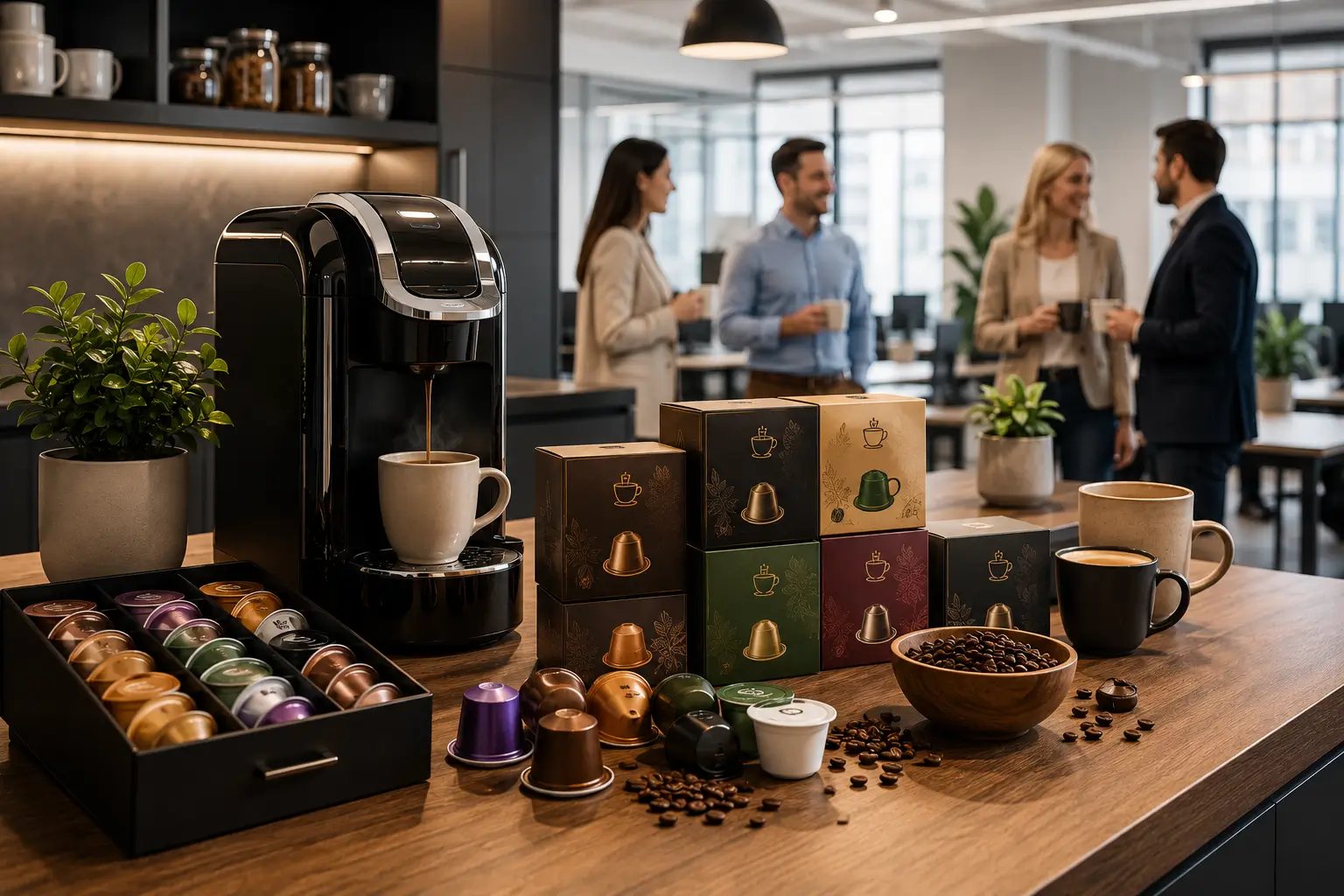
Good coffee can make a noticeable difference in a workplace. Whether you manage ↗ a small office or a larger team, the right coffee pods should be easy to use, compatible with your machine, and varied enough to suit different tastes.
Office coffee needs are different from home coffee. Employees may prefer different roast levels, strengths, decaf options, or flavored pods, so a practical office setup should offer enough choice without creating unnecessary waste.
In this guide, I explain how to choose coffee pods for offices, estimate how many pods you need, select flavors most people will enjoy, control costs, and avoid common buying mistakes.
Quick Answer
For most offices, start with a small mix of balanced medium-roast coffee, a stronger option, decaf, and one or two popular flavored pods. Choose coffee pods that fit your office machine, buy smaller quantities first, and increase pack sizes only after you know which coffees employees actually use.
Key Takeaways
Why Does Choosing the Right Coffee Pods Matter?

Choosing the right coffee pods matters because an office usually has several people with different tastes, caffeine preferences, and drink habits. A poor selection can lead to unused pods, higher costs, and employees avoiding the coffee provided.
A practical office coffee setup should balance:
The goal is not to offer every possible flavor. It is to provide a small, useful selection that most people in the office will actually drink.
What Should You Consider Before Buying Coffee Pods for an Office?
Before ordering office coffee pods, check a few practical factors. This helps you choose the right quantity and avoid buying pods that employees may not use.
| Factor | What to Check |
|---|---|
| Office size | How many people may use the coffee station |
| Daily coffee drinkers | How many cups are normally consumed each day |
| Machine compatibility | Which pod or capsule system your machine accepts |
| Employee preferences | Preferred roast, strength, decaf, and flavors |
| Monthly budget | How much you can spend on coffee each month |
| Storage space | How many boxes or sleeves you can store comfortably |
These factors make it easier to choose a coffee pod setup that fits your office rather than simply buying the largest variety pack available.
Estimate How Many Coffee Pods Your Office Needs

The number of coffee pods an office needs depends on how many people drink coffee and how many cups they usually have each workday.
A simple way to estimate monthly demand is:
| Office Size | Estimated Cups Per Day | Estimated Pods Per Month |
|---|---|---|
| 1–5 employees | 5–15 cups | 100–300 |
| 6–15 employees | 15–40 cups | 300–800 |
| 16–30 employees | 40–80 cups | 800–1,600 |
| 30+ employees | 80+ cups | 1,600+ |
These are simple estimates based on about 20 working days per month. Actual use will vary depending on attendance, remote work, meetings, and how many cups each person drinks.
Which Coffee Machine Does Your Office Use?
Before buying office coffee pods, confirm exactly which capsule or pod system your workplace machine accepts. Coffee capsules are not universally interchangeable.
Common office systems may include:
Always check the machine model and pod compatibility before ordering large quantities.
What Coffee Roast Works Best for Most Offices?
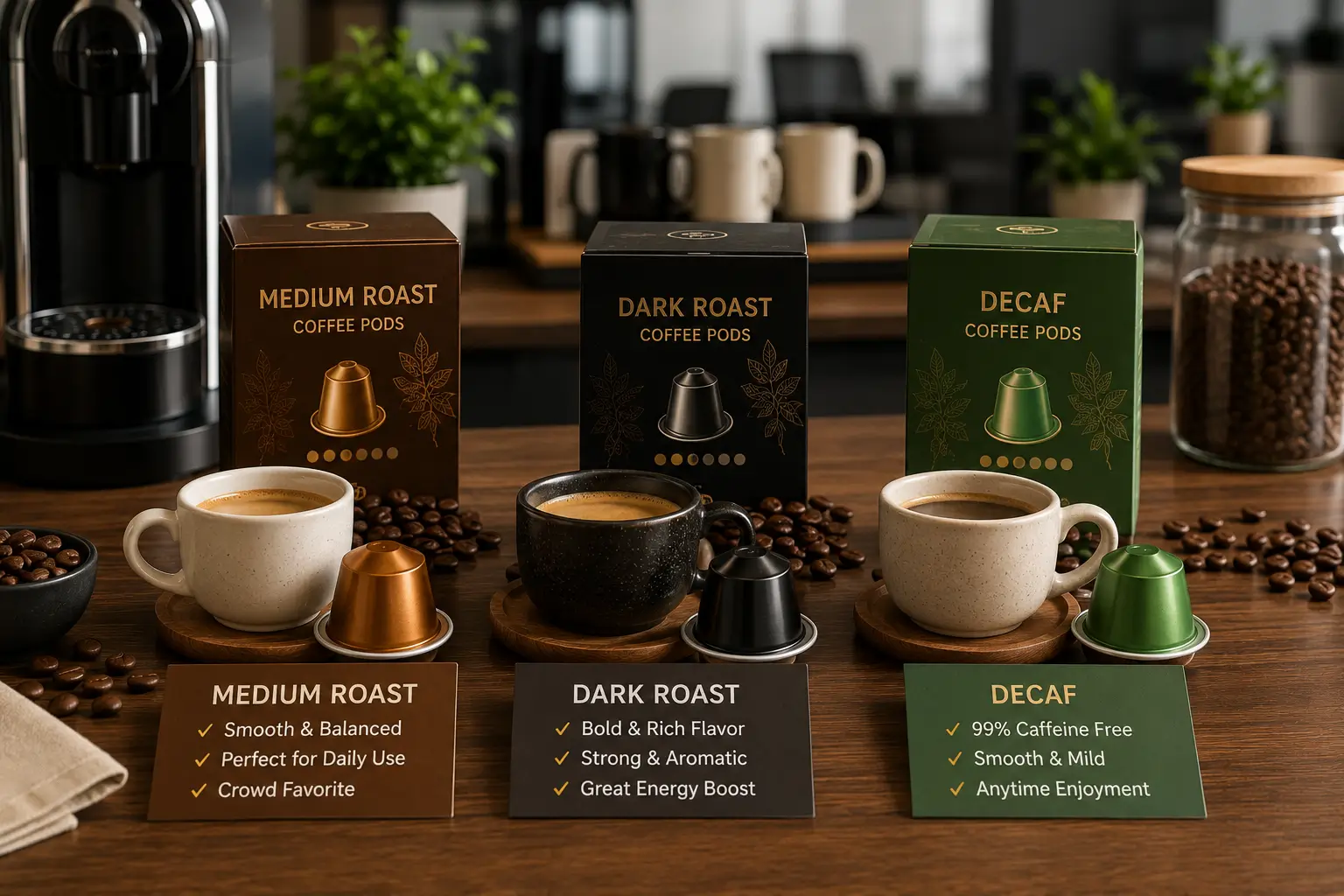
Different employees prefer different coffee strengths, so most offices do better with a small mix rather than only one roast.
A balanced medium roast should usually make up most of the office coffee supply, with smaller amounts of dark roast and decaf.
Medium Roast
Usually the safest everyday choice because it offers a balanced flavor that suits many coffee drinkers. It works well for regular office coffee, meetings, and shared coffee stations.
Best for:
Dark Roast
Useful for employees who prefer a stronger, bolder taste. Keep a smaller amount than medium roast unless your team clearly prefers stronger coffee.
Decaf
Important for employees who want coffee with less caffeine, especially later in the day. A small decaf supply makes the office coffee selection more inclusive.
Offering decaf makes your office coffee selection more inclusive.
Should You Offer Flavored Coffee Pods?
Yes, but keep the flavored selection small. Most offices do not need many flavored options because too much variety can lead to unused sleeves and unnecessary waste.
A practical starting point is one or two popular flavors, such as:
Keep most of the office supply focused on regular coffee, then adjust the flavored selection based on what employees actually use.
Coffee Selection That Works for Most Offices
A simple starting mix can help an office offer enough variety without overstocking. The percentages below are only a practical example and should be adjusted based on employee preferences.
| Coffee Type | Suggested Starting Share |
|---|---|
| Medium Roast | 50–60% |
| Dark Roast | 20–25% |
| Decaf | 10–15% |
| Flavored Coffee | 10–15% |
After a few weeks, check which pods are being used fastest and adjust future orders. If flavored or decaf pods remain unused, reduce those quantities rather than continuing to order the same mix.
Should You Buy One Brand or Offer Several?
Most offices do not need many different brands. It is usually better to choose one reliable capsule system and then offer a small range of coffees within that system.
This can make it easier to:
If employees want more variety, add a few different roasts, strengths, or flavors rather than introducing several incompatible pod systems.
Planning Ahead Prevents Coffee Shortages
Office coffee is easier to manage when you reorder before popular pods run out. Track weekly use and keep a small reserve supply for busy days, meetings, or unexpected demand.
A simple reorder point can help avoid both shortages and unnecessary overstocking.
Should Offices Buy Coffee Pods in Bulk?
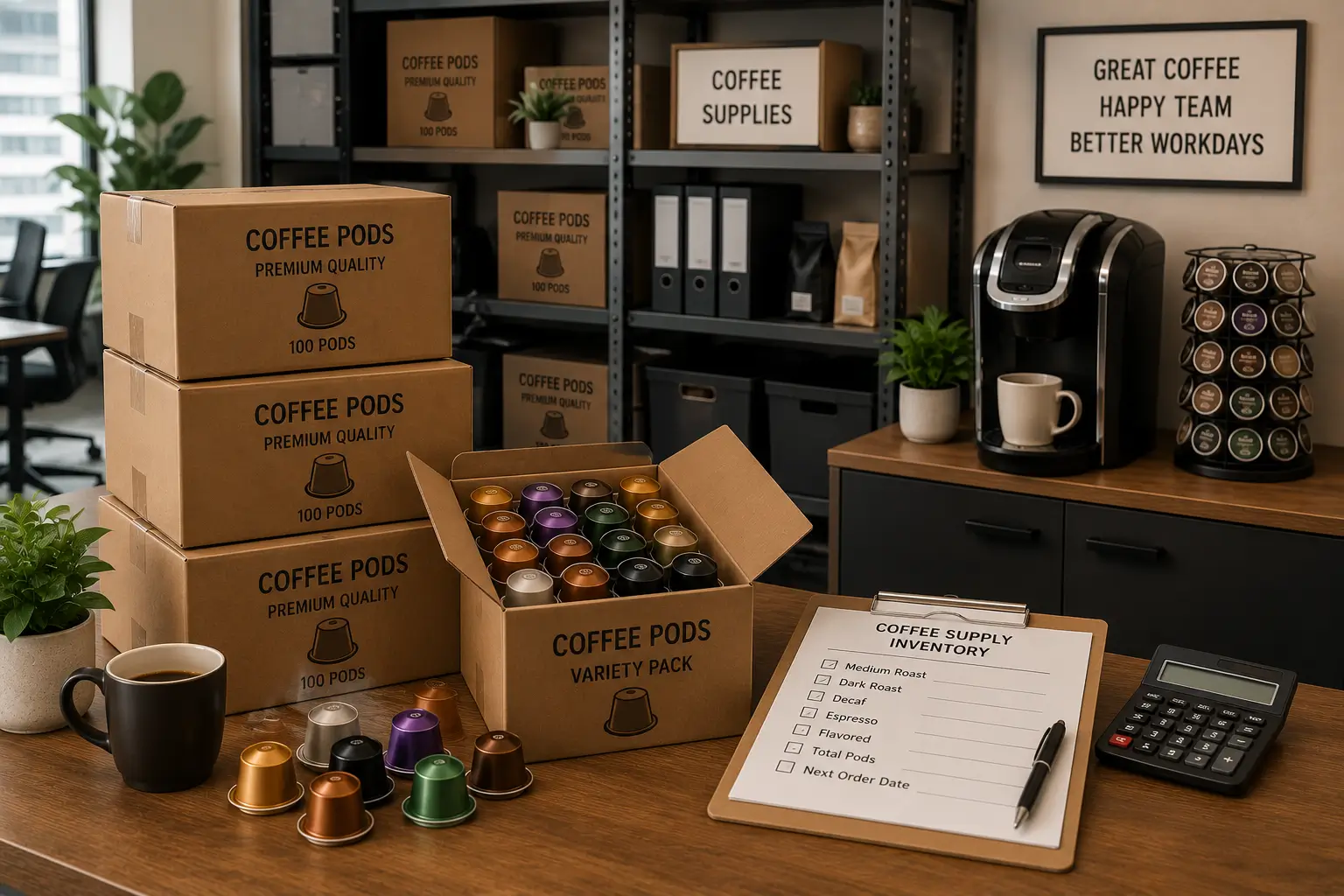
Buying coffee pods in larger quantities can reduce the average cost per pod, but it works best only after you know which coffees your office uses regularly.
Keep these conditions:
Start with smaller quantities when testing new flavors. Once you know which options are consistently popular, larger packs may make more sense.
For a detailed look at larger pack sizes, savings, storage, and buying considerations, see our Bulk Coffee Pods guide ↗.
Should Offices Use Coffee Pod Subscription Services?
A subscription can be useful when an office uses a predictable number of coffee pods each month. It can simplify reordering and reduce the risk of running out.
Common benefits include:
However, subscriptions may be less suitable for offices with changing attendance, seasonal staffing, or unpredictable coffee use.
If your workplace has seasonal staff or changing attendance, one-time purchases may offer more flexibility.
Learn when automatic deliveries make sense in our Coffee Pod Subscription Boxes ↗: Are They Worth It? (Beginner’s Guide).
How Can Offices Control Coffee Costs?
Office coffee costs are easier to manage when you track actual usage instead of ordering by guesswork.
Practical ways to control costs include:
Small improvements in purchasing and inventory control can reduce waste without reducing coffee quality.
How Often Should an Office Reorder Coffee Pods?
Reordering should be based mainly on how quickly your office uses coffee pods, not only on the number of employees.
| Office Size | Example Review Schedule |
|---|---|
| 1–5 employees | Every 4–6 weeks |
| 6–15 employees | Every 2–4 weeks |
| 16–30 employees | Every 1–2 weeks |
| 30+ employees | Weekly inventory review |
A simple rule is to reorder when your most popular coffee reaches its minimum reserve level instead of waiting until it runs out.
Where Should Offices Store Coffee Pods?
Store coffee pods in a cool, dry place away from heat, moisture, and direct sunlight. Keep unopened pods in their original packaging until needed and use older stock before newer boxes.
Simple storage habits help maintain coffee quality throughout the office.
How Much Variety Should an Office Offer?
Most offices do not need a large coffee menu. Too many choices can increase waste and make inventory harder to manage.
A practical starting selection is:
Add more options only when employees consistently request them or when usage data shows there is enough demand.
A smaller, well-used selection is usually better than keeping many sleeves that employees rarely choose.
Coffee Pods for Employees vs Visitors

Offices may want slightly different coffee options for everyday staff use and for meetings or visitors. The main difference is usually not the brand, but how much variety and presentation you want to offer.
For Employees
Focus on:
For Visitors and Clients
Consider offering:
You do not need a separate coffee system for visitors. In most offices, a small number of higher-end or espresso-style pods is enough for meetings and guests.
Common Mistakes Offices Make When Buying Coffee Pods
| Mistake | Better Approach |
|---|---|
| Buying only one coffee type | Offer a small mix of everyday, strong, and decaf options |
| Ignoring decaf drinkers | Keep a small decaf supply available |
| Waiting until supplies run out | Reorder before popular pods reach zero |
| Buying too many flavors | Start with one or two popular flavored options |
| Forgetting machine compatibility | Check the exact pod system before ordering |
Most office coffee waste comes from poor planning, over-ordering, or buying options that employees rarely use.
Example Office Coffee Plan
The table below shows a simple setup suitable for many workplaces.
| Office Type | Recommended Coffee Selection |
|---|---|
| Small office (1–5 employees) | Medium roast, dark roast |
| Medium office (6–15 employees) | Medium roast, dark roast, decaf |
| Large office (16–30 employees) | Medium roast, dark roast, decaf, flavored option |
| Office with frequent meetings or visitors | Everyday coffee plus a small premium or espresso-style selection |
This is only a starting point. Adjust the mix after a few weeks based on which pods employees actually use most often.
If your workplace is also looking to reduce long-term coffee expenses, our How to Save Money When Buying Coffee Pods ↗: 20 Smart Ways (Beginner’s Guide) shares practical strategies that work for both homes and offices.
How to Choose the Right Coffee Pods for Your Office

Choosing office coffee pods becomes easier when you follow a simple process based on employee preferences, daily usage, machine compatibility, and cost. The goal is to offer enough choice without overbuying.
Step 1: Know Your Team’s Coffee Habits
Ask simple questions such as:
These answers help you decide which coffee types deserve most of your office supply and which should be kept in smaller quantities.
Step 2: Estimate Monthly Usage
Use your daily coffee consumption to estimate how many pods your office may need each month.
Step 3: Choose Reliable Coffee Options
Start with the coffee types most likely to be used consistently.
Step 4: Review Costs Regularly
Coffee prices change throughout the year.
Every few months, compare:
Compare the final delivered cost per pod, not only the advertised box price.
If you want to compare pod prices more accurately, see our Coffee Pods Cost Per Cup guide ↗.
Frequently Asked Questions
Estimate daily coffee use, then multiply it by the number of working days. Add a small reserve so popular pods do not run out.
A balanced medium roast is usually the safest everyday choice. Add smaller amounts of dark roast and decaf for different preferences.
Start with mostly regular coffee and add only one or two popular flavors such as vanilla, hazelnut, or caramel. Adjust future orders based on what employees actually use.
Bulk packs can make sense for coffees that employees use regularly. Test new flavors in smaller quantities before buying large packs.
They can be useful when monthly usage is predictable. Offices with changing attendance may prefer flexible ordering.
Keep them in a cool, dry place away from heat, moisture, and direct sunlight. Use older stock before opening newer boxes.
Avoid buying too many flavors, ignoring machine compatibility, forgetting decaf drinkers, and waiting until popular pods completely run out.
Final Thoughts
The best office coffee pod setup does not need dozens of choices. Start with a reliable medium roast, add a stronger option, decaf, and a small flavored selection, then adjust quantities based on what employees actually drink.
Check machine compatibility, track monthly usage, and reorder before popular pods run out. A simple, well-managed selection can reduce waste, control costs, and keep the office coffee station useful for more people.