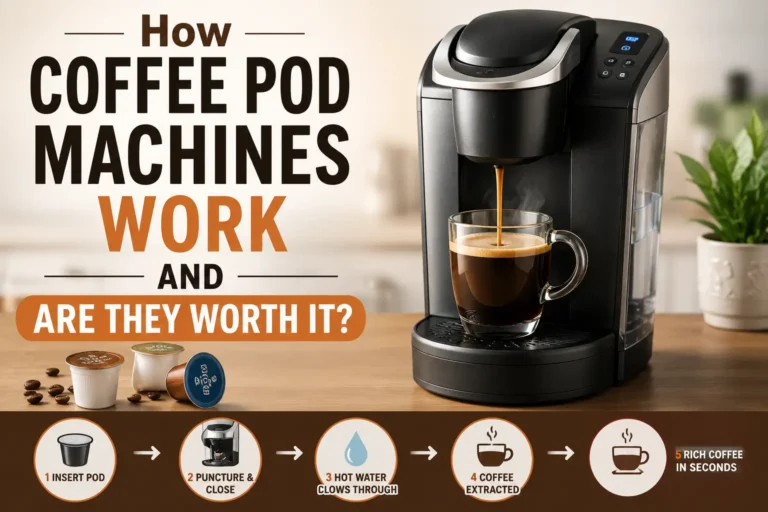
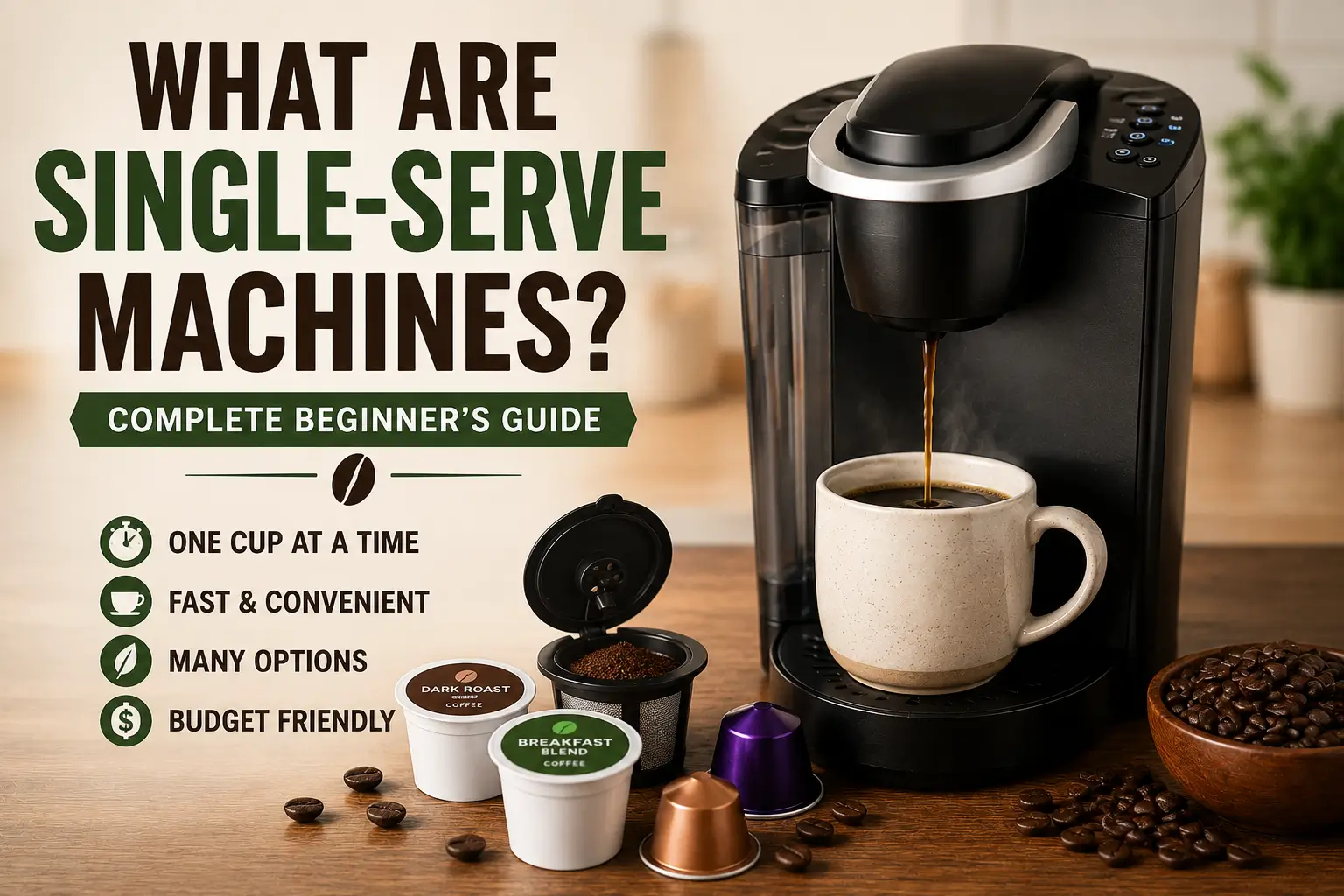

What Are Single-Serve Machines? Complete Beginner’s Guide
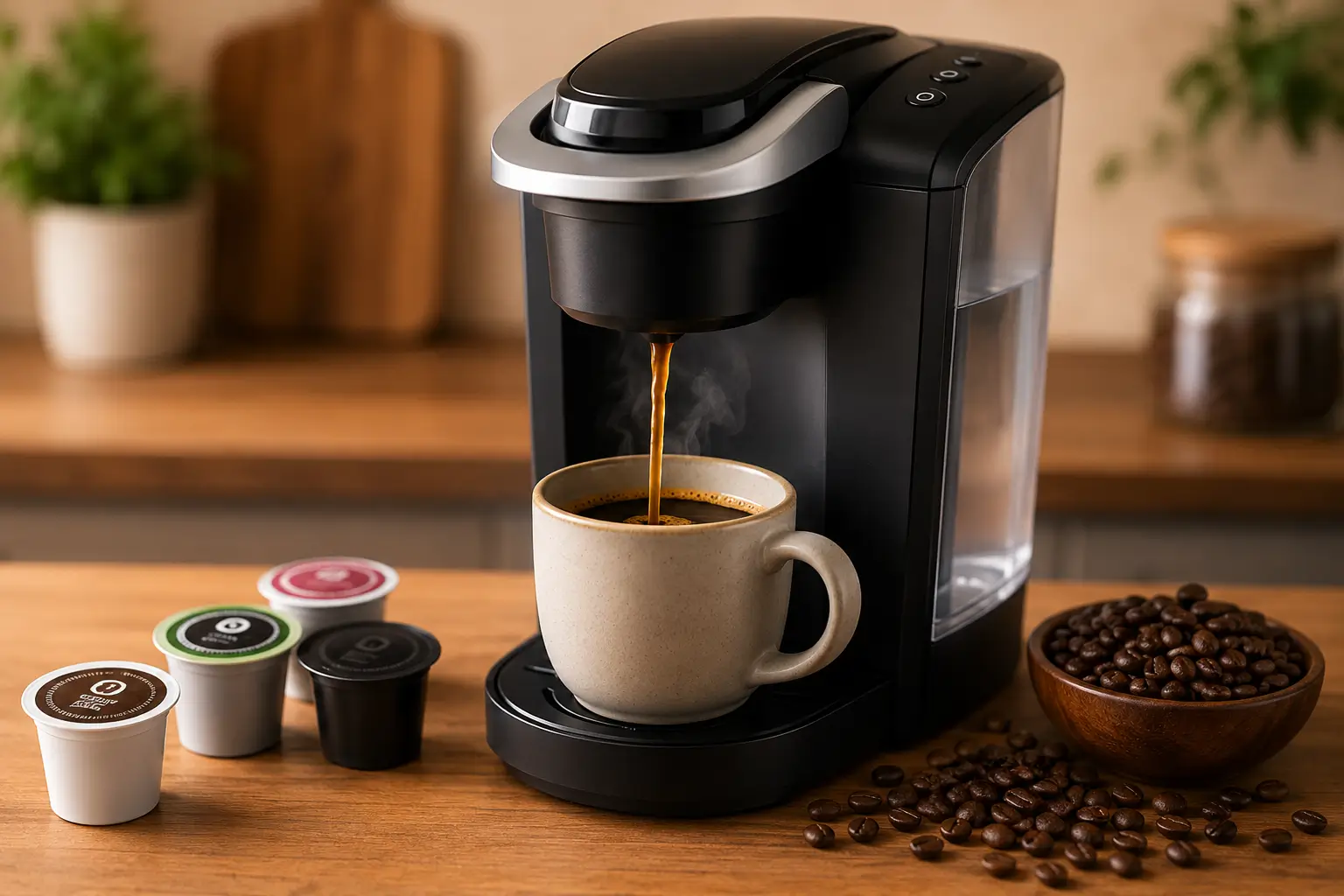
Making coffee at home has never been easier. Many coffee drinkers now use single-serve machines because they can brew one cup of coffee quickly without measuring beans, filters, or water. These machines are popular in homes, offices, dorm rooms, and small kitchens where convenience matters most.
When I first started using a single-serve coffee machine, I was mainly looking for a faster way to make coffee before work. Over time, I tested different pod machines, capsule systems, and reusable pod options. I learned that single-serve machines offer much more than convenience. They can provide consistent coffee quality, simple operation, and a variety of brewing choices. In this guide, you will learn what single-serve machines are, how they work, their different types, and whether they are the right choice for your coffee routine.
Key Takeaways
- Single-serve machines brew one cup of coffee at a time.
- Most models use coffee pods, capsules, or reusable filters.
- They are designed for speed, convenience, and easy cleanup.
- Popular systems include K-Cups, Nespresso capsules, soft pods, and reusable pods.
- Different machine types offer different brewing methods and coffee styles.
- Single-serve coffee makers are popular for homes, offices, and small spaces.
What Is a Single-Serve Coffee Machine?
A single-serve coffee machine is a coffee maker designed to brew one cup of coffee at a time.
Unlike traditional drip coffee makers that prepare multiple cups in one batch, single-serve machines focus on individual servings. This allows users to make fresh coffee whenever they want without brewing an entire pot.
Most single-serve coffee machines use:
- Coffee pods
- Coffee capsules
- Soft pods
- ESE pods
- Reusable coffee pods
- Ground coffee filters
The machine uses a measured amount of coffee and water to produce one fresh cup within minutes.
Because of their convenience, single-serve coffee makers have become one of the most popular coffee brewing systems in the United States.
How Do Single-Serve Machines Work?
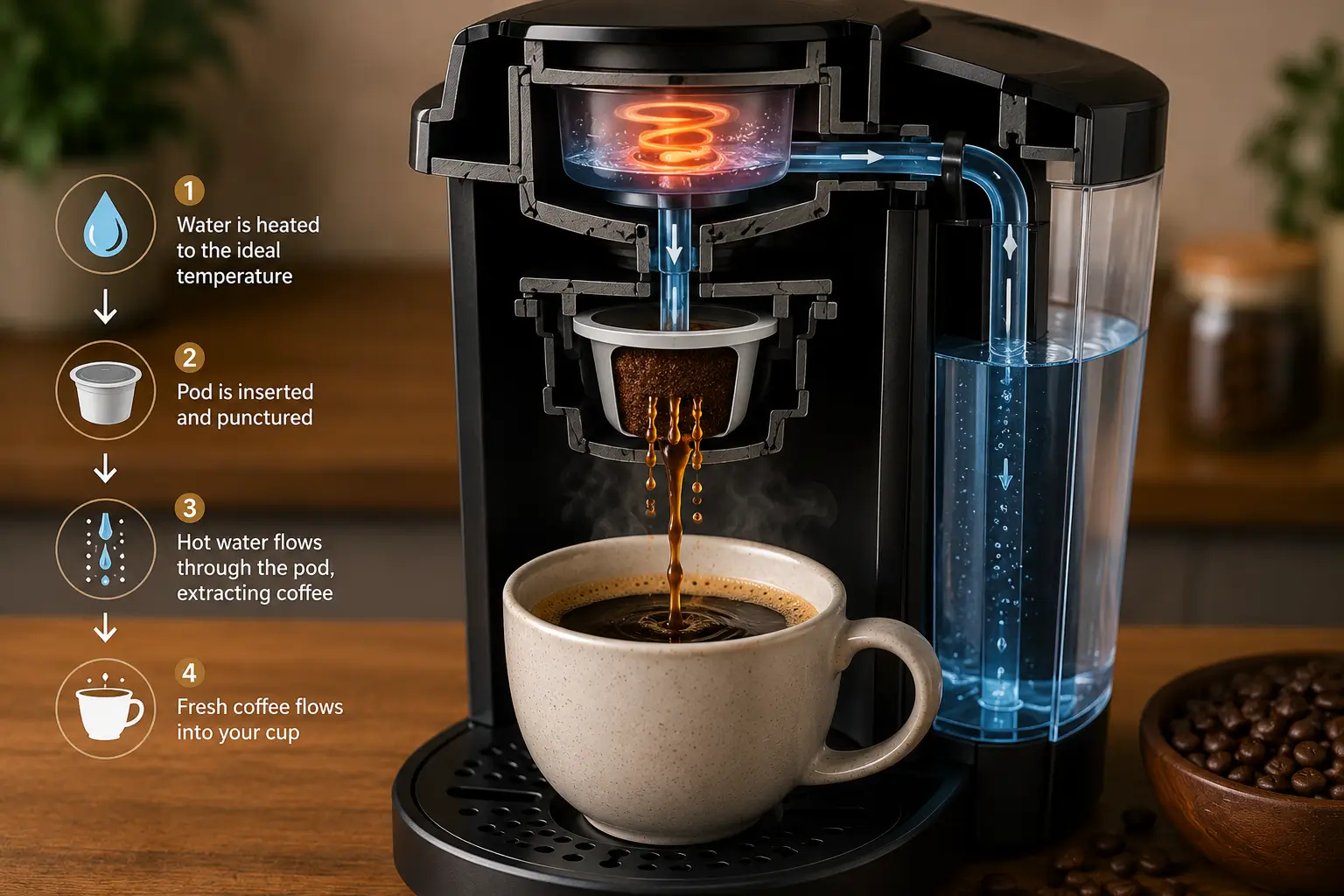
Single-serve coffee machines use a simple brewing process that combines hot water and coffee in a controlled environment.
While machine designs vary between brands, most follow the same basic steps.
Water Reservoir
Every single-serve machine includes a water reservoir or water tank.
This reservoir stores the water needed for brewing.
Some machines have:
- Small reservoirs for one cup
- Large removable tanks
- Automatic refill systems
The reservoir size affects how often users need to add water.
Heating System
After the machine is turned on, the heating element warms the water to the proper brewing temperature.
Most machines heat water quickly, allowing coffee to be ready within minutes.
This fast heating process is one reason many people choose single-serve coffee makers over traditional coffee machines.
Pod or Capsule Insertion
The user inserts:
- A K-Cup
- A Nespresso capsule
- A soft pod
- An ESE pod
- A reusable pod
depending on machine compatibility.
The machine then prepares the pod for extraction.
In pod-based systems, small needles often puncture the capsule to allow water to pass through the coffee grounds.
Brewing Process
Once the brewing cycle starts, hot water flows through the coffee pod or capsule.
The water extracts:
- Flavor
- Aroma
- Oils
- Caffeine
from the coffee grounds.
The brewed coffee then flows directly into the cup below.
Most single-serve machines complete this process in less than two minutes.
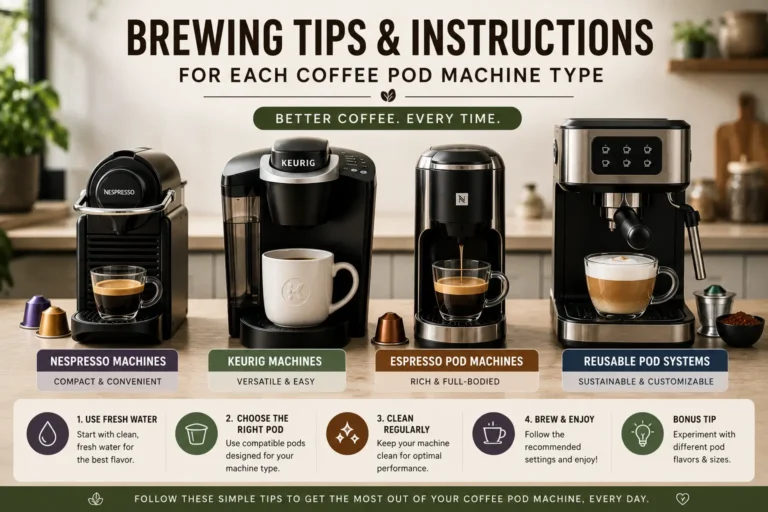
Types of Single-Serve Machines
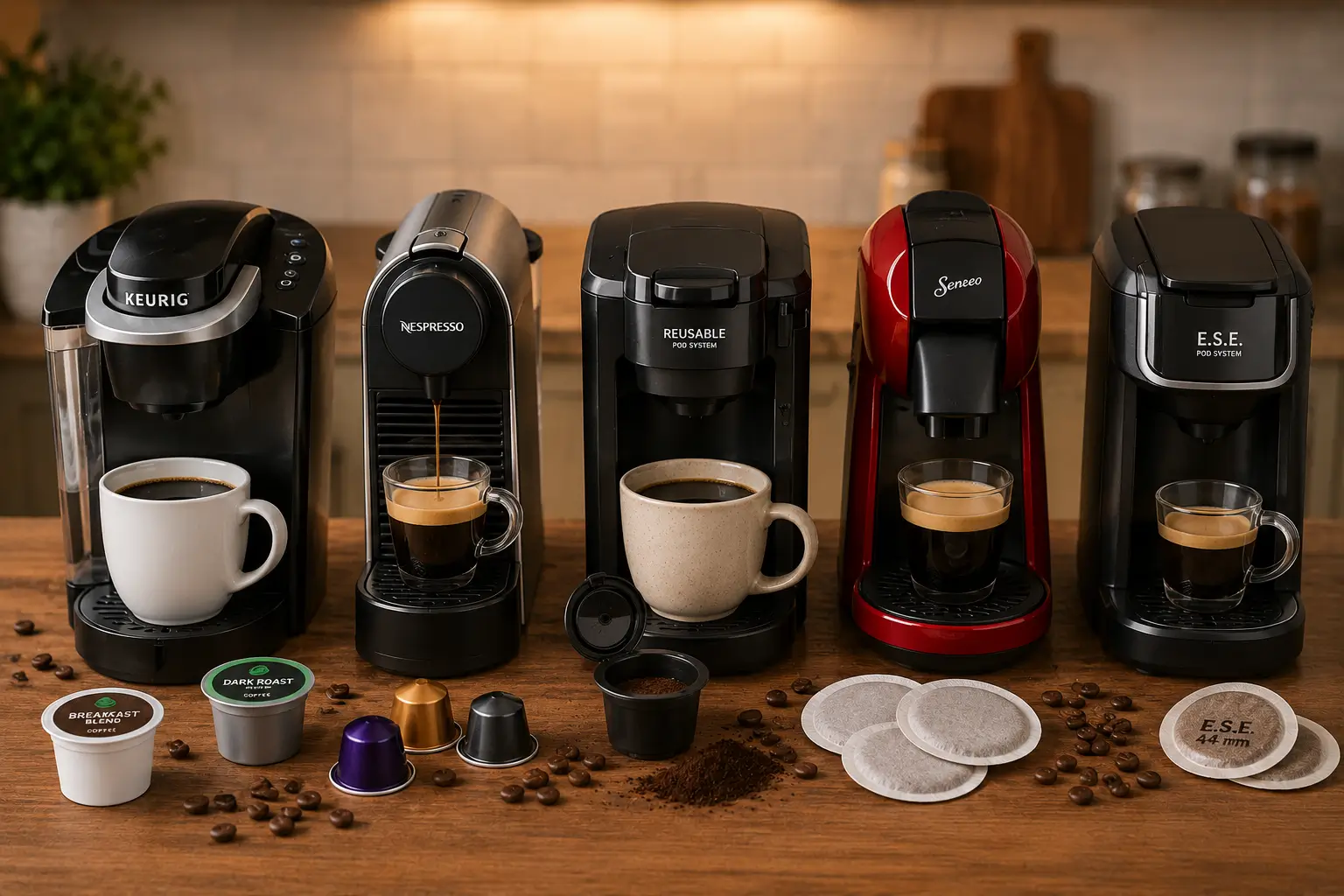
Not all single-serve coffee machines work the same way.
Several machine types exist, each designed for different brewing systems and coffee preferences.
Pod Coffee Makers
Pod coffee makers use pre-packaged coffee pods.
Popular examples include:
- Keurig machines
- K-Cup brewers
- Soft pod brewers
These machines focus on convenience and quick brewing.
Many households prefer pod coffee makers because they require very little preparation.
Capsule Machines
Capsule machines use sealed coffee capsules rather than soft pods.
The most well-known example is:
- Nespresso
Coffee capsules help preserve freshness because the coffee remains sealed until brewing.
Many capsule machines also provide espresso-style coffee options.
Single Cup Coffee Makers
Some single cup coffee makers do not require pods.
Instead, they use:
- Ground coffee
- Reusable filters
- Permanent filter baskets
These machines offer greater flexibility for users who prefer freshly ground coffee.
Reusable Pod Compatible Machines
Many modern single-serve coffee makers support reusable coffee pods.
These reusable pods allow users to fill the pod with their preferred coffee grounds.
Benefits include:
- Lower long-term costs
- Less waste
- Greater coffee variety
- Improved sustainability
Reusable pod systems have become increasingly popular among environmentally conscious coffee drinkers.
Hybrid Single-Serve Machines
Some machines support multiple brewing methods.
These hybrid systems may work with:
- Coffee pods
- Coffee capsules
- Ground coffee
- Reusable pods
Hybrid machines provide greater flexibility for households with different coffee preferences.
Why Single-Serve Machines Became Popular?
Single-serve coffee machines have grown rapidly in popularity because they solve several common problems.
Traditional coffee makers often produce more coffee than needed.
Single-serve systems allow users to brew exactly one cup at a time.
This helps reduce:
- Coffee waste
- Brewing time
- Cleanup effort
Many users also enjoy the wide range of available coffee flavors, roast levels, and beverage options.
Today, single-serve coffee machines can brew:
- Regular coffee
- Espresso-style drinks
- Flavored coffee
- Decaf coffee
- Specialty beverages
This flexibility has helped make them a common choice for modern coffee drinkers.
Advantages of Single-Serve Machines
Single-serve coffee machines have become popular because they offer convenience, speed, and flexibility. For many coffee drinkers, these benefits make them a practical alternative to traditional coffee makers.
Fast Brewing
One of the biggest advantages of single-serve machines is speed.
Most machines can brew a fresh cup of coffee in less than two minutes.
This makes them ideal for:
- Busy mornings
- Office environments
- Quick coffee breaks
- Individual coffee drinkers
Many users appreciate not having to wait for a full pot of coffee to brew.
Easy To Use
Single-serve coffee makers are designed for simplicity.
Most machines require only a few steps:
- Add water
- Insert a pod or capsule
- Press the brew button
The machine handles the rest.
This makes them beginner-friendly and convenient for people who want a hassle-free coffee experience.
Consistent Coffee Quality
Because each pod or capsule contains a pre-measured amount of coffee, every cup is brewed with consistent strength and flavor.
This helps eliminate common problems such as:
- Using too much coffee
- Using too little coffee
- Inconsistent brewing ratios
The result is a more predictable coffee experience.
Less Coffee Waste
Traditional coffee makers often brew more coffee than necessary.
Single-serve machines allow users to brew exactly one cup at a time.
This helps reduce:
- Leftover coffee
- Coffee waste
- Water waste
For people who drink only one or two cups per day, this can be a significant advantage.
Wide Variety Of Coffee Options
Many single-serve systems offer hundreds of beverage choices.
Users can select:
- Light roast coffee
- Medium roast coffee
- Dark roast coffee
- Flavored coffee
- Decaf coffee
- Espresso-style drinks
- Specialty beverages
This variety allows coffee drinkers to experiment with different flavors and brands.
Compact Design
Most single-serve coffee machines take up less counter space than traditional coffee makers.
This makes them suitable for:
- Apartments
- Small kitchens
- Dorm rooms
- Office desks
Their compact size is one reason they remain popular among urban households.
Disadvantages of Single-Serve Machines
While single-serve machines offer many benefits, they also have some limitations.
Understanding these drawbacks can help consumers make informed decisions.
Higher Cost Per Cup
One of the biggest disadvantages is the cost of coffee pods and capsules.
Compared to brewing ground coffee in a traditional machine, pods usually cost more per serving.
Over time, this can increase the total cost of making coffee at home.
Limited Brewing Capacity
Single-serve machines brew one cup at a time.
This works well for individuals but may be less convenient when serving:
- Families
- Guests
- Large groups
Brewing multiple cups requires multiple brewing cycles.
Pod Compatibility Restrictions
Not every coffee pod works with every machine.
For example:
- K-Cups work with Keurig machines
- Nespresso capsules work with Nespresso systems
- Soft pods require compatible brewers
Choosing the wrong pod can lead to compatibility issues.
Environmental Concerns
Many coffee pods are single-use products.
Although recyclable, biodegradable, compostable, and reusable pod options exist, pod waste remains a concern for some consumers.
This is one reason reusable coffee pods have become increasingly popular.
Regular Maintenance Requirements
Like all coffee makers, single-serve machines require maintenance.
Tasks include:
- Cleaning
- Descaling
- Water reservoir maintenance
- Needle cleaning
Ignoring maintenance can affect brewing performance and machine lifespan.
Single-Serve Machines vs Traditional Coffee Makers
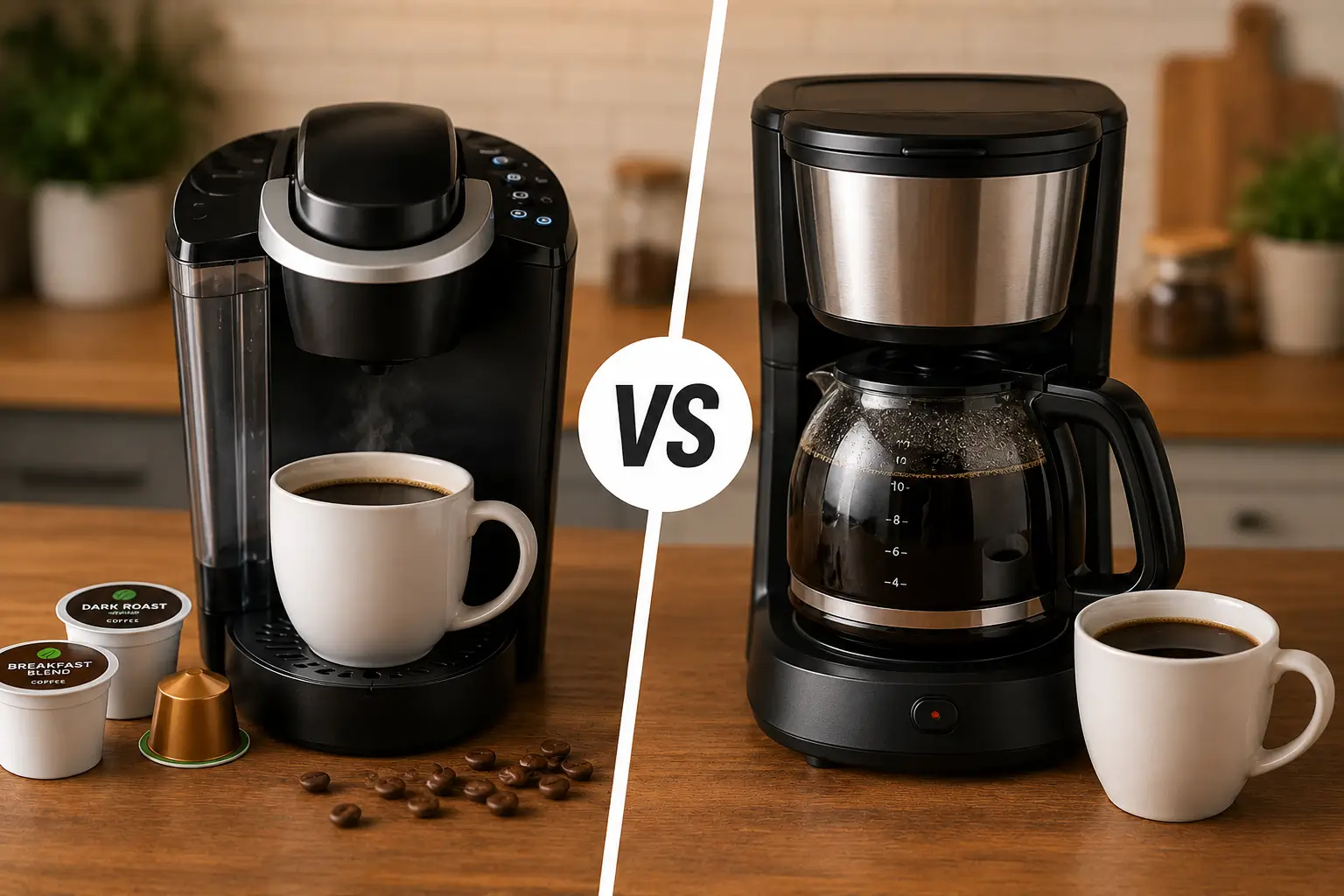
Many coffee drinkers compare single-serve machines with traditional drip coffee makers before purchasing a machine.
Both options have advantages depending on individual needs.
| Feature | Single-Serve Machines | Traditional Coffee Makers |
|---|---|---|
| Brewing Quantity | One Cup | Multiple Cups |
| Brewing Speed | Faster | Slower |
| Convenience | High | Moderate |
| Coffee Waste | Lower | Higher |
| Cost Per Cup | Higher | Lower |
| Variety | Very High | Moderate |
| Cleanup | Easy | Moderate |
Brewing Speed
Single-serve machines generally brew coffee faster.
Most cups are ready within minutes.
Traditional drip coffee makers often take longer because they prepare larger quantities of coffee.
Coffee Waste
Single-serve machines help reduce wasted coffee because users brew only what they need.
Traditional coffee makers often leave unused coffee sitting in the pot.
Long-Term Cost
Traditional coffee makers usually have lower operating costs because ground coffee costs less than coffee pods.
However, some single-serve machine owners reduce costs by using reusable coffee pods.
Convenience
For convenience, single-serve coffee machines usually have the advantage.
Users can quickly switch between different coffee flavors without cleaning an entire coffee pot.
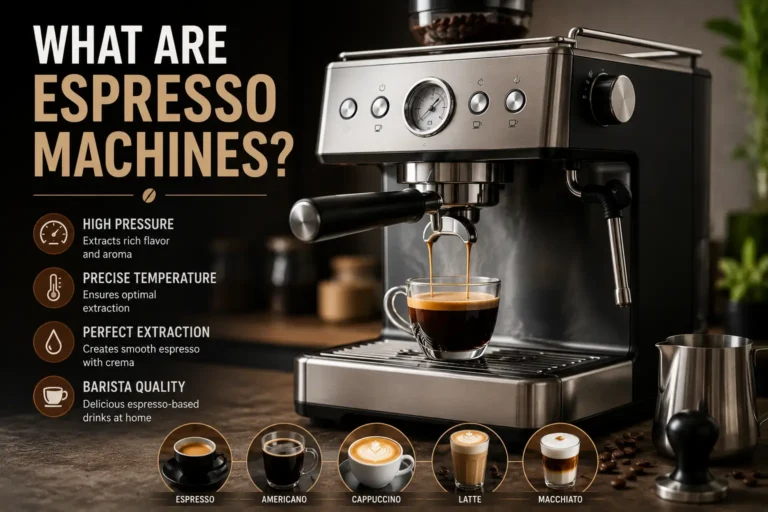
Single-Serve Machines vs Espresso Machines
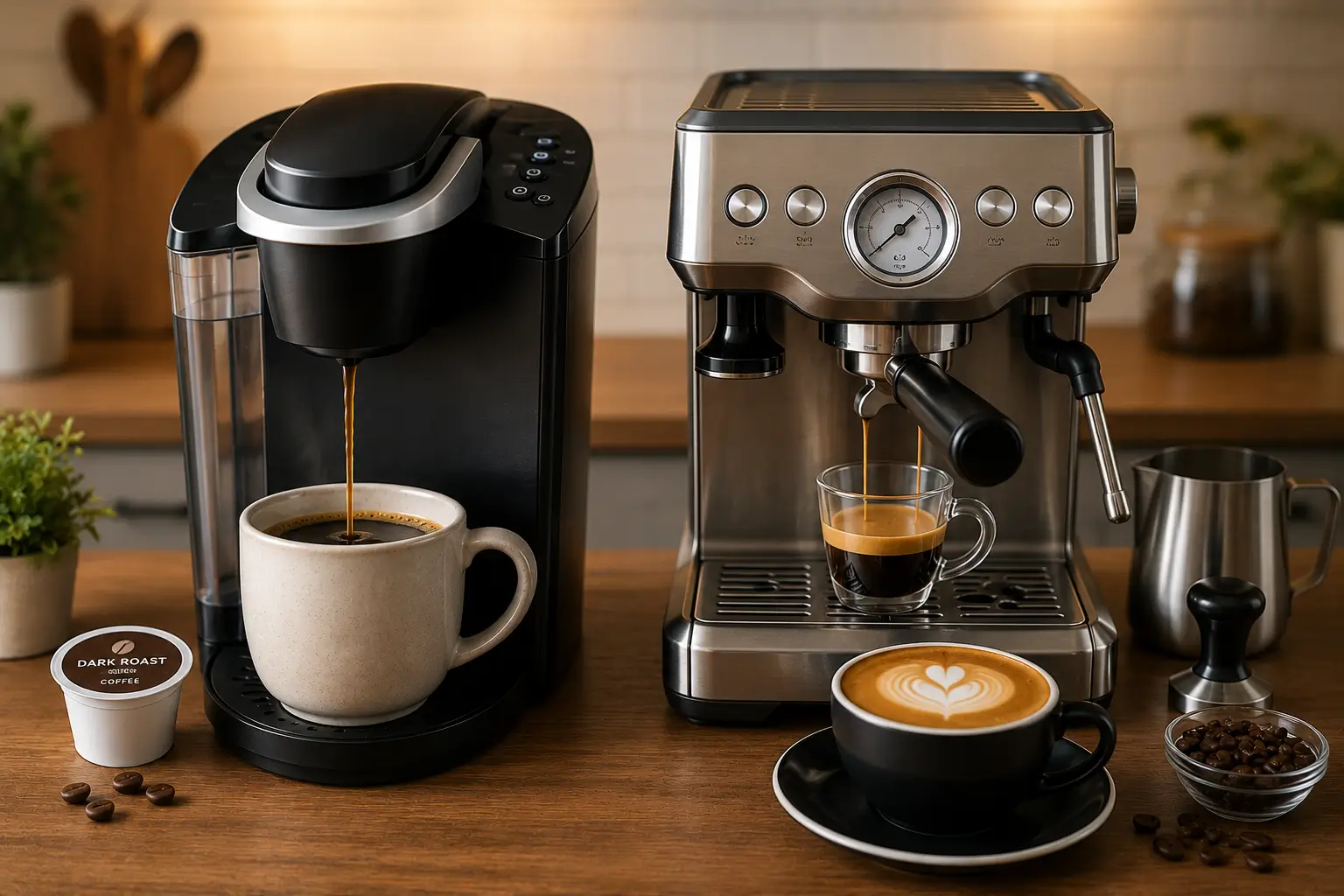
Many beginners confuse single-serve machines with espresso machines.
Although some pod machines can make espresso-style drinks, they are not the same.
| Feature | Single-Serve Machine | Espresso Machine |
|---|---|---|
| Primary Use | Coffee Brewing | Espresso Brewing |
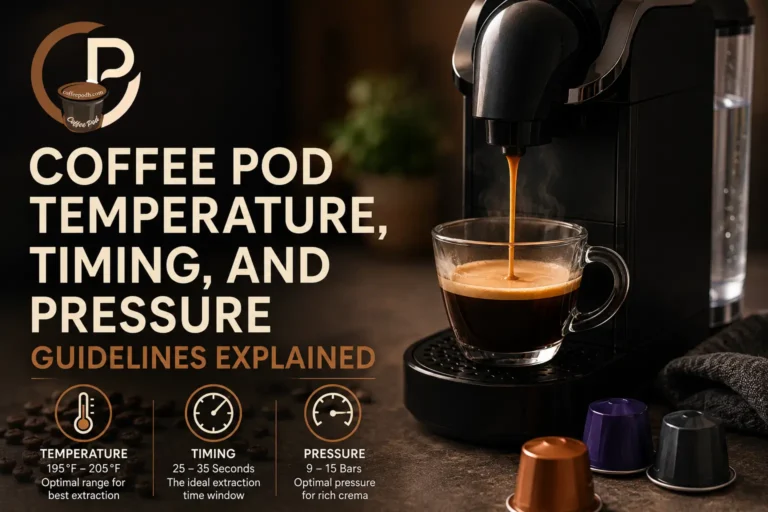
| Pressure Levels | Lower | Higher |
| Ease Of Use | Easier | More Complex |
| Maintenance | Simpler | More Involved |
| Brewing Speed | Fast | Fast |
| Learning Curve | Minimal | Higher |
Brewing Method
Single-serve coffee machines focus on convenience and simplicity.
Espresso machines use higher pressure to produce concentrated espresso shots.
Skill Requirements
Most single-serve machines require little experience.
Espresso machines often require users to learn:
- Grinding
- Tamping
- Extraction timing
- Milk frothing
Beverage Options
Single-serve machines excel at making everyday coffee quickly.
Espresso machines provide more control for espresso-based beverages such as:
- Lattes
- Cappuccinos
- Americanos
- Macchiatos
Are Single-Serve Machines Worth It?
For many coffee drinkers, the answer is yes.
Single-serve machines are often worth the investment when convenience, speed, and flexibility are priorities.
They are especially useful for:
- Individuals
- Small households
- Office workers
- Students
- Busy professionals
People who drink only one or two cups of coffee per day often benefit the most.
Who Should Buy A Single-Serve Machine?
A single-serve coffee machine may be a good choice if you:
- Want quick coffee preparation
- Prefer simple operation
- Enjoy trying different coffee flavors
- Have limited kitchen space
- Drink coffee alone or in small quantities
Coffee Pod Compatibility Guide
One of the most important factors when choosing a single-serve coffee machine is pod compatibility.
Not every coffee pod works with every machine.
Understanding compatibility can help you avoid purchasing pods that your machine cannot use.
Most single-serve coffee makers are designed to work with specific pod systems.
The most common options include:
- K-Cups
- Nespresso capsules
- Soft pods
- ESE pods
- Reusable coffee pods
Always check the manufacturer’s compatibility information before purchasing coffee pods.
K-Cups vs Nespresso Capsules
K-Cups and Nespresso capsules are two of the most popular coffee pod systems.
Although both are used in single-serve machines, they offer different brewing experiences.
| Feature | K-Cups | Nespresso Capsules |
|---|---|---|
| Coffee Style | Regular Coffee | Espresso & Coffee |
| Machine Brand | Keurig | Nespresso |
| Pod Size | Larger | Smaller |
| Variety | Very High | High |
| Brewing Pressure | Lower | Higher |
| Average Cost | Moderate | Higher |
K-Cups
K-Cups are commonly used in Keurig machines.
They offer:
- Large flavor selection
- Wide brand availability
- Easy brewing
- Multiple cup sizes
Many households choose K-Cups because of their convenience and variety.
Nespresso Capsules
Nespresso capsules focus on espresso-style coffee.
Many users prefer them for:
- Rich flavor
- Stronger coffee
- Espresso drinks
- Premium coffee experience
Nespresso systems generally use higher brewing pressure than standard K-Cup machines.
Soft Pods and ESE Pods
Some single-serve machines use soft pods instead of plastic capsules.
These systems remain popular among coffee drinkers who prefer a simpler brewing method.
What Are Soft Pods?
Soft pods are small paper filter packets filled with coffee grounds.
They resemble tea bags but contain coffee instead.
Soft pods offer:
- Easy disposal
- Less plastic waste
- Simple brewing
- Consistent coffee preparation
Many coffee drinkers choose soft pods because they create less waste than traditional plastic capsules.
What Are ESE Pods?
ESE stands for Easy Serving Espresso.
These pods are standardized espresso pods designed for compatible espresso machines.
ESE pods provide:
- Consistent espresso extraction
- Easy preparation
- Reduced cleanup
- Simple espresso brewing
They are often used by people who want espresso convenience without using traditional capsules.
Cost Per Cup Comparison
One of the most common questions consumers ask is whether single-serve machines are affordable in the long run.
The answer depends on the brewing system.
Average Cost Comparison
| Brewing Method | Typical Cost Per Cup |
|---|---|
| Ground Coffee | Lowest |
| Reusable Pod | Low |
| Soft Pod | Low to Moderate |
| K-Cup | Moderate |
| Nespresso Capsule | Higher |
Reusable coffee pods usually provide the lowest long-term operating cost among pod-based systems.
Ground coffee remains the most economical option overall.
Environmental Impact of Single-Serve Machines
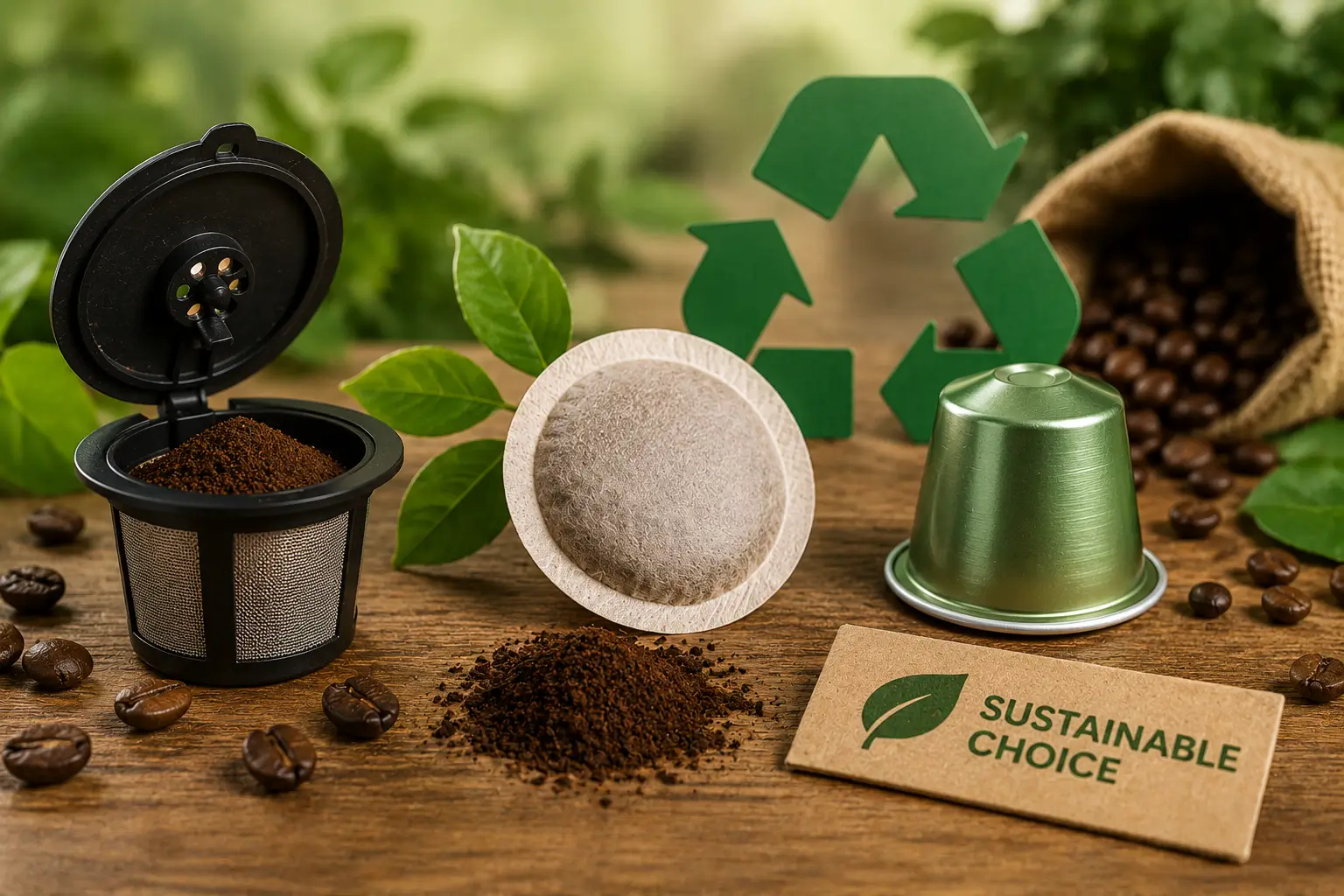
Single-serve coffee machines have improved convenience, but they have also raised environmental concerns.
The main concern involves pod waste.
Pod Waste
Many traditional coffee capsules are single-use products.
Millions of coffee pods are discarded every day.
This has encouraged manufacturers to develop:
- Recyclable pods
- Biodegradable pods
- Compostable pods
- Reusable pods
Reusable Pod Solutions
Reusable coffee pods can help reduce waste significantly.
Instead of discarding a pod after every use, consumers refill the pod with fresh coffee grounds.
Benefits include:
- Less waste
- Lower costs
- Greater coffee flexibility
Sustainable Coffee Options
Many coffee drinkers now choose:
- Compostable coffee pods
- Biodegradable coffee pods
- Soft pods
- Reusable pod systems
These alternatives can help reduce the environmental impact of single-serve brewing.
How Long Do Single-Serve Machines Last?
The lifespan of a single-serve machine depends on:
- Machine quality
- Usage frequency
- Maintenance habits
- Water quality
- Most quality machines last between:
- 3 to 7 years
- Sometimes longer with proper care
Regular cleaning can significantly extend machine lifespan.
Signs a Machine Needs Replacement
Common signs include:
- Inconsistent brewing
- Water leaks
- Slow brewing cycles
- Poor extraction
- Electrical issues
Proper maintenance often prevents many of these problems.
Common Problems and Solutions
Like any appliance, single-serve coffee machines occasionally experience issues.
Machine Not Brewing
Possible causes:
- Empty water reservoir
- Blocked needle
- Mineral buildup
- Solution:
- Refill water
- Clean brewing needle
- Descale machine
Weak Coffee
Possible causes:
- Old coffee pods
- Incorrect brew size
- Poor-quality coffee
- Solution:
- Use fresh pods
- Adjust brew settings
- Try a stronger roast
Slow Brewing
Possible causes:
- Mineral deposits
- Internal blockages
- Solution:
- Run a descaling cycle
Water Leaks
Possible causes:
- Damaged seals
- Improper pod placement
- Solution:
- Check pod position
- Inspect seals
- Replace damaged components if necessary
Cleaning and Maintenance Tips
Routine maintenance helps improve performance and machine longevity.
Daily Cleaning
After brewing:
- Empty drip tray
- Remove used pods
- Wipe exterior surfaces
Weekly Cleaning
At least once per week:
- Wash removable parts
- Clean pod holder
- Rinse water reservoir
Descaling Schedule
Most manufacturers recommend descaling every:
- 3 months
- 6 months
depending on water hardness.
Descaling helps remove mineral buildup that can affect brewing performance.
My Experience Using Single-Serve Machines
When I first started using single-serve coffee machines, convenience was the main reason I made the switch.
Over time, I tested several systems, including K-Cups, reusable pods, and capsule-based machines.
I found that brewing speed and consistency were excellent across most quality machines.
The biggest lesson I learned was that maintenance matters. Machines that receive regular cleaning and descaling usually perform much better over the long term.
I also discovered that reusable coffee pods can reduce both waste and long-term costs without sacrificing coffee quality.
For many coffee drinkers, single-serve machines offer an excellent balance of convenience, consistency, and flexibility.
Frequently Asked Questions
A single-serve coffee machine is a coffee maker that brews one cup of coffee at a time using pods, capsules, soft pods, reusable pods, or ground coffee.
For many users, yes.
They provide fast brewing, convenience, and consistent coffee quality.
Many do.
However, some machines also support reusable pods and ground coffee.
It depends on personal preference.
K-Cups offer greater variety, while Nespresso capsules often focus on espresso-style coffee and stronger flavor.
Most quality machines last between three and seven years when properly maintained.
Many modern single-serve machines support reusable coffee pods.
Always verify compatibility before purchasing.
Traditional pod systems can create waste, but reusable, compostable, biodegradable, and recyclable pod options can reduce environmental impact.
Conclusion
In short, When I first started using a single-serve coffee machine, I simply wanted a faster way to make coffee. After testing different pod systems, reusable pods, capsule machines, and brewing methods, I realized these machines offer much more than convenience. They provide consistent coffee quality, easy operation, and flexibility for different coffee preferences. While they may have higher per-cup costs than traditional coffee makers, many users find the convenience worth the investment. For coffee drinkers who value speed, simplicity, and variety, a quality single-serve machine can be an excellent addition to a daily coffee routine. Before buying, consider pod compatibility, maintenance requirements, long-term costs, and sustainability options to find the machine that best fits your needs.