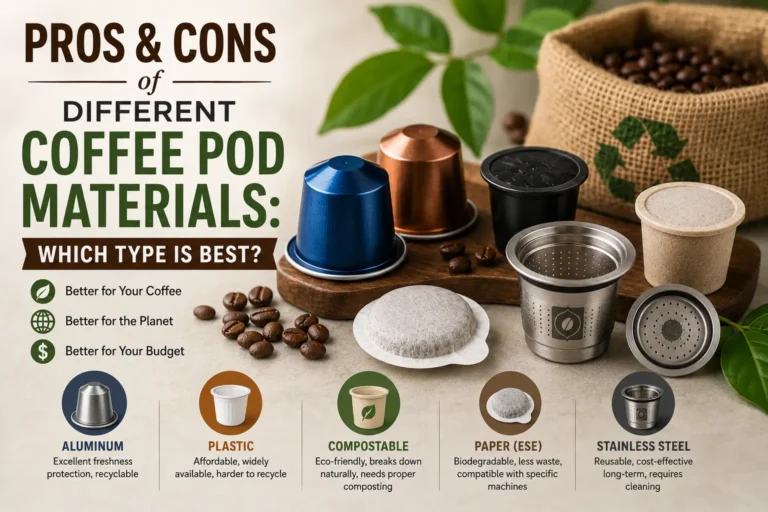
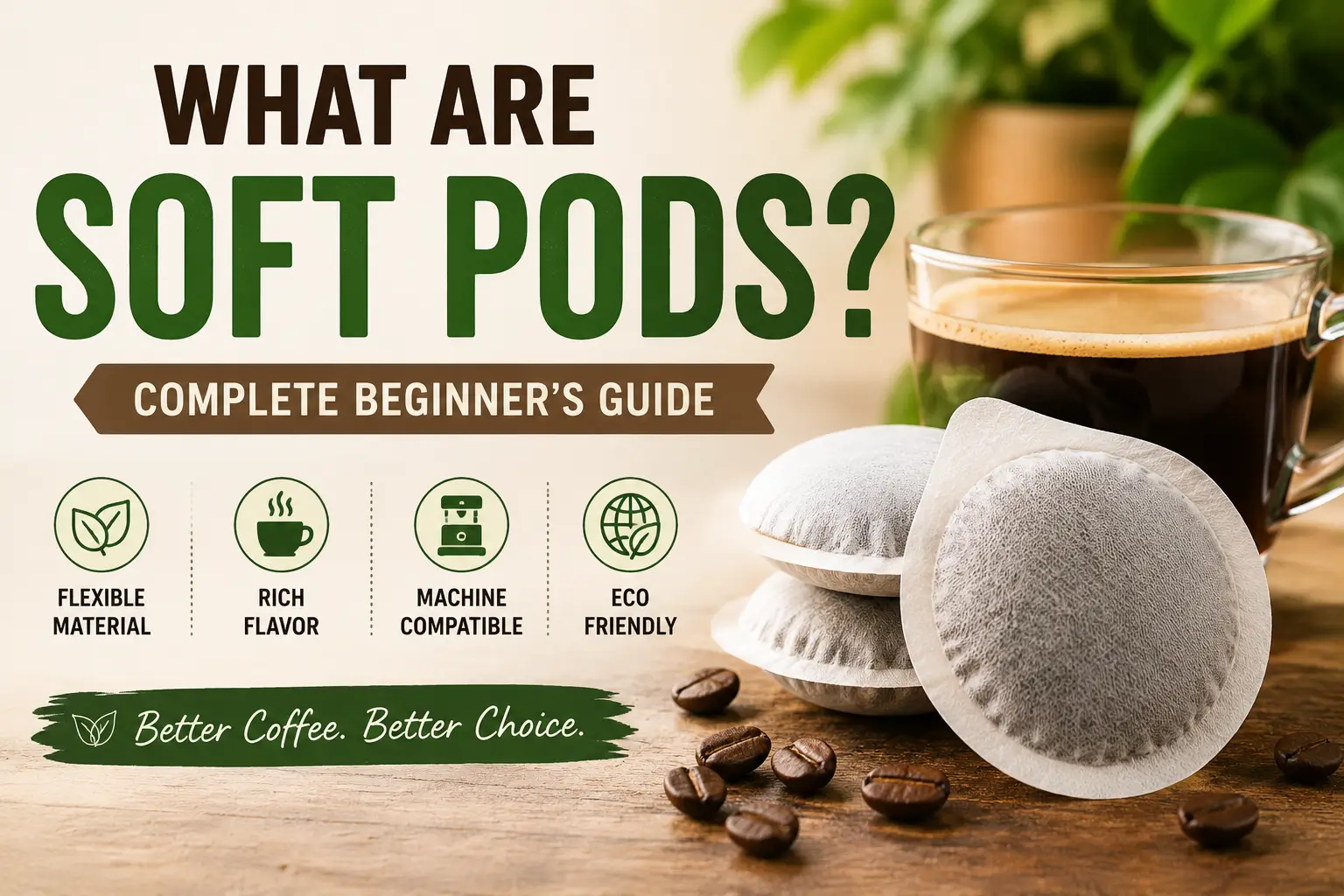

What Are Soft Pods? Soft Coffee Pods Explained
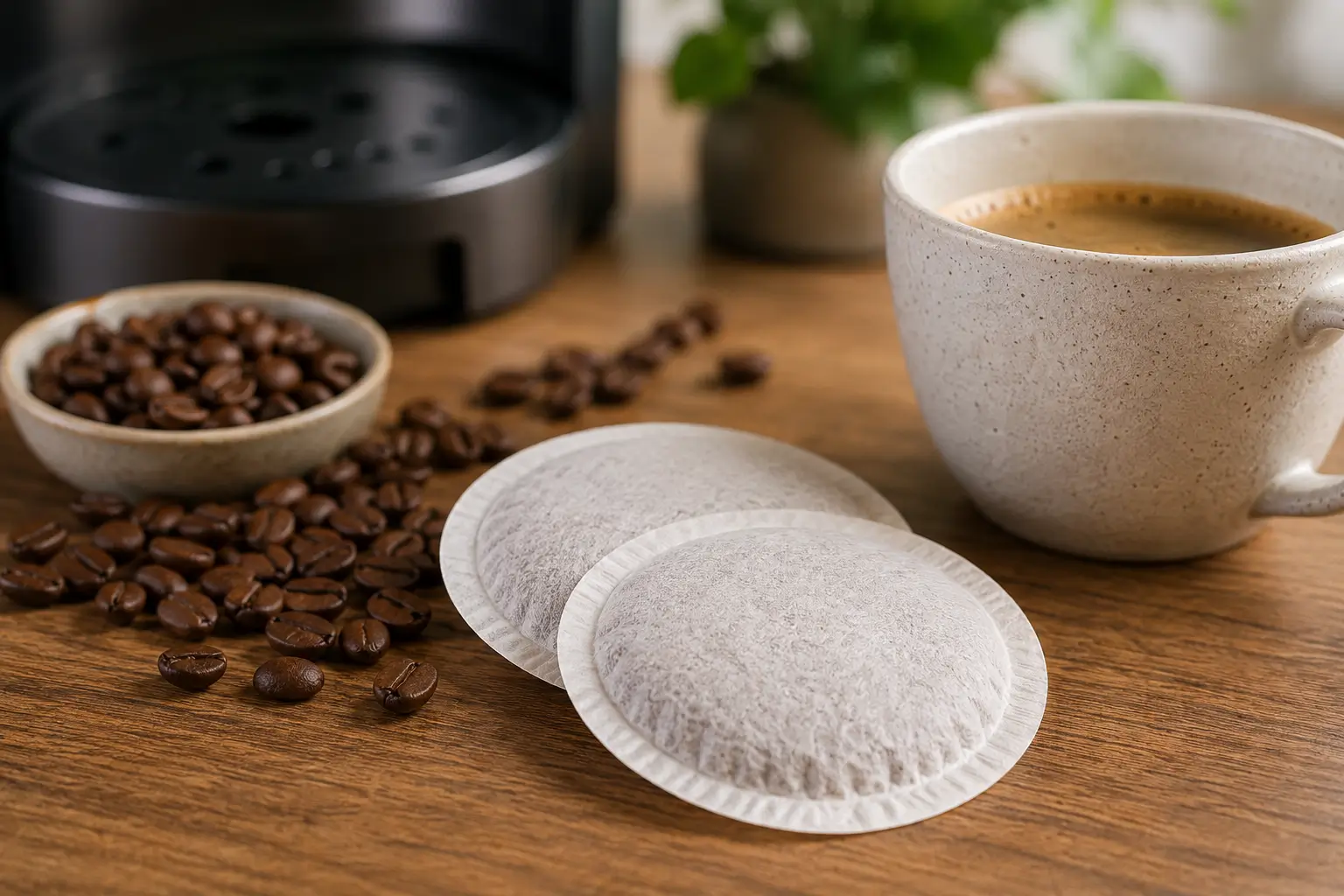
Soft pods are flat, round paper-filter pouches filled with a pre-measured amount of ground coffee. They are made for compatible soft-pod coffee makers and offer a simple way ↗ to brew one cup without measuring loose coffee.
Soft coffee pods usually look like small, round tea-bag-style pads rather than hard plastic or aluminum capsules. Senseo-style soft pods are different from E.S.E. espresso pods, which are smaller and made for higher-pressure espresso brewing.
In this guide, I explain what soft pods are, how they work, which machines use them, how to brew them, and how they compare with E.S.E. pods, K-Cups and coffee capsules.
Important Note:
Soft pods are not the same as E.S.E. espresso pods. Always check your coffee maker before buying because the two paper-pod formats use different sizes and brewing systems.
Key Takeaways
Soft pods are paper-filter pouches filled with pre-measured ground coffee.
They usually look flat and round rather than like hard capsules.
Senseo-style brewers are one of the main systems that use soft coffee pods.
Soft pods and E.S.E. espresso pods are different formats.
Machine compatibility should always be checked before buying.
Quick Answer
Soft coffee pods are round, flexible paper pouches filled with ground coffee. They are designed for compatible paper-pod machines such as Senseo. They are not interchangeable with K-Cups, Nespresso capsules, or 44 mm E.S.E. espresso pods.
What Are Soft Pods?
Soft pods are single-serve paper coffee pods designed for compatible soft-pod coffee makers. Ground coffee is sealed between layers of filter paper, allowing hot water to pass through the coffee during brewing.
They normally look like flat, round paper pouches rather than rigid capsules. Senseo-style soft pods are commonly larger than E.S.E. espresso pods and use lower-pressure brewing.
Soft pods are mainly used for regular coffee rather than concentrated espresso.
What Are Soft Pods Made Of?
One of the biggest differences between soft coffee pods and coffee capsules is their construction.
Most soft coffee pods use simple materials that focus on convenience and brewing performance.
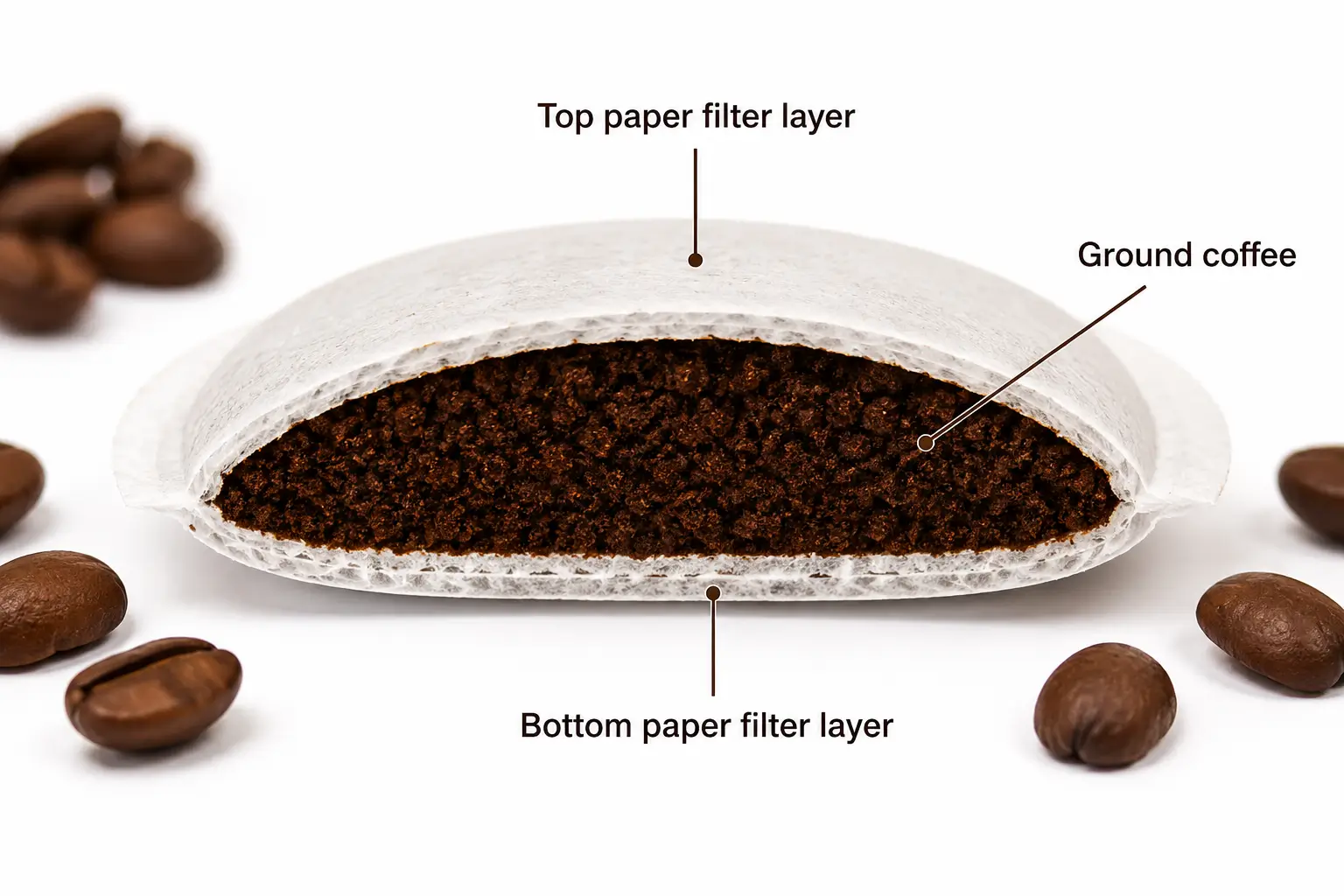
A soft coffee pod mainly contains ground coffee sealed inside filter paper. The paper keeps the coffee together while allowing hot water to flow through it.
Many products also use an outer wrapper or bag to protect the coffee from air, moisture and light before brewing. Packaging materials vary by brand.
How Do Soft Pods Work?
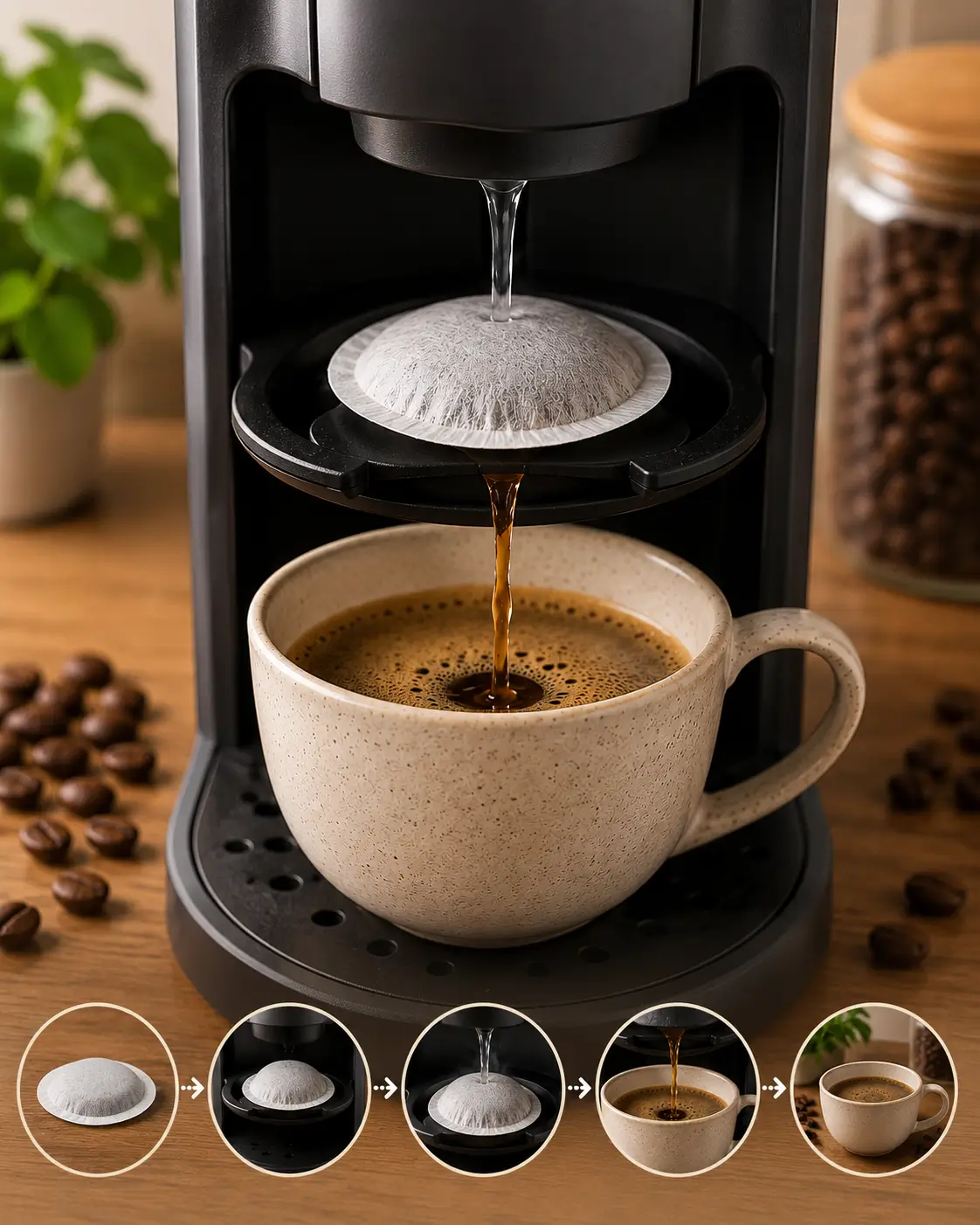
Soft coffee pods work by allowing hot water to pass through the coffee grounds while the paper filter holds everything together.
The brewing process is simple and convenient.
Step 1: Place the soft pod flat in the compatible pod holder.
Step 2: Close the brewing chamber.
Step 3: Hot water passes through the paper pod and ground coffee.
Step 4: Remove the used pod after brewing.
Soft pod systems generally use lower pressure than espresso-pod systems, which usually produces a milder, longer coffee. Senseo-style soft pods and E.S.E. espresso pods are built for different pressure levels.
Water Flow In Soft Pods
Soft coffee pods rely on a gentle brewing process.
Water passes evenly through the paper filter and coffee grounds.
This helps create a balanced extraction and smooth flavor profile.
Pressure Differences
Unlike espresso capsules, most soft pod systems use lower brewing pressure.
This means:
- Softer extraction
- Less concentrated coffee
- Milder flavor profile
Many users enjoy soft pod coffee because it produces a clean and easy-drinking cup of coffee.
Why Soft Pods Are Different From Coffee Capsules
Coffee capsules typically use:
- Rigid plastic or aluminum shells
- Sealed systems that match specific machines
Soft pods instead use flexible paper filters. These design differences affect machine compatibility, packaging, freshness, and brewing style.
Benefits Of Soft Pods
Soft coffee pods have remained popular for many years because they offer a simple and convenient way to brew coffee. While newer capsule systems receive a lot of attention, many coffee drinkers still prefer soft pods because of their ease of use and lower packaging requirements.
Easy To Use
One of the biggest advantages of soft coffee pods is simplicity.
There is no need to:
- Measure coffee grounds
- Use filters separately
- Clean complicated brewing equipment
Simply insert the soft pod into a compatible machine and start brewing.
This makes soft pod coffee a convenient option for busy mornings.
Less Packaging Waste
Compared to many coffee capsules, soft pods often use fewer materials.
Most soft coffee pods contain:
- Paper filter material
- Ground coffee
without requiring hard plastic or aluminum shells.
This can help reduce packaging waste.
Convenient Brewing
Soft pods provide consistent coffee preparation.
Each pod contains a pre-measured amount of coffee, helping users achieve similar results every time they brew.
This convenience is one reason soft pod systems remain popular in many households.
Often More Affordable
Soft coffee pods are frequently less expensive than premium coffee capsules.
For many coffee drinkers, this makes them an attractive option for everyday use.
Costs vary by brand and machine type, but soft pod coffee is often considered a budget-friendly brewing method.
Wide Availability
Many coffee brands ↗ offer soft pod products.
Popular options can often be found online and in stores, making it easy to try different roasts and flavors.
Are Soft Pods Environmentally Friendly?
Many coffee drinkers choose soft pods because they believe they create less waste than some capsule systems.
In many cases, this can be true.
However, environmental impact depends on the materials used and how the pods are disposed of.
Paper-Based Materials
Most soft coffee pods use paper filter materials rather than hard plastic or aluminum shells.
Paper-based construction generally requires fewer materials and can reduce packaging waste.
Reduced Plastic Use
Many soft pod systems contain little or no plastic inside the pod itself.
This can reduce dependence on petroleum-based materials.
Lower Packaging Waste
Soft coffee pods are lightweight and compact.
Because they use fewer materials, they often generate less waste than some capsule systems.
Sustainability Benefits
Soft pods may appeal to environmentally conscious coffee drinkers because they often combine:
- Paper materials
- Simpler construction
- Lower material usage
These factors can contribute to a smaller environmental footprint.
Are Soft Pods Compostable?
Many people assume all soft coffee pods are compostable.
The answer depends on the materials used by the manufacturer.
Compostability Factors
Some soft coffee pods contain:
- Paper filters
- Coffee grounds
- Natural materials
These components may be suitable for composting.
Material Differences
Not all soft pods are identical.
Some products may include:
- Adhesives
- Additional packaging materials
- Synthetic components
These materials can affect compostability.
Always check the manufacturer’s instructions.
Disposal Considerations
Even when soft pods contain compostable materials, proper disposal remains important.
Local composting rules and facilities vary.
Consumers should review local guidelines before composting used pods.
Do Soft Pods Taste Different?
Taste is one of the most important factors when choosing a coffee pod system.
Many coffee drinkers wonder whether soft pods produce a different flavor compared to capsules or espresso pods.
Flavor Profile
Soft coffee pods often produce a smooth and balanced cup of coffee.
Because most systems use lower pressure than espresso capsule machines, the flavor can be less concentrated.
Brewing Strength
Soft pod coffee is typically:
- Milder
- Less intense
- Smooth
- Easy to drink
Some users prefer this style for everyday coffee consumption.
Freshness Considerations
Freshness depends on:
- Coffee quality
- Packaging
- Storage conditions
Well-packaged soft coffee pods can maintain good flavor and aroma before brewing.
Soft Pods vs Hard Pods
Many people confuse soft pods with hard pods.
Although both are coffee pod formats, they differ significantly.
Structure Comparison
Soft pods use:
Soft pods use flexible paper filters. Hard pods and capsules use rigid containers.
Brewing Comparison
Soft pods generally use lower brewing pressure.
Hard pods often support stronger extraction.
Cost Comparison
Soft pods are frequently less expensive than hard pod systems.
Convenience Comparison
Both systems are easy to use.
The choice often depends on machine compatibility and personal preference.
Comparison Table
| Feature | Soft Pods | Hard Pods |
|---|---|---|
| Material | Paper Filter | Rigid Pod |
| Brewing Pressure | Varies | Varies |
| Cost | Often Lower | Often Higher |
| Waste Generation | Varies | Varies |
| Brewing Style | Coffee | Coffee/Espresso |
Soft Pods vs Coffee Capsules
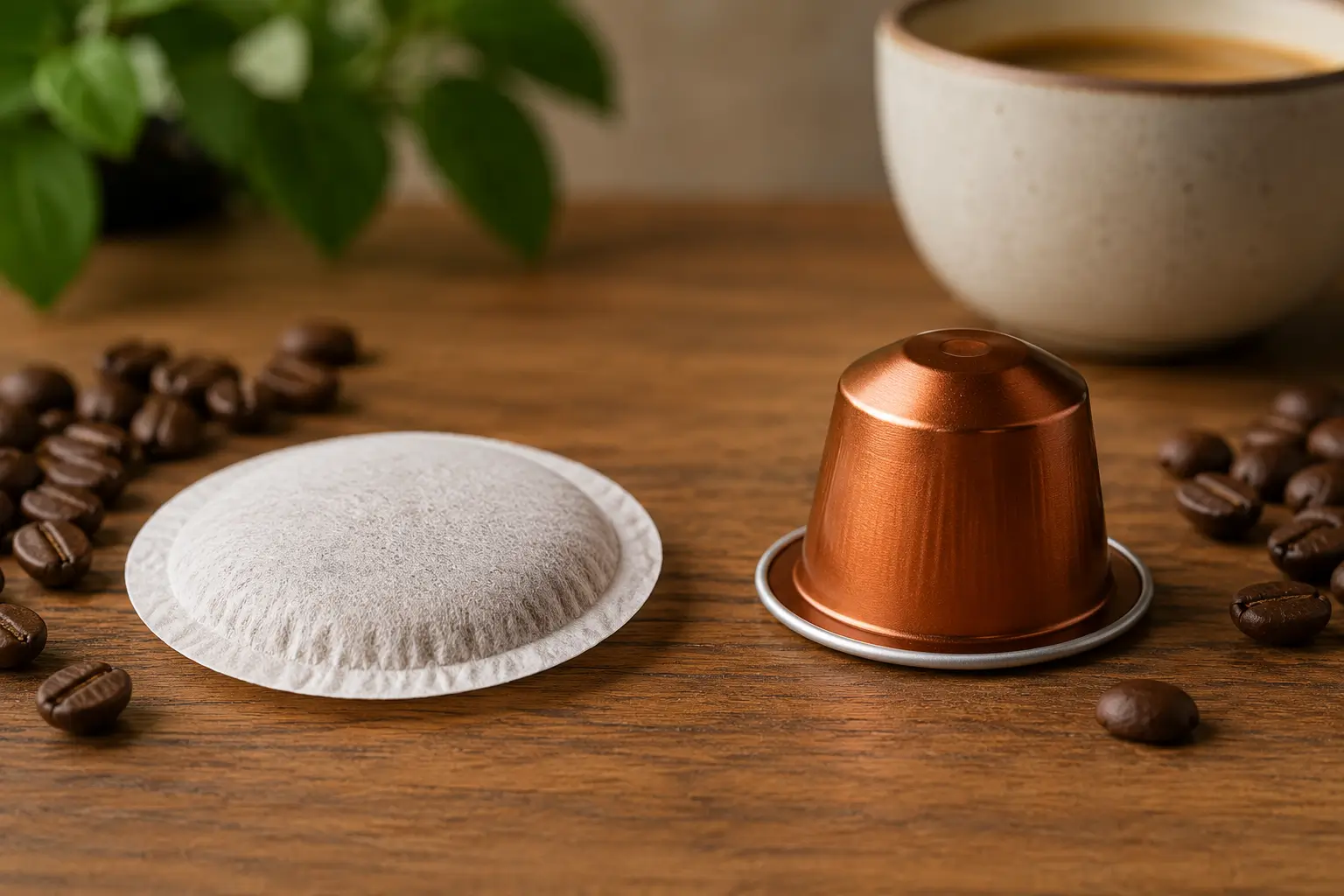
Coffee capsules and soft pods are often confused because both are single-serve coffee systems.
However, they work differently.
Brewing Method
Soft pods rely on paper-filter brewing.
Coffee capsules use sealed capsule technology.
Freshness
Capsules often provide stronger protection against:
- Oxygen
- Moisture
- Light
Soft pods rely more heavily on external packaging for freshness.
Machine Compatibility
Soft pods require specific soft pod machines.
Capsules require compatible capsule systems.
Sustainability
Soft pods often use fewer materials and less packaging.
Comparison Table
| Feature | Soft Pods | Coffee Capsules |
|---|---|---|
| Material | Paper | Plastic/Aluminum |
| Freshness Protection | Moderate | High |
| Packaging Waste | Varies | Varies |
| Brewing Style | Coffee | Coffee/Espresso |
| Sustainability | Varies | Varies |
Soft Pods vs K-Cups
K-Cups are one of the most recognized coffee pod formats in the United States.
They differ significantly from soft pods.
Brewing System
K-Cups use hard plastic pod systems.
Soft pods use paper-filter construction.
Environmental Impact
Soft pods generally use less material.
Many K-Cups contain plastic components.
Cost
Soft pods are often more affordable.
Availability
K-Cups offer a wider range of brands and flavors in the U.S. market.
Comparison Table
| Feature | Soft Pods | K-Cups |
|---|---|---|
| Material | Paper | Plastic |
| Waste | Varies | Varies |
| Brewing Style | Coffee | Coffee |
| Cost | Lower | Moderate |
| Sustainability | Depends on materials and disposal | Depends on materials and disposal |
Soft Pods vs E.S.E. Pods
This is one of the most common areas of confusion.
Many people assume soft pods and E.S.E. pods are the same.
They are not.
Pod Design
Soft pods are typically larger and designed for regular coffee brewing.
E.S.E. pods are smaller and specifically designed for espresso machines.
Espresso Brewing
E.S.E. stands for Easy Serving Espresso.
These pods are designed for espresso extraction.
Pressure Requirements
E.S.E. pods use higher brewing pressure.
Soft pods use lower brewing pressure.
Coffee Strength
E.S.E. pods generally produce stronger coffee.
Soft pods usually produce a milder cup.
Comparison Table
| Feature | Soft Pods | E.S.E. Pods |
|---|---|---|
| Purpose | Coffee | Espresso |
| Pressure | Varies | Varies |
| Flavor Strength | Milder | Stronger |
| Pod Size | Larger | Smaller |
| Brewing Style | Coffee | Espresso |
Soft Pods vs Aluminum Capsules
Aluminum capsules are commonly used by premium coffee brands.
Soft pods offer a different approach.
Sustainability
Soft pods often use fewer materials.
Aluminum capsules focus on recyclability.
Freshness Protection
Aluminum capsules provide stronger protection against:
- Oxygen
- Moisture
- Light
Recycling
Aluminum capsules require recycling programs.
Some soft pods may be compostable.
Comparison Table
| Feature | Soft Pods | Aluminum Capsules |
|---|---|---|
| Material | Paper | Aluminum |
| Compostable Potential | Yes | No |
| Recyclable | Limited | Yes |
| Freshness Protection | Moderate | Excellent |
| Packaging Waste | Varies | Varies |
Which Coffee Machines Use Soft Pods?
One of the most important things to know before buying soft coffee pods is machine compatibility.
Unlike coffee capsules and K-Cups, soft pods only work in machines designed for paper coffee pods.
Senseo Machines
Senseo is one of the most popular soft pod coffee systems.
These machines were developed to brew coffee using specially designed soft coffee pods.
Senseo machines are known for:
- Easy operation
- Quick brewing
- Wide pod availability
- Consistent coffee quality
Many coffee drinkers first discover soft pods coffee through Senseo machines.
Handpresso Machines
Handpresso also supports certain soft pod formats.
These portable coffee systems are designed for convenient coffee brewing while traveling.
They are often used by:
- Travelers
- Campers
- Road trip enthusiasts
Soft Pod Brewers
Some coffee makers are designed specifically for soft coffee pods.
These brewers typically include:
- Pod holders
- Water distribution systems
- Brewing chambers
that are optimized for paper coffee pods.
Compatible Systems
Always check machine compatibility before purchasing soft coffee pods.
Not all pod systems use the same format.
Soft pods generally do not work in:
- Nespresso machines
- Keurig machines
- Most capsule systems
unless specifically designed for soft pod use.
Soft Coffee Pod Sizes and Compatibility
There is no single size that fits every paper-pod machine. Senseo-style coffee pads are commonly around 62 mm wide, while standard E.S.E. espresso pods are about 44 mm wide. Check the product label and the exact holder specification for your machine before ordering.
| Pod format | Typical design | Compatible brewer |
|---|---|---|
| Senseo-style soft pod | Flat paper coffee pad, often about 62 mm | Compatible Senseo-style machine |
| E.S.E. espresso pod | Compact 44 mm paper espresso pod | Espresso machine with an E.S.E. holder |
| K-Cup | Rigid single-serve cup | Compatible Keurig brewer |
| Nespresso capsule | Sealed rigid capsule | Matching Original or Vertuo system |
Can You Use Soft Pods in a Regular Coffee Maker?
Not in a standard drip coffee maker’s pod slot unless the manufacturer explicitly supports that format. Some people open a paper pod and use the grounds in a filter, but this is not the intended brewing method and results can vary.
Can You Use Soft Pods in a Keurig or Nespresso?
No. Senseo-style paper pods do not fit standard K-Cup holders or Nespresso Original and Vertuo capsule systems. Do not force a paper pod into an incompatible brewer.
How To Use Soft Pods
One reason many people enjoy soft pod coffee is its simplicity.
The brewing process is straightforward.
Step 1: Fill The Water Reservoir
Add fresh water to the machine.
The amount depends on the number of cups you want to brew.
Step 2: Insert The Soft Pod
Place the soft coffee pod into the designated pod holder.
Make sure it sits flat.
Step 3: Close The Brewing Chamber
Close the machine according to the manufacturer’s instructions.
This ensures proper water flow during brewing.
Step 4: Start Brewing
Press the brew button.
Hot water will pass through the pod and extract the coffee.
Step 5: Remove The Used Pod
Once brewing is complete, remove the used pod.
Dispose of it according to local waste or composting guidelines.
Common Mistakes To Avoid
Many beginners make simple mistakes.
Avoid:
- Using incompatible pods
- Reusing damaged pods
- Storing pods improperly
- Using stale coffee pods
These mistakes can affect brewing quality.
How Long Do Soft Pods Last?
Soft coffee pods generally have a good shelf life when stored correctly.
However, freshness depends on packaging and storage conditions.
Typical Shelf Life
Most soft coffee pods remain fresh for:
- Several months
- Up to one year
- Sometimes longer
depending on packaging quality.
Always check the best-before date.
Storage Conditions
To maintain freshness:
- Store pods in a cool place
- Avoid direct sunlight
- Keep away from moisture
- Use sealed packaging when possible
Proper storage helps preserve flavor and aroma.
Freshness Factors
Several factors affect coffee quality over time:
- Oxygen exposure
- Humidity
- Heat
- Packaging quality
Freshly stored pods generally produce better-tasting coffee.
Popular Soft Pod Coffee Brands
Several companies offer soft coffee pod products.
Some of the most recognized brands include:
Senseo
Senseo remains one of the most popular soft pod coffee brands worldwide.
The company offers a wide range of blends and roast levels.
Douwe Egberts
Douwe Egberts is closely associated with the Senseo system and offers numerous soft pod coffee options.
Melitta
Melitta produces various coffee products, including soft coffee pod options in some markets.
Handpresso
Handpresso offers soft pod solutions designed for portable brewing systems.
Other Popular Brands
Depending on your location, additional soft pod brands may also be available.
Many local coffee roasters now offer compatible soft pod products.
Common Misconceptions About Soft Pods
Many myths surround soft coffee pods.
Let’s clear up some common misunderstandings.
Soft Pods Are The Same As Capsules
This is false.
Soft pods use paper filters.
Capsules use plastic or aluminum shells.
The brewing systems are different.
Soft Pods Make Weak Coffee
Not necessarily.
Coffee strength depends on:
- Coffee blend
- Roast level
- Brewing method
- Water ratio
Many soft pods can produce rich and flavorful coffee.
Soft Pods Only Work In One Machine
While compatibility is important, multiple brewing systems support soft pods.
Examples include:
- Senseo
- Handpresso
- Other compatible soft pod brewers
Soft Pods Are Not Eco-Friendly
Many soft pods use paper-based materials and may generate less waste than some capsule systems.
Environmental impact depends on materials and disposal methods.
What to Check Before Choosing Soft Pods
For a good result, match the pod size to the brewer, choose a roast you enjoy, and check how each pack is sealed. This guide compares brewing formats and specifications; it does not claim hands-on testing of every pod or machine.
Frequently Asked Questions
Most soft coffee pods use paper filter material filled with pre-measured ground coffee.
Some soft pods may be compostable depending on the materials used.
Always check the manufacturer’s disposal instructions.
No.
Soft pods require compatible soft pod brewing systems such as Senseo or Handpresso machines.
The answer depends on your priorities.
Soft pods often use fewer materials, while capsules may provide stronger freshness protection.
Most soft coffee pods stay fresh for several months when stored properly.
Many soft pods use paper-based materials and may produce less packaging waste than some capsule systems.
They can produce flavorful coffee, but they generally create a milder cup than espresso capsule systems.
Conclusion
Soft coffee pods are an easy way to brew a single cup in a compatible paper-pod machine. Their paper-filter design differs from rigid K-Cups and Nespresso capsules. The best choice depends on pod size, machine compatibility, taste, freshness, and local disposal options. Always check your brewer manual before buying.