

Keurig Coffee Pods: Types, Sizes, Flavors & K-Cup Guide
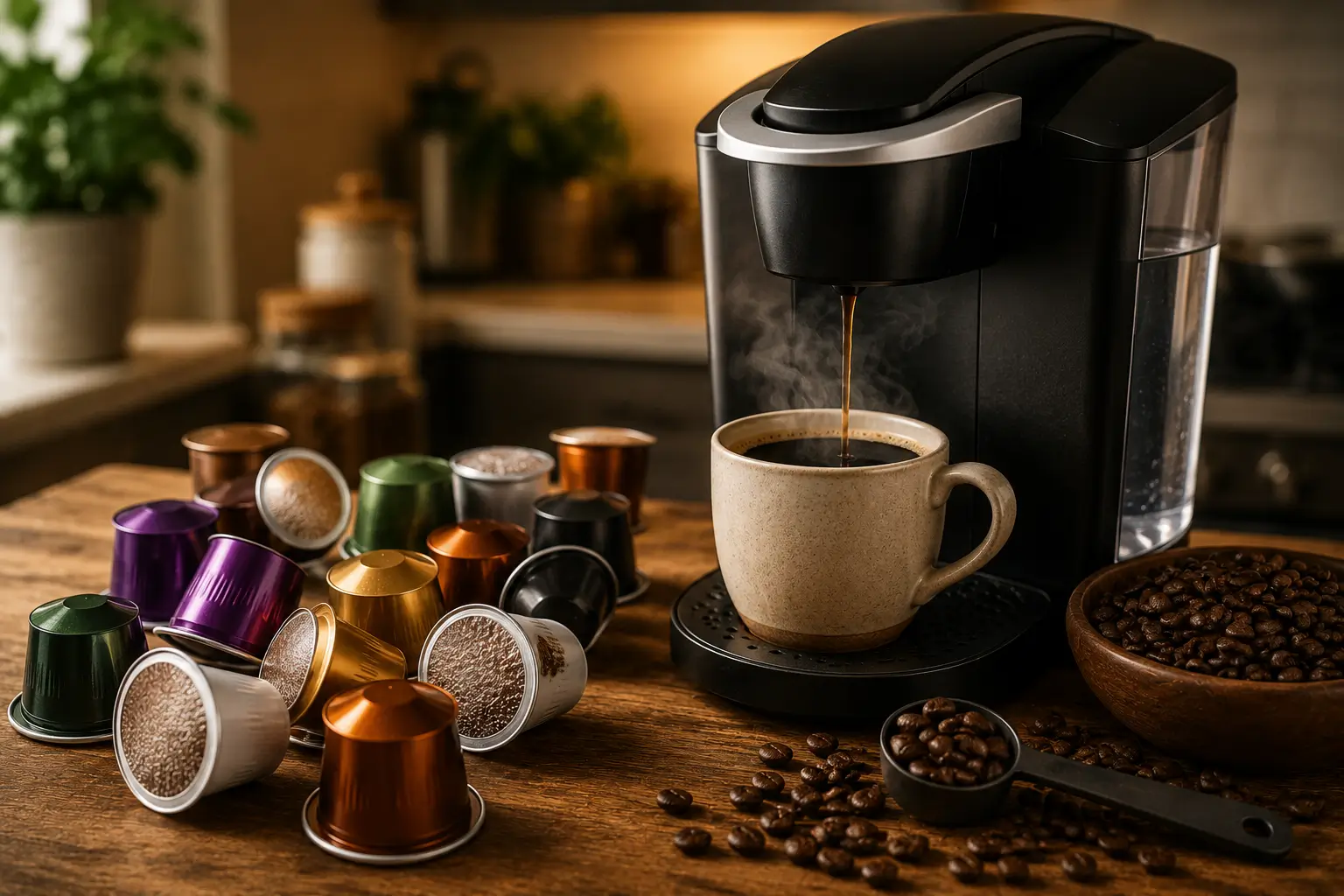
Keurig coffee pods are commonly called K-Cup pods. They are single-serve beverage pods made for compatible Keurig brewers and are available in regular coffee ↗, decaf, flavored coffee, tea, cocoa, and some specialty drink formats.
The main buying questions are not just “which flavor is best?” You also need to know whether the pod fits your brewer, which roast and caffeine level you want, how much water your machine will use, and whether one K-Cup can make the strength of coffee you expect.
This guide covers K-Cup types, flavors, cup sizes, caffeine, compatibility, reusable filters, recycling, and one of the most common complaints from Keurig users: why some cups taste weak or watery.
Important Note
K-Cup is a pod format; Keurig is the brewer brand. Other coffee brands also sell K-Cup-compatible products. Nespresso Original, Nespresso Vertuo, soft paper pods, ESE pods, K-Carafe pods, and other capsule systems are different formats and should not be assumed to fit a standard Keurig brewer.
Key Takeaways
- K-Cups are rigid single-serve pods designed for compatible Keurig-style brewers.
- K-Cup choices include coffee, decaf, flavored coffee, tea, cocoa, and some specialty beverages.
- The cup-size button changes the amount of water, not the amount of coffee inside the pod.
- A larger brew size can taste weaker because the same coffee dose is diluted with more water.
- Current Keurig models offer different brew-size ranges, so always check your exact machine.
- Keurig’s current My K-Cup reusable filter is compatible with most current home brewers, but not every Keurig model.
- Genuine K-Cup pods use recyclable #5 polypropylene, but local recycling acceptance varies.
Quick Answer
Choose a K-Cup that matches your brewer, then pick the roast, flavor, caffeine level, and brew size you prefer. If your coffee tastes weak, try a smaller cup size before changing pods. A 12-ounce brew uses more water through the same pod than a 6- or 8-ounce brew, so the finished coffee can taste lighter.
What Are Keurig Coffee Pods?
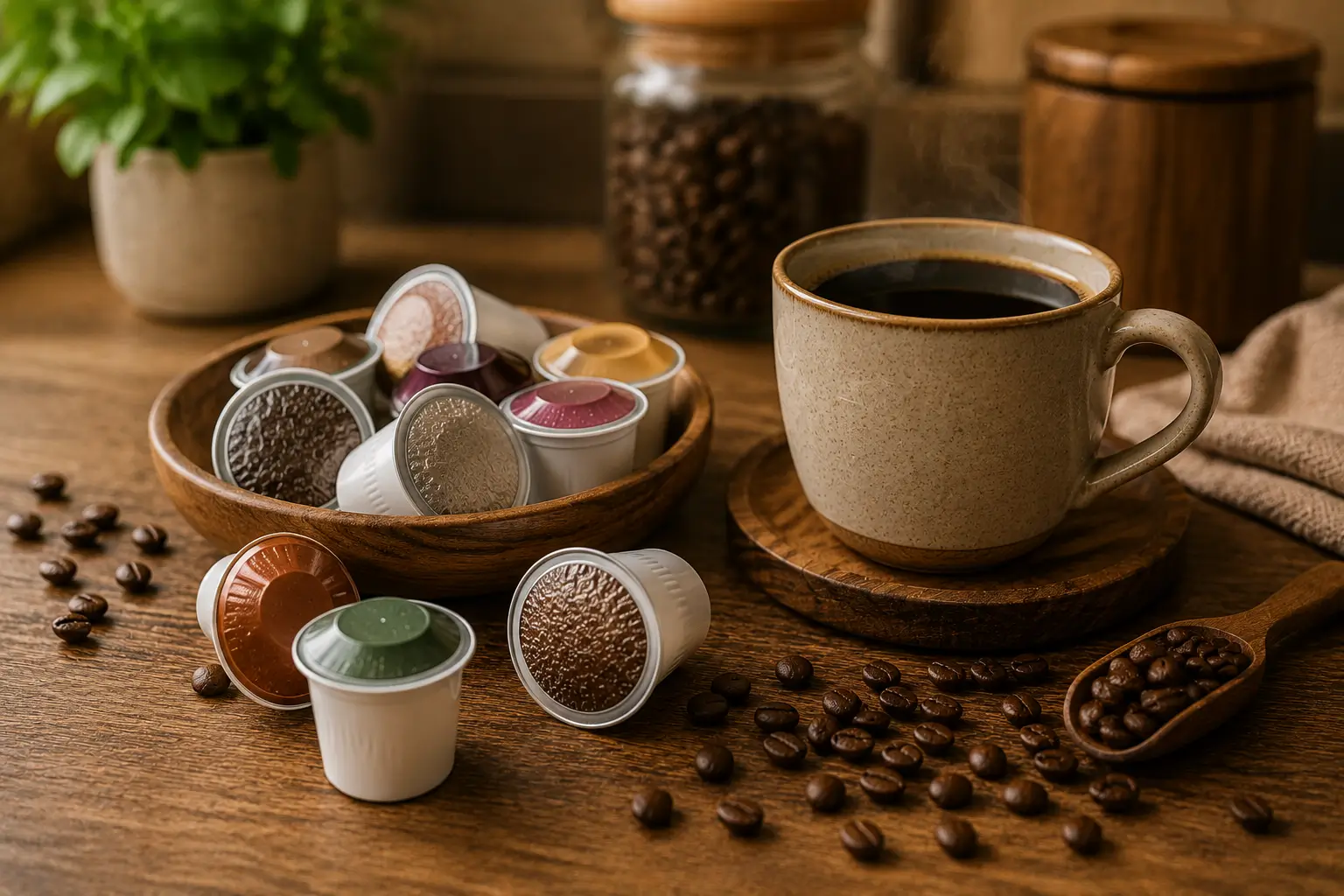
Keurig coffee pods are single-serve beverage containers commonly known as K-Cups. A coffee K-Cup normally contains a pre-measured dose of ground coffee inside the cup with a filter and sealed lid. The brewer punctures the pod and sends hot water through the coffee.
This design makes brewing fast and portioned. You do not need to measure grounds for every cup, and the pod keeps the coffee enclosed until brewing.
For the physical format, materials, and brewing process in more detail, see What Are K-Cups? Types, Materials & How They Work ↗.
What Is the Difference Between a K-Cup and a Coffee Pod?
In everyday speech, people often call K-Cups “coffee pods.” Technically, however, coffee pod is a broader term. A traditional soft coffee pod is usually a flat paper pouch, while a K-Cup is a rigid single-serve cup designed for Keurig-style brewing.
| Format | Shape | Typical System | Interchangeable With K-Cup? |
|---|---|---|---|
| K-Cup | Rigid cup with sealed lid | Keurig-style brewer | Yes, when the brewer supports standard K-Cups |
| Soft coffee pod | Flat paper/filter pouch | Soft-pod brewer | No |
| Nespresso Original | Small capsule | Nespresso Original | No |
| Nespresso Vertuo | Barcode capsule | Nespresso Vertuo | No |
Types of Keurig Coffee Pods
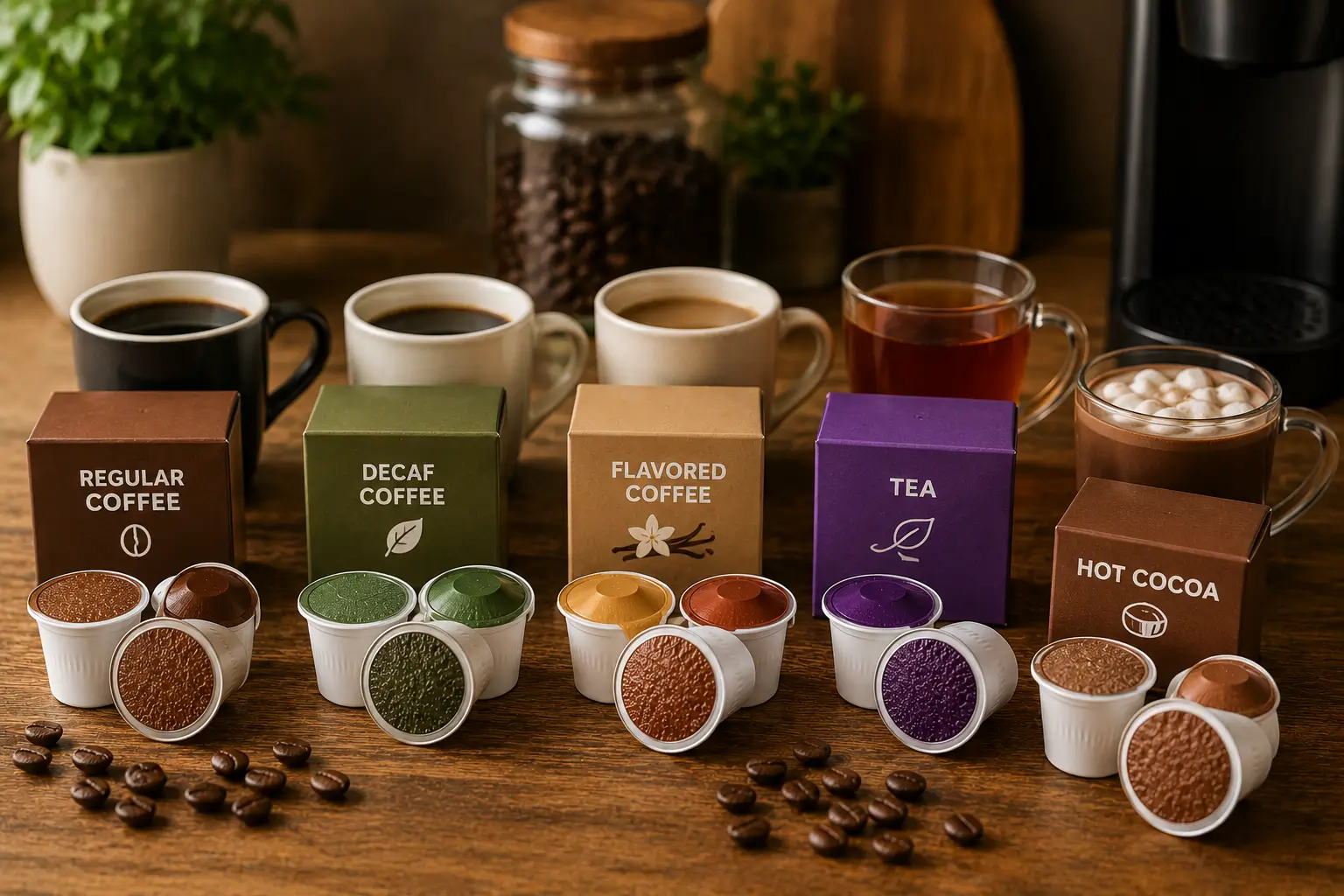
| Pod Type | What It Contains or Makes | What to Check |
|---|---|---|
| Regular coffee | Ground coffee in light, medium or dark roasts | Roast, blend, caffeine and brew size |
| Decaf coffee | Coffee with most caffeine removed | Decaf still contains some caffeine |
| Flavored coffee | Coffee with added flavoring such as vanilla or hazelnut | Added flavoring vs natural tasting notes |
| Tea | Tea beverage in a K-Cup format | Tea type and serving directions |
| Hot chocolate / specialty beverage | Drink mix rather than plain ground coffee | Sugar, milk ingredients and allergens |
| Reusable filter | Your own ground coffee | Exact brewer compatibility and fill method |
Keurig Coffee Flavors List: What Can You Choose?
K-Cup coffee ranges from plain single-origin or blended coffee to flavored coffee. Common flavor directions include vanilla, caramel, hazelnut, chocolate, cinnamon, seasonal flavors, and coffees described with fruit, nut, cocoa, or spice tasting notes.
Flavoring vs Tasting Notes
A coffee described as having “chocolate,” “nut,” or “fruit” notes does not automatically contain those ingredients. Plain coffee can naturally produce those flavor impressions. A flavored K-Cup, by contrast, uses added flavoring.
Vanilla
Usually soft, sweet-smelling and easy for beginners who want flavored coffee.
Caramel
Often gives a sweet, toasted aroma without necessarily being a sugary drink mix.
Hazelnut
Nut-style flavoring commonly paired with light or medium roast coffee.
Mocha / Chocolate
May mean flavored coffee or a sweet specialty drink. Check the ingredient label.
A small variety pack can be more practical than buying a large box when you are still learning which flavor you prefer.
Keurig Roast Levels: Light, Medium and Dark
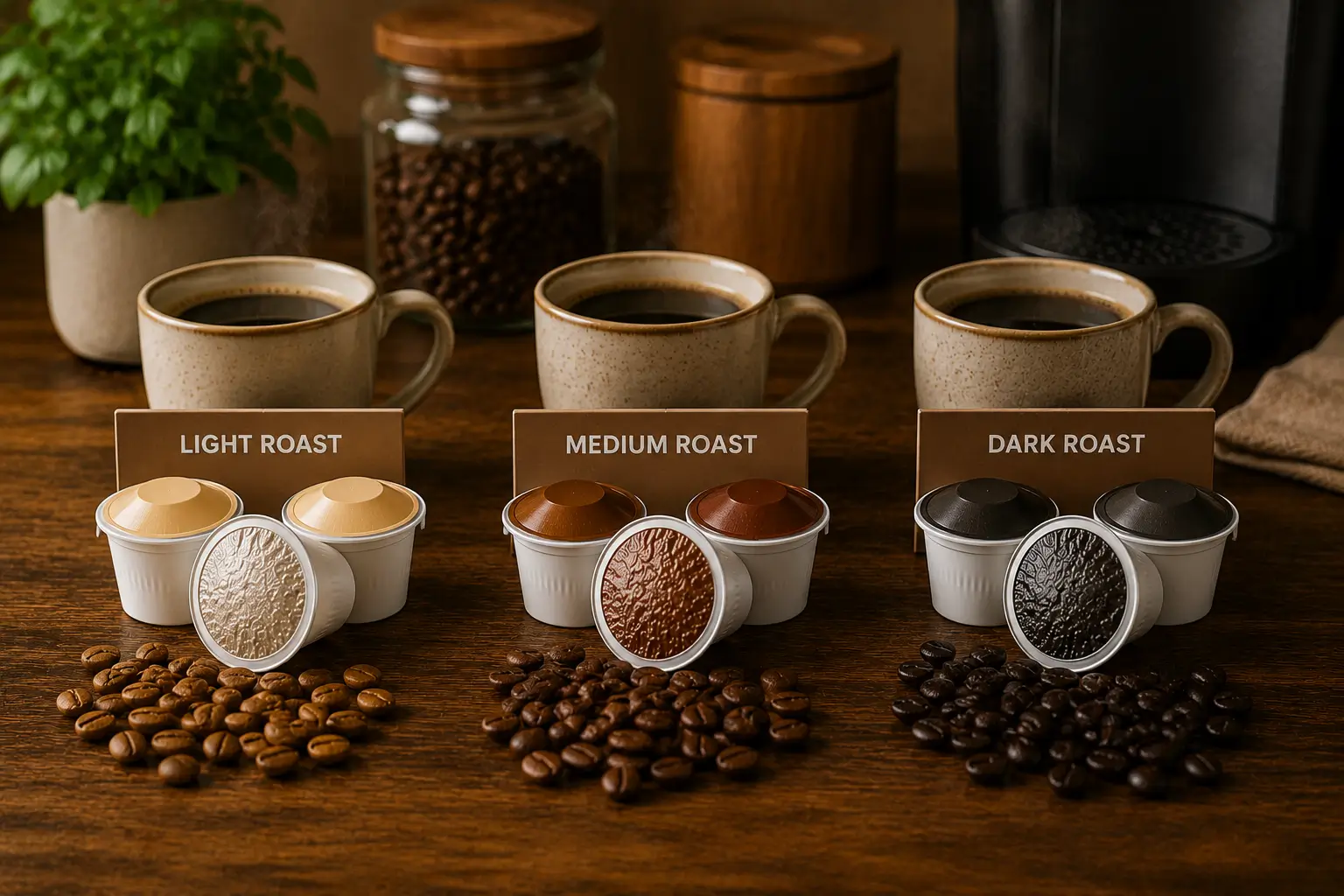
| Roast | Typical Taste Direction | Good Starting Point For |
|---|---|---|
| Light roast | Brighter acidity, lighter roasted character, more origin notes | People who prefer a lighter, livelier cup |
| Medium roast | Balanced roast, sweetness and body | Beginners and everyday coffee |
| Dark roast | Deeper roasted, smoky or bittersweet character | People who prefer a bolder roast taste |
Dark roast does not automatically mean “more caffeine” or “stronger extraction.” Roast taste, caffeine, coffee dose and brew concentration are separate variables.
Keurig Cup Sizes: How Many Ounces Can You Brew?
Keurig brew-size options depend on the machine. Current examples show the difference: the K-Supreme Gen 2 offers 6, 8, 10 and 12 oz, while the K-Supreme Plus offers 4, 6, 8, 10 and 12 oz. Other Keurig models can use different size ranges.
| Example Model | Current Published Single-Serve Sizes | What It Means |
|---|---|---|
| K-Supreme Gen 2 | 6, 8, 10, 12 oz | Four water-volume choices |
| K-Supreme Plus | 4, 6, 8, 10, 12 oz | Five water-volume choices |
The important point is that the K-Cup itself does not become larger when you choose a larger cup size. The brewer sends more water through the same pod. That usually makes a larger serving less concentrated.
Why Does My Keurig Coffee Taste Weak or Watery?
This is one of the most common real-world Keurig complaints. Recent Keurig community discussions repeatedly mention weak coffee at 10- or 12-ounce settings, especially with reusable filters. The first thing to test is a smaller brew size.
| Possible Cause | Why It Can Taste Weak | What to Try |
|---|---|---|
| Large brew size | More water passes through the same coffee dose | Try 6 or 8 oz |
| Mild roast or blend | The coffee may naturally taste lighter | Try a fuller medium-dark or dark roast |
| Reusable filter under-filled | Too little coffee can produce a thin brew | Follow the reusable filter’s fill instructions |
| Wrong grind for reusable filter | Water can move through the coffee too quickly | Use the grind recommended for the filter |
| Blocked needle / poor flow | Brewing performance can become uneven | Clean the brewer according to its manual |
| Machine supports Strong / Extra Strong | Standard mode may taste lighter to you | Use the supported strength setting |
Fast Weak-Coffee Fix
If you are brewing a normal K-Cup at 12 oz and the coffee tastes watery, try the same pod at 8 oz before buying a different brand. This changes concentration without changing the coffee inside the pod.
How Much Caffeine Is in a Keurig K-Cup?
Caffeine varies by coffee, roast, blend and serving. Keurig’s Canadian K-Cup support information gives a broad range of 75–150 mg of caffeine per 8 oz cup for coffee K-Cups. Individual products can fall outside a simple expectation, so the exact roaster or product information is best when caffeine matters.
Decaf is not caffeine-free. Keurig’s Canadian guidance says decaf coffee typically retains a small amount of caffeine.
For the broader topic, see Caffeine Content in Coffee Pods ↗ and Decaf Coffee Pods ↗.
Keurig Coffee Pods: Calories, Sugar and Ingredients
Plain black coffee K-Cups are generally very low in calories. Most extra calories come from milk, creamers, sugar, flavored syrup or toppings added after brewing.
Do not apply that rule to every specialty beverage pod. Hot chocolate, cappuccino-style and other drink mixes can contain sugar, milk ingredients, fat or allergens. Check the exact ingredient and nutrition label.
See Coffee Pods Calories & Nutrition ↗ for a deeper guide.
Can You Use Your Own Ground Coffee in a Keurig?
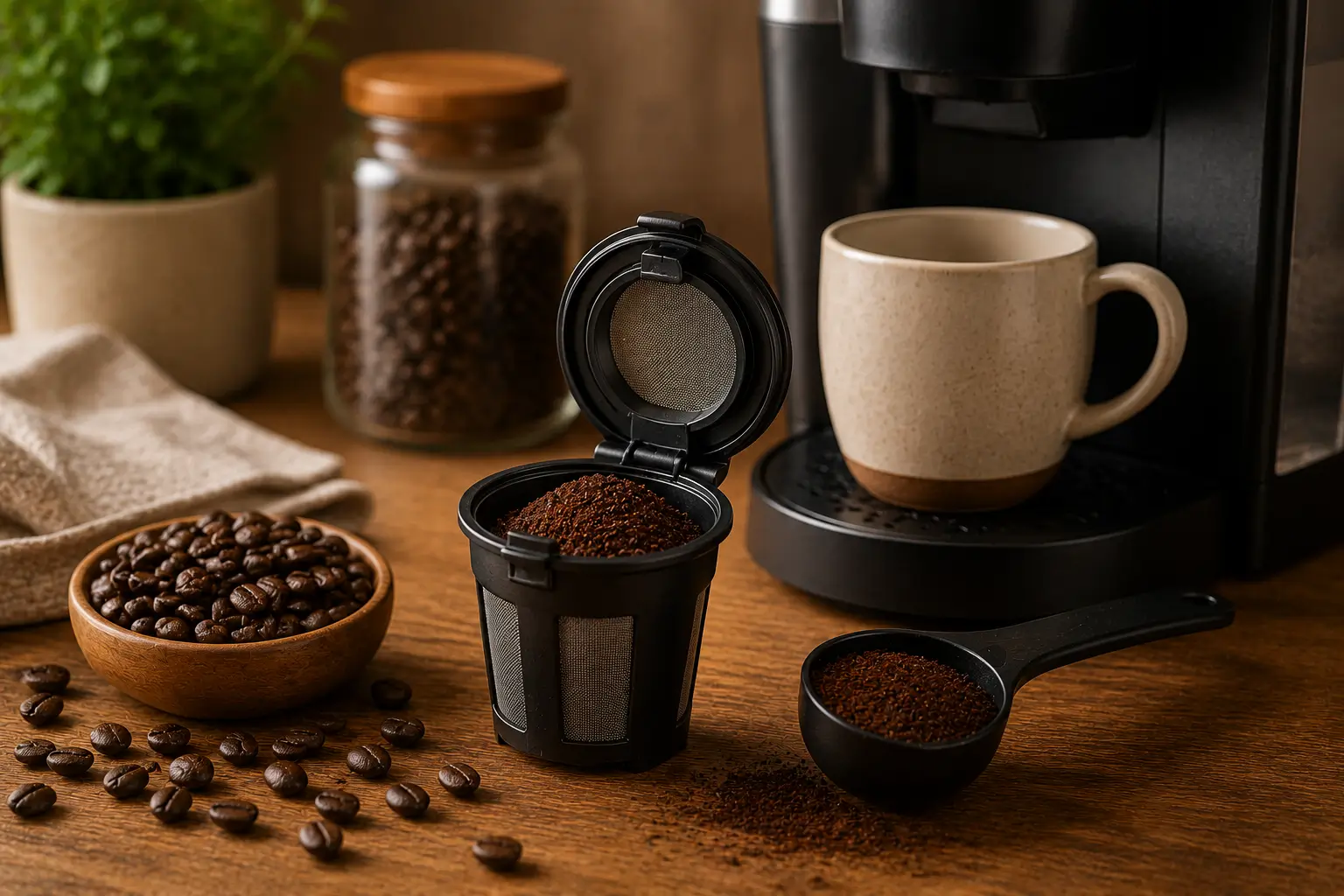
Yes, with a reusable filter that is compatible with your brewer. Keurig’s current My K-Cup Universal Reusable Coffee Filter is designed for ground coffee and is listed as compatible with most Keurig home coffee makers.
However, “universal” does not mean literally every Keurig brewer. Keurig’s current listing says the filter is not compatible with Keurig commercial brewers, K-Crema, or Keurig 2.0 brewers. Compatibility can change as accessories and brewer generations change, so check the current filter listing for your exact model.
Keurig also says the My K-Cup reusable filter is intended for ground coffee, not loose tea leaves, hot cocoa powder or other powdered beverages.
For a broader reusable-pod guide, see Refillable Coffee Pods ↗.
Do All K-Cups Work in Every Keurig Machine?
Standard genuine K-Cup pods work across many current Keurig single-serve brewers, but not every product with the word “pod” is a K-Cup. Third-party K-Cup-style pods may also work, although Keurig says it cannot guarantee the same performance for non-Keurig-made pods.
- Use standard K-Cups only in brewers designed for the K-Cup format.
- Do not put Nespresso Original or Vertuo capsules into a Keurig.
- Do not assume a soft paper pod fits a Keurig K-Cup holder.
- Check reusable filter compatibility separately from disposable K-Cup compatibility.
- Older K-Carafe and Keurig 2.0 accessories should not be assumed to match current brewers.
If you are shopping across retailers and pack sizes, see Best Places to Buy Coffee Pods by Brand ↗.
Are Keurig K-Cup Pods Recyclable?

Keurig says all genuine K-Cup pods have used recyclable #5 polypropylene since 2020. Its current recycling instructions are to let the pod cool, peel off the lid, empty the grounds, and check whether the local recycling system accepts the empty cup.
The important limitation is local acceptance. Keurig explicitly notes that K-Cup pods are not recycled in many communities. A recycling symbol therefore does not guarantee curbside acceptance in your city.
Reusable filters can reduce the number of single-use K-Cup shells, while compostable third-party alternatives may work for some brewers and locations. For the wider sustainability decision, see Eco-Friendly Coffee Pods ↗.
Which K-Cups Work Best for Lattes and Iced Coffee?
For a latte made with brewed K-Cup coffee plus milk, a medium-dark or dark roast often stays more noticeable after milk is added. A smaller brew size can also give you a more concentrated coffee base.
For iced coffee, some current Keurig brewers include a dedicated Brew Over Ice setting. If your machine does not, a common approach is to brew a smaller, stronger serving over a cup prepared with ice, following the instructions for your exact brewer.
K-Cup Coffee Is Not Espresso
A dark or “espresso-style” K-Cup can taste bold, but a standard Keurig brewer does not turn that pod into a traditional pressure-extracted espresso shot. This matters when comparing café-style lattes and cappuccinos.
How to Choose the Right Keurig Coffee Pod
| If You Want… | Start With… | Then Adjust… |
|---|---|---|
| Easy everyday coffee | Medium roast K-Cup | 6–10 oz depending on strength preference |
| Stronger roast taste | Medium-dark or dark roast | Smaller cup size or Strong setting |
| Lower caffeine | Decaf K-Cup | Check exact product caffeine information |
| Sweet aroma without a drink mix | Flavored coffee K-Cup | Check whether it is coffee with flavoring or a sweet specialty mix |
| Your own ground coffee | Compatible reusable filter | Grind, dose and brew size |
| Less single-use waste | Reusable filter or locally recyclable/accepted option | Compatibility and disposal route |
Keurig vs Other Coffee Pod Systems
| System | Main Format | Main Strength |
|---|---|---|
| Keurig | K-Cup | Large beverage variety and simple single-cup brewing |
| Nespresso Original | Original capsule | Short espresso-style drinks and compatible capsule market |
| Nespresso Vertuo | Vertuo capsule | Several capsule sizes and coffee/espresso-style drinks |
| Soft pod / ESE systems | Paper pod | Different paper-based single-serve format |
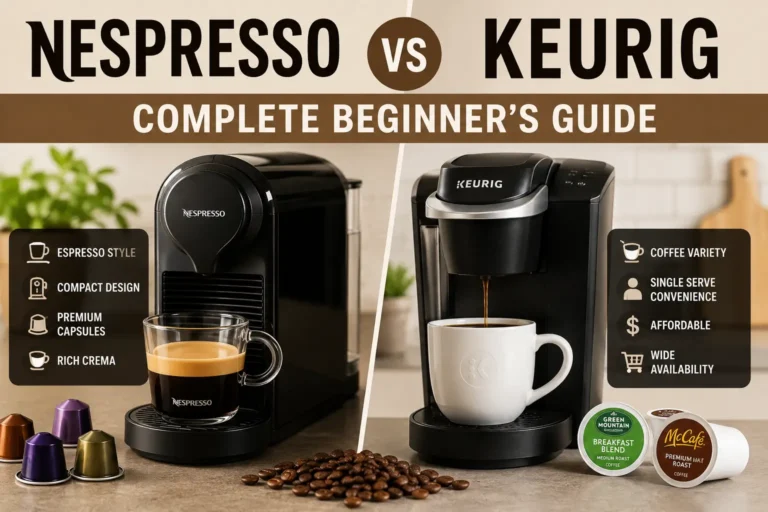
For the most common direct comparison, see Nespresso vs Keurig ↗.
Frequently Asked Questions
Keurig coffee pods are single-serve beverage pods commonly called K-Cups. Coffee K-Cups contain a measured amount of ground coffee and are made for compatible Keurig-style brewers.
K-Cup is a specific rigid single-serve format used by Keurig-style brewers. Coffee pod is a broader term and can also describe flat paper pods or other capsule systems that are not interchangeable with K-Cups.
A large brew size is a common cause because more water passes through the same coffee dose. Try a smaller size such as 6 or 8 oz, a stronger roast, or the Strong setting if your machine supports it.
No. With a normal single K-Cup, the brewer uses more water through the same pod. That can make a 12 oz serving taste less concentrated than a smaller cup.
Keurig’s Canadian support information gives a broad range of 75–150 mg per 8 oz coffee K-Cup, but the exact amount varies by product, coffee and roast. Check the specific roaster when caffeine matters.
Yes, with a reusable filter that is compatible with your exact brewer. The current Keurig My K-Cup reusable filter is intended for ground coffee and is not compatible with every Keurig model.
Standard K-Cups work in many current Keurig brewers, but compatibility is not universal across every Keurig product, older accessory, reusable filter or third-party pod. Check the exact brewer and product.
Genuine K-Cup pods use recyclable #5 polypropylene. Keurig says they are not recycled in many communities, so peel, empty and check your local recycling rules before placing them in curbside recycling.
A medium-roast variety pack is a useful starting point because it lets you compare balanced coffees without committing to a large box of one flavor.
Medium-dark and dark roast K-Cups often stay more noticeable after milk is added. A smaller brew size can also make the coffee base more concentrated.
No. Compatible K-Cup formats can include coffee, decaf, tea, hot chocolate, cocoa and some specialty beverages. Ingredients and nutrition vary by product.
Keurig’s current My K-Cup reusable filter is designed for ground coffee. Keurig does not recommend hot cocoa or other powdered beverages in that filter.
Conclusion
Keurig coffee pods are easy to use, but choosing the right K-Cup is more than picking a flavor. First confirm compatibility, then choose roast, caffeine level and ingredients, and use a brew size that gives you the concentration you prefer.
If your coffee tastes weak, start by reducing the cup size. If you want your own grounds, verify reusable-filter compatibility with the exact brewer. And if recycling matters to you, check whether your local program actually accepts prepared #5 K-Cup pods.