

Coffee Pods and Weight Loss: Calories, Caffeine & Diet

Coffee pods can fit into a weight-loss diet, but coffee itself is not a weight-loss treatment. Plain black pod coffee is usually very low in calories ↗. The bigger calorie difference often comes from sugar, syrups, creamers, milk and specialty drink ingredients.
Current weight-management guidance still centers on sustainable eating habits, calorie intake, physical activity, sleep and other long-term behaviors. A coffee pod can make a lower-calorie drink convenient, but it cannot replace those basics.
Caffeine may temporarily affect appetite or energy expenditure in some people, but recent randomized-trial evidence does not show ordinary coffee or decaf as reliable stand-alone weight-loss drinks. That makes the most useful question: what is in your cup, and how does it fit into your full day?
Important Note
This article gives general nutrition information. Weight is affected by diet, activity, sleep, medicines, medical conditions, hormones, age, genetics and other factors. If you have a medical condition, eating disorder history, take weight-related medicines, or need an individualized plan, speak with a qualified healthcare professional.
Key Takeaways
- Plain black coffee pods are usually very low in calories and can fit into many calorie-controlled eating plans.
- Coffee pods do not directly cause meaningful weight loss on their own.
- Sugar, syrups, creamers, milk and whipped toppings can turn a low-calorie coffee into a much higher-calorie drink.
- Caffeine may have short-term effects on appetite or energy use, but it is not a reliable appetite suppressant.
- Recent randomized-trial evidence does not show ordinary coffee or decaf as effective weight-loss beverages.
- Decaf can fit a weight-management plan just as regular coffee can; its main difference is much lower caffeine.
- Late caffeine can hurt sleep in some people, and poor sleep can make weight-management routines harder.
- Coffee should not replace balanced meals simply because it is low in calories.
Quick Answer
Yes, coffee pods can fit into a weight-loss diet, especially when the brewed drink is plain and low in calories. But the coffee pod itself does not make body fat disappear. Sustainable weight loss depends on the overall balance of calories, nutrition, activity, sleep and long-term habits.
Can Coffee Pods Fit Into a Weight-Loss Diet?
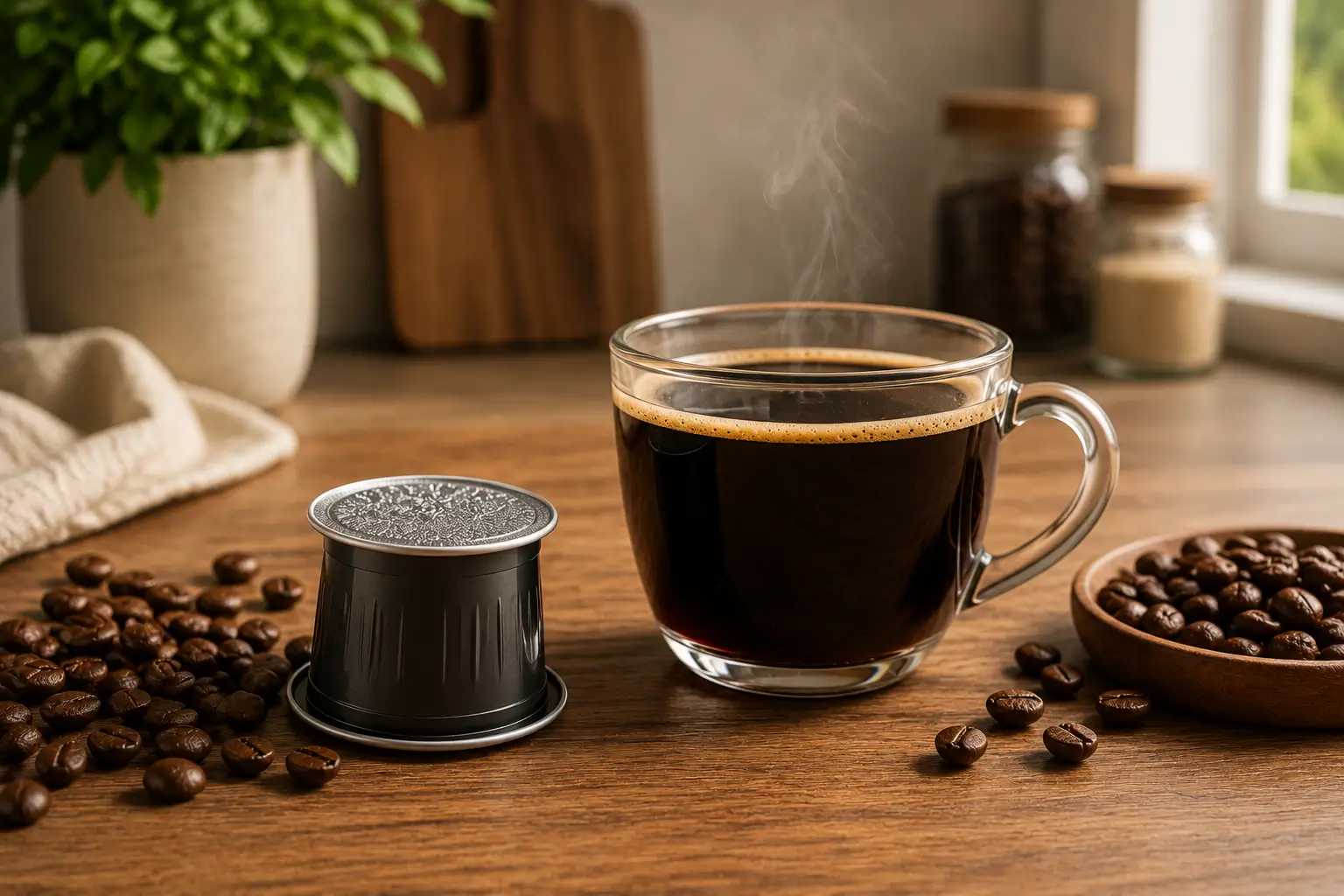
Yes. A plain coffee pod can fit easily into many eating patterns because brewed black coffee usually contributes very few calories, little or no sugar and minimal fat.
The more important question is whether your total food and beverage intake supports your goal. NIDDK guidance explains that weight loss generally requires taking in fewer calories than your body uses over time, while maintaining adequate nutrition and activity.
Low-Calorie Use
Plain black coffee can replace a higher-calorie sweet drink without adding much energy.
Higher-Calorie Use
The same pod can become a much higher-calorie drink after sugar, syrup, cream, sweetened milk or toppings are added.
Do Coffee Pods Actually Cause Weight Loss?
No evidence supports treating ordinary coffee pods as a weight-loss solution.
A 2024 systematic review and network meta-analysis of 22 randomized trials compared several teas and coffees. Regular coffee, decaffeinated coffee and green coffee did not show a clear weight-loss effect versus the comparison groups. The certainty of evidence across beverages was generally low.
This matters because observational studies can sometimes show that coffee drinkers weigh less or gain less weight, but that does not prove coffee caused the difference. Coffee habits can be linked with many other lifestyle factors.
Avoid “Fat-Burning Coffee” Claims
A product can contain coffee, caffeine or added supplements and still fail to produce meaningful long-term fat loss. Do not judge a coffee pod by claims such as “metabolism boost,” “detox” or “fat burner” without strong clinical evidence.
How Many Calories Are in Coffee Pods?
For weight-management purposes, the useful split is between plain brewed coffee and specialty coffee products.
| Coffee Type | Typical Weight-Management View | What to Check |
|---|---|---|
| Plain black coffee pod | Usually very low in calories | Whether anything is added after brewing |
| Flavored black coffee pod | May still be very low in calories | Ingredient and nutrition label |
| Latte / cappuccino-style pod | Can contain more calories | Milk powder, sugar and serving size |
| Hot chocolate / mocha-style pod | Often higher than plain coffee | Sugar, cocoa, milk ingredients and portion |
| Plain decaf pod | Usually similar calorie profile to plain regular coffee | Main difference is caffeine, not calories |
For detailed nutrition numbers, see Coffee Pods Calories & Nutrition ↗ and Do Coffee Pods Have Calories? ↗.
What Ingredients Add Extra Calories?
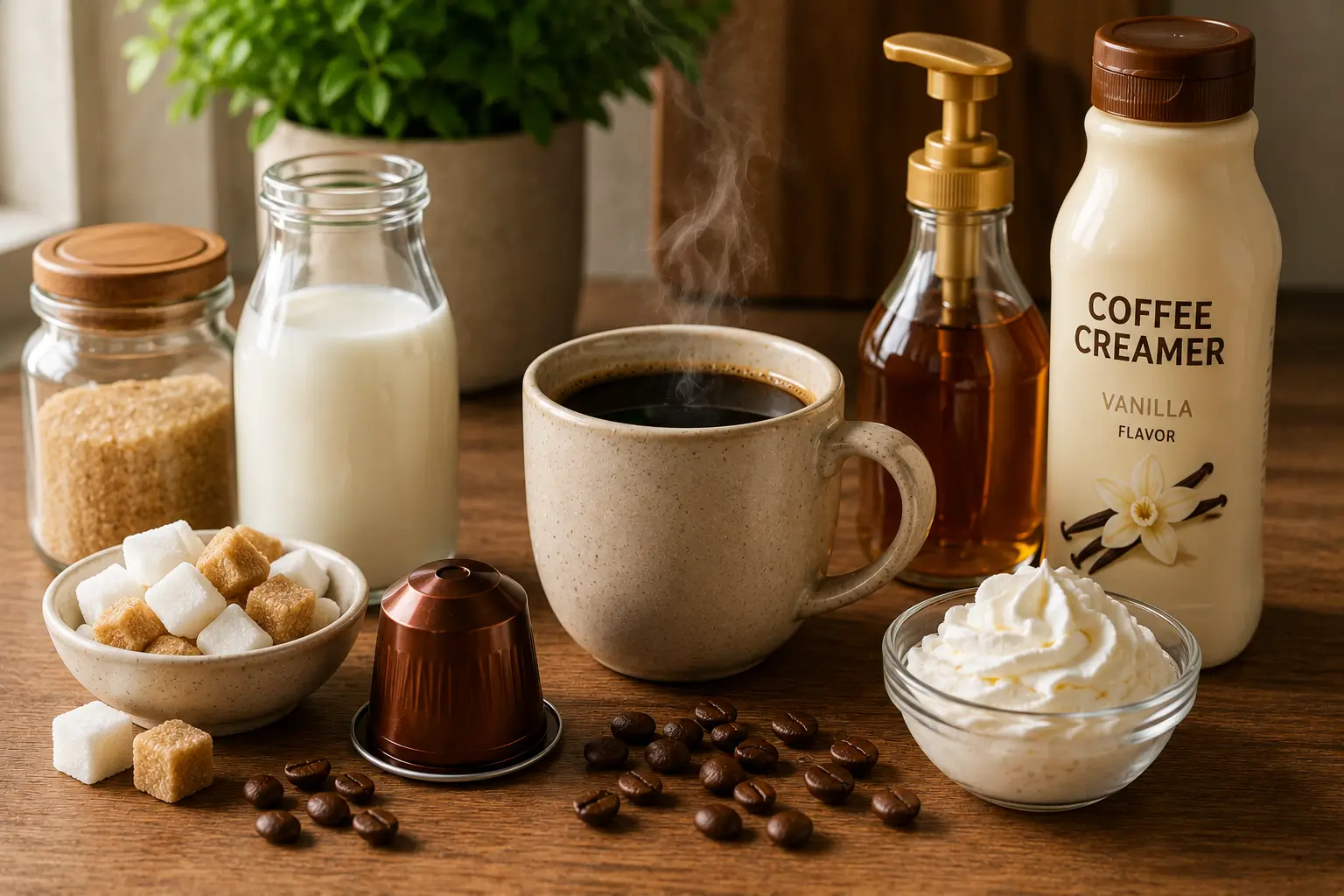
The biggest calorie changes often happen after brewing.
- Sugar.
- Flavored syrups.
- Sweetened creamers.
- Heavy cream.
- Large amounts of whole milk.
- Whipped cream.
- Chocolate or caramel toppings.
Milk is not “bad” simply because it has calories. It also provides nutrients. The point is that calories from add-ins still count toward your full-day intake.
A 2023 prospective analysis of three large U.S. cohorts found that adding sugar to coffee was associated with more long-term weight gain, while the relationship with cream or coffee whitener was not significant. This does not prove one teaspoon of sugar causes weight gain by itself, but it supports paying attention to repeated sweetening habits.
Black Coffee Pods vs Specialty Coffee Drinks
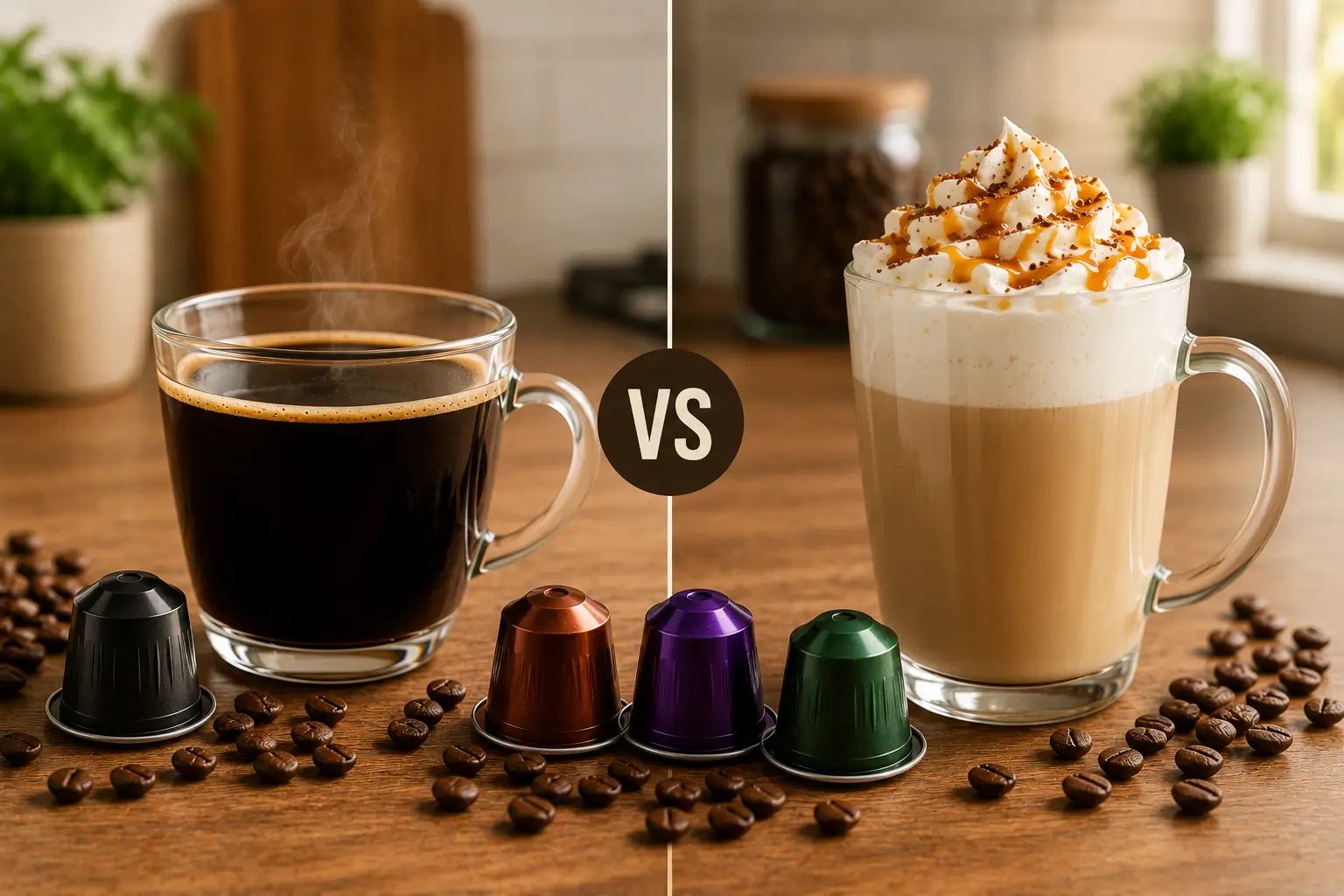
| Feature | Plain Black Pod Coffee | Sweet Specialty Coffee |
|---|---|---|
| Calories | Usually very low | Can rise substantially |
| Added sugar | None unless you add it | May contain sugar or sweetened syrup |
| Fat | Minimal | Can increase with milk, cream or toppings |
| Weight-management role | Easy low-calorie beverage choice | Needs to be counted as part of calorie intake |
Neither drink is automatically “forbidden.” The difference is how much energy and sugar it adds to the day.
Can Caffeine Reduce Appetite or Boost Metabolism?
Caffeine can have short-term physiological effects, but those effects should not be confused with reliable long-term weight loss.
A review of coffee, caffeine and appetite found that caffeine taken shortly before a meal may reduce acute energy intake in some studies, while coffee itself often had little effect on food intake. Appetite hormones and hunger ratings were inconsistent.
A randomized trial also found that caffeine’s effect on food intake was weak and temporary. It did not support caffeine as an effective appetite suppressant.
Practical Meaning
If coffee briefly makes you less hungry, that does not mean your body will automatically lose weight. Hunger later in the day, food choices, sleep, activity and total calorie intake still determine the bigger picture.
The FDA cites 400 mg caffeine per day as an amount not generally associated with negative effects for most healthy adults, but individual sensitivity varies. Do not increase caffeine simply to chase a weight-loss effect.
For caffeine ranges in pods, see Caffeine in Coffee Pods ↗.
Does Drinking Coffee While Fasted Burn More Fat?
Drinking black coffee before breakfast can temporarily change fuel use and exercise metabolism, but that is not the same as proving greater long-term fat loss.
Your body can burn more fat during one period of the day and still store fat later if total energy intake exceeds needs. Sustainable weight change is determined over time, not by whether one cup was consumed before breakfast.
Do Not Confuse Fat Oxidation With Fat Loss
Fat oxidation means your body is using fat as fuel at that moment. Body-fat loss means your stored fat mass decreases over time. They are related, but they are not the same outcome.
Does Decaf Coffee Help With Weight Management?
Decaf can fit a weight-management diet just like regular coffee. Plain decaf is usually very low in calories, but its main advantage is much lower caffeine.
Recent randomized-trial evidence does not show decaf coffee as a weight-loss beverage. Choose it when you want less caffeine, not because you expect it to burn fat.
Decaf can be useful later in the day if regular caffeine interferes with your sleep.
See Decaf Coffee Pods ↗.
Do Flavored Coffee Pods Contain More Calories?

Not always. A flavor name does not tell you the calorie content.
Some vanilla, caramel or hazelnut black-coffee pods use flavoring without meaningful added sugar. Other specialty products include sugar, milk powder, cocoa or cream ingredients.
| Label | What It May Mean | Best Check |
|---|---|---|
| Vanilla-flavored coffee | May simply be flavored black coffee | Nutrition + ingredient label |
| Caramel-flavored coffee | Flavor does not automatically mean caramel syrup | Look for sugar/carbohydrate information |
| Mocha coffee | Could mean flavored coffee or a sweet cocoa drink | Check exact product type |
| Latte / cappuccino pod | Often includes milk and sometimes sugar | Serving calories and ingredients |
Can Late Coffee Make Weight Management Harder?
It can indirectly. Caffeine taken too late can reduce sleep duration or quality in some people.
CDC’s current healthy-weight guidance includes enough sleep as one part of a healthy weight-management lifestyle. A 2026 systematic review of weight-loss interventions also found that sleep restriction may reduce fat loss, although the broader sleep-and-weight evidence remains mixed.
That does not mean one late coffee causes weight gain. It means repeatedly using caffeine in a way that disrupts sleep can work against another part of a healthy routine.
See Can Coffee Pods Affect Sleep? ↗.
What About Coffee Before Exercise?
Caffeine can improve performance in some exercise settings, but using a caffeinated pod before a workout does not automatically produce weight loss.
Exercise supports health and energy expenditure, while weight change still depends on the full pattern of food, beverages and activity over time.
If a pre-workout coffee helps you exercise comfortably and does not cause jitters, stomach upset or sleep problems, it can fit into your routine. Do not keep increasing caffeine to try to “burn more.”
Can Coffee Replace a Meal During Weight Loss?
Coffee should not be used as a routine replacement for balanced meals simply because it is low in calories.
Plain coffee provides very little energy and does not provide the full protein, fiber, vitamins, minerals and other nutrients you expect from a balanced meal.
Skipping meals can also leave some people extremely hungry later, making the diet harder to maintain. Sustainable plans are built around adequate nutrition, not simply eating as little as possible.
What About Protein Coffee or Butter Coffee?
These drinks need to be judged by their ingredients rather than the word “coffee.”
Protein Coffee
Protein powder or a protein drink can add protein, but it also adds calories. Whether it fits depends on your total diet and protein needs.
Butter / MCT Coffee
Butter and oils are calorie-dense. Adding them can turn a very low-calorie coffee into a high-energy drink.
Neither option should automatically be labeled “better for weight loss.” Count the full drink, not only the coffee base.
Best Coffee Pod Choices for a Lower-Calorie Routine
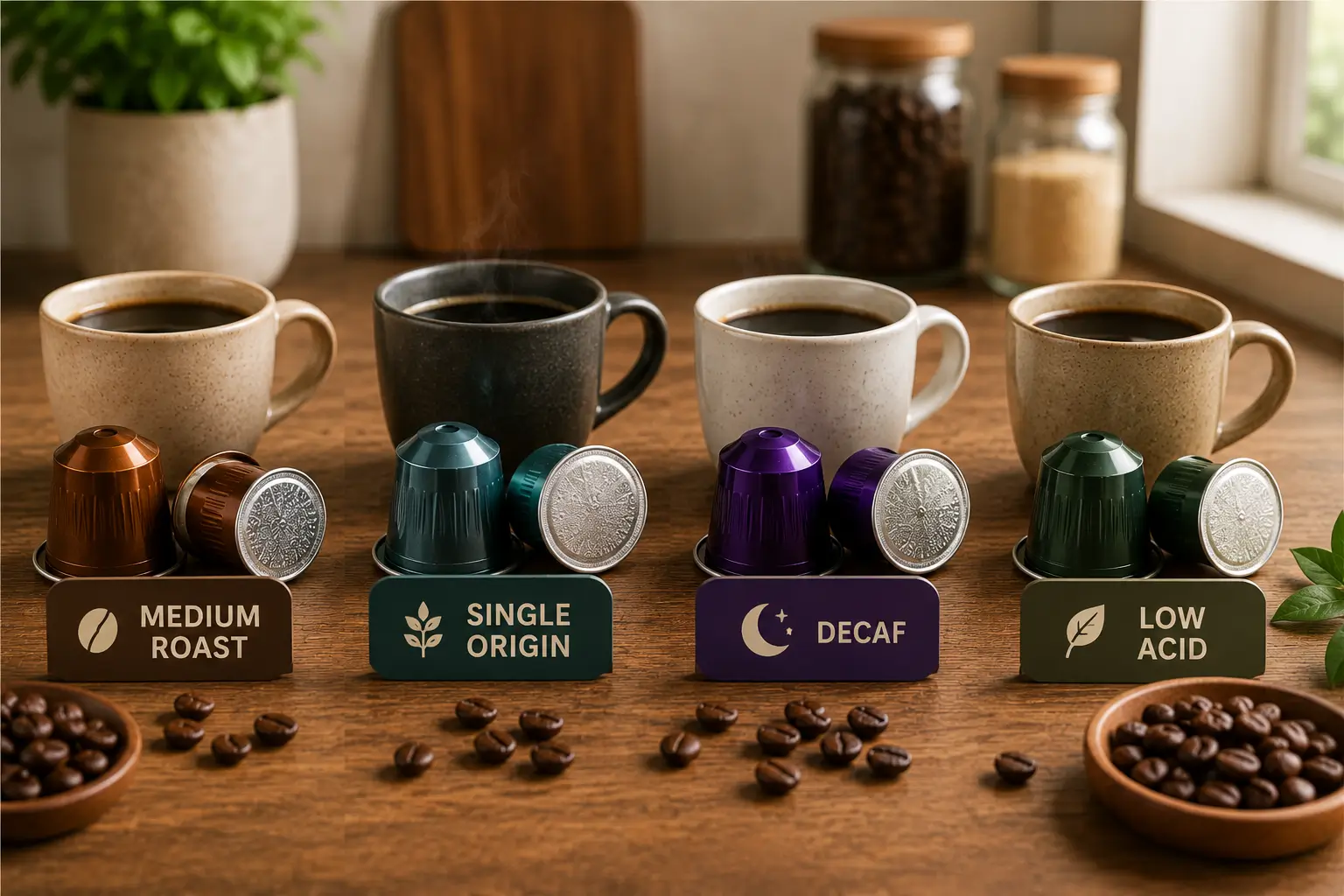
- Plain black coffee pods: simplest low-calorie starting point.
- Unsweetened flavored black coffee: can add flavor without automatically adding sugar.
- Decaf pods: useful when you want lower caffeine, especially later in the day.
- Medium or dark roasts: stronger roast flavor may reduce the desire for syrups for some people, but this is preference, not a weight-loss effect.
- Single-origin pods: can offer distinctive flavor without needing sweet add-ins.
- Low-acid pods: choose for acidity/taste tolerance, not for weight-loss benefits.
See Low-Acid Coffee Pods ↗ if acidity is the main concern.
Common Coffee Mistakes During Weight Loss
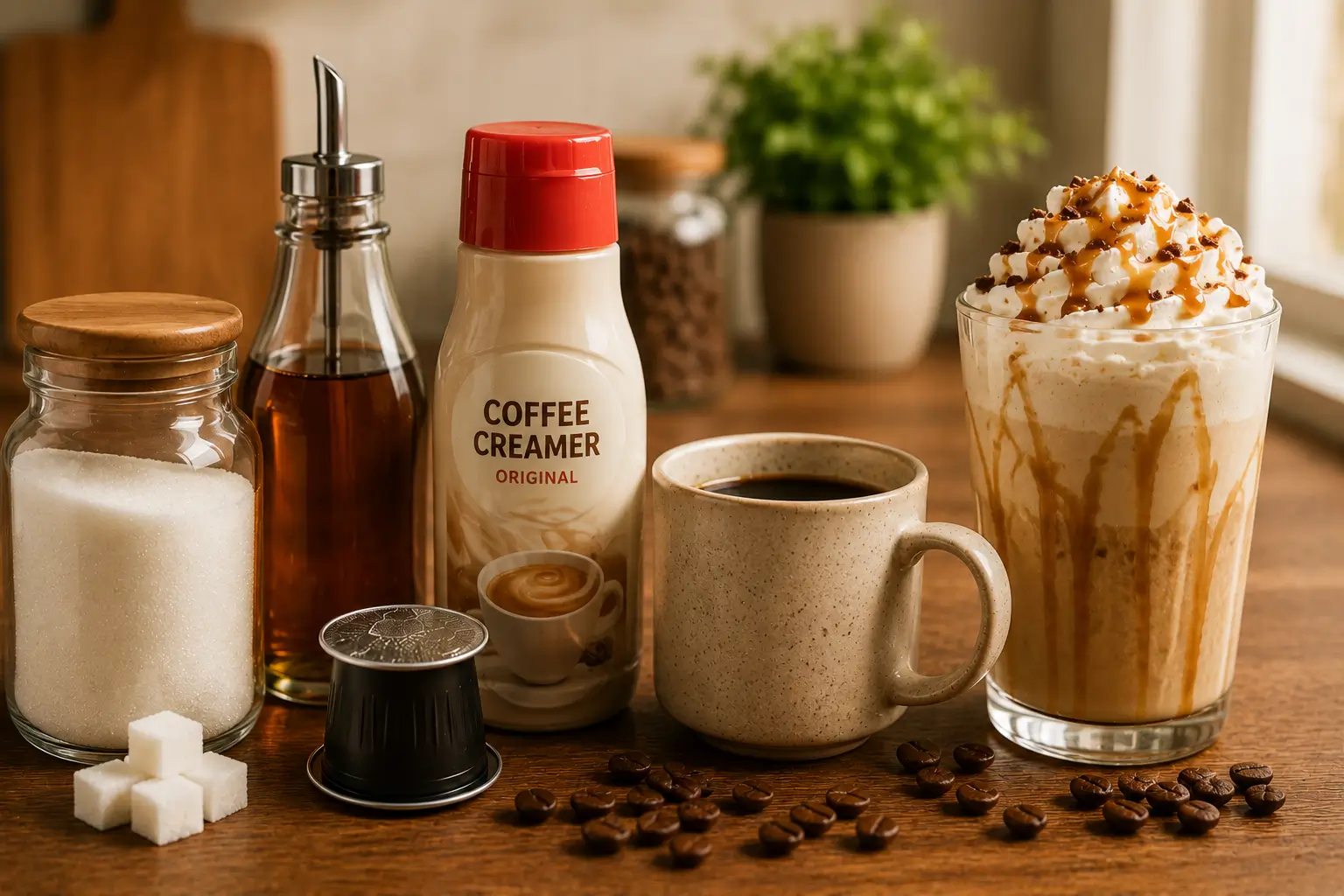
- Ignoring liquid calories: sweet drinks can add substantial energy without feeling like a meal.
- Assuming all flavored pods are sugar-free: check the exact product.
- Using coffee as a meal replacement: low calories are not the same as complete nutrition.
- Adding “healthy” oils without counting them: butter and MCT oil still contain calories.
- Chasing appetite suppression with more caffeine: appetite effects are inconsistent and short-lived.
- Drinking caffeine late: sleep disruption can make healthy routines harder.
- Ignoring the full day: one low-calorie coffee cannot compensate for an eating pattern that does not match your goal.

Simple Coffee Habits That Fit a Balanced Plan
- Keep plain water available during the day.
- Use less added sugar if you currently use a lot.
- Measure calorie-dense creamers or syrups instead of pouring without checking.
- Use decaf later in the day if caffeine harms your sleep.
- Choose a coffee you actually enjoy without needing many add-ins.
- Keep coffee as a beverage, not a substitute for balanced nutrition.
For hydration, see Do Coffee Pods Dehydrate You? ↗.
Frequently Asked Questions
Coffee pods do not directly cause meaningful weight loss. Plain coffee can fit into a lower-calorie diet because it usually adds very few calories.
Plain black coffee pods are usually very low in calories. Sugar, syrups, creamers, milk and specialty ingredients can raise the calorie total.
Black coffee can be a useful low-calorie beverage choice, but it is not a weight-loss treatment. The overall eating and activity pattern matters more.
Caffeine may briefly reduce food intake in some situations, but research is inconsistent and the effect is too weak and temporary to rely on as an appetite-control strategy.
Caffeine can have short-term metabolic effects, but ordinary coffee has not been shown to be a reliable stand-alone weight-loss treatment.
No coffee pod has been shown to selectively burn belly fat. Body-fat loss occurs through an overall weight-management process, not targeted fat burning from one drink.
Fasted coffee may change short-term fuel use, but short-term fat oxidation is not the same as long-term body-fat loss.
Decaf can fit into a low-calorie diet, but recent randomized-trial evidence does not show decaf itself as an effective weight-loss beverage.
Some flavored black-coffee pods contain little or no sugar, while latte, mocha and dessert-style products may contain sugar or other calorie-containing ingredients. Check the label.
Plain black coffee pods are generally among the lowest-calorie choices. Exact nutrition depends on the product and anything added after brewing.
Plain coffee is not a balanced meal. It does not provide the full protein, fiber, vitamins, minerals and energy expected from a nutritious meal.
Protein coffee can add protein, but it also adds calories. Whether it helps depends on your full diet, protein needs and calorie intake, not the coffee label.
Butter and oils are calorie-dense. Adding them can make coffee much higher in calories, so butter coffee is not automatically a weight-loss drink.
Indirectly, yes. If caffeine disrupts your sleep, it can make a healthy weight-management routine harder. Sleep is one part of current healthy-weight guidance.
The FDA cites 400 mg per day as an amount not generally associated with negative effects for most healthy adults, but this is not a weight-loss target and individual sensitivity varies.
Conclusion
Coffee pods can fit into a weight-loss diet when the drink is simple and the calories fit your overall plan. Plain black coffee is usually very low in calories, while sweeteners, creamers, milk, syrups and specialty pod ingredients can change the total quickly.
Do not rely on caffeine, fasted coffee, butter coffee or “fat-burning” claims to create weight loss. Sustainable results come from the full pattern of calories, nutrition, physical activity, sleep and long-term habits. Choose your pod for taste, convenience and caffeine needs—not as a miracle weight-loss product.
Medical Disclaimer
Important Health Information
This article is provided for general information and educational purposes only. It is not medical advice and should not be used to diagnose, treat, prevent, or manage any health condition.
Caffeine affects people differently based on age, health, medicines, pregnancy, sensitivity, and total daily intake.
Speak with a qualified healthcare professional if you have ongoing symptoms, a medical condition, take regular medication, are pregnant or breastfeeding, or are concerned about your caffeine intake.