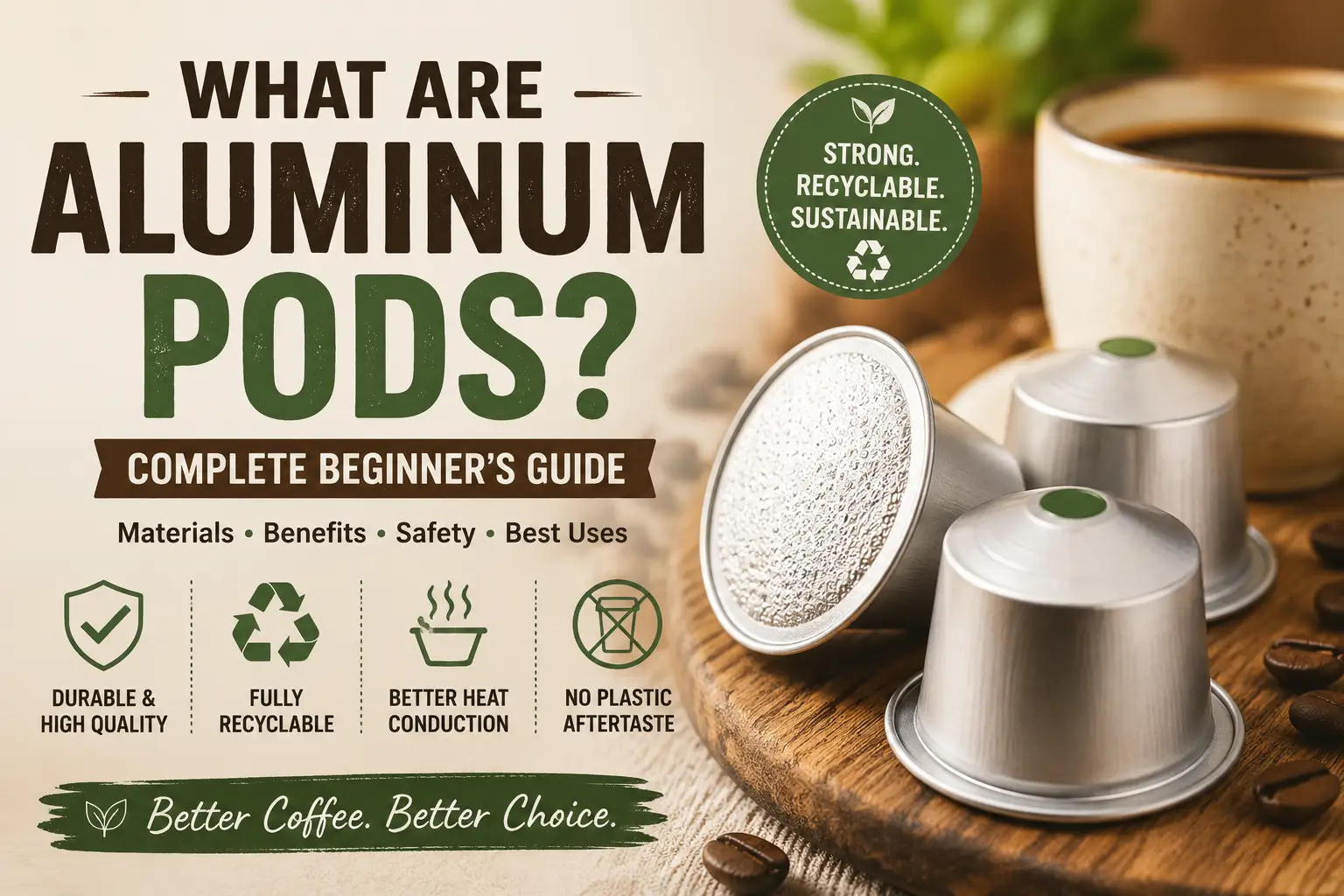
What Are Aluminum Pods? Complete Beginner’s Guide
Coffee pods have changed the way many people brew coffee at home. They are fast, convenient, and consistent. Among the different types of coffee capsules available today, aluminum pods have become especially popular. Many premium coffee brands use aluminum coffee capsules because they help protect coffee freshness and deliver a high-quality brewing experience.
When I first started comparing different coffee pod materials, I noticed that many brands highlighted aluminum capsules as a premium option. This made me curious. Why do companies like Nespresso use aluminum instead of plastic? Are aluminum coffee pods safe? Are they recyclable? After researching coffee capsule materials and testing different pod systems, I learned that aluminum pods offer several advantages beyond convenience. In this guide, you will learn what aluminum pods are, how they work, what they are made of, and why they have become a popular choice for coffee lovers around the world.
Key Takeaways
What Are Aluminum Pods?
Aluminum pods are single-serve coffee capsules made primarily from food-grade aluminum. They are designed to store pre-measured coffee grounds and work with compatible coffee machines to brew espresso and coffee beverages.
Unlike traditional plastic coffee pods, aluminum coffee capsules provide a stronger barrier against air, moisture, and light. This helps preserve coffee freshness and aroma until the capsule is used.
Aluminum coffee pods are commonly found in:
Many coffee manufacturers choose aluminum because it helps maintain coffee quality while also offering excellent recyclability.
Why Are Coffee Pods Bad For The Environment?
Coffee pods offer convenience, but they also create waste.
Billions of coffee capsules are used every year worldwide. Many of these capsules end up in landfills because they are not recycled properly.
Traditional coffee pods may contain:
These materials can be difficult to process if consumers do not dispose of them correctly.
Some environmental concerns include:
This is one reason why many coffee drinkers are becoming more interested in recyclable coffee pods, compostable coffee pods, biodegradable coffee pods, and sustainable coffee capsule systems.
Aluminum coffee pods are often promoted as a more environmentally responsible option because aluminum can be recycled repeatedly without losing quality.
What Are Aluminum Coffee Pods Made Of?
Although they are commonly called aluminum pods, these capsules contain several carefully designed components that work together to protect coffee quality.
Food-Grade Aluminum
The main body of the capsule is usually made from food-grade aluminum.
Food-grade aluminum is lightweight, durable, and highly resistant to corrosion.
It provides excellent protection against:
This helps keep coffee fresh for longer periods.
Protective Inner Coating
Many aluminum coffee capsules contain a very thin food-safe inner coating.
This coating helps:
These coatings are designed to meet food safety standards.
Aluminum Foil Lid
Most aluminum coffee pods use a sealed aluminum foil lid.
The lid plays an important role in preserving:
When the capsule is inserted into a compatible coffee machine, the foil lid is pierced during the brewing process.
Capsule Sealing Technology
Modern aluminum coffee capsules use advanced sealing technology.
The sealed environment protects coffee from:
This is one reason why aluminum capsules are often associated with premium coffee quality.
Many manufacturers believe that maintaining a completely sealed environment helps preserve the original flavor profile of roasted coffee.
How Do Aluminum Pods Work?
Aluminum coffee pods work in a simple but highly effective way.
Each capsule contains pre-measured ground coffee sealed inside an airtight aluminum shell.
When inserted into a compatible coffee machine, several steps occur.
Capsule Insertion
The coffee pod is placed into the machine’s brewing chamber.
The machine positions the capsule for extraction.
Capsule Piercing
The machine pierces the capsule.
This creates entry and exit points for water and coffee extraction.
High-Pressure Extraction
Hot water is forced through the coffee grounds under pressure.
The pressure helps extract:
This process is especially important for espresso-style beverages.
Coffee Delivery
The brewed coffee flows into the cup while the used capsule remains inside the machine.
After brewing, the capsule can be removed and prepared for recycling according to local guidelines.
How Aluminum Helps Preserve Coffee Before Brewing?
One of the biggest advantages of aluminum coffee pods is their ability to protect coffee before brewing.
The aluminum shell acts as a barrier against:
These factors can cause coffee to lose freshness over time.
By limiting exposure, aluminum capsules help maintain coffee quality until the moment the pod is used.
Benefits Of Aluminum Coffee Pods
Aluminum coffee pods have become one of the most popular capsule options in the coffee industry. Many premium brands use aluminum because it helps protect coffee quality while offering strong recycling potential.
Although no coffee pod system is perfect, aluminum capsules provide several advantages that have made them a preferred choice for many coffee lovers.
Superior Coffee Freshness
One of the biggest benefits of aluminum coffee pods is their ability to preserve freshness.
Fresh coffee is highly sensitive to:
When coffee is exposed to these elements, it gradually loses aroma and flavor.
Aluminum creates a strong protective barrier that helps keep coffee fresh until brewing.
Excellent Oxygen Barrier
Oxygen is one of coffee’s biggest enemies.
Exposure to oxygen can cause oxidation, which affects:
Aluminum capsules help minimize oxygen exposure by creating a nearly airtight environment around the coffee grounds.
This is one reason many premium espresso brands prefer aluminum coffee capsules.
Moisture Protection
Moisture can damage coffee quality before brewing.
Even small amounts of humidity can affect:
Aluminum capsules help block moisture from entering the pod, helping maintain coffee quality for longer periods.
Light Protection
Coffee is also sensitive to light exposure.
Over time, light can contribute to flavor degradation.
Aluminum pods help shield coffee grounds from light, adding another layer of protection.
Aroma Preservation
Many coffee drinkers choose premium capsules because they want maximum aroma.
Aluminum helps preserve the volatile compounds responsible for coffee’s smell and flavor.
This allows users to enjoy a fresher and more aromatic cup of coffee.
Long Shelf Life
Because aluminum provides protection against oxygen, moisture, and light, coffee capsules often maintain their quality for extended periods.
This makes aluminum pods a practical choice for people who buy coffee capsules in bulk.
Recyclability
Unlike many plastic coffee pods, aluminum capsules can be recycled repeatedly without losing quality.
This makes aluminum one of the most recyclable materials used in coffee packaging.
Many coffee brands now offer aluminum pod recycling programs to encourage responsible disposal.
Are Aluminum Coffee Pods Safe?
Many consumers wonder whether aluminum coffee pods are safe to use.
The short answer is yes.
Food-grade aluminum coffee capsules are designed to meet strict food safety standards and are widely used throughout the coffee industry.
Food Safety
Aluminum coffee capsules are manufactured using food-grade materials.
These materials are designed for direct contact with food and beverages.
Coffee companies must comply with safety regulations before selling coffee capsules to consumers.
BPA Concerns
Many consumers are familiar with concerns about BPA, a chemical sometimes associated with certain plastics.
Most aluminum coffee pods do not rely on BPA-containing plastic structures in the same way traditional plastic pods may.
However, consumers should always review manufacturer information if they have specific concerns.
Heat Exposure
Some people worry that hot water may cause aluminum to enter the coffee.
Modern aluminum coffee capsules use food-safe designs and protective inner coatings to minimize direct contact between aluminum and brewed coffee.
These systems are designed specifically for high-temperature brewing conditions.
Aluminum Exposure Myths
There are many myths surrounding aluminum coffee capsules.
Current food safety standards and manufacturing practices support the safe use of food-grade aluminum in coffee capsule systems.
For most consumers, aluminum coffee pods are considered safe when used as intended.
Do Aluminum Pods Affect Coffee Taste?
One common question is whether aluminum coffee pods change the taste of coffee.
In most cases, the answer is no.
The purpose of aluminum capsules is not to alter flavor but to preserve it.
Many coffee companies choose aluminum because it helps protect coffee from factors that can negatively affect taste.
These include:
As a result, aluminum coffee pods often help maintain the flavor profile intended by the coffee roaster.
Why Do Many Premium Coffee Brands Use Aluminum?
Many specialty coffee companies use aluminum capsules because they believe freshness plays a major role in coffee quality.
The better the protection, the more closely the brewed coffee reflects the original roasted coffee.
This is one reason brands such as Nespresso continue to use aluminum coffee capsules.
Why Aluminum Keeps Coffee Fresher
The ability to preserve freshness is one of the strongest arguments in favor of aluminum coffee pods.
Several factors contribute to this advantage.
Oxygen Barrier Protection
Coffee begins to lose freshness when exposed to oxygen.
Aluminum creates an effective oxygen barrier that helps slow oxidation.
This helps preserve:
for longer periods.
Moisture Barrier Protection
Humidity can negatively affect coffee quality.
Aluminum capsules help prevent moisture from entering the pod before brewing.
Aroma Preservation
Coffee contains hundreds of aromatic compounds.
Many of these compounds are delicate and can dissipate over time.
Aluminum helps retain these compounds until the capsule is used.
Shelf Life Benefits
Because aluminum protects coffee from multiple environmental factors, capsules often maintain quality longer than less protective packaging systems.
This helps ensure a more consistent coffee experience.
Aluminum Pods vs Plastic Coffee Pods
Many coffee drinkers compare aluminum coffee pods with plastic coffee pods before making a purchase decision.
Both offer convenience, but they differ in several important areas.
Environmental Impact
Plastic coffee pods often create significant waste challenges.
Aluminum capsules can be recycled repeatedly when processed correctly.
Freshness Comparison
Aluminum provides stronger protection against:
This can help preserve coffee freshness more effectively.
Brewing Performance
Both systems can produce quality coffee.
However, many premium espresso systems use aluminum capsules because of their ability to maintain coffee quality before brewing.
Recycling Comparison
Recycling programs for aluminum coffee capsules are increasingly available.
Plastic pod recycling can be more complicated depending on local facilities.
Comparison Table
| Feature | Aluminum Pods | Plastic Pods |
|---|---|---|
| Coffee Freshness | Excellent | Good |
| Oxygen Protection | Excellent | Moderate |
| Moisture Protection | Excellent | Moderate |
| Recyclability | High | Varies |
| Shelf Life | Long | Moderate |
| Sustainability Potential | Higher | Lower |
Aluminum Pods vs Compostable Pods
Both aluminum pods and compostable coffee pods offer alternatives to traditional plastic capsules.
However, they focus on different environmental solutions.
Sustainability Comparison
Aluminum focuses on recyclability.
Compostable pods focus on decomposition.
Waste Comparison
Compostable pods are designed to break down under composting conditions.
Aluminum capsules are designed to be collected and recycled.
Convenience Comparison
Both systems provide convenient single-serve brewing.
The best choice often depends on local recycling and composting infrastructure.
Comparison Table
| Feature | Aluminum Pods | Compostable Pods |
|---|---|---|
| Recyclable | Yes | No |
| Compostable | No | Yes |
| Freshness Protection | Excellent | Good |
| Oxygen Barrier | Excellent | Moderate |
| Long Shelf Life | Yes | Moderate |
Aluminum Pods vs Biodegradable Pods
Biodegradable coffee pods are another alternative to traditional plastic capsules.
They are designed to break down naturally over time.
Environmental Impact
Biodegradable pods reduce long-term waste through decomposition.
Aluminum pods reduce waste through recycling.
Disposal Methods
Biodegradable pods often require specific disposal conditions.
Aluminum pods require proper recycling.
Longevity
Aluminum offers stronger protection against environmental factors, helping preserve coffee freshness for longer periods.
Comparison Table
| Feature | Aluminum Pods | Biodegradable Pods |
|---|---|---|
| Recyclable | Yes | Sometimes |
| Biodegradable | No | Yes |
| Shelf Life | Long | Moderate |
| Recycling Programs | Common | Limited |
Are Aluminum Coffee Pods Recyclable?
One of the biggest advantages of aluminum coffee pods is their recyclability.
Unlike many packaging materials, aluminum can be recycled repeatedly without losing quality. This makes it one of the most valuable recyclable materials in the world.
However, recycling aluminum coffee capsules is not always as simple as placing them in a household recycling bin.
Proper recycling depends on:
Home compostable pods are generally more convenient for consumers who compost at home.
How Aluminum Recycling Works?
When aluminum coffee pods are collected and processed, the aluminum can be melted down and reused to create new products.
Recycled aluminum may be used in:
One major advantage is that recycled aluminum requires far less energy than producing new aluminum from raw materials.
Why Is Aluminum Highly Recyclable?
Aluminum can be recycled over and over again without losing its strength or quality.
This supports a circular economy where materials remain in use for longer periods instead of becoming waste.
For this reason, many sustainability experts consider aluminum one of the most valuable recyclable packaging materials available.
Capsule Collection Programs
Several coffee brands offer recycling programs for used aluminum capsules.
Examples include:
These programs help consumers recycle aluminum coffee pods more effectively.
Local Recycling Rules
Recycling requirements vary by location.
Some recycling facilities accept used aluminum coffee capsules directly.
Others may require:
Always check local recycling guidelines before disposal.
Can Aluminum Coffee Pods Be Reused?
Many coffee drinkers wonder whether aluminum coffee capsules can be reused.
Technically, some users refill aluminum capsules with fresh coffee grounds.
However, there are limitations.
However, there are limitations.
Reusing aluminum coffee pods may affect:
Capsules are typically designed for single use.
Repeated use can reduce performance.
Refillable Alternatives
Consumers who want reusable options may prefer:
These products are specifically designed for repeated use.
Environmental Impact Of Aluminum Coffee Pods
Aluminum coffee pods offer environmental benefits, but they also have environmental costs.
A balanced view is important.
Aluminum Production
Producing new aluminum requires significant energy.
Mining and refining raw aluminum materials can have environmental impacts.
These include:
Recycling Benefits
The good news is that aluminum is highly recyclable.
Recycling aluminum requires significantly less energy than producing new aluminum.
This helps reduce environmental impact over time.
Circular Economy
Aluminum supports a circular economy because it can remain in use through repeated recycling cycles.
Instead of becoming waste, aluminum can return to the production process.
This is one reason many sustainability programs support aluminum recycling initiatives.
Carbon Footprint
The environmental footprint of aluminum depends heavily on recycling rates.
When capsules are properly recycled, their overall environmental impact can be reduced significantly.
This is why consumer participation in recycling programs is important.
Recycled Aluminum Content
Some manufacturers now use recycled aluminum in their capsule production.
This helps reduce demand for newly mined materials while supporting sustainability goals.
Why Nespresso Uses Aluminum Capsules?
Many coffee drinkers ask why Nespresso continues to use aluminum capsules instead of plastic alternatives.
The answer largely comes down to coffee quality and recyclability.
Coffee Freshness
Aluminum provides exceptional protection against:
This helps preserve coffee flavor and aroma.
Pressure Resistance
Espresso brewing requires pressure.
Aluminum capsules are strong enough to withstand the pressure needed for quality extraction.
Shelf Stability
The protective properties of aluminum help maintain coffee quality during storage.
This contributes to longer shelf life.
Sustainability Goals
Nespresso promotes aluminum recycling programs because aluminum can be recycled repeatedly without losing quality.
This aligns with many of the company’s sustainability initiatives.
Common Misconceptions About Aluminum Pods
There are several myths surrounding aluminum coffee capsules.
Let’s look at the most common ones.
Aluminum Pods Are Unsafe
Food-grade aluminum coffee capsules are widely used and designed to meet food safety standards.
When used as intended, they are considered safe.
Aluminum Changes Coffee Taste
Aluminum is used to preserve flavor, not alter it.
Most users notice no metallic taste from properly manufactured aluminum capsules.
Aluminum Cannot Be Recycled
This is one of the biggest misconceptions.
Aluminum is actually one of the most recyclable materials available.
Plastic Pods Are More Sustainable
The answer depends on:
In many cases, properly recycled aluminum can offer significant sustainability advantages.
Popular Aluminum Coffee Pod Brands
Several well-known coffee companies use aluminum capsules.
Popular examples include:
Nespresso
One of the most recognized aluminum capsule systems.
L’OR
Offers aluminum coffee capsules compatible with Nespresso Original machines.
Lavazza
Provides aluminum espresso capsules for several brewing systems.
Starbucks By Nespresso
Uses aluminum capsules designed for Nespresso compatibility.
Peet’s Coffee
Offers aluminum capsule options in certain product lines.
My Experience Using Aluminum Coffee Pods
When I first started comparing coffee pod materials, I assumed all capsules performed similarly.
After using both plastic and aluminum coffee pods, I noticed the biggest difference was consistency. Coffee brewed from aluminum capsules often seemed fresher, especially when the capsules had been stored for several months.
I also found that recycling aluminum coffee pods required a little more effort than simply throwing them away. However, once I learned about capsule collection programs and local recycling options, the process became much easier.
For coffee drinkers who value freshness, aroma, and recycling potential, aluminum coffee pods can be a practical option. The key is making sure the capsules are recycled properly after use.

Conclusion
In short, When I first researched aluminum coffee pods, I assumed they were simply another type of coffee capsule. After learning how they preserve freshness, protect aroma, and support recycling programs, I realized why many premium coffee brands rely on aluminum. Aluminum coffee pods offer strong protection against oxygen, moisture, and light, helping maintain coffee quality until brewing. They also provide one of the most recyclable packaging options available in the coffee industry. While aluminum production has environmental costs, proper recycling can significantly reduce its long-term impact. For coffee drinkers who value freshness, convenience, and recyclability, aluminum coffee pods can be a smart choice. Before buying, I recommend considering your local recycling options, machine compatibility, and sustainability goals to determine whether aluminum capsules fit your coffee routine.