
Coffee Pod Caffeine Comparison: Which Pods Have the Most Caffeine?
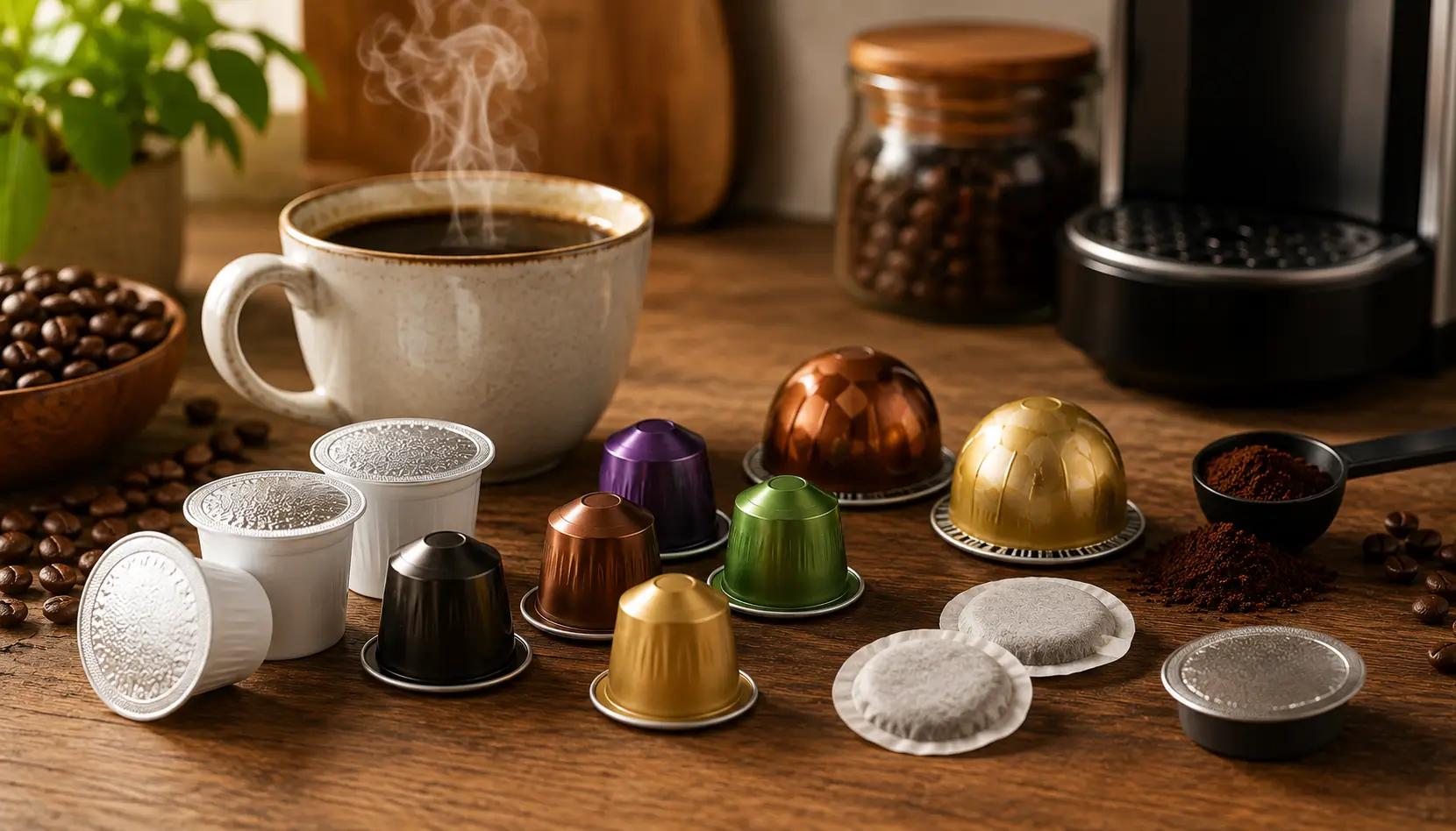
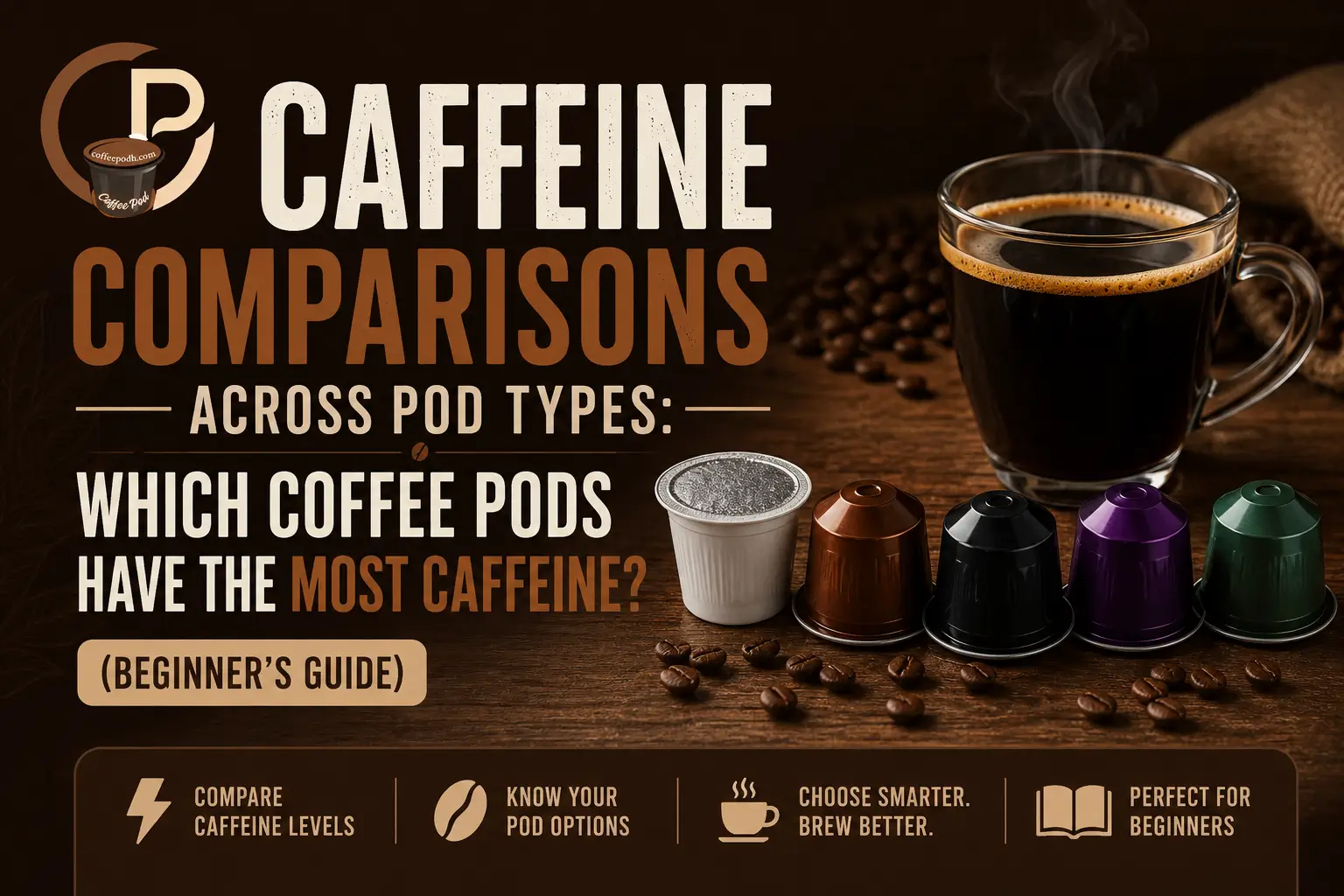
Coffee pods can contain very different amounts of caffeine depending on the pod size, coffee blend, bean type, brewing system, and serving size.
A small espresso capsule may taste stronger but still contain less total caffeine than a larger coffee pod brewed into a full mug. This is why flavor strength and caffeine amount should not be treated as the same thing.
In this guide, we compare caffeine levels across common coffee pod types, including K-Cups, Nespresso Original and Vertuo capsules, espresso pods, decaf, half-caff, and higher-caffeine options. You will also see which pod types generally contain more or less caffeine and what factors cause the difference.
Important Note:
Caffeine levels vary by brand, blend, pod size, and brewing method. The ranges in this guide are general comparisons, so check the manufacturer’s label or product information when you need the exact caffeine amount for a specific pod.
Key Takeaways
Quick Answer:
Coffee pod caffeine varies by pod type and serving size. Larger K-Cup-style and some Nespresso Vertuo pods often contain more total caffeine than smaller espresso capsules, while decaf and half-caff pods contain much less. A stronger taste does not always mean more caffeine.
Why Caffeine Levels Differ Between Coffee Pods?
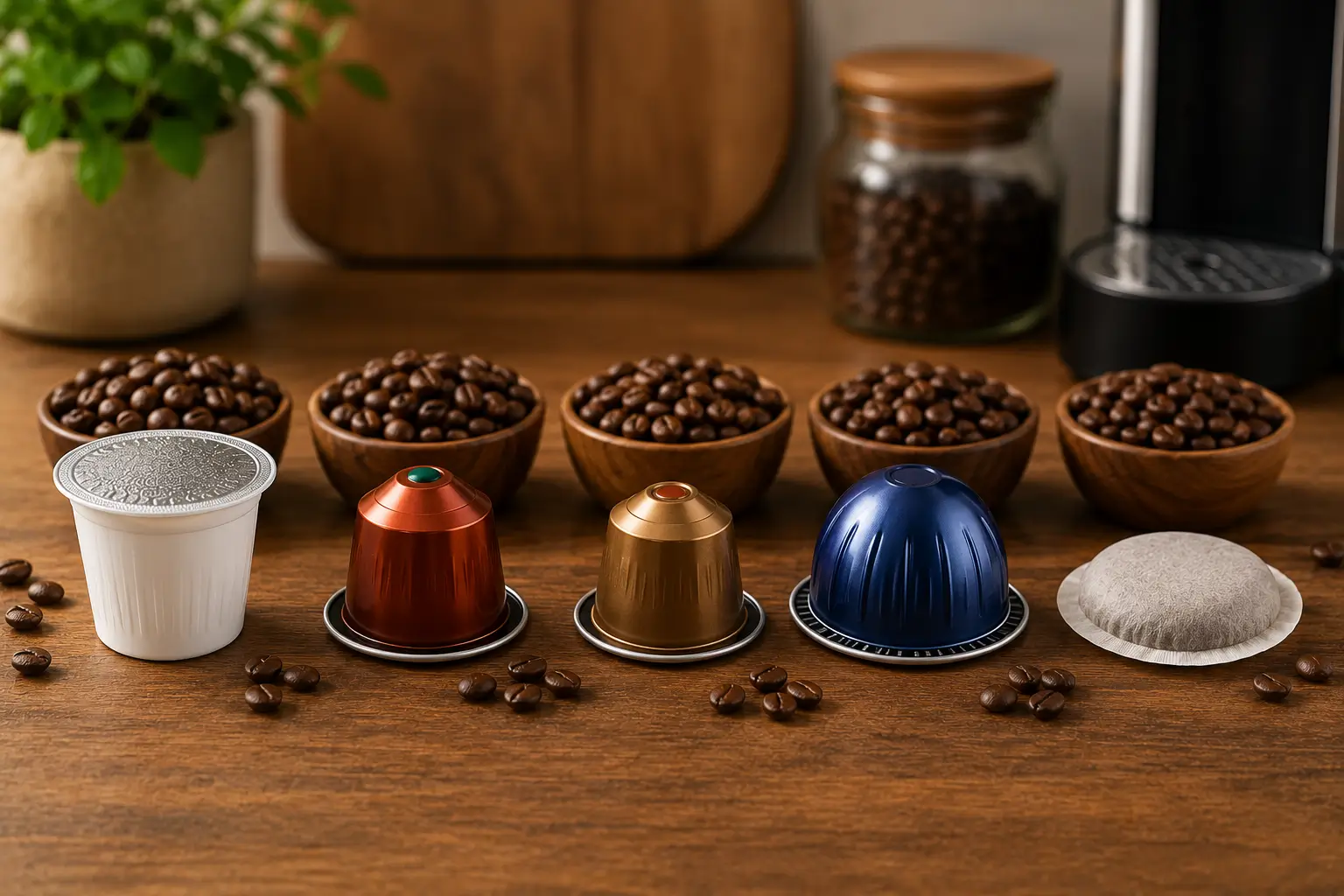
Coffee pods do not all contain the same amount of caffeine. The final amount depends on several factors, including how much coffee is inside the pod, the type of beans used, the pod size, and the drink volume.
The main factors are:
This is why two pods with similar intensity numbers can still have different caffeine levels.
Caffeine Levels in Coffee Pods Compared
The table below gives a general comparison of caffeine across common coffee pod types. Exact amounts vary by brand and product, so these ranges should be used as a guide rather than a fixed rule.
| Pod Type | Typical Caffeine Level | General Comparison |
|---|---|---|
| Espresso-style capsules | Lower to moderate total caffeine | Small serving, concentrated taste |
| Nespresso Original-style capsules | Lower to moderate | Usually designed for espresso or lungo drinks |
| Nespresso Vertuo-style capsules | Moderate to high | Larger formats may contain more total caffeine |
| K-Cup-style coffee pods | Moderate to high | Often brewed as a larger cup |
| Robusta-heavy pods | Often higher | Bean type can increase caffeine |
| Half-caff pods | Lower | Designed to reduce caffeine |
| Decaf pods | Very low | Usually contain only a small amount |
A pod that tastes stronger is not automatically the one with the most caffeine. Total caffeine depends more on the coffee dose, bean type, pod format, and serving size.
Caffeine per Ounce vs Total Caffeine
A small espresso drink can contain more caffeine per ounce, while a larger pod-brewed coffee can contain more caffeine in the full serving.
For example, espresso is highly concentrated because it uses less water. But a larger coffee pod may deliver more total caffeine because the finished drink is much bigger.
When comparing coffee pods, always ask:
This gives a more useful comparison than judging caffeine by taste strength alone.
K-Cups vs Nespresso Pods Caffeine Comparison
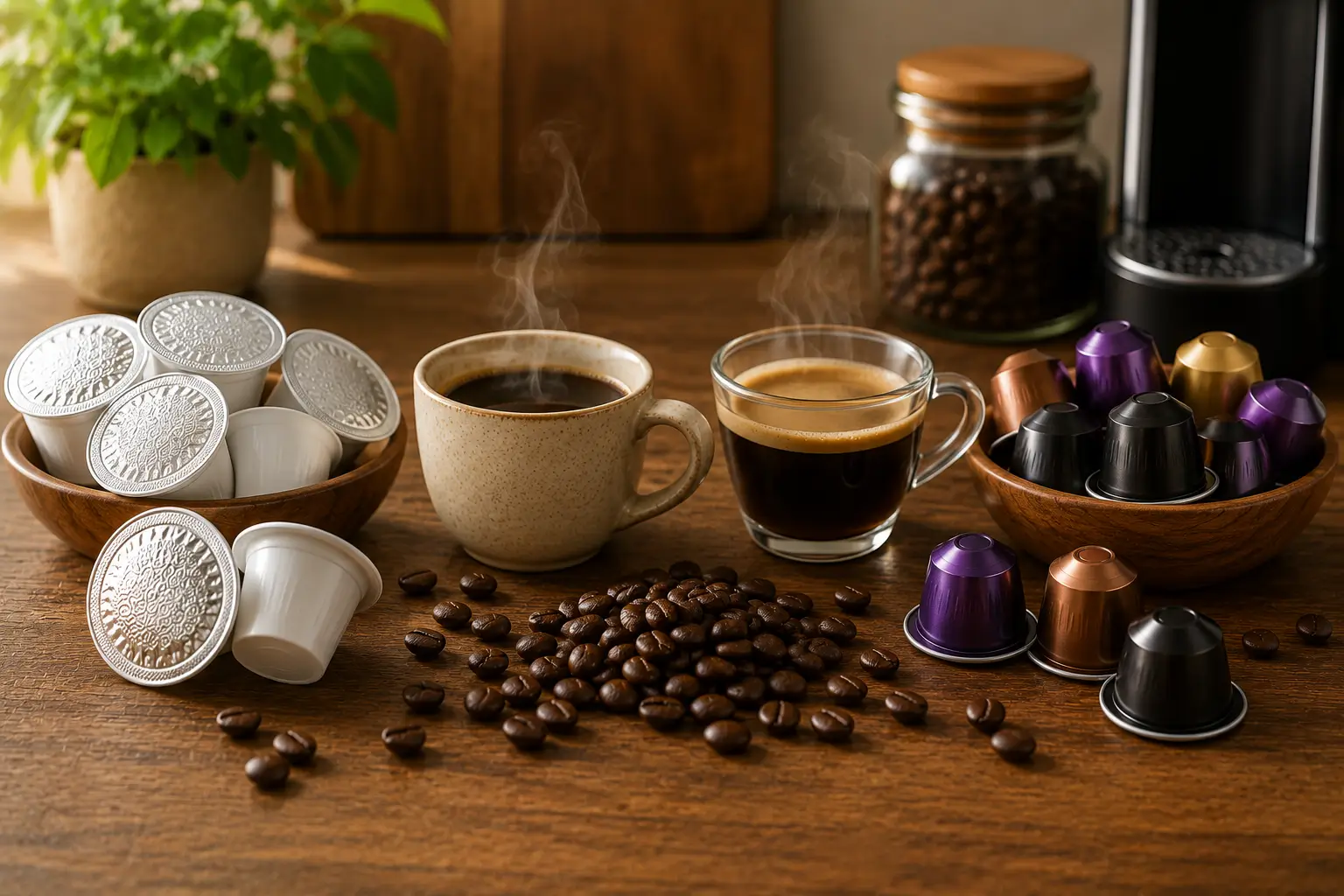
MK-Cup-style pods and Nespresso capsules can both contain significant caffeine, but they are designed for different drink sizes. K cup are commonly brewed as larger cups of coffee, while many Nespresso Capsules are designed for smaller espresso or lungo servings.
Because serving size and coffee dose differ, a larger pod may contain more total caffeine even when a smaller espresso capsule tastes stronger.
Starbucks also offers single-serve coffee across different pod systems and roast styles. See our Starbucks Coffee Pods guide ↗ for the available types, flavors, and pod options.
| Feature | K-Cup-Style Pods | Nespresso Capsules |
|---|---|---|
| Common drink style | Larger cup of coffee | Espresso, lungo, or larger Vertuo drinks |
| Typical serving size | Usually larger | Depends strongly on capsule system |
| Taste concentration | Usually less concentrated | Espresso formats can taste more concentrated |
| Total caffeine | Can be moderate to high | Varies widely by Original vs Vertuo and capsule |
| Best way to compare | Check total caffeine per pod | Check capsule type and finished drink size |
Neither system is automatically “stronger” in caffeine. The specific pod, coffee dose, bean blend, and drink size matter more than the system name alone.
Which pod system has the most caffeine? There is no single winner across every product. Larger K-Cup-style pods and larger Nespresso Vertuo capsules often provide more total caffeine than small espresso capsules, but the exact amount depends on the individual pod, coffee dose, bean blend, and serving size.
If you want to compare the pod systems, flavors, sizes, and compatible options in more detail, see our Nespresso Coffee Pods ↗ guide and Keurig Coffee Pods guide ↗.
Nespresso Original vs Vertuo Capsules
Nespresso Original and Vertuo capsules should not be treated as one caffeine category. The two systems use different capsule formats and are designed for different drink sizes.
Original capsules are mainly used for espresso and lungo-style drinks, so the finished serving is usually smaller.
Vertuo capsules are available in a wider range of sizes, including larger coffee servings. Because some Vertuo capsules contain more coffee and produce larger drinks, they may provide more total caffeine than a small Original espresso capsule.
| System | Typical Drink Style | General Caffeine Pattern |
|---|---|---|
| Nespresso Original | Espresso and lungo | Often lower to moderate total caffeine per serving |
| Nespresso Vertuo | Espresso through larger coffee sizes | Wider range; larger capsules may contain more total caffeine |
Do not compare Original and Vertuo only by intensity number. Intensity describes taste characteristics, not the exact caffeine amount.
Which Coffee Pod System Contains the Most Caffeine?
Based on average serving sizes, high-caffeine coffee pods and some Nespresso Vertuo capsules usually provide the highest caffeine levels.
However, the strongest option is not always the best option.
The right choice depends on:
Some people prefer a strong energy boost, while others simply want a balanced cup of coffee without consuming too much caffeine.
Espresso Pods vs Regular Coffee Pods
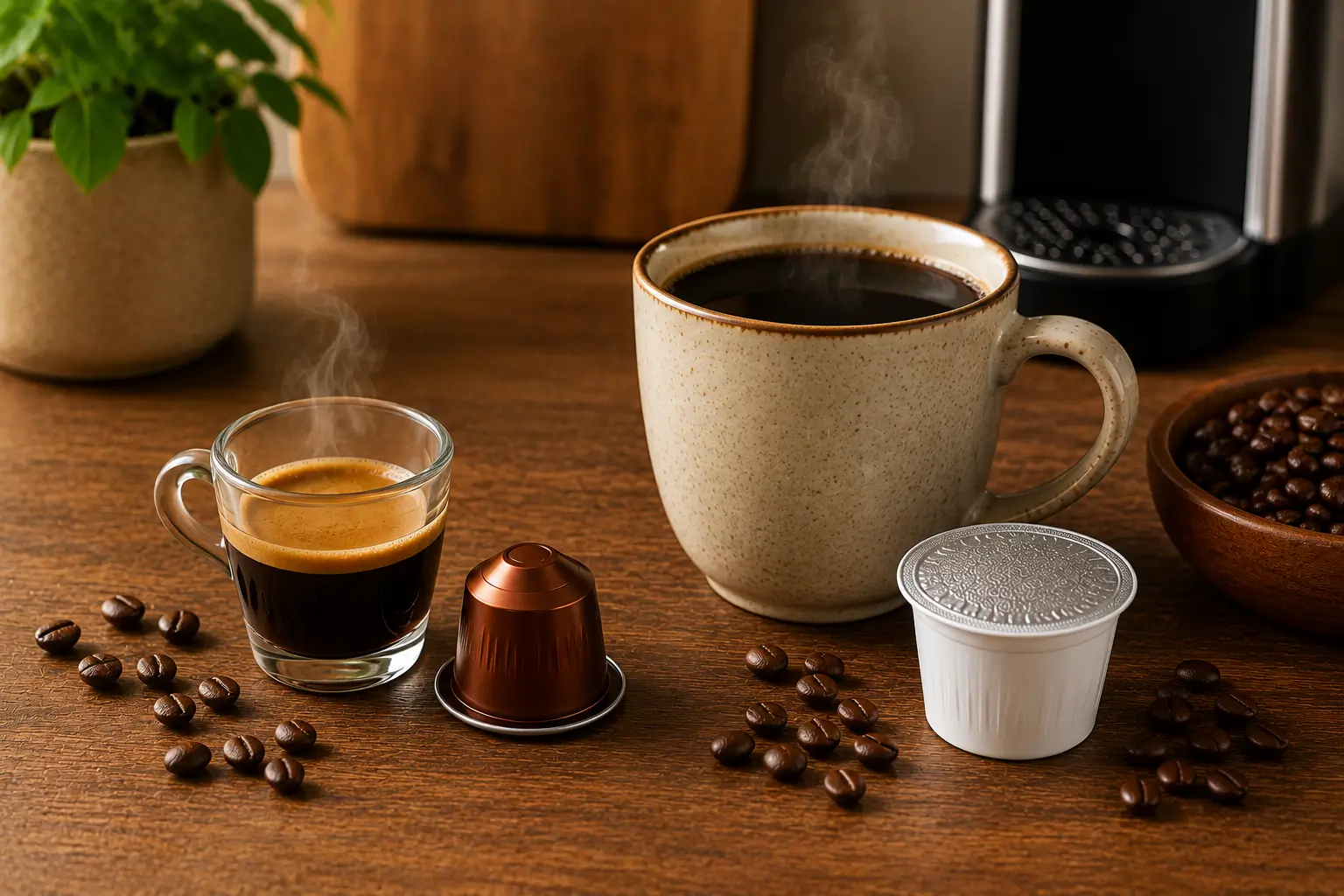
Espresso pods usually produce a smaller, more concentrated drink, while regular coffee pods are often brewed into a larger cup. This difference affects how caffeine should be compared.
Espresso may contain more caffeine per ounce, but a full-size coffee pod can contain more total caffeine per serving because the drink is larger.
Espresso Pods
Regular Coffee Pods
So, a stronger-tasting espresso does not automatically contain more total caffeine than a larger pod-brewed coffee.
Light Roast vs Dark Roast Pods
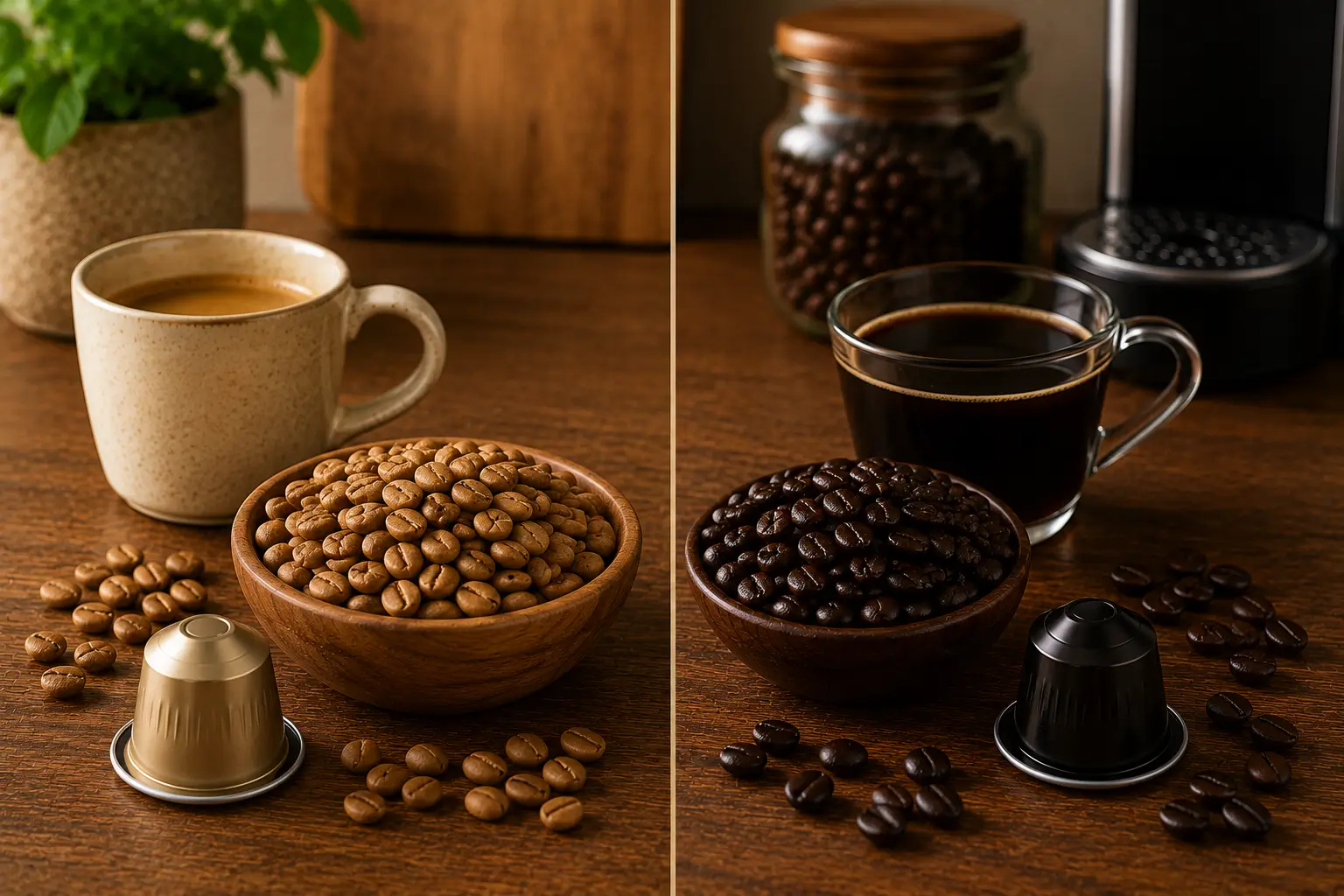
Many coffee drinkers think dark roast coffee contains more caffeine because it tastes stronger.
In reality, the difference is very small.
| Roast Type | Typical Taste | Caffeine Comparison |
|---|---|---|
| Light Roast | Brighter, lighter roast character | Not automatically lower in caffeine |
| Dark Roast | Bolder, more roasted flavor | Not automatically higher in caffeine |
Roast level alone is not a reliable way to predict caffeine in a coffee pod. Pod dose, bean type, capsule size, and product recipe are more useful factors when comparing total caffeine.
Arabica vs Robusta Coffee Pods
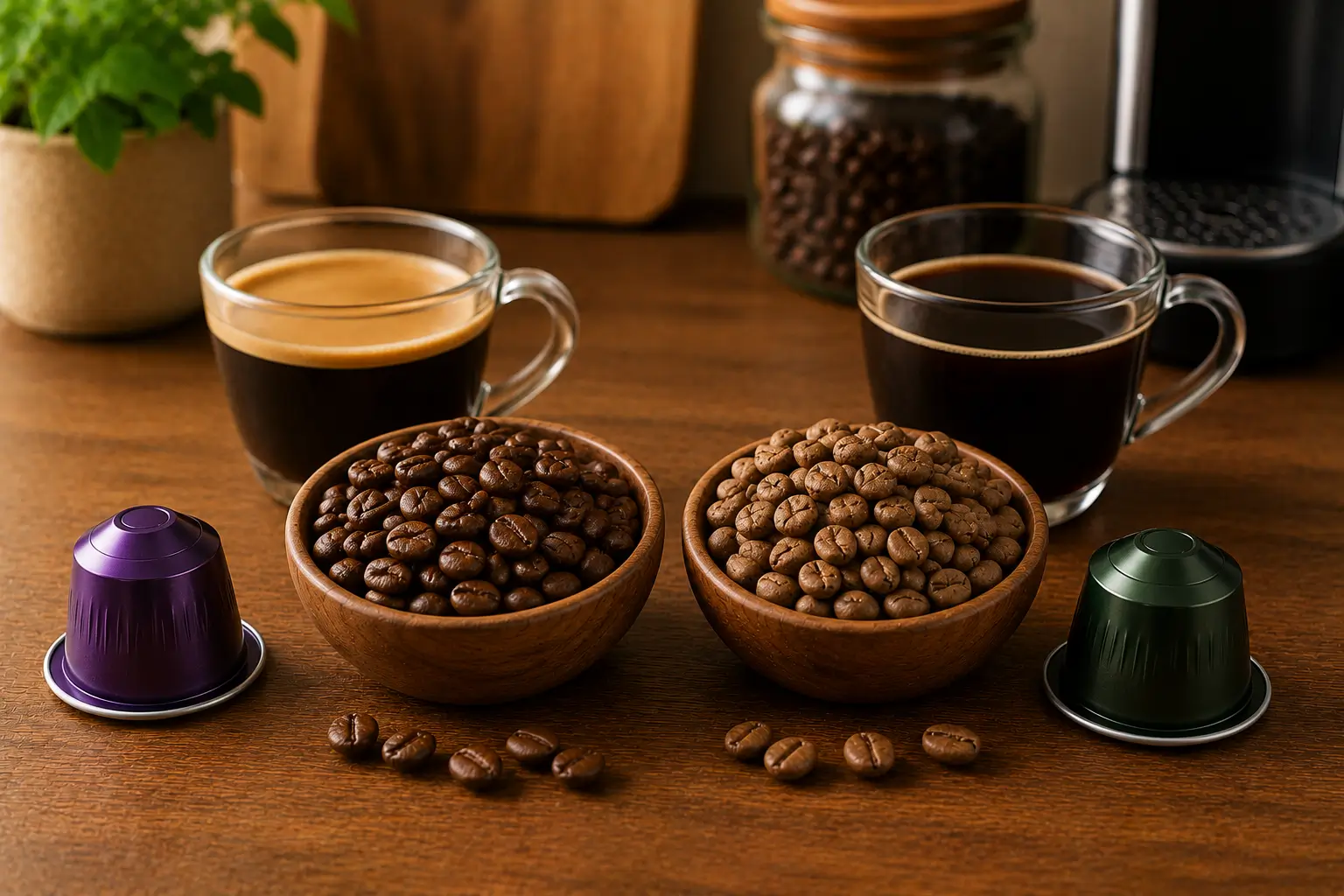
Bean type can make a meaningful difference to caffeine content. The two main coffee species used in pods are Arabica and Robusta.
Bean blends also vary by brand. You can see how this works in practice in our Lavazza Coffee Pods guide ↗, which covers different blends, roast levels, strengths, and capsule options.
| Bean Type | Typical Flavor | General Caffeine Pattern |
|---|---|---|
| Arabica | Smoother, more aromatic, often less bitter | Usually lower |
| Robusta | Stronger, heavier, often more bitter | Usually higher |
| Arabica–Robusta Blend | Balanced mix of flavor and body | Depends on the blend ratio |
Robusta generally contains more caffeine than Arabica, so pods with a higher Robusta percentage may contain more caffeine. However, the final amount still depends on how much coffee is inside the pod and how the product is formulated.
If you prefer Arabica-focused coffee, our Illy Coffee Pods guide ↗ explains Illy’s pod types, roast options, flavors, and compatible choices.
Decaf Coffee Pods and Their Caffeine Content
Decaf coffee pods contain much less caffeine than regular coffee pods, but they are not always completely caffeine-free.
The exact amount varies by brand, pod size, and decaffeination process. If you need to closely limit caffeine, check the manufacturer’s product information rather than assuming every decaf pod contains the same amount.
In a caffeine comparison, decaf pods are generally the lowest-caffeine category.
You can still enjoy coffee flavor without consuming large amounts of caffeine.
Half-Caff Coffee Pods
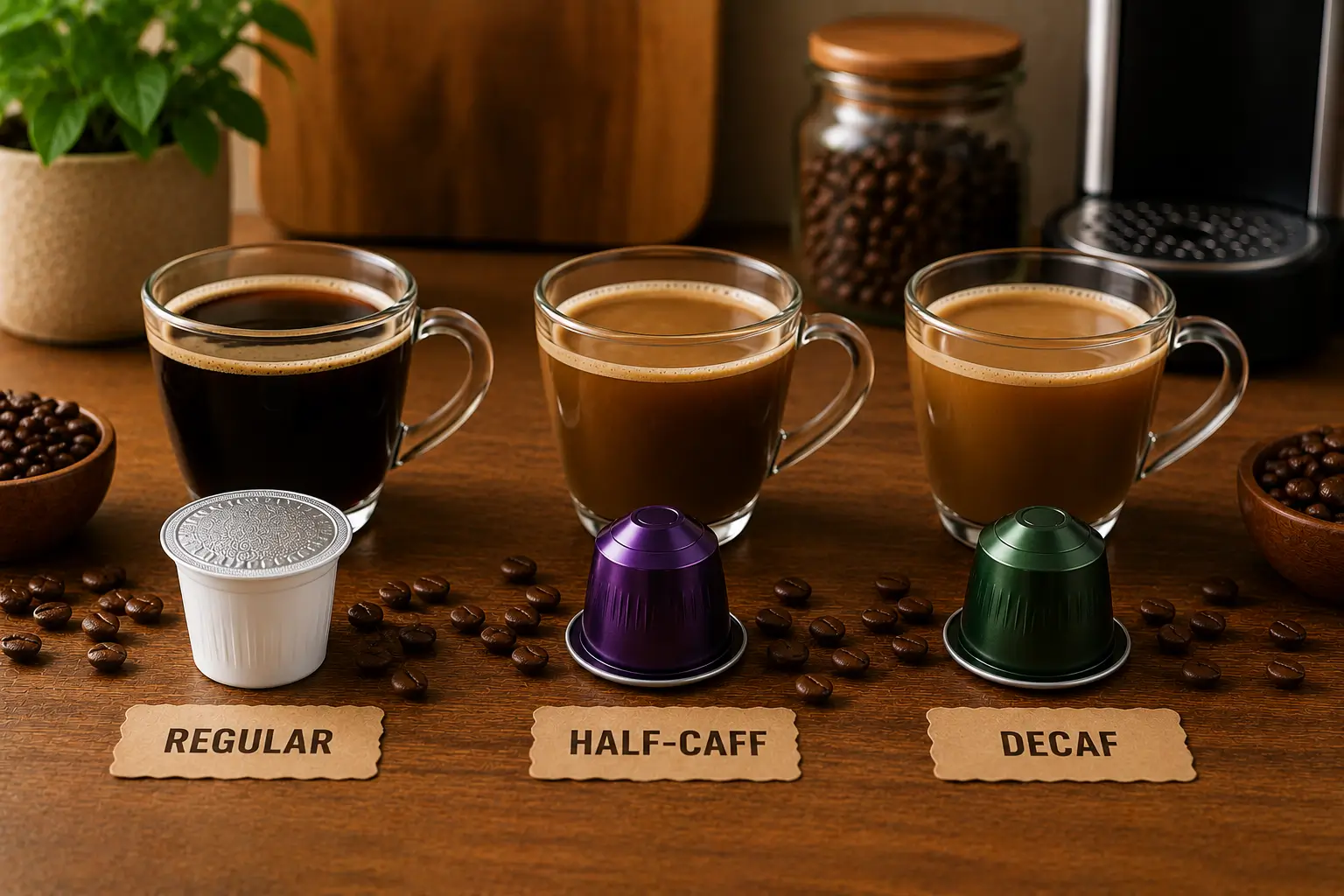
Half-caff coffee pods combine regular and decaffeinated coffee to provide less caffeine than a comparable fully caffeinated pod.
However, “half-caff” does not guarantee one exact caffeine amount. The final level depends on the blend, coffee dose, and product.
For comparison purposes:
Which Coffee Pods Tend to Have the Most Caffeine?
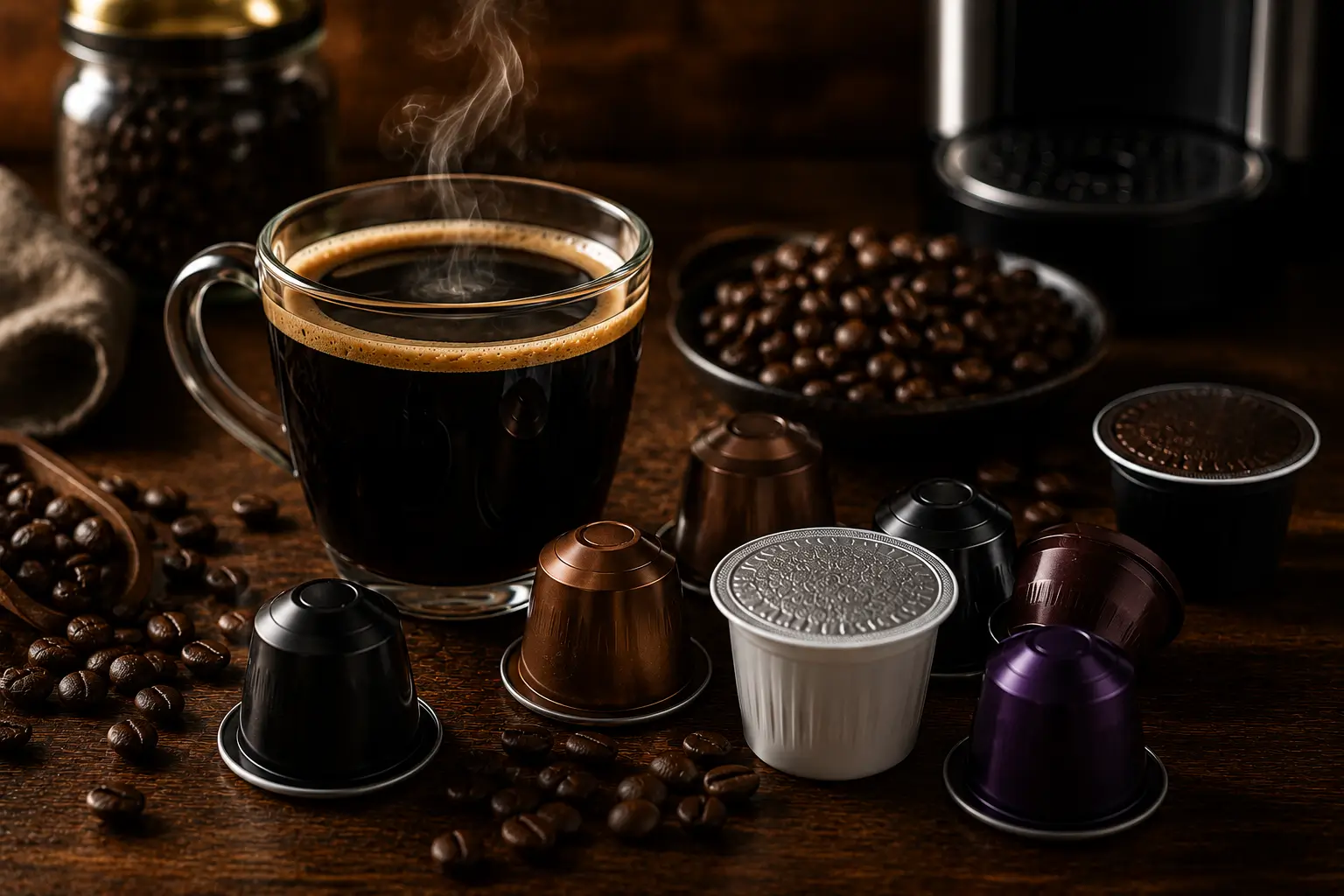
The highest-caffeine coffee pods are usually products specifically designed as high-caffeine coffee or pods that contain a larger coffee dose or a higher proportion of Robusta beans.
When comparing high-caffeine options, look for:
Do not choose based only on words such as strong, bold, dark roast, or a high intensity number. These usually describe taste rather than an exact caffeine amount.
Which coffee pods have the most caffeine? High-caffeine specialty pods and some larger pod formats can contain more caffeine than standard espresso capsules, but there is no single highest-caffeine pod across every brand. Check the stated caffeine amount per serving for an accurate comparison.
Lowest-Caffeine Coffee Pod Options
Not everyone wants maximum caffeine.
Lower-caffeine options include:
A smaller pod may sometimes contain less total caffeine, but size alone is not enough to predict caffeine accurately.
Who Should Choose Each Pod Type?
Different pod types suit different caffeine preferences. The table below gives a simple comparison rather than a medical recommendation.
| If You Want… | Pod Type to Consider |
|---|---|
| Very low caffeine | Decaf pods |
| Reduced caffeine | Half-caff pods |
| Moderate caffeine | Standard coffee or espresso pods |
| More total caffeine | Larger coffee pods or products with clearly stated higher caffeine |
| Stronger taste, not necessarily more caffeine | Higher-intensity or darker-tasting pods |
Always check the product’s stated caffeine amount when exact intake matters, because roast level, intensity number, and drink size alone are not reliable measures.
Common Myths About Coffee Pod Caffeine
Myth 1: Stronger-Tasting Pods Always Have More Caffeine
Not necessarily. A pod can taste bold because of roast level, intensity, or blend while containing less total caffeine than a larger, milder-tasting pod.
Myth 2: Dark Roast Pods Always Have More Caffeine
Not reliably. Roast level alone is not a good way to predict caffeine in a coffee pod.
Myth 3: Espresso Pods Always Have the Most Caffeine
Espresso is highly concentrated, but a larger cup of pod coffee can contain more total caffeine per serving.
Myth 4: Intensity Numbers Show Caffeine Amount
They usually do not. Intensity scores generally describe taste, body, roast character, or bitterness rather than exact caffeine.
Myth 5: Decaf Pods Are Completely Caffeine-Free
Decaf pods usually contain much less caffeine than regular pods, but they may still contain a small amount.
Myth 6: Larger Drink Size Always Means More Caffeine
Not always. Larger servings often contain more total caffeine, but the exact amount still depends on coffee dose, bean type, and product recipe.
Frequently Asked Questions
High-caffeine specialty pods, larger coffee pod formats, and some Robusta-heavy blends may contain more caffeine than standard espresso capsules. The exact amount depends on the individual product, so check the stated caffeine per serving.
Decaf pods are generally the lowest-caffeine option, followed by half-caff pods. Always check the product information if you need an exact amount.
Not always. Some Nespresso capsules are more concentrated, while larger K-Cup-style coffees may contain more total caffeine per serving. Compare the individual pod and drink size rather than the system name alone.
Espresso pods usually contain more caffeine per ounce, but a larger regular coffee pod can contain more total caffeine in the full serving.
Larger Vertuo capsules often contain more total caffeine than small Original espresso capsules because the capsule and drink sizes can be larger. The exact amount varies by product.
Not necessarily. Dark roast may taste stronger, but roast level alone is not a reliable way to predict caffeine content.
No. Intensity usually describes taste, body, roast character, or bitterness rather than the exact caffeine amount.
No. Decaf pods usually contain much less caffeine than regular pods, but they may still contain a small amount.
Final Thoughts
Coffee pod caffeine can vary widely between pod types, capsule sizes, bean blends, and serving formats. A strong-tasting espresso capsule may contain less total caffeine than a larger coffee pod, while Robusta-heavy blends and larger pod formats may contain more.
The best way to compare coffee pods is to look at the caffeine amount per serving when it is available. Do not rely only on roast level, intensity number, or flavor strength, because these do not directly tell you how much caffeine is in the pod.
Medical Disclaimer
Important Health Information
This article is provided for general information and educational purposes only. It is not medical advice and should not be used to diagnose, treat, prevent, or manage any health condition.
Caffeine affects people differently based on age, health, medicines, pregnancy, sensitivity, and total daily intake.
Speak with a qualified healthcare professional if you have ongoing symptoms, a medical condition, take regular medication, are pregnant or breastfeeding, or are concerned about your caffeine intake.