

Machine Cleaning and Maintenance: Complete Guide to Keeping Your Coffee Machine Running Smoothly
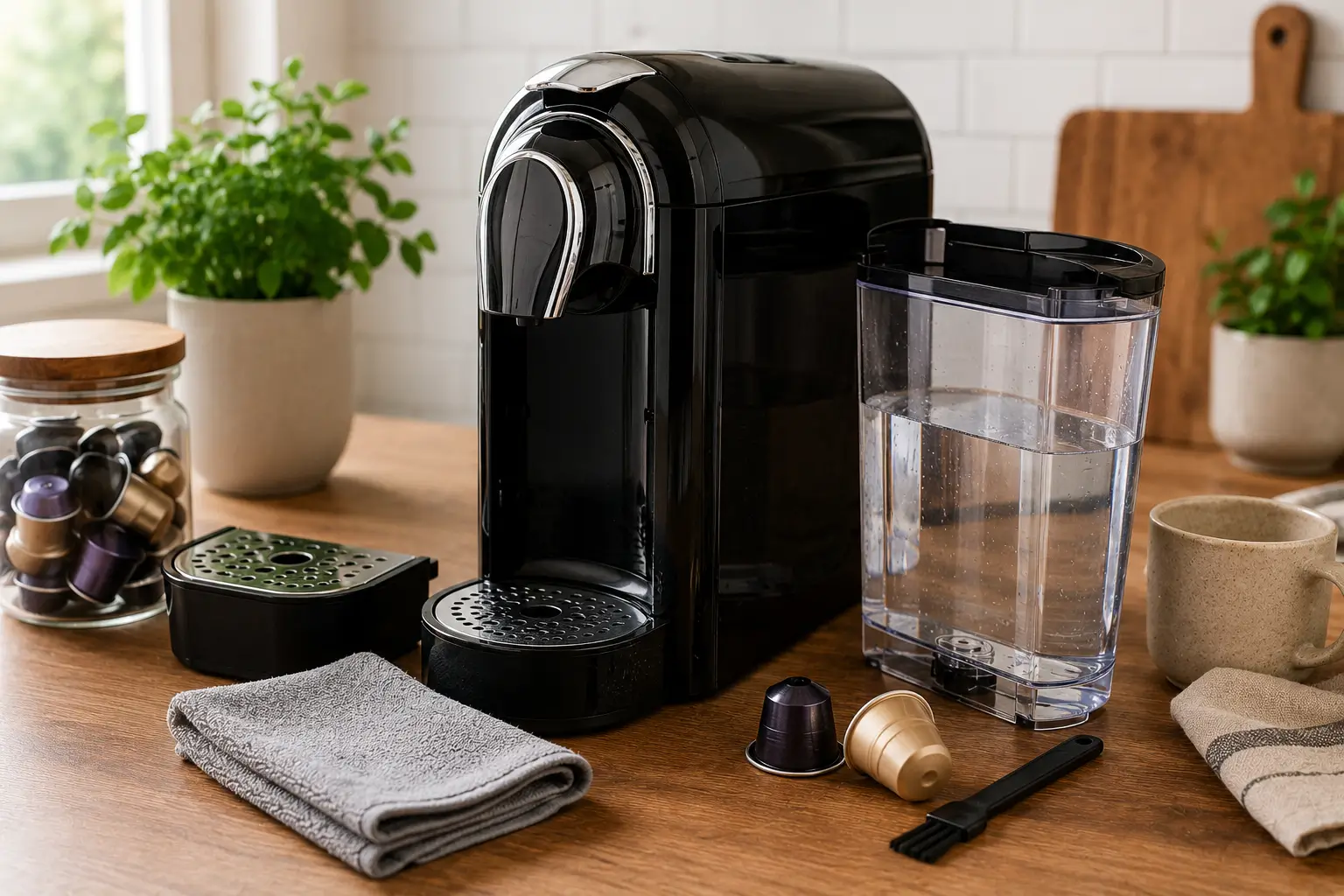
When I bought my first coffee pod machine, I focused mainly on making coffee and rarely thought about cleaning it. After a few months, I noticed the coffee tasted different, the machine became noisier, and brewing seemed slower than before. At first, I assumed the machine was getting old. Later, I discovered that mineral deposits, coffee oils, and leftover residue were affecting its performance.
Over the years, I have used several coffee machines, including coffee pod systems, single-serve brewers, and espresso machines. One lesson became clear very quickly: regular machine cleaning and maintenance can make a huge difference. A well-maintained machine produces better-tasting coffee, experiences fewer problems, and often lasts much longer.
In this guide, you will learn how to clean and maintain your coffee machine, prevent common issues, and keep your brewer performing at its best.
Why Coffee Machine Cleaning and Maintenance Matters?
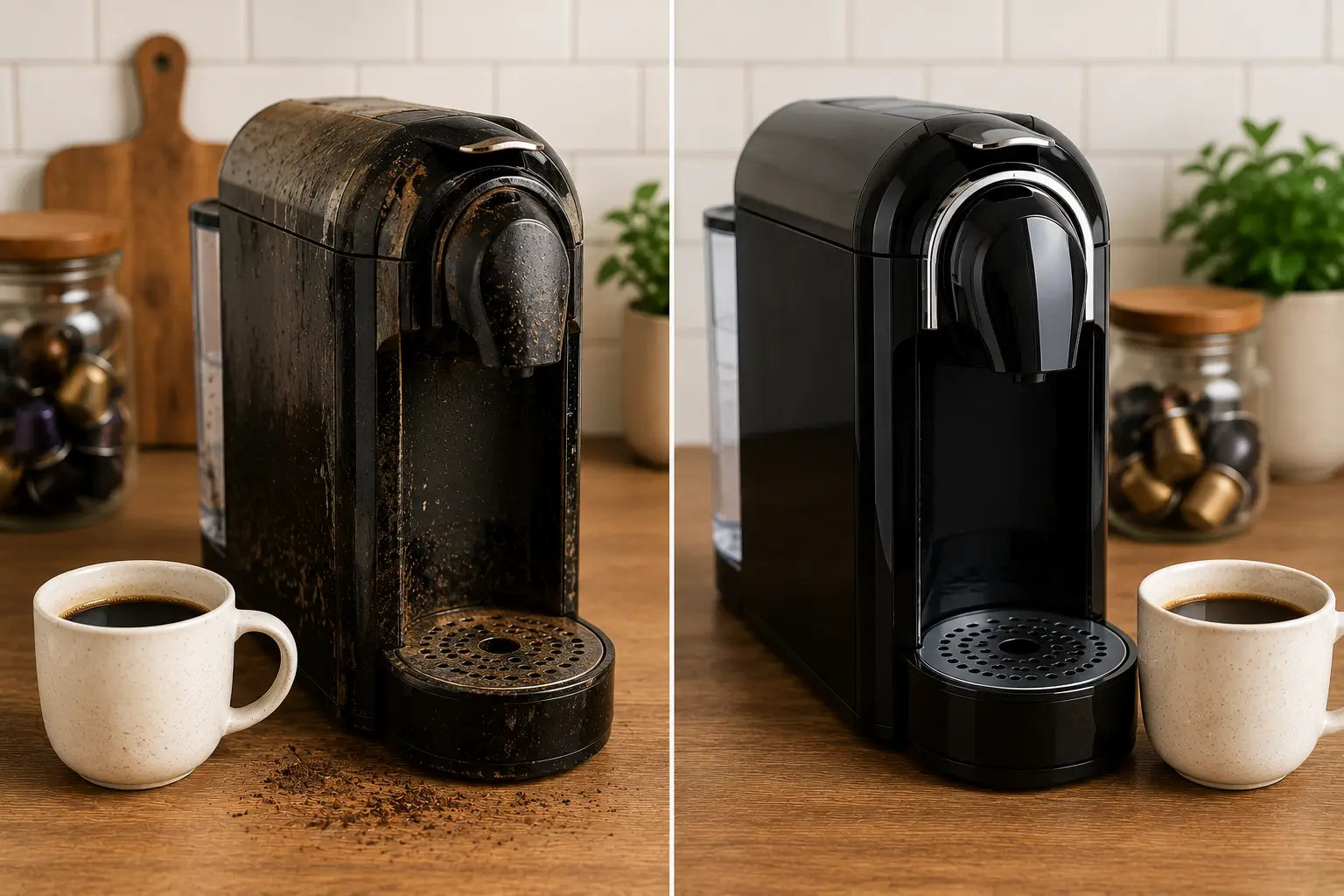
Many coffee drinkers only clean their machine when a problem appears. However, regular maintenance helps prevent those problems from happening in the first place.
Coffee machines are exposed to:
Coffee oils
Mineral deposits
Moisture
Water residue
Used coffee particles
Over time, these substances can build up inside the machine.
Regular coffee machine cleaning helps:
Improve Coffee Flavor
Old coffee oils can become stale and affect the taste of fresh coffee.
Prevent Machine Problems
Routine maintenance reduces the risk of blockages and brewing issues.
Extend Machine Lifespan
Clean machines generally experience less wear and tear over time.
Improve Brewing Performance
A clean machine often brews faster and more consistently.
Reduce Bacteria and Mold Growth
Moist environments can encourage bacteria and mold if parts are not cleaned regularly.
For most coffee machine owners, cleaning is one of the easiest ways to protect their investment.
Signs Your Coffee Machine Needs Cleaning
Many coffee machines show warning signs before performance starts to decline.
If you notice any of the following issues, it may be time for cleaning or descaling.
Slow Brewing
Water may take longer than usual to pass through the machine.
Weak Coffee Flavor
Buildup inside the system can affect extraction quality.
Strange Taste or Odor
Old coffee residue and mineral deposits can influence flavor.
Excessive Noise During Brewing
Scale buildup can make pumps work harder than normal.
Reduced Water Flow
Mineral deposits may restrict water movement through internal components.
Visible Residue
Coffee grounds, oils, or water stains often indicate cleaning is needed.
Addressing these signs early can help avoid larger maintenance problems later.
Daily Coffee Machine Cleaning Tasks
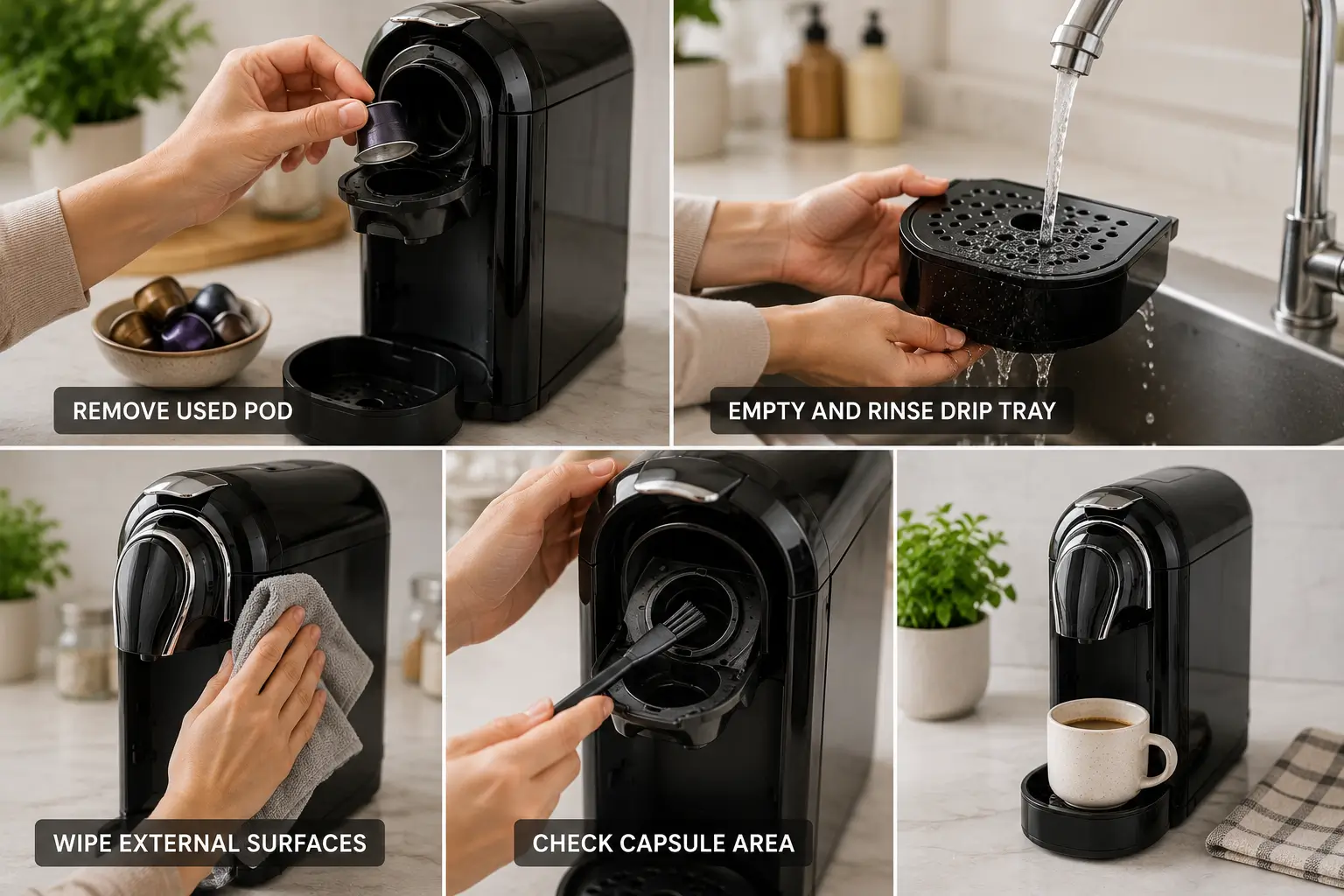
Daily maintenance only takes a few minutes and helps keep your machine in good condition.
Empty Used Coffee Pods
Remove used capsules after brewing to prevent residue buildup.
Rinse Reusable Coffee Pods
If you use reusable coffee pods, rinse them immediately after use.
Empty the Drip Tray
Drip trays collect excess water and coffee. Emptying them daily helps prevent odors and mold growth.
Wipe External Surfaces
Use a soft damp cloth to remove coffee splashes and fingerprints.
Check the Capsule Area
Inspect the capsule holder for leftover coffee particles.
These simple tasks help prevent larger cleaning jobs later.
Weekly Cleaning Routine
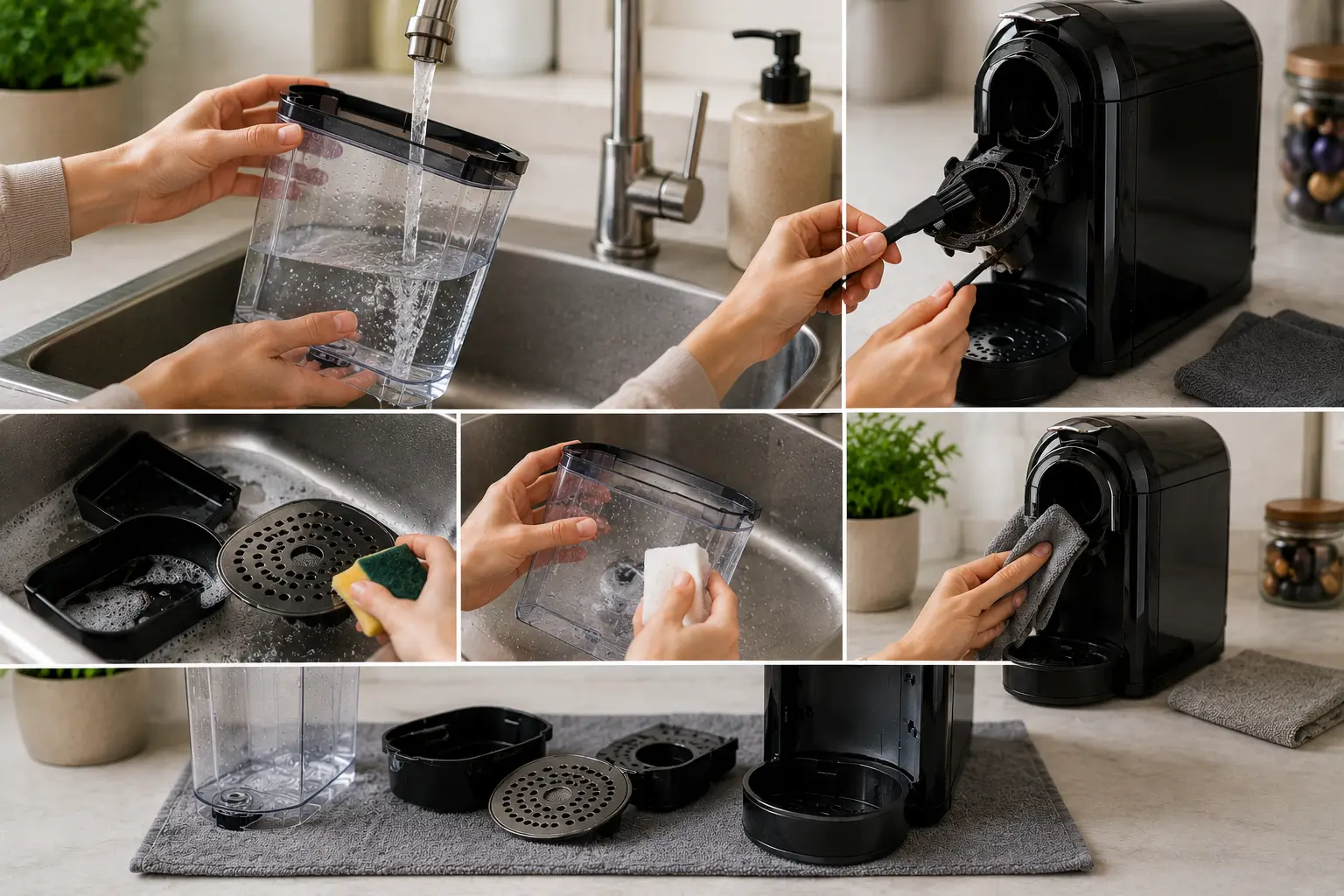
A weekly cleaning routine helps remove buildup that daily cleaning may miss.
Clean the Water Reservoir
Empty the water tank and wash it with warm water and mild soap.
Rinse thoroughly before refilling.
Clean the Capsule Holder
Coffee oils and residue can collect around the capsule chamber.
Use a soft brush or cloth to clean hard-to-reach areas.
Wash Removable Components
Many machines have removable parts such as:
Drip trays
Capsule holders
Water tanks
Cleaning these parts regularly improves hygiene and performance.
Run a Water-Only Brew Cycle
Running a brew cycle without coffee helps flush loose residue from internal pathways.
Monthly Deep Cleaning Checklist
Monthly maintenance provides a deeper level of care.
Inspect for Mineral Deposits
Check for white or chalky buildup around water contact areas.
Clean Hard-to-Reach Areas
Use a soft brush to remove hidden coffee residue.
Inspect Reusable Coffee Pods
Check mesh filters for clogs or damage.
Check Machine Performance
Monitor:
Brewing speed
Water flow
Coffee temperature
Unusual sounds
Prepare for Descaling
Many coffee machines benefit from descaling every few months, depending on water hardness and usage frequency.
Monthly inspections can help identify problems before they become expensive repairs.
Key Takeaways
Regular machine cleaning improves coffee quality and performance.
Coffee oils and mineral deposits build up over time.
Daily cleaning helps prevent residue accumulation.
Weekly maintenance keeps key components hygienic.
Monthly inspections
Cleaning the Capsule Holder
The capsule holder is one of the most frequently used parts of a coffee pod machine.
Every time you brew coffee, small amounts of coffee residue and oils can collect inside the holder. If left untreated, this buildup may affect coffee flavor and machine performance.
How to Clean the Capsule Holder?
Turn off and unplug the machine.
Remove the capsule holder if possible.
Rinse it with warm water.
Use a soft brush to remove coffee particles.
Dry thoroughly before reinstalling.
Why This Matters?
A clean capsule holder helps:
Improve coffee flavor.
Reduce residue buildup.
Maintain proper brewing performance.
Weekly cleaning is usually sufficient for most users.
Cleaning the Water Reservoir
The water reservoir stores the water used during brewing.
Because it remains moist, it can develop mineral deposits, bacteria, and unpleasant odors if not cleaned regularly.
How to Clean the Water Reservoir
Empty the tank completely.
Wash it with warm water and mild dish soap.
Use a soft sponge to clean interior surfaces.
Rinse thoroughly.
Allow it to air dry before refilling.
Additional Tips
Use fresh water daily.
Avoid leaving water in the tank for extended periods.
Inspect for discoloration or residue.
Regular reservoir cleaning helps improve both hygiene and coffee taste.
Cleaning the Drip Tray
The drip tray collects excess water, coffee drips, and condensation.
Because it often stays wet, it can become a source of odors and mold growth.
How to Clean the Drip Tray
Remove the tray.
Empty any liquid.
Wash with warm soapy water.
Rinse thoroughly.
Dry completely before placing it back.
How Often Should You Clean It?
For most coffee drinkers:
Empty daily.
Wash thoroughly at least once per week.
Cleaning External Surfaces
Many people focus on internal cleaning and forget about the outside of the machine.
Coffee splashes, fingerprints, dust, and water spots can accumulate over time.
Cleaning Steps
Use a soft microfiber cloth.
Dampen it slightly with water.
Wipe all external surfaces.
Dry with a clean cloth.
Avoid
Abrasive cleaners.
Harsh chemicals.
Rough scrubbing pads.
These products may damage machine finishes.
How to Descale a Coffee Machine?
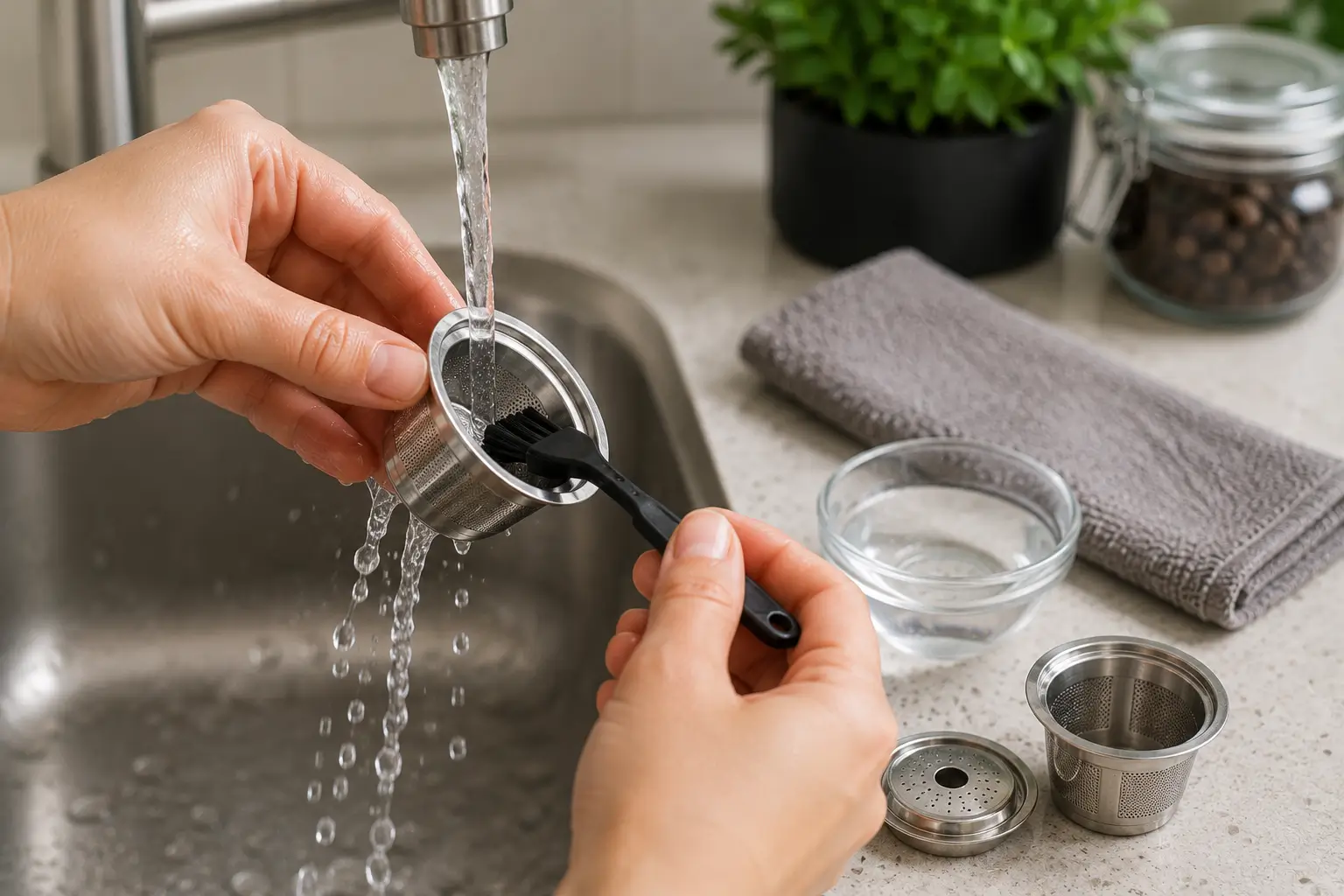
Descaling removes mineral deposits that build up inside the machine from hard water.
Over time, scale buildup can:
Slow water flow.
Affect brewing temperature.
Increase machine noise.
Reduce machine lifespan.
Basic Descaling Process
Empty the water reservoir.
Add descaling solution according to instructions.
Run the descaling cycle.
Flush the machine with clean water.
Repeat rinsing if necessary.
Always consult the manufacturer’s instructions before descaling.
How Often Should You Descale?
Frequency depends on:
Water hardness.
Machine usage.
Manufacturer recommendations.
Many coffee machine owners descale every 2 to 3 months.
Vinegar vs Commercial Descaling Solutions
Many users wonder whether vinegar can replace commercial descaling products.
Both options have advantages and disadvantages.
Vinegar
Benefits
Inexpensive.
Easy to find.
Effective at removing some mineral buildup.
Drawbacks
Strong odor.
May leave a lingering taste.
Some manufacturers discourage its use.
Commercial Descaling Solutions
Benefits
Designed specifically for coffee machines.
Effective at removing scale.
Usually leave less residue.
Drawbacks
Higher cost.
Must be purchased separately.
Which Option Is Better?
Commercial descaling solutions are generally the safest choice because they are designed for coffee machine maintenance.
However, many users successfully use vinegar when following manufacturer guidelines.
Nespresso Machine Cleaning Guide
Nespresso machines are known for convenience, but regular maintenance is still important.
Coffee oils, mineral deposits, and capsule residue can affect performance over time.
Daily Nespresso Cleaning
Remove used capsules after brewing.
Empty the drip tray.
Rinse the water tank if needed.
Wipe external surfaces.
Weekly Nespresso Cleaning
Wash the water reservoir.
Clean the capsule container.
Rinse removable parts.
Run a water-only brewing cycle.
Nespresso Descaling
Most Nespresso machines should be descaled every few months depending on water hardness and usage.
Always follow the descaling instructions provided for your specific model.
Signs Your Nespresso Machine Needs Cleaning
Slower brewing.
Reduced coffee temperature.
Unusual noises.
Warning lights.
Weak coffee flavor.
Regular cleaning helps maintain consistent coffee quality and machine performance.
Keurig Machine Cleaning Guide
Keurig machines also require routine maintenance to operate efficiently.
Mineral deposits and coffee residue can build up inside the brewer.
Daily Keurig Cleaning
Remove used K-Cups.
Empty excess water from the drip tray.
Wipe down machine surfaces.
Weekly Keurig Cleaning
Wash the water reservoir.
Clean the pod holder.
Rinse removable components.
Run a water-only cycle.
Keurig Descaling
Many Keurig owners descale their machines every 3 months, although frequency depends on water quality and usage.
Signs Your Keurig Needs Maintenance
Brewing takes longer.
Water flow becomes inconsistent.
Coffee tastes unusual.
Error messages appear.
Routine cleaning helps keep brewing performance consistent.
Cleaning Reusable Coffee Pods
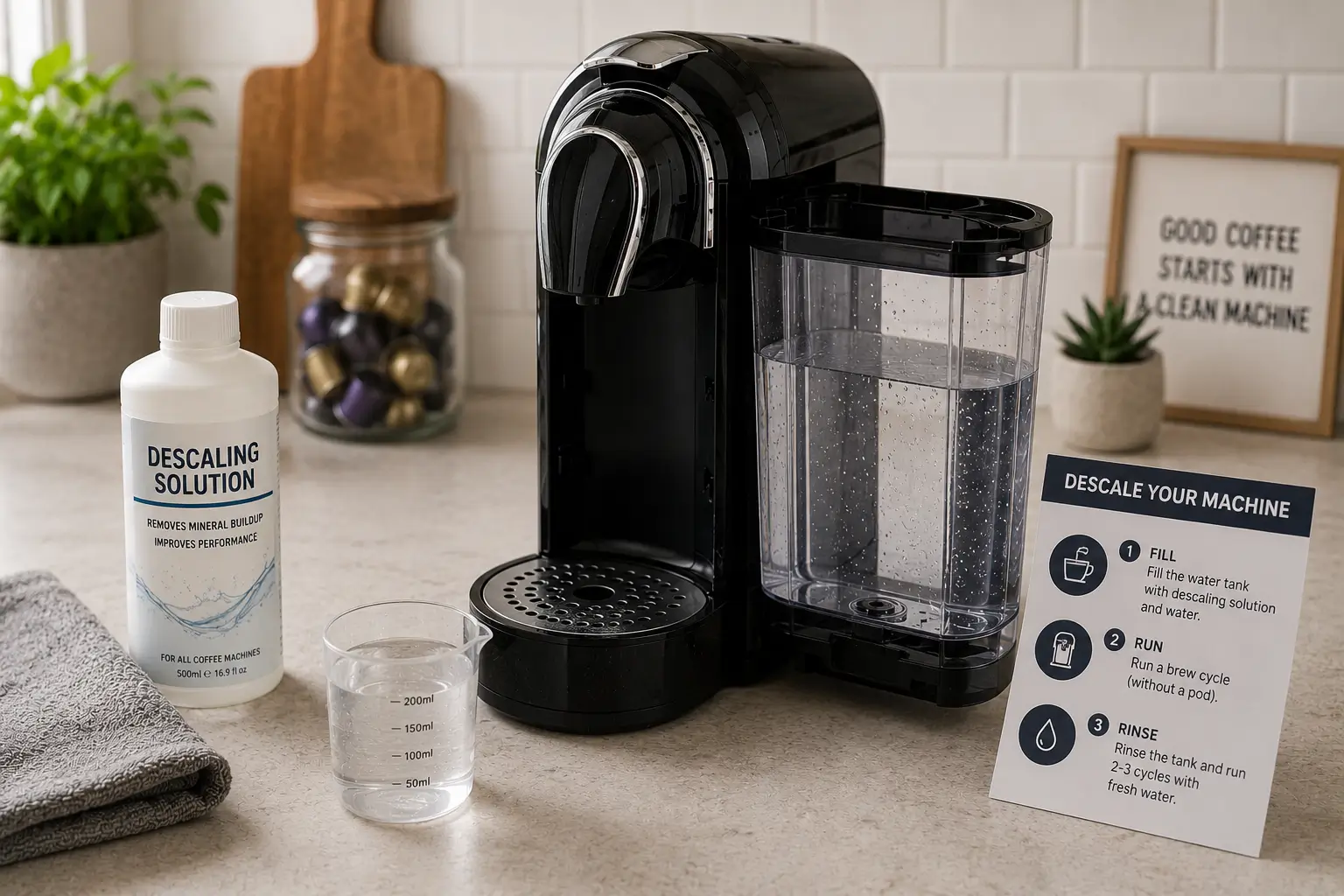
Reusable coffee pods require extra attention because they are used repeatedly.
Coffee oils and fine particles can become trapped inside filters and mesh screens.
Cleaning After Every Use
Empty used coffee grounds.
Rinse immediately with warm water.
Remove visible residue.
Allow the pod to dry completely.
Weekly Deep Cleaning
For reusable stainless steel pods:
Soak in warm water.
Use a soft brush to clean mesh filters.
Remove any blocked particles.
Why Cleaning Matters
Regular cleaning helps:
Improve coffee flavor.
Prevent filter blockages.
Extend pod lifespan.
Maintain proper water flow.
Neglecting reusable pod maintenance can lead to weak extraction and inconsistent brewing.
Hard Water and Scale Buildup
Hard water contains naturally occurring minerals such as calcium and magnesium.
As water passes through your coffee machine, these minerals can accumulate inside internal components.
Signs of Scale Buildup
Slower brewing cycles.
Reduced water flow.
Excessive machine noise.
Lower brewing temperatures.
How to Reduce Scale Buildup
Descale regularly.
Use filtered water when possible.
Follow maintenance schedules.
Monitor machine performance.
Hard water is one of the most common causes of coffee machine problems.
Mold and Bacteria Prevention
Coffee machines contain moisture, warmth, and water reservoirs, which can create conditions for mold and bacteria growth.
Fortunately, prevention is usually simple.
Empty Standing Water
Avoid leaving water in the reservoir for extended periods.
Clean Removable Parts Regularly
Water tanks, drip trays, and capsule holders should be cleaned frequently.
Dry Components Properly
Allow washed parts to dry before reinstalling them.
Store the Machine Correctly
Keep the machine in a clean and well-ventilated area.
Watch for Warning Signs
Look for:
Musty odors.
Visible residue.
Discoloration.
Unusual tastes.
Addressing these issues early helps maintain machine hygiene.
Coffee Machine Maintenance Schedule
Following a maintenance schedule makes cleaning easier and helps prevent major problems.
| Maintenance Task | Recommended Frequency |
|---|---|
| Remove Used Pods | Daily |
| Empty Drip Tray | Daily |
| Wipe External Surfaces | Daily |
| Rinse Reusable Pods | After Every Use |
| Clean Water Reservoir | Weekly |
| Clean Capsule Holder | Weekly |
| Run Water-Only Cycle | Weekly |
| Deep Clean Machine | Monthly |
| Inspect for Scale Buildup | Monthly |
| Descale Machine | Every 2-3 Months |
This schedule provides a simple routine for most coffee pod machine owners.
Common Coffee Machine Problems and Solutions
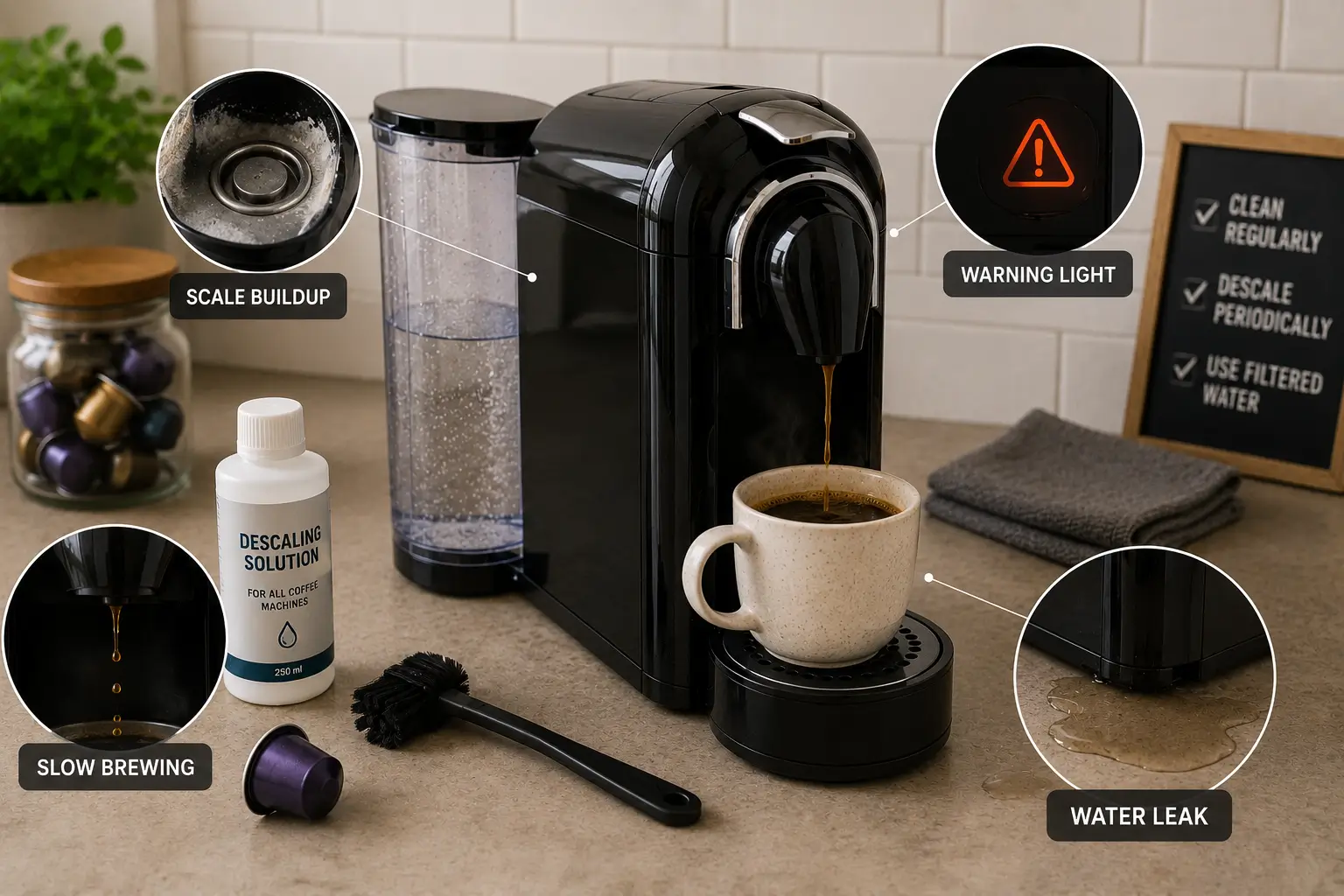
Even well-maintained coffee machines can experience occasional problems. The good news is that many issues have simple solutions.
Machine Is Brewing Slowly
Possible Causes
Scale buildup
Clogged water lines
Dirty internal components
Solution
Descale the machine.
Run a cleaning cycle.
Check the water reservoir and capsule holder.
Coffee Tastes Weak
Possible Causes
Dirty machine components
Clogged reusable pods
Old coffee residue
Solution
Clean the capsule holder.
Wash reusable coffee pods.
Run a water-only cycle.
Strange Taste or Odor
Possible Causes
Coffee oil buildup
Stale water
Dirty reservoir
Solution
Clean the water tank.
Replace standing water.
Deep clean removable parts.
Water Flow Is Restricted
Possible Causes
Mineral deposits
Blocked pod chamber
Scale buildup
Solution
Descale the machine.
Clean the capsule holder.
Inspect reusable pod filters.
Machine Leaks Water
Possible Causes
Improperly installed reservoir
Damaged seals
Overfilled drip tray
Solution
Check component placement.
Empty the drip tray.
Inspect for worn parts.
Tips to Extend Coffee Machine Lifespan
A quality coffee machine can last many years when properly maintained.
Follow a Cleaning Schedule
Routine cleaning prevents residue and mineral buildup.
Descale Regularly
Removing scale helps protect internal components and water pathways.
Use Clean Water
Filtered water may reduce mineral deposits and improve coffee flavor.
Empty Used Pods Promptly
Leaving used capsules inside the machine can increase residue accumulation.
Clean Reusable Coffee Pods Thoroughly
Blocked filters may affect brewing performance and place extra strain on the machine.
Avoid Ignoring Warning Signs
Address slow brewing, unusual sounds, and taste changes early.
Store the Machine Properly
Keep the machine in a dry and clean environment.
Frequently Asked Questions
Basic cleaning should be performed daily and weekly. Deep cleaning and descaling are usually recommended every few months.
Most manufacturers recommend descaling every 2 to 3 months, although this depends on water hardness and machine usage.
Some machines can be cleaned with vinegar, but many manufacturers recommend using approved descaling solutions. Always check your machine’s manual.
Slow brewing is often caused by scale buildup, clogged components, or dirty internal pathways.
Rinse reusable pods after every use and deep clean them weekly to remove trapped coffee particles and oils.
Hard water can create mineral deposits that reduce efficiency and increase wear on machine components.
Many coffee machines can last several years when properly cleaned and maintained.
Coffee oils, mineral deposits, stale water, and dirty components can all affect flavor.
Conclusion
In short, machine cleaning and maintenance play an important role in coffee quality, machine performance, and long-term reliability. When I first started using coffee pod machines, I underestimated how important regular maintenance could be. Like many coffee drinkers, I focused on the coffee itself and ignored the machine until problems appeared. Once I started following a simple cleaning schedule, I noticed immediate improvements in flavor, brewing speed, and overall machine performance. From my experience, consistency is the key. A few minutes of maintenance each week can help keep your coffee machine running smoothly for years.