


Coffee Pod Calories and Nutrition: Calories, Sugar & Ingredients

Most plain black coffee pods contain ↗ very few calories, but nutrition can change when a pod includes milk powder, sugar, sweeteners, cocoa, or other added ingredients.
This guide explains coffee pod calories, sugar, carbohydrates, ingredients, flavored pod nutrition, and K-Cup calories. For exact values, always check the nutrition label because recipes vary by brand and product.
Key Takeaways
How Many Calories Are in Coffee Pods?

| Pod Type | Typical Nutrition Pattern |
|---|---|
| Plain black coffee pod | Very low calorie |
| Espresso pod | Very low calorie |
| Unsweetened flavored coffee pod | Usually low calorie |
| Sweetened flavored pod | Can contain more calories and sugar |
| Latte or cappuccino pod | Usually higher due to milk/sweeteners |
| Hot chocolate/specialty pod | Can be much higher |
Most plain coffee pods contain very few calories.
Black coffee brewed from coffee pods usually contains:
Very low calories
No significant fat
Minimal carbohydrates
Little or no sugar
The exact nutrition values depend on:
Coffee brand
Roast type
Flavoring ingredients
Serving size
In general, regular black coffee pods are considered low-calorie beverages.
For brand-specific information, see our Nespresso pod calories guide ↗.
Coffee Pod Nutrition Facts

Coffee pods contain more than just caffeine. Their nutrition profile may include:
Plain black coffee pods typically contain very small amounts of these nutrients.
However, nutrition values can increase when pods contain added ingredients or when extra milk and sweeteners are used.
Common Ingredients Found in Coffee Pods
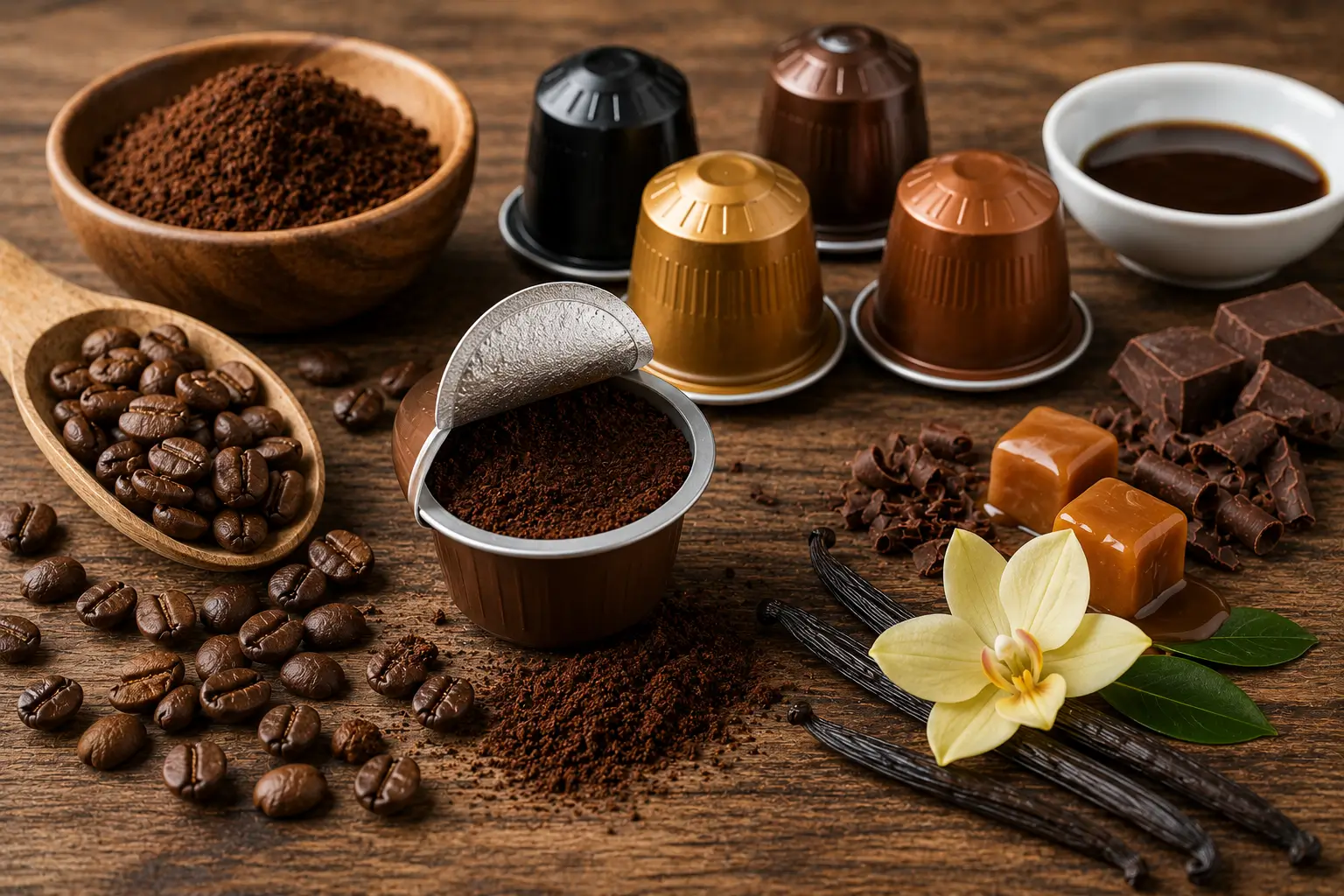
Most coffee pods contain:
Ground coffee
Natural flavors
Artificial flavors (in some flavored pods)
Specialty pods may also contain:
Milk powder
Cocoa ingredients
Sweeteners
Flavor extracts
Most plain coffee pods mainly contain roasted ground coffee. Depending on the product, flavored or specialty pods may also contain flavorings, milk powder, cocoa, sugar, sweeteners, or other ingredients.
Do Flavored Coffee Pods Contain More Calories?

Flavored does not automatically mean sweetened. Some flavored black coffee pods use flavoring without adding meaningful sugar, while latte, mocha, and dessert-style pods may contain added ingredients that increase calories.
Flavored coffee pods may contain slightly different nutrition values depending on the ingredients used.
Popular flavors include:
Many flavored coffee pods still contain very few calories because the flavor often comes from oils and extracts rather than sugar. In most cases, the calories in flavored coffee pods remain low compared to sweetened coffee drinks.
However, specialty drinks and dessert-style pods may contain additional ingredients that increase calorie counts.
If you enjoy flavored coffee, you may also like:
Do Keurig K-Cup Pods Have Calories?

Plain coffee K-Cups are generally very low in calories. Calories can increase when the pod contains milk, sweeteners, cocoa, or other added ingredients. Check the package for exact nutrition values.
K-Cups
Regular K-Cups usually provide:
Very low calories
Little or no sugar
Minimal fat
Small amounts of carbohydrates
What Increases Calories in Pod Coffee?
Coffee itself is naturally low in calories. However, many people add ingredients that increase the nutritional value.
Common calorie boosters include:
A plain black coffee pod may remain low in calories, while specialty drinks can contain much more.
How to Choose a Lower-Calorie Coffee Pod?

Choose a pod that mainly contains ground coffee and has little or no added sugar, milk powder, or sweeteners. Plain black coffee and espresso pods are usually simpler choices than latte or dessert-style capsules.
Coffee Pods Calories Chart
The exact nutrition values vary by brand and ingredients, but this table shows general differences between common coffee pod types.
Actual nutrition facts depend on the manufacturer and recipe.
Frequently Asked Questions
Most regular coffee pods contain little or no sugar. Some flavored and specialty pods may contain sweeteners or additional ingredients.
Plain black coffee pods are generally considered keto-friendly because they contain very few carbohydrates.
Most plain black coffee pods contain 0 to 5 calories per serving. Flavored pods without added sugar are also usually very low in calories. The calorie count increases when you add milk, cream, sugar, or flavored syrups. Always check the packaging for exact nutrition information.
Black coffee pods, light roast coffee pods, medium roast coffee pods, and single-origin coffee pods are usually among the lowest-calorie options.
Some flavored coffee pods contain small amounts of carbohydrates depending on the ingredients used.
Plain coffee pods can fit into many weight-loss plans because they are naturally low in calories. However, extra sugar and cream can increase calorie intake.
Regular K-Cups are naturally low in calories. Nutrition values may change depending on the beverage type and added ingredients.
How We Research Coffee Pod Nutrition?

At CoffeePodH, we focus on explaining coffee topics in a simple and practical way. Our guides are written for everyday coffee drinkers who want clear answers without complicated nutrition language.
When evaluating coffee pod nutrition, we look at:
Ingredients
Calories
Sugar content
Carbohydrates
Added flavorings
Brewing methods
Our goal is to help readers make informed decisions based on realistic coffee habits.
Final Thoughts
In short, When I first started using coffee pod machines ↗, I assumed every coffee pod had the same nutrition facts. After trying regular coffee pods, flavored varieties, and specialty drinks from different brands, I learned that the biggest nutritional differences usually come from added milk, cream, and sweeteners rather than the coffee itself. In my experience, plain black coffee pods remain one of the easiest low-calorie beverage choices for daily use. At CoffeePodH, we believe understanding calories and ingredients helps coffee lovers enjoy their favorite drinks while making choices that fit their personal health goals ↗. Small changes in what you add to your coffee can often make a bigger difference than the coffee pod itself.
Medical Disclaimer
Important Health Information
This article is provided for general information and educational purposes only. It is not medical advice and should not be used to diagnose, treat, prevent, or manage any health condition.
Caffeine affects people differently based on age, health, medicines, pregnancy, sensitivity, and total daily intake.
Speak with a qualified healthcare professional if you have ongoing symptoms, a medical condition, take regular medication, are pregnant or breastfeeding, or are concerned about your caffeine intake.