
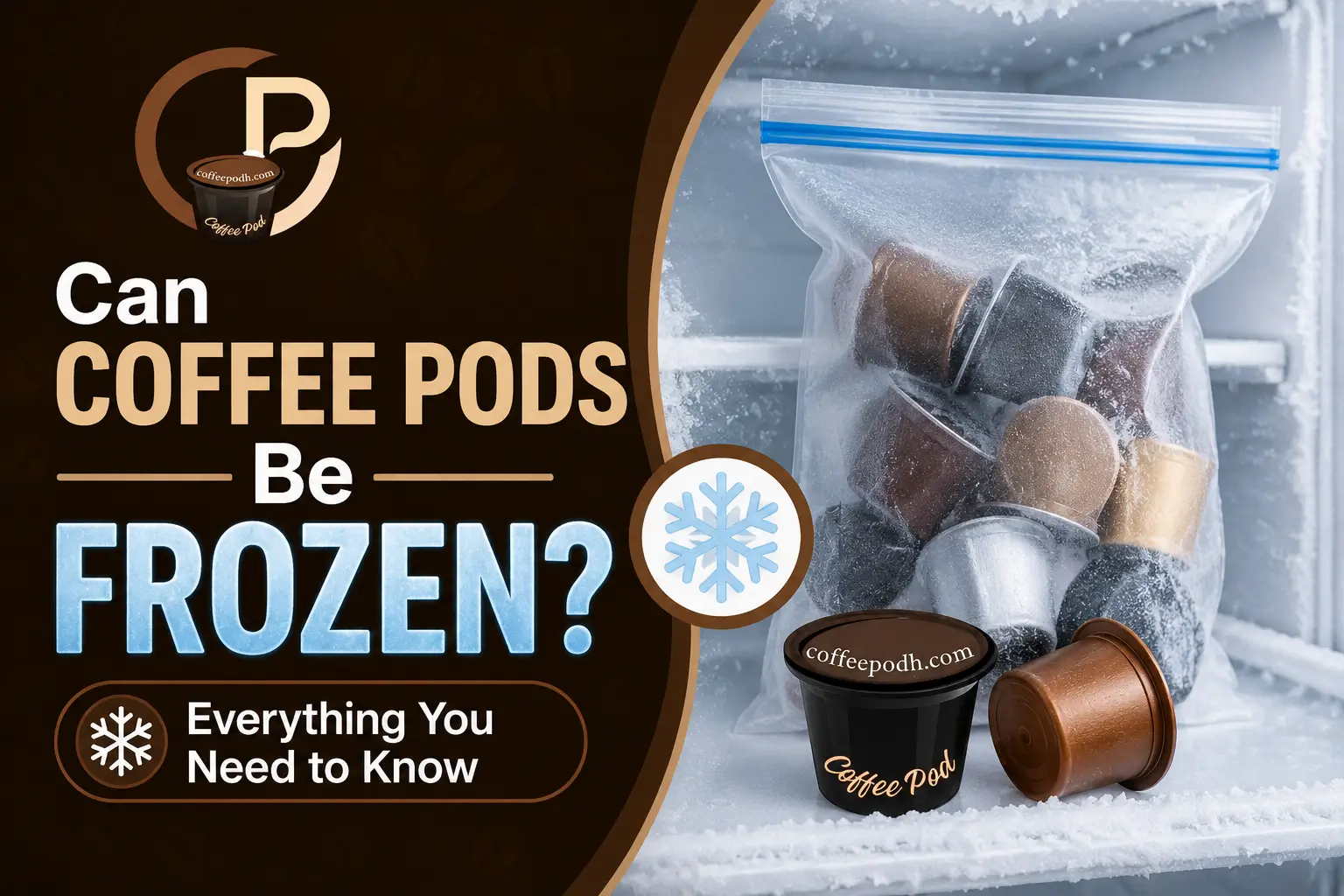
Can You Freeze Coffee Pods?
Regular sealed coffee pods usually do not need to be frozen. Most pod manufacturers recommend storing capsules ↗ in a cool, dry place away from heat, sunlight, and moisture. The sealed capsule is already designed to protect the coffee during normal storage.
Freezing can create an extra moisture risk when a very cold pod is moved into warm, humid air. Condensation can form on the capsule or packaging, especially if the pod is repeatedly taken in and out of the freezer. For that reason, normal cupboard storage is the simpler option for Nespresso, K-Cup, and similar sealed coffee pods.
Best storage: Keep unused coffee pods sealed, dry, and away from ovens, kettles, steam, direct sunlight, and other warm or humid areas.
What If You Already Froze Coffee Pods?
If sealed pods have already been frozen, avoid opening or puncturing them while they are still very cold. Let the unopened pods return to room temperature in a dry place before brewing. Discard any capsule that is damaged, wet, swollen, leaking, or has a broken seal.
Are Frozen-Coffee Capsules Different?
Yes. Some specialty coffee products are specifically manufactured and sold as frozen coffee. Those products are designed for freezer storage and are different from normal dry coffee pods or capsules. Always follow the storage instructions for the exact product you buy.