
Antioxidants in Coffee Pods: Roast, Decaf & Brewing

Yes. Coffee pods contain compounds with antioxidant activity because they contain roasted coffee. Important examples include chlorogenic acids and other phenolic compounds. Roasting also creates melanoidins, a group of brown Maillard-reaction compounds that contribute to coffee ↗ color, flavor and antioxidant activity.
The amount in your cup is not fixed. Bean species, roast level, coffee dose, capsule design, brewing volume and extraction all change the final chemical profile.
There is also an important health distinction: showing antioxidant activity in a laboratory test does not prove that one pod prevents disease or is “healthier” than another. What happens after digestion, absorption and metabolism is more complex than an antioxidant score measured in a test tube.
Important Note
This article explains coffee chemistry and nutrition evidence. It does not claim that coffee pods prevent, treat or cure disease. Antioxidant activity is one property of coffee, not a complete measure of health value.
Key Takeaways
- Coffee pods contain chlorogenic acids, other phenolics and roasting-derived melanoidins.
- Single-dose capsule espresso has been directly measured to contain chlorogenic acids and antioxidant activity.
- 5-caffeoylquinic acid (5-CQA) is commonly one of the major chlorogenic acids measured in brewed capsule coffee.
- Progressively darker roasting generally reduces chlorogenic acids, but roasting also forms melanoidins and other new compounds.
- Decaf still contains polyphenols and other coffee compounds, but decaffeination can change their concentrations.
- Robusta and Arabica differ in chemistry; species alone does not tell you which finished pod is “healthier.”
- Brewing method and extraction affect the amount and mix of compounds that reach the cup.
- More antioxidant activity in a lab test does not automatically mean greater health benefit in a person.
Quick Answer
Yes, brewed coffee from pods contains antioxidant-active compounds. Chlorogenic acids are important examples, and roasting creates melanoidins with antioxidant properties. The exact amount depends on the coffee and brewing conditions, so a K-Cup, Nespresso capsule or other pod should not be assigned one universal “antioxidant score.”
What Are Antioxidants?
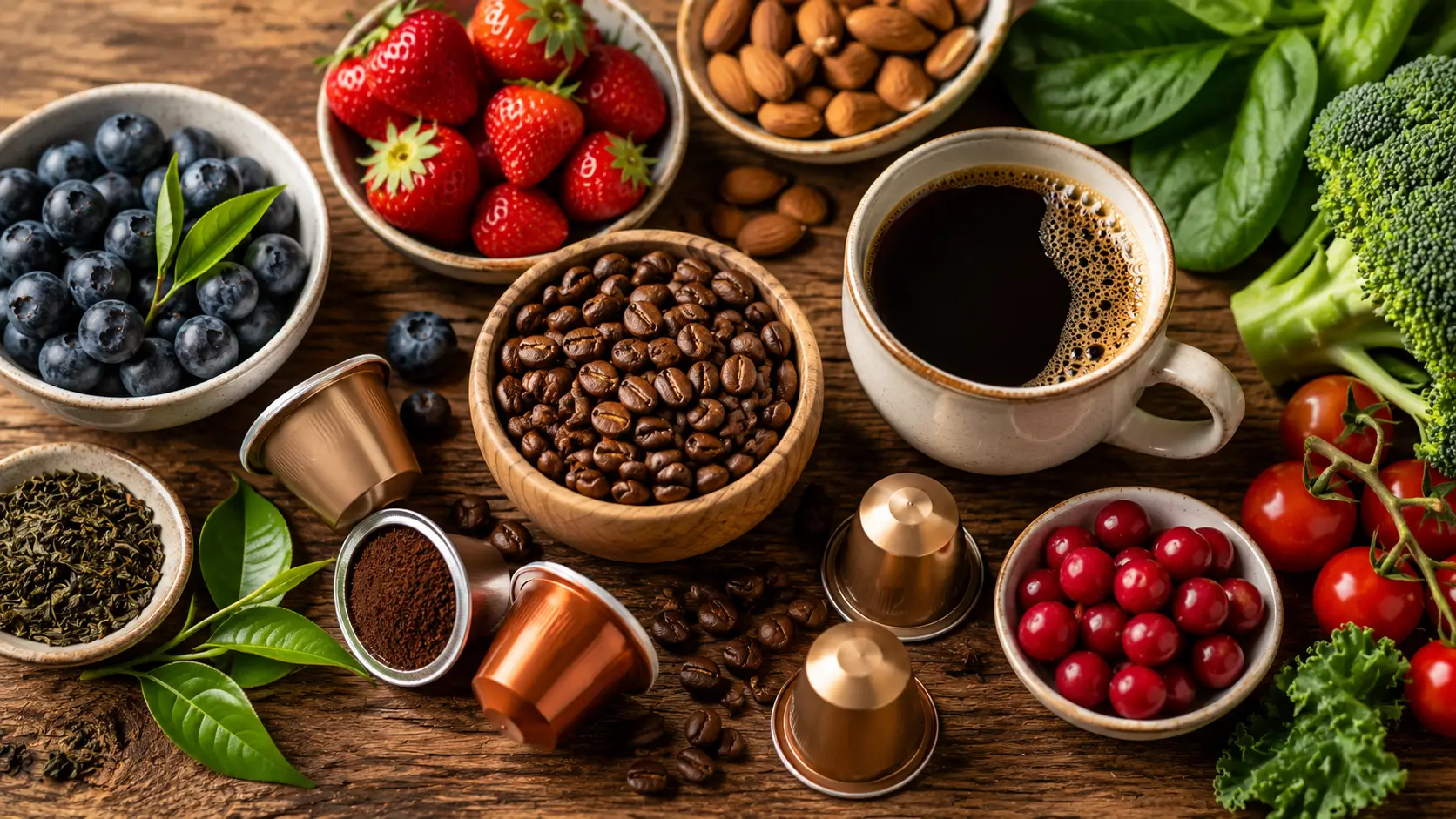
Antioxidants are compounds that can react with oxidants or take part in systems that limit oxidative damage. In food science, researchers often measure antioxidant activity with laboratory assays such as DPPH, ABTS, ORAC or related methods.
These tests are useful for comparing chemical behavior, but they are not the same as measuring a clinical health outcome in a person.
Food-Chemistry Meaning
A compound can donate electrons, scavenge radicals or influence oxidation in a laboratory system.
Human-Health Meaning
The compound must survive digestion, be absorbed or metabolized, reach relevant tissues and produce a meaningful biological effect.
Why “High Antioxidants” Is Not a Medical Claim
A coffee can score highly in an in-vitro antioxidant assay without proving that drinking it prevents heart disease, cancer, diabetes or another condition. Those questions require human outcome evidence.
Do Coffee Pods Contain Antioxidants?
Yes. The pod format does not remove coffee’s bioactive compounds.
A study of 11 commercial espresso coffees made from single-dose capsules measured multiple chlorogenic acids in every sample. The researchers also measured antioxidant activity in the brewed espresso. Another study of 65 capsule-brewed coffees found substantial variation in caffeine, trigonelline, niacin and chlorogenic acids across products.
That is the useful conclusion: capsule coffee contains measurable bioactive compounds, but the amount varies greatly from one product to another.
| Factor | How It Can Change the Cup |
|---|---|
| Bean species / blend | Changes the starting concentrations of chlorogenic acids, caffeine and other compounds |
| Roast level | Reduces some original bean compounds while forming new roasting products |
| Coffee dose | More ground coffee can change the total amount available for extraction |
| Brewing volume | Changes concentration and extraction conditions |
| Extraction method | Changes which compounds and how much of them reach the beverage |
Which Antioxidant-Active Compounds Are Found in Coffee?
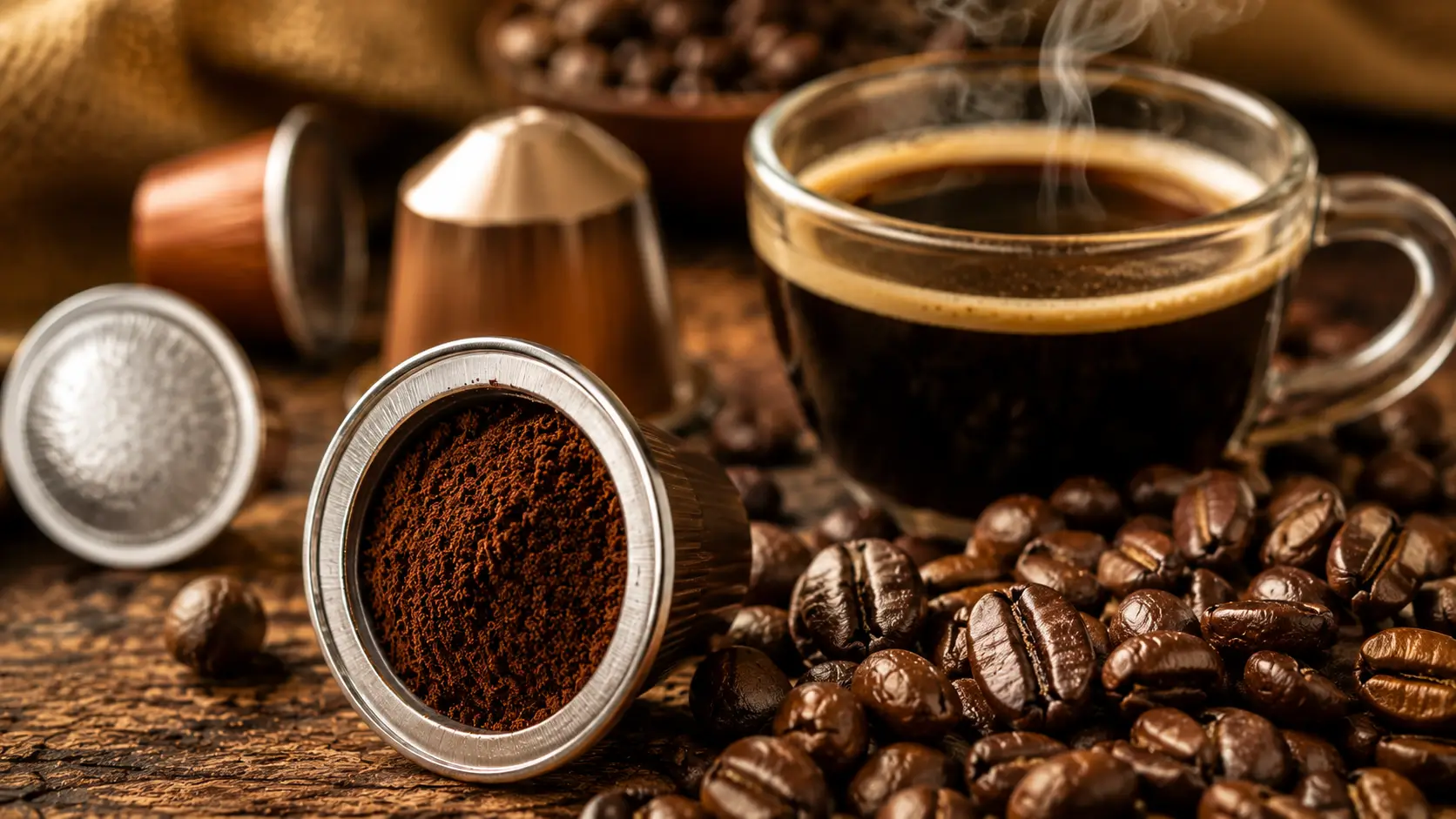
Coffee contains a large mixture of compounds. The main antioxidant-related groups usually discussed include:
- Chlorogenic acids (CGAs): a major family of coffee polyphenols.
- Caffeic and ferulic acid-related compounds: phenolic components related to coffee’s wider polyphenol profile.
- Melanoidins: brown high-molecular-weight compounds formed during roasting through Maillard reactions.
- Other phenolic compounds: present in smaller or product-dependent amounts.
- Trigonelline and roasting products: not simply “antioxidants,” but part of coffee’s wider bioactive chemistry.
It is more accurate to describe coffee as a complex bioactive mixture than to reduce it to one antioxidant molecule.
Chlorogenic Acids: The Main Polyphenol Group to Know
Chlorogenic acids are among the best-studied phenolic compounds in coffee. The term covers several related molecules rather than one single acid.
In the 11-capsule espresso study, researchers detected several caffeoylquinic acids, feruloylquinic acids, caffeoylshikimic acids and dicaffeoylquinic acids. 5-CQA was the major compound, followed by 4-CQA and 3-CQA.
In the larger 65-capsule study, caffeoylquinic acids ranged broadly across products, showing why one universal chlorogenic-acid number cannot be assigned to every pod.
Why Pod-to-Pod Variation Matters
Two capsules that both say “espresso” can use different beans, blends, roast levels and doses. Their chlorogenic-acid content can therefore differ even when the cup size looks similar.
What Are Coffee Melanoidins?
Melanoidins are brown, high-molecular-weight compounds formed during roasting through Maillard reactions between sugars, amino compounds and other coffee components.
A 2026 comprehensive review describes coffee as an important dietary source of melanoidins. These compounds contribute to brown color, roasted aroma, flavor, foam properties and antioxidant activity measured in laboratory systems.
This is why the simple idea that “roasting only destroys antioxidants” is incomplete. Roasting reduces some original compounds, especially chlorogenic acids, while also creating new compounds such as melanoidins.
Does Pod Brewing Destroy the Antioxidants?

No. Brewing extracts many soluble compounds from roasted coffee into water. That is how chlorogenic acids and other coffee components reach the drink.
But extraction is not identical across methods. A 2026 study comparing Americano, V60, French press and cold brew found significant differences in chlorogenic-acid composition, total phenolic content and measured antioxidant activity.
For capsule espresso specifically, published studies directly confirm that brewed single-dose capsule coffee contains chlorogenic acids and measurable antioxidant activity.
So the better question is not “does brewing destroy antioxidants?” It is which compounds are extracted, at what concentration, under that specific brewing method?
Light Roast vs Dark Roast: Which Has More Antioxidants?
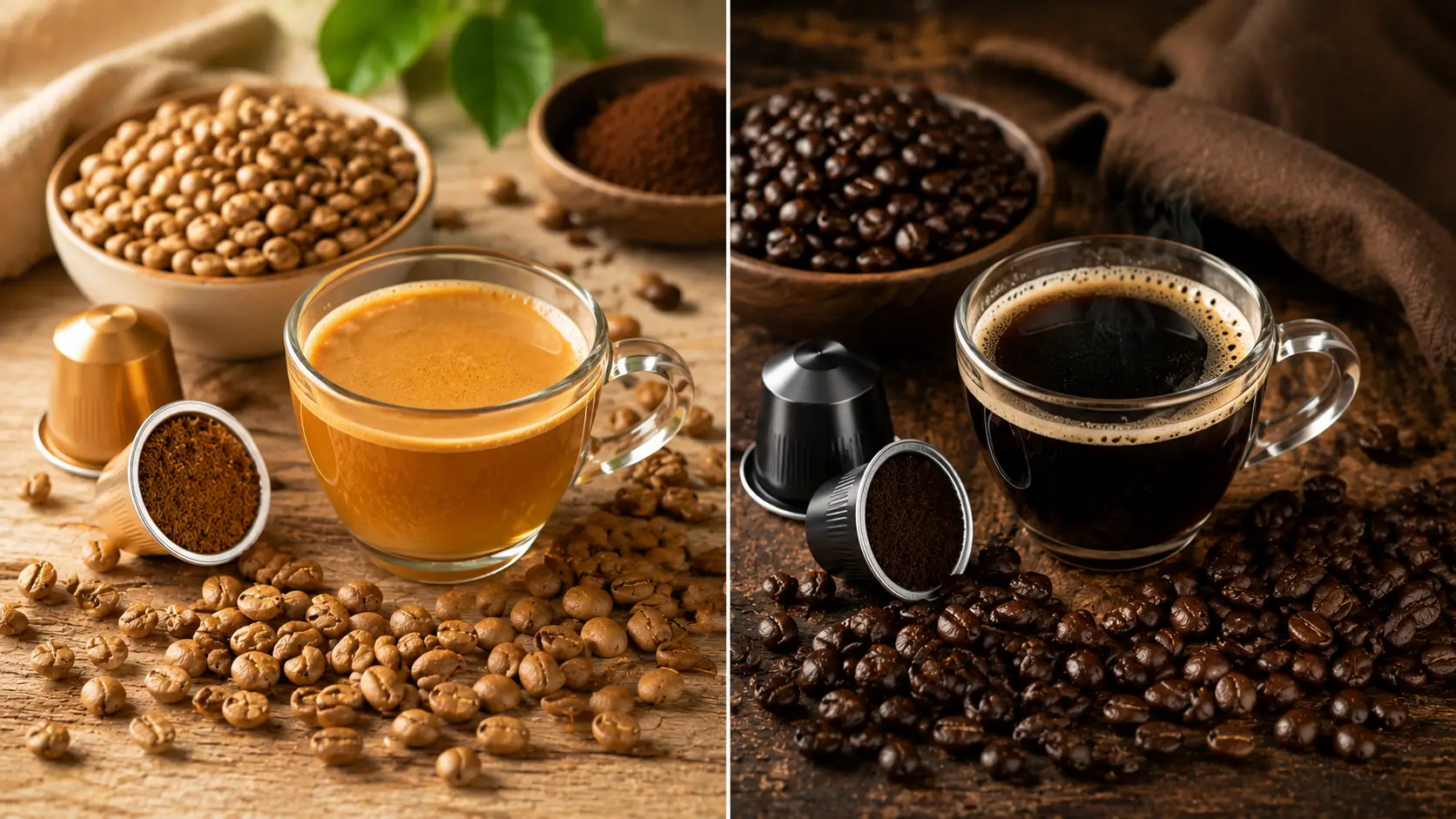
There is no useful one-word answer because roasting changes different antioxidant-related compounds in different directions.
| Roast Change | General Pattern | Why It Matters |
|---|---|---|
| Chlorogenic acids | Generally decline as roasting progresses | Light-to-medium roasts often retain more original CGAs |
| Melanoidins | Form and develop during roasting | Darker roasting creates more roasting-derived brown compounds |
| Flavor chemistry | Changes strongly with roast | Antioxidant composition cannot be separated from overall roasting chemistry |
| Lab antioxidant score | Depends on compounds and test method | One assay cannot define the “healthiest” roast |
A 2025 roasting study found several non-volatile compounds, including chlorogenic acids, were more abundant in light-to-medium roasts and declined significantly in dark roasts. A broad meta-analysis also found progressive roasting decreased chlorogenic acids across Arabica and Robusta.
However, dark roast still contains bioactive compounds, including melanoidins. Therefore, “light roast has antioxidants, dark roast does not” is false.
For roast selection, see Coffee Pods by Roast Type ↗.
Do Decaf Coffee Pods Still Contain Antioxidants?

Yes. Removing most caffeine does not remove every polyphenol or roasting-derived compound.
Decaf coffee still contains chlorogenic acids and other phenolic compounds, but the decaffeination process can change their concentrations. Recent research comparing regular and decaffeinated coffee has found changes in chlorogenic acids, trigonelline and other bioactive components after decaffeination.
Decaf Is Not “Antioxidant-Free”
It is accurate to say decaf still contains coffee polyphenols. It is not accurate to assume every decaf pod has exactly the same chlorogenic-acid or antioxidant profile as the regular version.
See Decaf Coffee Pods ↗.
Arabica vs Robusta: Which Has More Antioxidant Compounds?
Both Arabica and Robusta contain chlorogenic acids and other coffee compounds, but their starting chemistry differs.
A large review and meta-analysis of coffee acids found that roasted Robusta generally contained more total measured organic acids than Arabica. For chlorogenic acids, roast level was a stronger overall driver than species, although species still contributes to product-to-product differences.
Robusta also usually contains more caffeine than Arabica.
Arabica
Often used for sweeter, aromatic and specialty-style profiles. It still contains substantial chlorogenic acids and other bioactives.
Robusta
Usually higher in caffeine and chemically different in several acid fractions. It should not automatically be labeled “healthier” from one compound alone.
Does Nespresso Have More Antioxidants Than K-Cup Coffee?
There is not enough evidence to give either brewing system a universal antioxidant-health ranking.
Nespresso-style espresso capsules and K-Cup-style coffee can differ in coffee dose, bean blend, roast, grind, water volume, pressure and extraction time.
A capsule espresso may be more concentrated per milliliter, while a larger K-Cup serving may deliver more total beverage volume. Without measuring the actual products, saying one system “has more antioxidants” is too broad.
For the brewing-system comparison, see Nespresso vs Keurig ↗.
Does Cup Size Change Antioxidants in the Drink?
It can change both concentration and total extraction, but not in a perfectly linear way.
Adding more water to the same pod usually makes the drink less concentrated. At the same time, running more water through the coffee can extract additional soluble compounds until extraction becomes less efficient.
This means a 12 oz cup is not simply “three times the antioxidants” of a 4 oz cup from the same pod.
Concentration vs Total Amount
Concentration means how much compound is present per milliliter. Total amount means how much is present in the whole cup. A larger cup can be less concentrated while still containing a different total amount.
Do Flavored or Sweet Coffee Pods Still Have Antioxidants?
If the product contains real coffee, it can still contain coffee-derived chlorogenic acids, melanoidins and other compounds.
But this does not make every flavored coffee nutritionally equal.
| Product Type | Coffee Bioactives? | Other Nutrition Considerations |
|---|---|---|
| Plain flavored black coffee | Yes, if coffee is the base | May still be very low calorie |
| Sweet latte-style pod | May contain coffee compounds | Can also contain sugar and milk ingredients |
| Mocha / chocolate drink pod | Depends on coffee content | May contain cocoa, sugar and milk powder |
| Decaf flavored coffee | Yes, coffee compounds remain | Much lower caffeine; other ingredients still matter |
For ingredient and calorie differences, see Coffee Pods Calories & Nutrition ↗.
Does More Antioxidant Activity Mean a Coffee Pod Is Healthier?
No. Not by itself.
A laboratory antioxidant assay measures chemical behavior under specific test conditions. Human health depends on digestion and absorption, metabolism by the liver and gut microbiota, dose, other coffee compounds, the full diet and individual health context.
The capsule-espresso digestion study is a good example. Chlorogenic acids decreased during simulated gastrointestinal digestion, although measurable antioxidant activity remained. That illustrates why the amount in a brewed cup is not the same as the amount that remains bioaccessible after digestion.
A recent 2026 review of coffee bioactives also emphasizes that bioavailability, metabolism, genetics and gut microbiota can affect biological responses.
Do Not Rank Pods by One Antioxidant Number
A higher DPPH, ABTS, ORAC or total-phenolic result does not prove a pod will produce a better health outcome. Use antioxidant data as chemistry information, not as a disease-risk score.
For the broader health topic, see Health Benefits & Risks of Coffee Pods ↗.
Does Storage Affect Coffee Antioxidants?
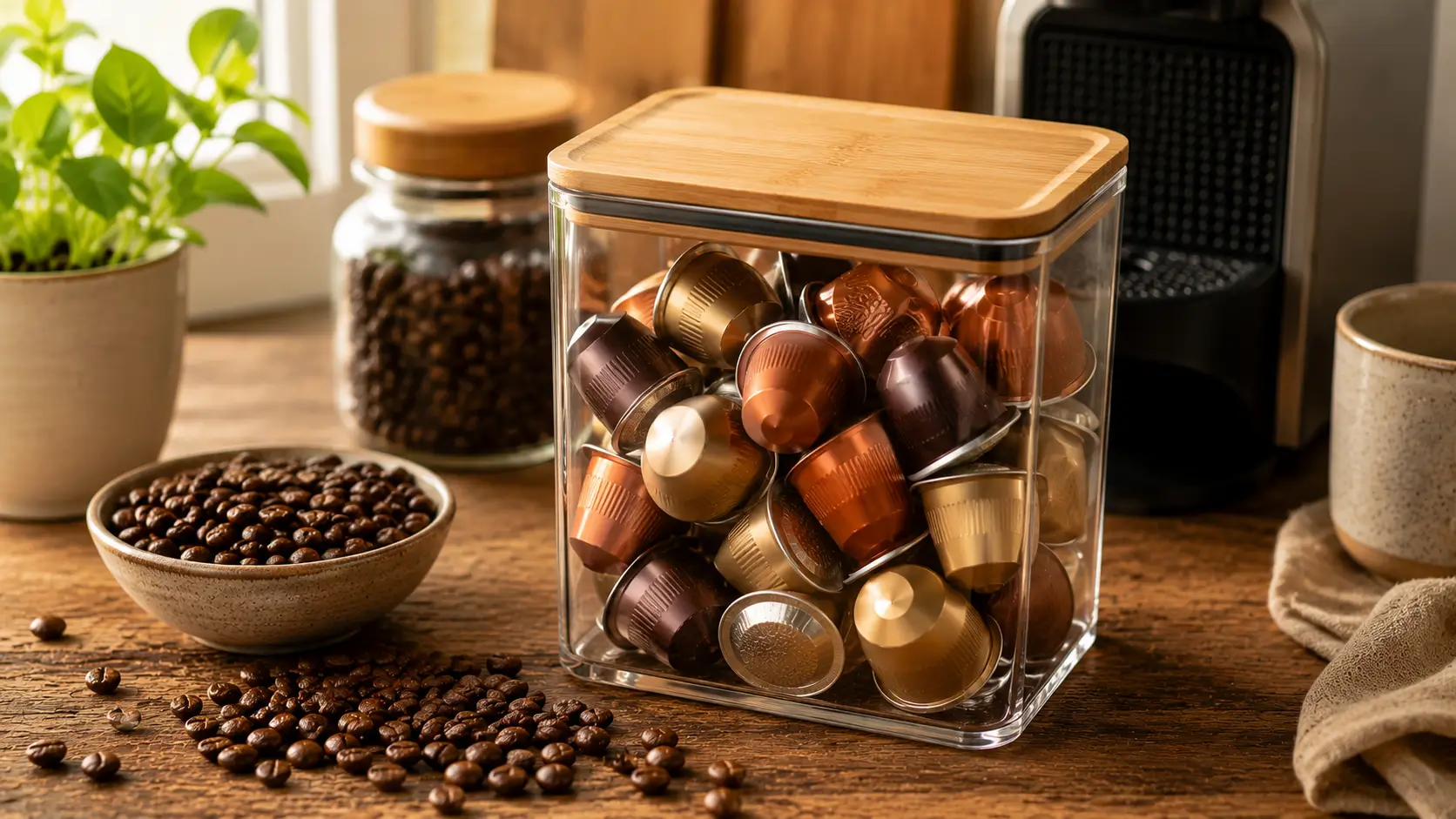
Storage can change coffee chemistry over time. A 2025 study examining chlorogenic acids during long-term storage found degradation patterns in stored green and roasted coffee.
For everyday pod storage, protect quality from heat, moisture, direct sunlight, damaged packaging and very long storage after the best-quality period.
Individually sealed pods help limit exposure before brewing, but sealed packaging does not mean coffee chemistry stays unchanged forever.
See How Long Do Coffee Pods Last? ↗.
How to Choose Coffee Pods if Antioxidants Matter to You
- Choose real coffee: plain coffee-based pods provide the compounds discussed in this guide.
- Choose roast for taste first: light/medium may retain more chlorogenic acids, while darker roasting forms more roasting-derived compounds.
- Use decaf when you want less caffeine: decaf still contains polyphenols.
- Check ingredients in specialty pods: antioxidant claims do not cancel sugar or calorie content.
- Store pods properly: keep them cool, dry and protected from direct light.
- Brew within the intended range: do not over-extract one pod just to chase compounds.
- Keep the full diet in perspective: coffee does not replace fruits, vegetables, legumes, nuts or other nutrient-rich foods.
Frequently Asked Questions
Yes. Brewed pod coffee contains chlorogenic acids, other phenolic compounds and roasting-derived melanoidins with measured antioxidant activity.
Important groups include chlorogenic acids and other phenolics. Roasting also creates melanoidins that contribute to measured antioxidant activity.
Yes, if the pod contains coffee. The exact amount depends on bean, roast, dose and brewing conditions rather than the K-Cup format alone.
Yes. Studies of single-dose capsule espresso have measured chlorogenic acids and antioxidant activity in the brewed coffee.
There is no single best answer. Lighter roasting generally retains more chlorogenic acids, while roasting creates melanoidins and changes other compounds. One antioxidant score does not define the healthiest roast.
Yes. Dark roasting reduces many chlorogenic acids but does not eliminate all bioactive compounds. Roasting also creates melanoidins with antioxidant activity.
Yes. Decaf still contains chlorogenic acids and other coffee compounds, although decaffeination can change their concentrations.
It does not remove all of them. Research shows decaffeination can alter chlorogenic-acid levels, and the effect depends on the process and coffee.
No. Brewing extracts many antioxidant-active compounds into the cup. Different brewing methods change their concentration and profile.
The species differ chemically, but roast and processing also matter. Species alone is not enough to rank one finished pod as healthier.
Not in a simple proportion. More water changes both concentration and extraction. A larger cup can be less concentrated even if the total extracted amount changes.
Yes, if coffee is the base. But flavored or specialty pods may also contain sugar, milk ingredients or other additives, so check the full nutrition profile.
No. Laboratory antioxidant tests measure chemical activity, not guaranteed human health outcomes. Bioavailability, metabolism and the full diet matter.
Coffee chemistry changes during storage, and chlorogenic acids can degrade over long periods. Proper storage helps protect overall quality.
No. Coffee can contribute polyphenols, but it should not replace a varied diet or be consumed in excessive amounts simply to increase antioxidant intake.
Conclusion
Coffee pods do contain antioxidant-active compounds. Chlorogenic acids are important in green and roasted coffee, while roasting also creates melanoidins that contribute to the chemistry of the brewed drink. Capsule studies confirm that these compounds reach single-serve espresso and other brewed coffee.
The useful takeaway is not to hunt for a “highest-antioxidant pod.” Bean type, roast, brewing and storage all change the profile, and a laboratory antioxidant score is not a complete health rating. Choose coffee for taste, caffeine needs and overall nutrition, while treating antioxidants as one part of a much larger picture.
Medical Disclaimer
Important Health Information
This article is provided for general information and educational purposes only. It is not medical advice and should not be used to diagnose, treat, prevent, or manage any health condition.
Caffeine affects people differently based on age, health, medicines, pregnancy, sensitivity, and total daily intake.
Speak with a qualified healthcare professional if you have ongoing symptoms, a medical condition, take regular medication, are pregnant or breastfeeding, or are concerned about your caffeine intake.