
Eco-Friendly Coffee Pods: Best Sustainable Options
The most eco-friendly coffee pod is not automatically the one with the greenest label. A sustainable choice ↗ depends on the pod material, how many times it can be used, whether your local waste system can process it, how well it protects the coffee, and whether you follow the correct disposal route.
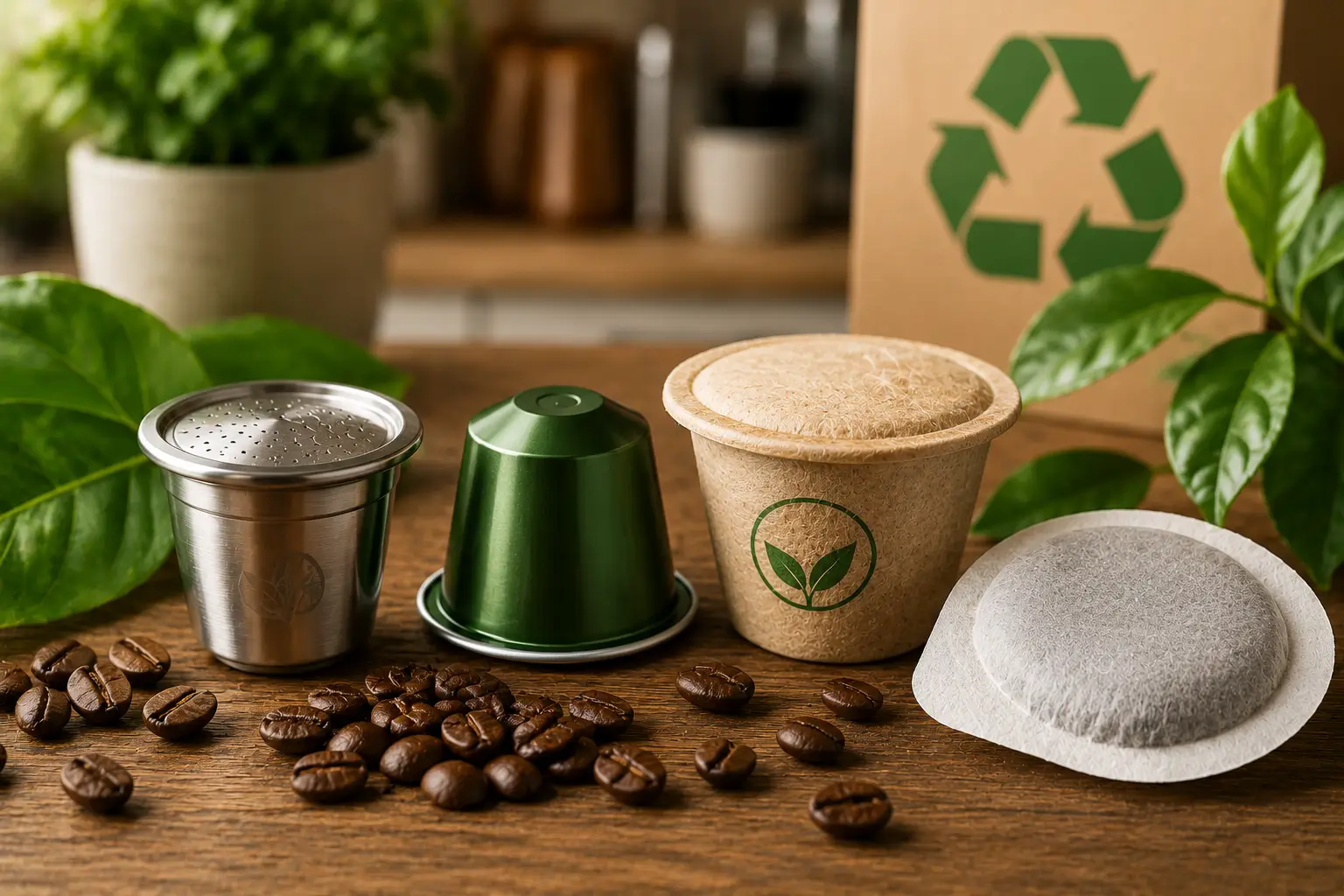
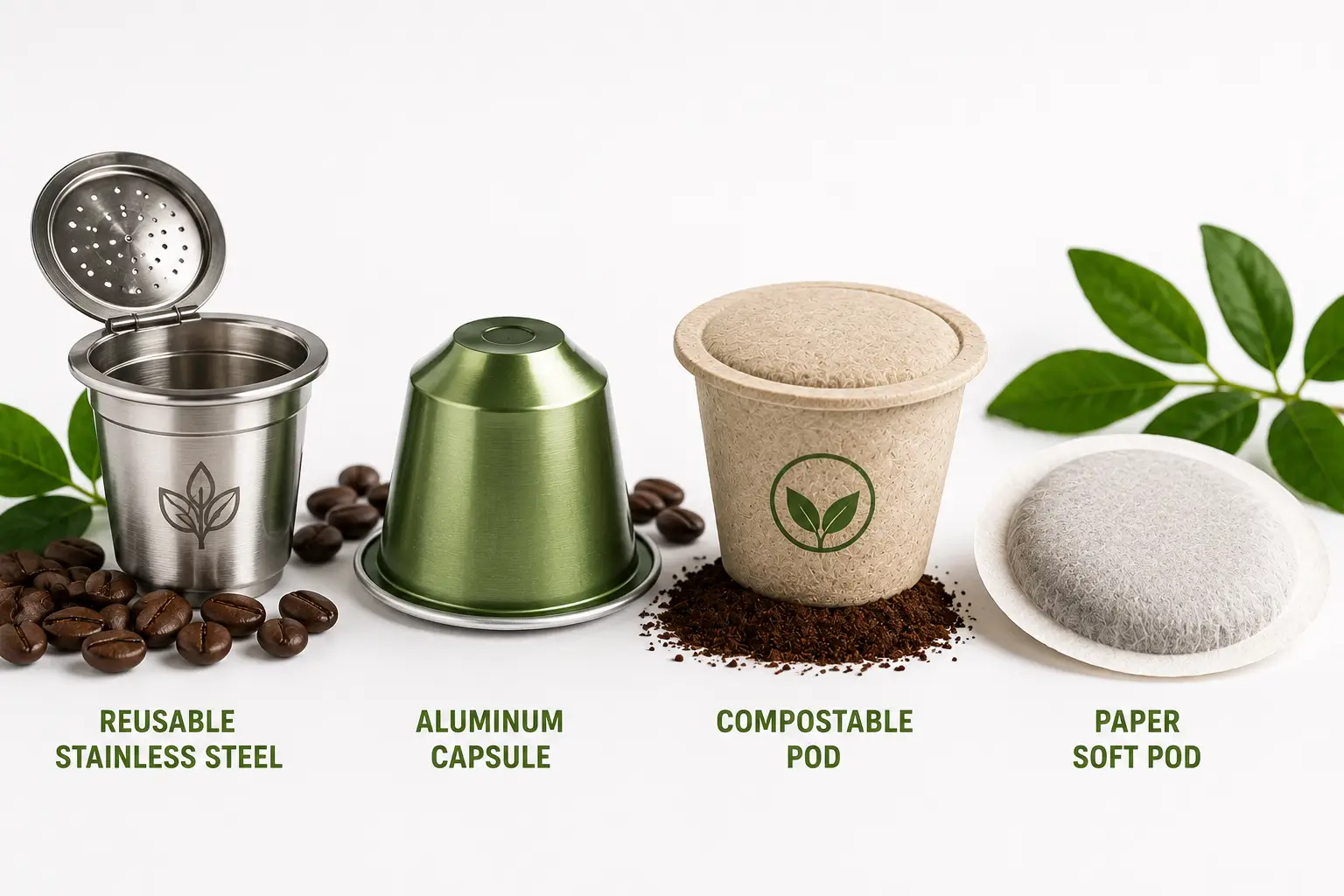
The main options are reusable pods, home-compostable pods, commercially compostable pods, recyclable aluminum capsules, recyclable polypropylene pods, and paper-based soft pods. Each solves a different part of the waste problem. None is the universal best choice for every machine, location, and user.
This guide focuses on the sustainability decision itself. For a deeper technical comparison, see Pros & Cons of Different Coffee Pod Materials ↗.
Important Note
Terms such as recyclable, compostable, biodegradable, plastic-free, and reusable do not mean the same thing. A pod can be technically recyclable but not accepted locally. A compostable pod may require a commercial facility rather than a backyard compost bin. Follow the disposal instructions for the exact product and your local waste service.
Key Takeaways
- There is no single coffee-pod material that is always the most sustainable in every situation.
- Reusable pods can reduce repeated single-use packaging, but their real impact depends on repeated use, cleaning, coffee dose and compatibility.
- Home-compostable and commercially compostable are different claims.
- Aluminum can be recycled, but a real collection route must accept the used capsule.
- Genuine K-Cup pods use recyclable #5 polypropylene, but they are not recycled in many communities.
- Paper or fiber-based does not automatically mean home compostable.
- The best practical question is: “Can I correctly dispose of this exact pod where I live?”
Quick Answer
Choose the pod that has a realistic end-of-life route you will actually use. Reusable pods can reduce single-use packaging. Certified home-compostable pods can work well when you can compost them correctly. Aluminum works well when you have access to capsule recycling. Recyclable polypropylene can also be useful, but local acceptance of small coffee pods varies.
What Makes a Coffee Pod Eco-Friendly?
An eco-friendly coffee pod should be judged across its life cycle rather than by one marketing word. Important factors include material, reuse, end-of-life options, contamination, coffee protection, machine compatibility and user behavior.
- Material: What is the pod, lid, filter and wrapper made from?
- Reuse: Can the pod replace many single-use capsules?
- End of life: Can you recycle or compost it through a service available to you?
- Contamination: Do grounds, foil, filters or mixed materials need to be separated first?
- Coffee protection: Does the packaging help prevent stale coffee and avoid waste?
- Machine compatibility: Will it work correctly in the brewer you own?
- User behavior: Will you actually refill, clean, recycle or compost it as intended?
Why Do Single-Use Coffee Pods Create a Sustainability Challenge?
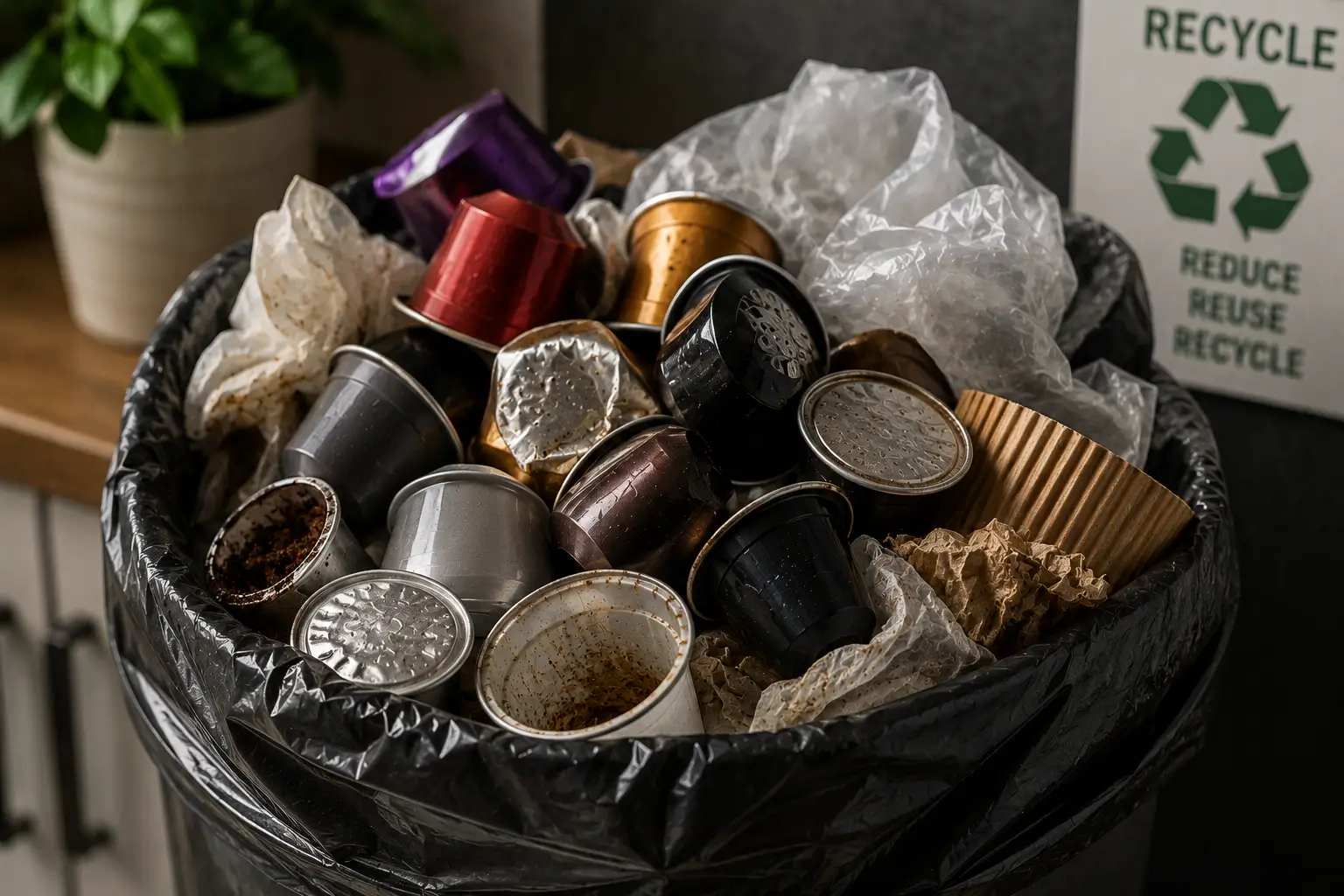
Single-serve brewing is convenient because each serving is individually portioned and packaged. That same design creates an end-of-life problem: a used pod can contain grounds, a filter, a lid and a shell made from one or more materials.
The capsule is also small. Even when its shell material is recyclable, some municipal sorting systems do not accept small coffee pods. Compostable alternatives solve a different problem, but only when the correct composting route is available.
What Are the Main Eco-Friendly Coffee Pod Options?
Reusable Pods
Reduce repeat capsule waste when used many times, but require filling, cleaning and compatible brewing.
Compostable Pods
Designed to break down under specified composting conditions. Check whether the product is home or commercial compostable.
Recyclable Aluminum
Strong barrier material with recycling potential when a suitable collection route is available.
Recyclable Plastic
Can be recyclable by material, but acceptance of small polypropylene pods differs by local program.
Compostable Coffee Pods
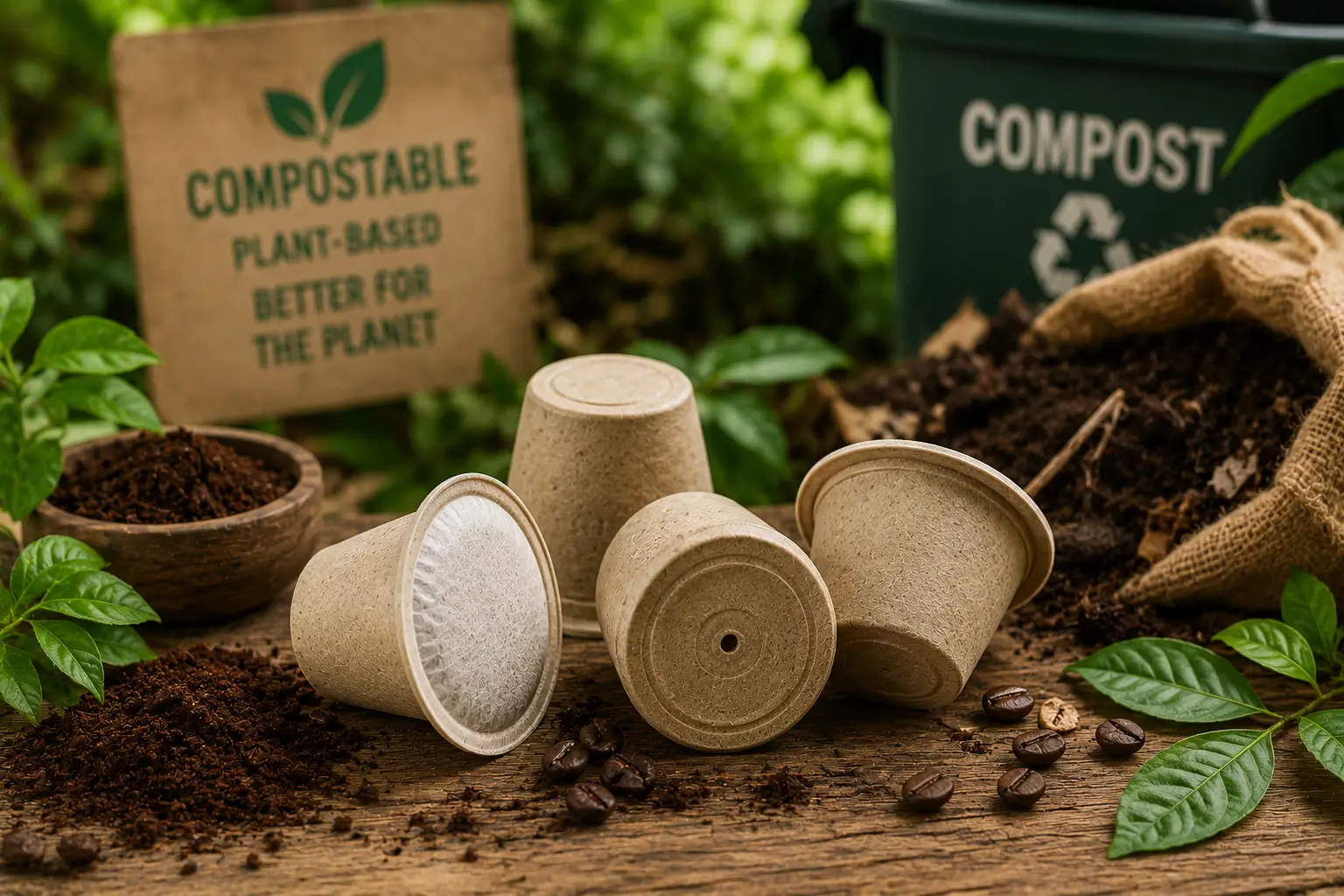
Compostable pods use materials designed to break down under defined composting conditions. Depending on the product, these may include plant-based polymers, fiber, paper or other certified compostable components.
A 2024 life-cycle assessment comparing aluminum, polypropylene, industrial-compostable bioplastic and home-compostable bioplastic capsules found that biocompostable options performed favorably in the modeled current disposal scenarios, with home-compostable material showing particularly low impacts in that study. The same research also showed that results change when recycling and material-recovery assumptions change.
That means “compostable is always greener” is too broad. A compostable pod works best when the whole product is suitable for the compost route you use and that route is actually available.
Home-Compostable vs Commercially Compostable Pods
These terms are not interchangeable. BPI distinguishes between Commercial Only certification and Commercial & Home certification. The first is designed for commercial composting conditions. The second covers both commercial facilities and properly managed home composting.
| Claim | Where It Is Intended to Break Down | What You Should Check |
|---|---|---|
| Home compostable | Properly managed household compost | Certification, product instructions and whether every pod component is covered |
| Commercially compostable | Commercial/industrial compost facility | Whether your local facility accepts the product type |
| Biodegradable | Not specific enough by itself | Look for defined conditions, standards and disposal instructions |
“Biodegradable” Is Not a Disposal Instruction
A vague biodegradable claim does not tell you how long an item will break down, under what conditions, or whether it belongs in a home compost bin. A specific compostability claim and clear instructions are more useful.
Are Aluminum Coffee Capsules Eco-Friendly?
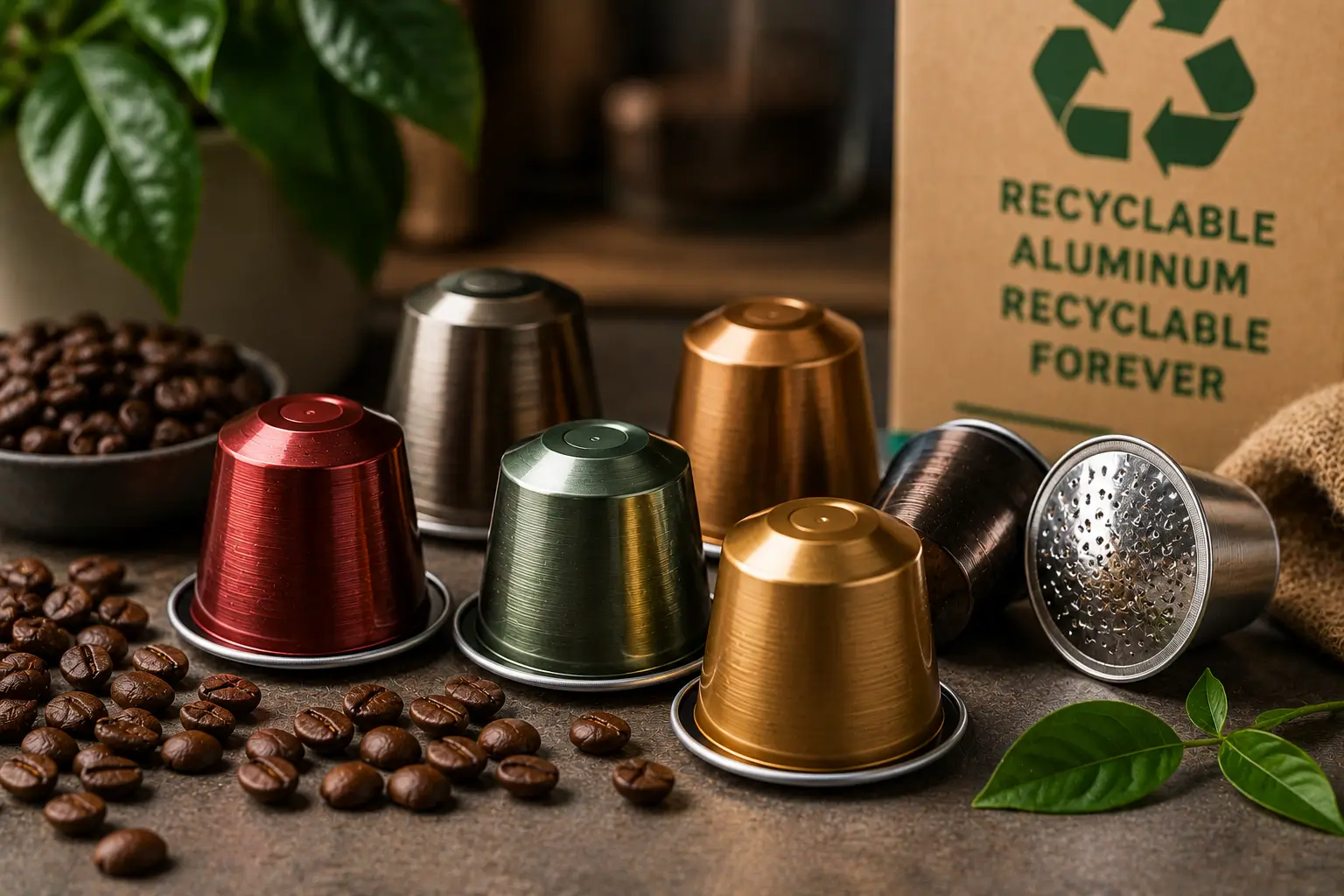
Aluminum gives coffee strong protection from oxygen, moisture and light, and the metal can be recycled when it enters an appropriate recycling stream. Nespresso uses aluminum capsules and operates dedicated collection and recycling routes in many markets.
The limitation is collection. A capsule being made from recyclable aluminum does not automatically mean your curbside program accepts it. Small items can be difficult for sorting systems, so a dedicated capsule-return route can matter.
Aluminum production also uses substantial energy, so the sustainability case improves when recycled material and effective recovery are part of the system.
Are Recyclable Plastic K-Cup-Style Pods Sustainable?
Keurig states that genuine K-Cup pods are made from recyclable #5 polypropylene. However, Keurig also states that K-Cup pods are not recycled in many communities, so users need to check local acceptance.
This is the difference between “made from recyclable material” and “actually recyclable where I live.”
For brewer-specific information, see Keurig Coffee Pods ↗.
Are Reusable Coffee Pods the Most Sustainable Option?
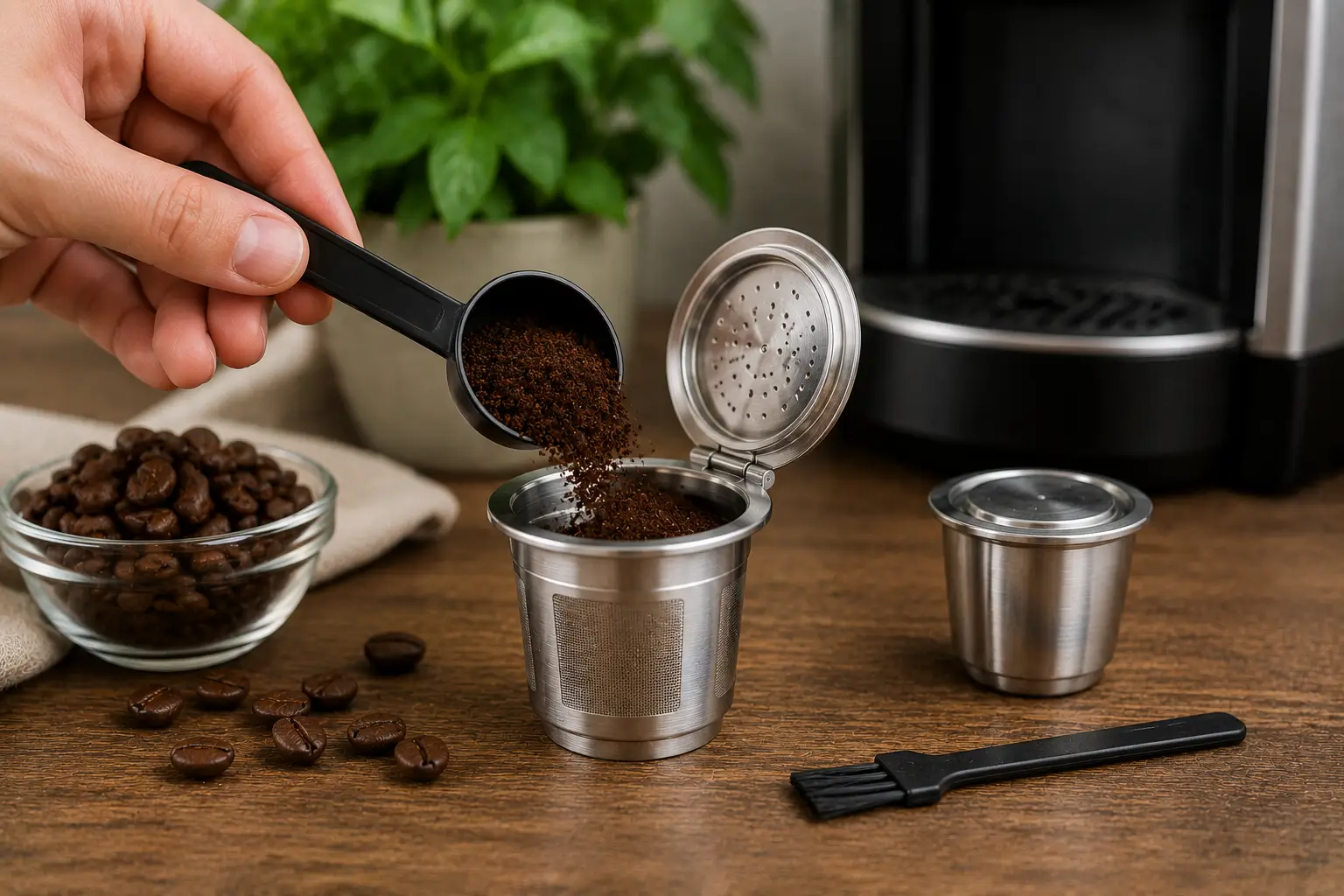
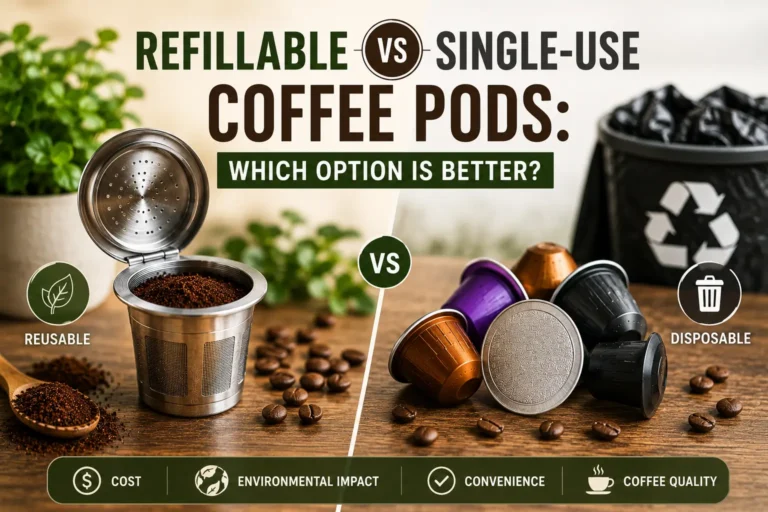
Reusable capsules can reduce the number of single-use shells you buy. They can also let you choose ground coffee in larger bags instead of individually packaged doses.
But it is too strong to say that a reusable pod is automatically the “greenest” choice in every case. Its real impact depends on its material, how many times it is reused, the amount of coffee used, how it is washed and whether it works efficiently in the machine.
- Fewer single-use capsule shells over repeated brews.
- More control over coffee source, roast, grind and dose.
- Potential long-term cost savings.
- Extra filling and cleaning after use.
- Results can vary with grind size and coffee amount.
For the cost side, see Coffee Pods Cost Per Cup ↗.
Are Paper Soft Pods Eco-Friendly?
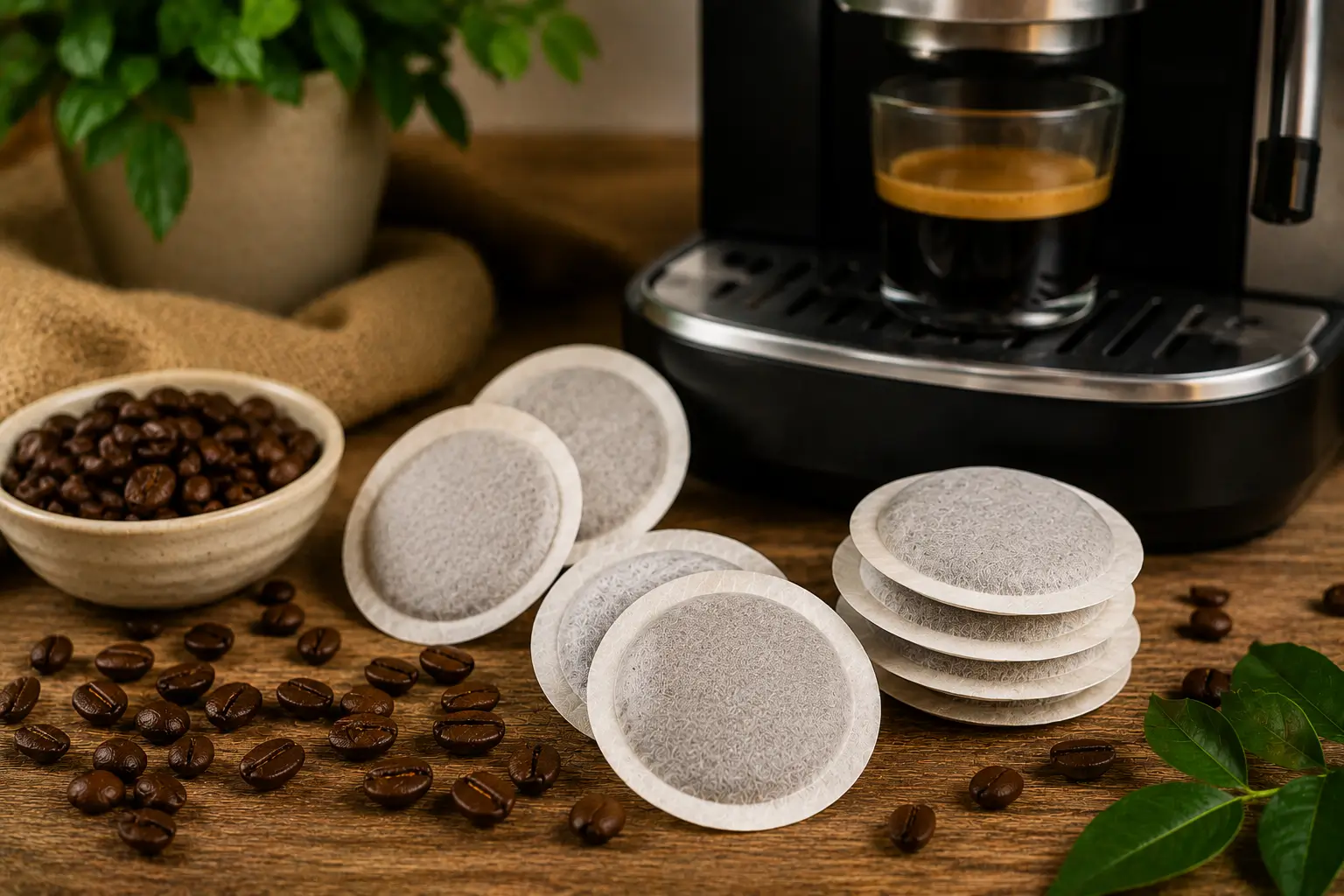
Soft pods and ESE-style pods use paper filter material around the coffee instead of a rigid plastic or aluminum shell. This can reduce the amount of hard capsule material used for each serving.
However, paper-based does not automatically mean compostable or plastic-free. Heat-seal materials and individual freshness wrappers can add other materials. Check the complete product rather than only the visible paper.
What Does “Plastic-Free Coffee Pod” Really Mean?
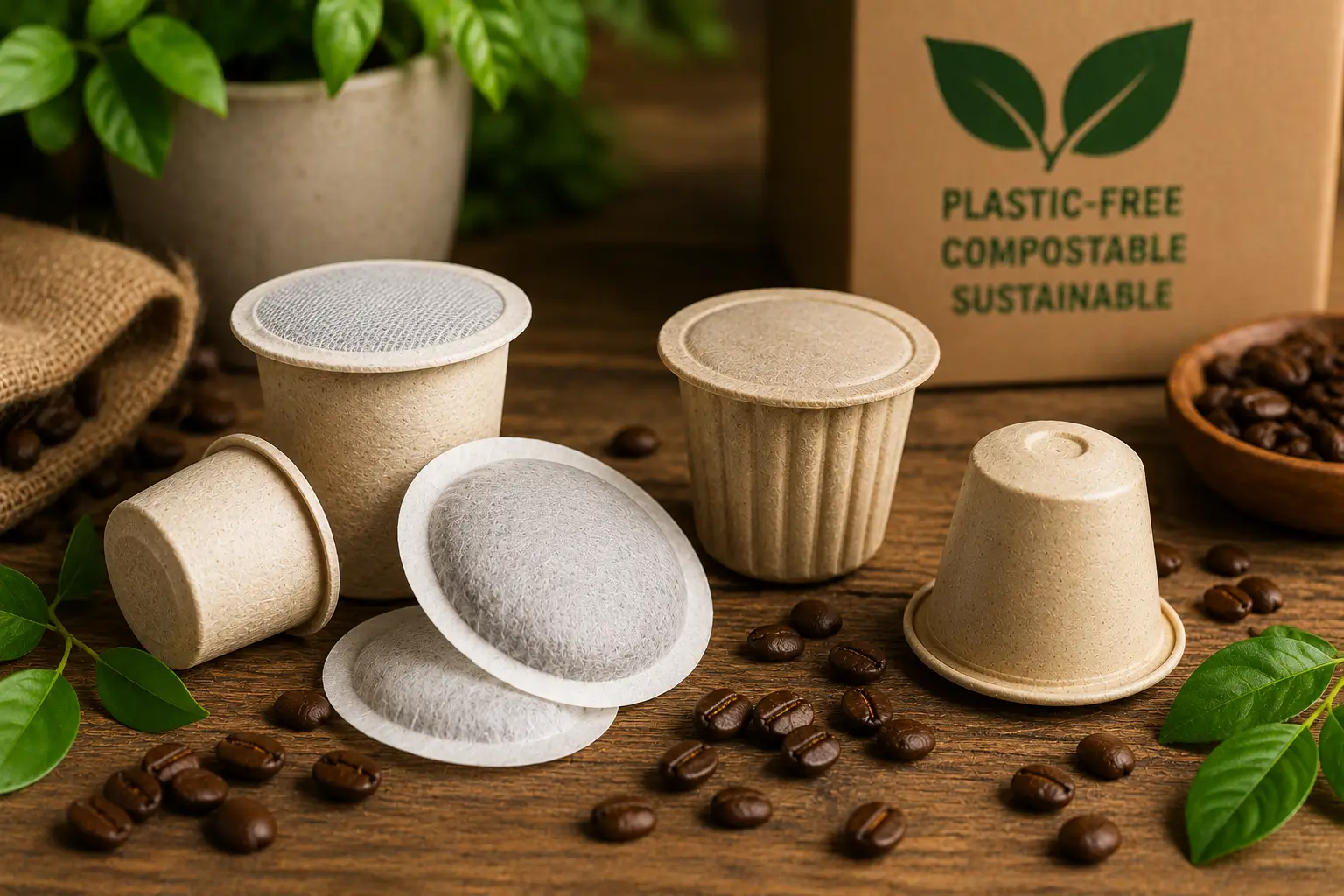
“Plastic-free” usually means the manufacturer is avoiding conventional petroleum-based plastic in the pod, but the construction can vary. A pod may use aluminum, paper, molded fiber or compostable biopolymers.
Do not use “plastic-free” as a shortcut for “lowest environmental impact.” A plastic-free capsule still needs raw materials, manufacturing, packaging, transport and an appropriate disposal route.
Eco-Friendly Coffee Pod Comparison
| Pod Type | Main Sustainability Strength | Main Limitation | Best When… |
|---|---|---|---|
| Reusable capsule | Reduces repeat single-use shells | Cleaning, filling and user behavior | You will use it many times |
| Home-compostable pod | Designed for home compost conditions | Not every compostable product qualifies | You have a suitable home compost route |
| Commercially compostable pod | Can enter organics processing | Requires an accepting facility | Your local service accepts it |
| Aluminum capsule | Strong coffee protection and recyclable metal | Needs effective collection | You have a reliable capsule recycling route |
| #5 polypropylene pod | Shell material can be recyclable | Small pods are not accepted in many communities | Your local program specifically accepts them |
| Paper/soft pod | Uses less rigid capsule material | Wrapper/seal materials and compatibility vary | Your machine supports the format |
How to Dispose of Coffee Pods More Responsibly
Aluminum
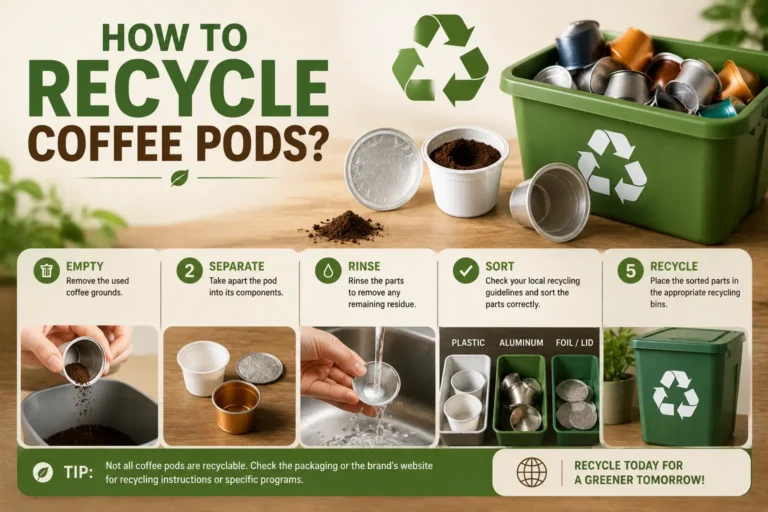
Use a dedicated capsule program or local route that specifically accepts the capsules. Follow preparation instructions.
#5 Plastic
Peel and empty as instructed, then confirm local acceptance of coffee pods, not just polypropylene generally.
Compostable
Check whether the pod is home or commercial compostable and use the correct composting route.
Reusable
Empty the grounds, wash according to instructions and keep using the capsule rather than treating it as disposable.
The Most Useful Sustainability Test
Before buying, ask: “What will I actually do with this pod after I brew it?” If the answer is “put it in general waste,” a recyclable or commercially compostable claim may not deliver the benefit you expect.
What Are the Best Eco-Friendly Options for Nespresso Users?
For Nespresso users, the most established sustainability route is the aluminum capsule recycling system. Nespresso states that its capsules are aluminum and that recycled capsule aluminum can be used in new aluminum objects. Collection methods differ by location.
Third-party compostable or reusable capsules also exist for some compatible machines, but compatibility must be checked carefully. Original and Vertuo are different systems.
What Are the Best Eco-Friendly Options for Keurig Users?
Keurig users generally have three routes: recycle eligible genuine K-Cup pods where accepted, use a compatible reusable filter, or choose third-party compostable pods that fit the exact brewer.
The key limitation is local recycling. Keurig itself says its #5 polypropylene K-Cup pods are recyclable but are not recycled in many communities.
Are Eco-Friendly Coffee Pods More Expensive?
Sometimes, but not always. Certified compostable materials, specialty manufacturing and smaller production volumes can raise the price of some single-use sustainable pods. Reusable pods cost more upfront but spread that cost over repeated brews.
The best comparison is cost per finished cup. See Coffee Pods Cost Per Cup Calculator & Guide ↗.
How to Choose a More Sustainable Coffee Pod
| Your Situation | Option to Consider First | What to Verify |
|---|---|---|
| You want to avoid a new shell every cup | Reusable capsule | Compatibility, repeated-use practicality and cleaning |
| You compost at home | Certified home-compostable pod | The complete pod is approved for home composting |
| Your city has commercial composting | Commercially compostable pod | Facility acceptance |
| You use Nespresso and have capsule collection | Aluminum + recycling program | Current local collection instructions |
| You use Keurig and local recycling accepts pods | Prepared #5 polypropylene pods | Rules for lids, grounds, filters and small items |
| You have no recycling or compost route | Reusable system, if compatible | Whether you will refill and clean it consistently |
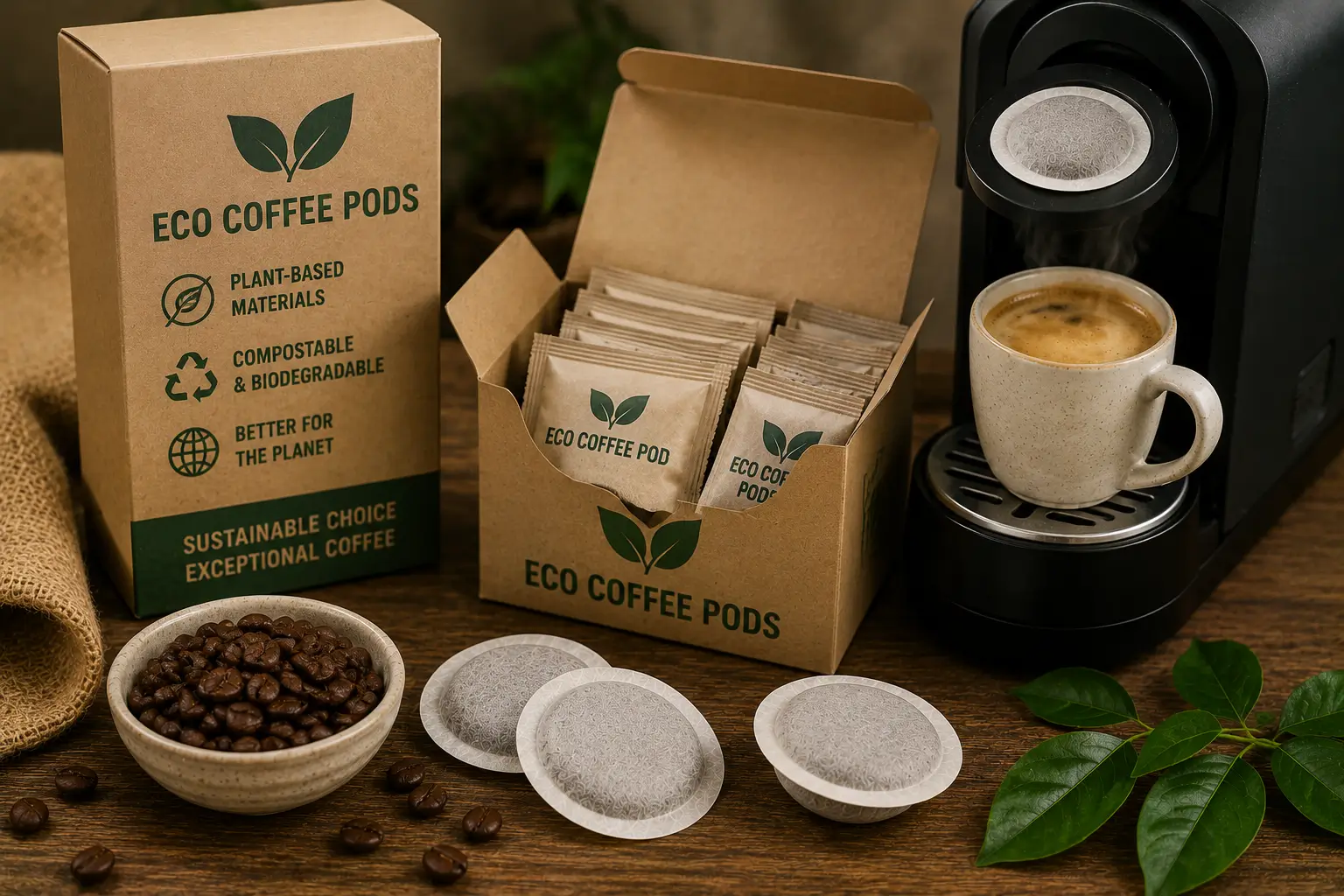
What Sustainable Practices Do Coffee Pod Brands Use?
- Using recyclable or certified compostable capsule materials.
- Adding recycled material where performance and food-contact requirements allow it.
- Running capsule take-back, mail-back or collection programs.
- Reducing unnecessary outer packaging and plastic.
- Supporting more responsible coffee sourcing and farm practices.
- Designing machines for longer use, repair or replaceable components.
- Giving clearer disposal instructions after brewing.
For buyers, a measurable program is more useful than a vague “green” claim. Look for specific material information, certifications, collection instructions and clear disposal guidance.
Frequently Asked Questions
There is no universal best capsule. Reusable pods can reduce single-use waste when used many times. Certified home-compostable pods can work well where home composting is practical, while aluminum can be a strong option when a reliable recycling route is available.
The main options are reusable capsules, certified home- or commercially compostable pods, recyclable aluminum capsules, recyclable polypropylene pods and some paper-based soft pods.
Not automatically. A compostable pod needs the correct composting conditions, while a recyclable pod needs an effective collection and recycling route. Life-cycle results can change with disposal and material recovery.
No. Home-compostable products are intended for properly managed home compost conditions. Commercially compostable products may require industrial conditions.
Only if your local recycling program accepts that exact pod material and format. Small capsules can be rejected even when their material is technically recyclable.
Aluminum is recyclable and Nespresso operates capsule collection programs in many locations. The practical benefit depends on used capsules reaching a suitable recycling route.
Genuine K-Cup pods use recyclable #5 polypropylene, but they are not accepted in many communities. Follow preparation instructions and confirm local acceptance.
No. Reusable capsules reduce repeated single-use packaging, but their total impact also depends on manufacturing, cleaning, coffee dose, lifespan and user behavior.
Some paper-based pods may contain biodegradable or compostable components, but do not assume the complete pod or wrapper is compostable just because paper is visible.
Practices can include recyclable aluminum or plastic formats, capsule collection programs, reduced-plastic packaging, compostable products and responsible coffee sourcing. Availability differs by province and municipality.
Look for a specific material, recognized certification where relevant, clear disposal instructions, exact machine compatibility and a recycling or composting route you can actually use.
Conclusion
The best eco-friendly coffee pod is the one that works with your brewer and has an end-of-life route you can actually follow. Reusable pods reduce repeated capsule waste, certified compostable pods can work well where the right composting option exists, and aluminum or polypropylene pods can be useful where reliable recycling is available.
Avoid choosing by words such as “green,” “plastic-free,” or “recyclable” alone. Check the complete pod material, certification or disposal instructions, machine compatibility, and your local recycling or composting system.